
Mexico's banking sector has committed to inject $250 billion into infrastructure and small and medium-sized enterprises (SMEs) by 2030, an initiative aimed at boosting Latin America's second-largest economy. This commitment, detailed in a report by France's General Directorate of the Treasury from March 2026, is part of the Mexican government's infrastructure program and seeks to significantly improve credit access for businesses and increase the banking penetration rate. The objective is to raise credit as a percentage of GDP from 38% to more than 45%, while enabling 30% of micro, small and medium-sized enterprises (MSMEs) to access formal credit, representing an additional 14,000 banked companies. [1]
$250 billion for infrastructure and SMEs by 2030
Mexico's banking sector commitment of $250 billion by 2030 represents a substantial financial effort designed to support the country's economic growth. These funds will be primarily directed toward financing strategic infrastructure and strengthening the capacity of small and medium-sized enterprises. This capital injection is perceived as an essential lever for modernizing the Mexican economy and creating new development opportunities. The plan aligns with national priorities for economic and social development. [1]
38% to 45% of GDP: the credit increase objective
Currently, credit represents approximately 38% of the Gross Domestic Product (GDP) in Mexico, a figure deemed insufficient to fully support the country's growth potential. The objective set by the banking sector is to reach more than 45% of GDP by the end of the decade. This increase is crucial to stimulate private investment, facilitate business expansion and improve consumption. Such progress would demonstrate greater financial depth and better economic inclusion. [1]
14,000 additional MSMEs banked through 30% access to formal credit
The banking penetration rate of SMEs in Mexico is currently low, especially compared to Organization for Economic Cooperation and Development (OECD) standards. The new commitment provides that 30% of micro, small and medium-sized enterprises (MSMEs) will have access to formal credit, which would translate into the integration of an additional 14,000 companies into the banking system. This measure is designed to reduce the financial obstacles faced by small businesses, thus enabling them to invest, grow and create jobs. Access to formal credit is a determining factor for the survival and development of MSMEs. [1]
The Mexican government infrastructure program as catalyst
The context of this banking commitment is closely linked to the Mexican government's ambitious infrastructure program. This program aims to modernize transportation, energy and telecommunications networks, thus creating an environment conducive to investment and economic activity. Banking sector support is fundamental for realizing these large-scale projects, which require considerable financing. The synergy between public and private initiatives is a key element of this development strategy. [1]
Mexico, Latin America's 2nd economy, faces a banking challenge
As Latin America's second-largest economy, Mexico has significant economic weight in the region. However, the low banking penetration rate of SMEs constitutes a brake on its full growth potential. Improving credit access for these companies is therefore a major challenge for the country. This banking sector commitment is a direct response to this challenge, seeking to align Mexico with the practices of more developed economies in terms of business financing. The success of this initiative could serve as a model for other emerging economies. [1]
[1]: General Directorate of the Treasury (France), Mexico report March 2026
Mexico in the context of financial inclusion in Latin America
Mexico's weak credit level (38% of GDP) contrasts with other comparable economies. In Brazil, credit represents approximately 85% of GDP, and in Chile, 115%. This difference is explained in part by structural factors: an informal sector that represents approximately 25% of the Mexican economy, a judicial system whose debt recovery delays discourage lenders, and a historical mistrust of banking institutions in certain regions of the country.
The World Bank's Global Findex 2025 indicates that 49% of Mexican adults own a bank account, compared to 70% on average in Latin America. The gap is even more pronounced for SMEs: according to the World Bank, 43% of Mexican small businesses identify access to financing as their main obstacle to growth, compared to 28% on average in OECD countries.
Nearshoring as a driver of credit demand
The $250 billion banking commitment comes in a context of global supply chain restructuring favorable to Mexico. The nearshoring phenomenon — relocating industrial activities near the United States — has generated strong demand for investment in industrial, logistics and energy infrastructure in Mexico's northern states (Nuevo León, Coahuila, Chihuahua, Baja California).
In 2024, Mexico attracted $36 billion in foreign direct investment, a historic record, with a significant portion related to nearshoring. This dynamic creates a credit demand that the Mexican banking system struggles to satisfy with its current capacity — hence the urgency of the announced commitment.
Obstacles to overcome to meet the commitment
The $250 billion objective by 2030 is ambitious, but its realization depends on several conditions. The first is macroeconomic stability: the Mexican peso experienced episodes of volatility in 2024-2025, and a significant depreciation would increase the cost of foreign currency credit. The second is the reform of the legal framework for debt recovery, long identified as a brake on credit expansion to SMEs. The third is the development of digital payment infrastructure, which conditions the integration of informal SMEs into the formal financial system.
The Mexican government launched a reform of the movable property registry in 2024, which should facilitate the use of SME assets as collateral to obtain loans. If this reform is fully implemented, it could unlock a significant portion of the latent credit demand in Mexico's small business fabric.
---
Sources: General Directorate of the Treasury (France), Mexico report, March 2026; World Bank, Global Findex 2025.
Receive Journal analyses directly in your mailbox.
Also read
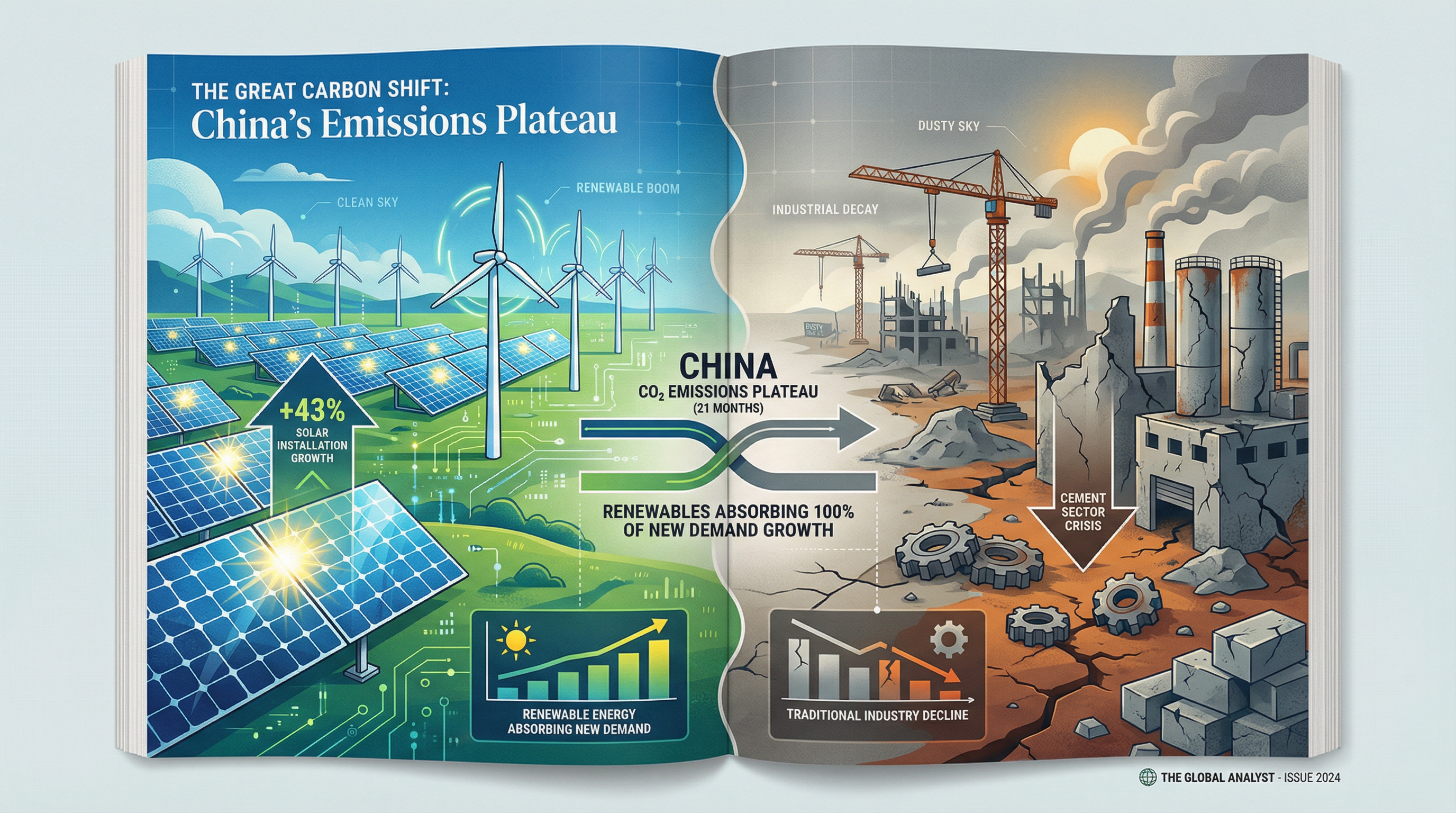
China's CO2 emissions stagnate for 21 months: structural peak or cyclical accident?
China's CO2 emissions fell by 0.3% in 2025. It's a modest figure. But it extends a trend that has lasted for 21 consecutive months: since March 2024, emissions from the world's largest polluter have been "stable or declining".

AI and employment: two March 2026 studies reveal -13% automatable job offers and +20% augmented roles
Does AI destroy jobs? Two studies published in March 2026 — one by Harvard Business School, the other by Anthropic — provide the first solid empirical data. And the answer is more nuanced than public debate suggests.
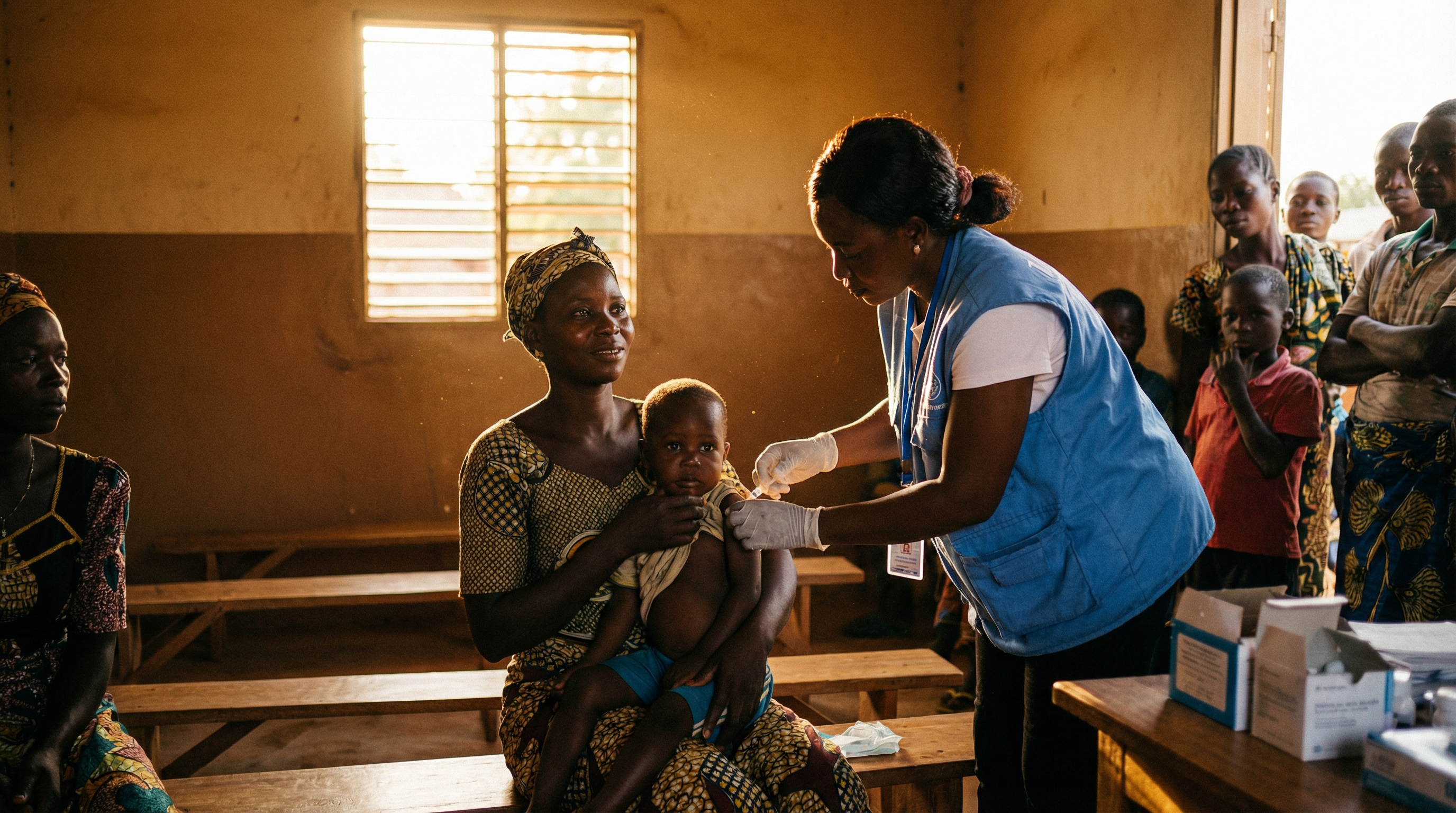
The malaria vaccine in Nigeria: 200,000 children vaccinated and a 50% drop in cases in Kebbi State
Malaria killed 608,000 people in 2022, 95% of them in sub-Saharan Africa and 78% children under five years old. And for the first time, a vaccine deployed on a large scale shows measurable results in the field.