85% of African cities will experience temperature increases exceeding 2°C by 2050. This unprecedented climate pressure is transforming constraints into catalysts for innovation. The continent’s metropolises are developing hybrid adaptation solutions that combine natural ecosystems and simple technologies, creating a new model of climate-responsive urbanism.
Lagos Grows Its Dykes on Floating Stilts
Lagos, with 15 million inhabitants, combats rising sea levels with mangroves cultivated on floating structures. The city has installed 12 kilometers of “vegetative dykes” that combine local wooden pilings and mangrove seedlings. These hybrid infrastructures cost 60% less than concrete dykes while filtering 40 tonnes of carbon per kilometer annually.
The principle blends simple engineering and ecology: recycled material caissons anchor mangrove roots that stabilize sediments. Aerial roots break the waves while the underground root system retains soil. Each kilometer of vegetative dyke employs 20 people for maintenance compared to 3 for a conventional dyke.
This approach is expanding to Abidjan and Dakar. Côte d’Ivoire launched in September 2025 a coastal restoration program combining 45 kilometers of reconstructed mangroves and 15 solar-powered pumping stations. Senegal is experimenting with “urban coastal forests” where oil palms and casuarina trees create natural barriers reinforced by early warning sensors powered by photovoltaic panels.
Addis Ababa Transforms Rain into Resources with Connected Green Roofs
Addis Ababa receives 1,200 mm of rain annually but experiences chronic water shortages. The Ethiopian capital has generalized green roofs equipped with underground cisterns and micro-sensors. 35,000 buildings now collect rainwater via suspended gardens that filter and store water while producing vegetables and medicinal plants.
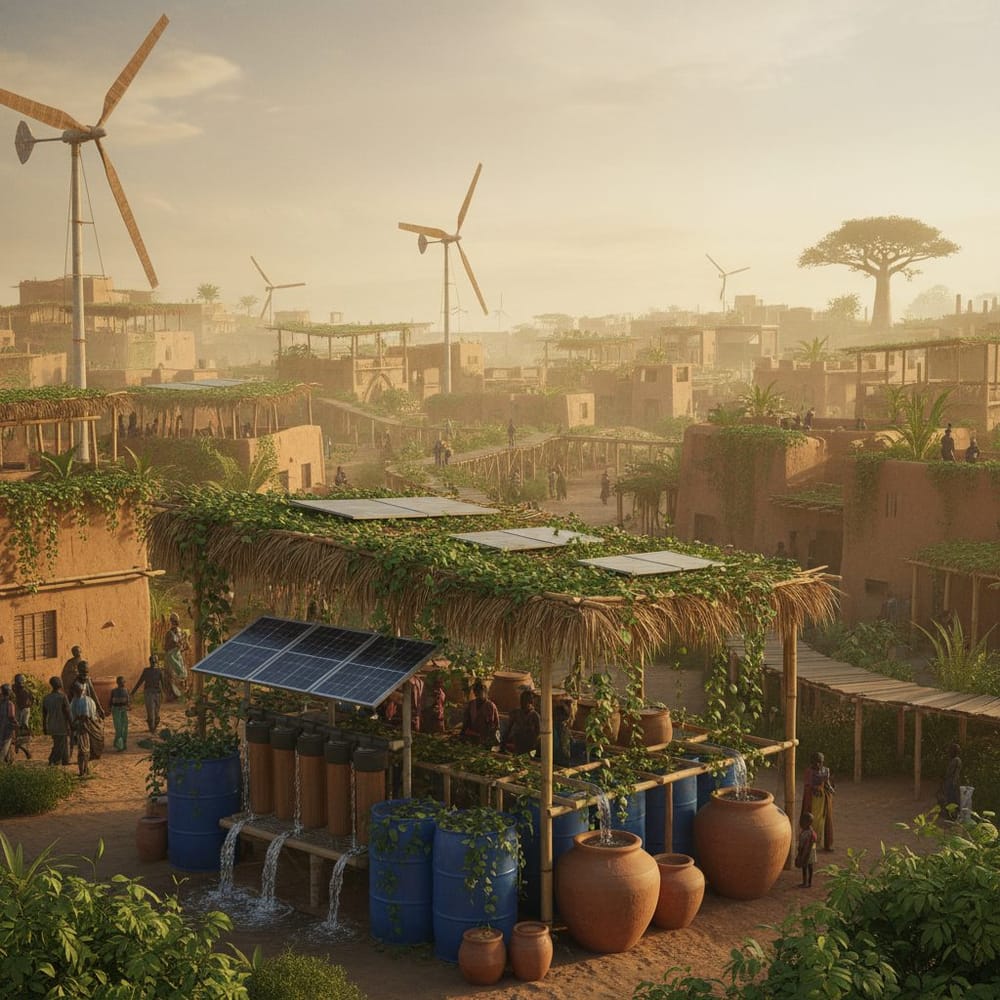
The system combines bamboo gutters, recycled plastic sheets, and local compost substrates. Connected sensors, manufactured by a local start-up from recovered electronic components, transmit water reserve levels and water quality by SMS. This decentralized infrastructure provides 40% of the drinking water for equipped neighborhoods.
Kigali adapted the model to Rwanda’s hills by creating “hydraulic staircases”: 15,000 cultivated terraces connected by a network of gravity-fed pipes that channel water from roofs to tiered gardens. The surplus feeds micro-dams equipped with small turbines that produce electricity for the sensors.
Marrakech Cools with Earth and Palm Trees
Marrakech faces heat peaks exceeding 48°C. The city has developed “cooling islands” that combine rammed earth architecture, date palms, and air circulation powered by solar energy. 200 public squares benefit from this system which lowers temperature by an average of 8°C.
The innovation rests on modern rammed earth walls—compacted earth mixed with plant fibers—that store nighttime coolness. Palms planted in a quincunx pattern create shade while solar-powered fans draw cool air at root level to diffuse it at human height. Installation costs represent one-tenth of a conventional air conditioning system.
Casablanca is experimenting with “oasis streets”: 50 urban axes equipped with misters powered by greywater recovery, Mediterranean fruit trees, and light-colored paving made from local materials. These green corridors lower temperature by 5°C and produce 15 tonnes of fruit per kilometer. Tunis adapts the concept with “climate patios” that recreate traditional architecture enriched with humidity sensors and solar-powered micro-sprinklers.
Cape Town Stores Energy in Sand and Stone
Cape Town faces rolling blackouts with thermal storage systems using sand and volcanic stones heated by solar panels. 12 neighborhoods are equipped with these “geological batteries” that restore heat and electricity for 72 hours without sun.
The principle exploits thermal inertia: insulated containers filled with local rocks accumulate solar heat at 600°C through electric resistances. At night, heat exchangers convert this heat into electricity or distribute it directly for water heating and cooking. Each neighborhood installation costs 80% less than an equivalent lithium battery system.
Johannesburg is testing “energy mines” that transform abandoned mine shafts into geothermal reservoirs. Hot water stored 200 meters underground feeds community heat pumps. Durban is experimenting with storage in coastal dunes: sand heated by concentrated solar collectors maintains urban greenhouses at constant temperature for vegetable production.
The Boomerang Effect: When Constraint Becomes Competitive Advantage
These frugal innovations are beginning to spread to wealthy countries. Barcelona has adapted Addis Ababa’s green roofs for 500 public buildings. Marseille is testing Lagos’s vegetative dykes in its creeks. Singapore is reproducing Marrakech’s cooling islands in its new neighborhoods.
This reversal of innovation flows reflects a structural shift. Europe systematizes circular economy through digital traceability but African cities already master the art of recovery and repurposing. Their climate solutions combine energy efficiency, resilience, and controlled costs.
The African adaptation model rests on three principles: nature-technology hybridization, use of local resources, and community maintenance. This constraint-based approach produces systems more robust and less dependent on global supply chains than Western climate technologies.
The 2025 COP30 formalized this recognition, opening new channels for international cooperation. 15 European cities will experiment in 2026 with adaptations of innovations developed in Lagos, Addis Ababa, and Marrakech.
Sources: