3,006 news sites entirely generated by artificial intelligence flood the web with false news. This data, revealed by NewsGuard in 2024, marks a historical turning point: disinformation is leaving the artisanal manipulation of yesteryear to become an automated mass industry. The European Union confirms this shift with its own figures: 27% of foreign manipulation operations now use generative AI tools, with Russia, China, and Iran as the primary state actors deploying these campaigns to undermine American foreign policy interests and disrupt civic discourse.
The industrialization of false information is radically transforming geopolitical power dynamics. Where a handful of trolls once sufficed to destabilize a debate, algorithms now generate thousands of articles daily, in every language, on every sensitive topic. This mass production paradoxically creates the conditions for coordinated technological counter-response: the sheer scale of the phenomenon makes it detectable by automated systems.
27% of Foreign Operations Migrate to Automation
The fourth report of the European External Action Service (EEAS) documents an unprecedented acceleration. Between January and July 2024, more than a quarter of foreign manipulation campaigns identified by the EU integrate generative artificial intelligence tools. This proportion rises to 45% for operations specifically targeting European elections.
State actors are leading this transformation. Russia has been deploying its automated troll farms since 2023, generating thousands of daily posts in French, German, and Polish as part of an operationalized disinformation ecosystem that creates and spreads false narratives to strategically advance the Kremlin’s political objectives. China is experimenting with synthetic account networks that comment on European geopolitical news with remarkable narrative coherence, using notably AI-generated news broadcasts and AI-manipulated images to fuel conspiracy theories. Iran is automating its destabilization campaigns in the Middle East, creating fictional political influencer personas, with its cyber actors having infiltrated personal accounts of Donald Trump’s presidential campaign in May 2024.
This migration toward AI responds to concrete operational constraints. Training human trolls is expensive and time-consuming. Keeping them active 24 hours a day requires complex logistics. Automation eliminates these friction points: a single algorithm can feed hundreds of accounts simultaneously, in multiple languages, without pause or continuous human supervision.
3,006 Content Farms Industrialize False Information
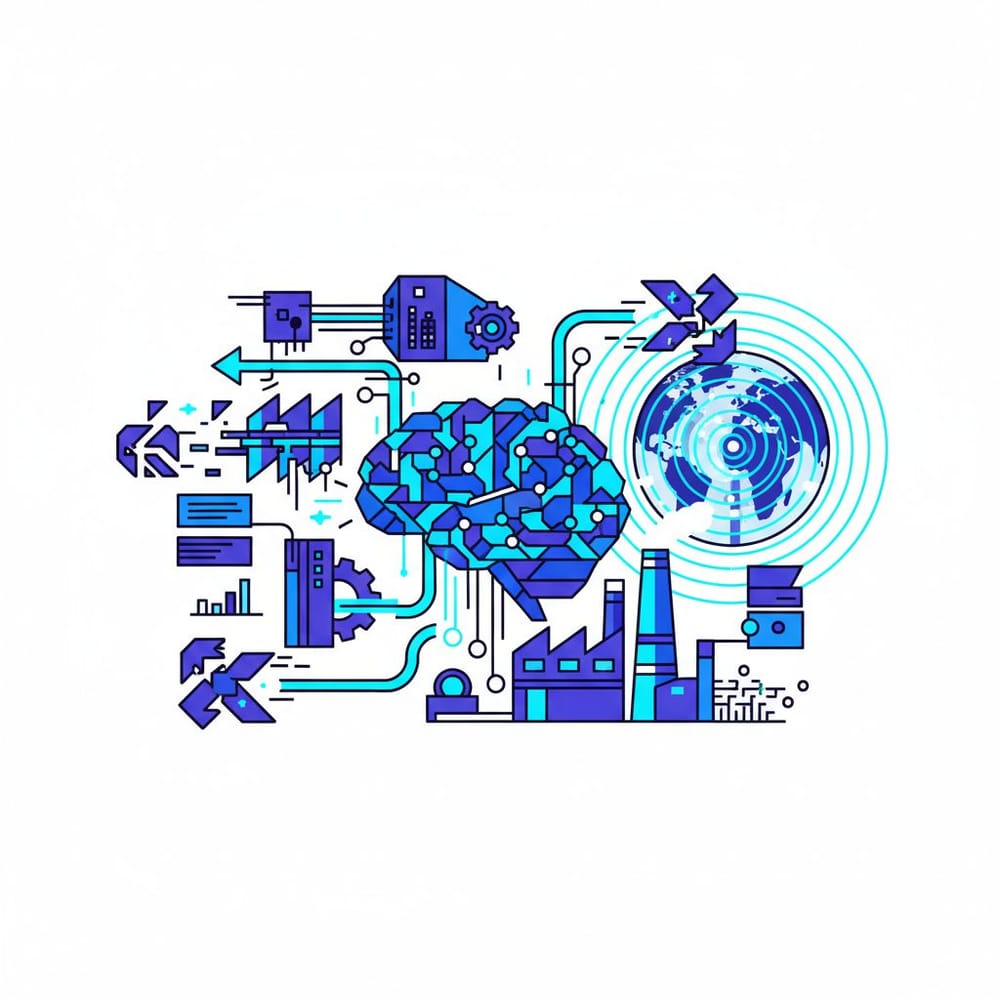
NewsGuard reveals the industrial scale of the phenomenon. Its analysts identified 3,006 websites entirely powered by artificial intelligence, with 1,140 created in the first six months of 2024. These “content farms” publish more than 40,000 automatically generated articles daily.
The geography of this industry follows global geopolitical tensions. 34% of identified sites target American news, 28% Europe, 18% Asia-Pacific. The preferred topics reveal a coordinated strategy: elections, pandemic, Ukraine conflict, South China Sea tensions, European immigration debates.
Technical analysis confirms the artificial origin of these contents. Texts display characteristic repetitions of language models, recurring factual errors, and a complete absence of verifiable journalistic sources. Even more revealing: 73% of these sites mention no human author, relying instead on generic signatures like “editorial team” or “AI writing.”
The monetization of these farms follows a well-established economic model. 67% integrate programmatic advertising, generating estimated revenues between $500 and $2,000 monthly per site depending on their audience. Multiplied by 3,006 sites, these revenues finance a self-sustaining disinformation infrastructure.
The Technological Ecosystem Involuntarily Fuels the Machine
The disinformation infrastructure relies on the same tools as legitimate journalism. Content farms use OpenAI, Anthropic, and Google to generate their texts. Web hosting platforms like WordPress and Webflow host their sites without verification. Ad networks distribute their advertisements without editorial control.
This technological dependence reveals a systemic vulnerability. Generative AI companies can detect malicious usage of their models by analyzing request patterns. A site generating 50 articles daily on sensitive geopolitical topics presents obvious warning signals.
Several technology players are beginning to respond. OpenAI closed more than 200 accounts linked to disinformation operations in 2024. Meta is developing detection tools specific to AI-generated content. Google is modifying its search algorithms to penalize sites without identified authors.
This response remains insufficient given the scale of the phenomenon. Content farms adapt rapidly: they diversify their AI suppliers, use open-source models hosted locally, and multiply domains to evade detection. In September 2024, the U.S. Department of Justice seized 32 internet domains linked to these campaigns and indicted two RT employees for covert creation and distribution of electoral content. China defies the West with a 2-exaflop supercomputer using no foreign chips, illustrating this technological adaptation capacity of state actors.
Democracies Organize Technological Counter-Response
Facing this industrialization of disinformation, democracies are developing their own mass tools. The European Union is funding 15 research projects on automatic detection of synthetic content. The United States is allocating $200 million to similar initiatives within its national security strategy.
Automated detection is progressing rapidly. Algorithms now analyze linguistic patterns characteristic of AI models: lexical repetitions, artificial syntactic construction, absence of verifiable factual references. Accuracy reaches 87% on long texts, 73% on short posts.
Social networks are integrating these tools into their moderation systems. Twitter has been automatically labeling suspicious content since September 2024. Facebook is testing preventive labeling of articles from unverified sites. TikTok is developing real-time video deepfake detection.
This technological race is transforming the economics of information. The costs of producing disinformation decrease with AI, but detection costs decrease as well. The structural advantage could shift toward defenders: a single detection system can analyze millions of pieces of content simultaneously, whereas malicious production remains constrained by computational capacity.
Journalistic Employment Adapts to Artificial Competition
The automation of disinformation paradoxically accelerates the transformation of traditional journalism. The great hiring freeze transforms entry into the labor market in many sectors, but journalism is developing new specializations.
Editorial offices are creating positions for “augmented fact-checkers,” journalists trained in automated verification tools. These professionals combine human expertise and detection algorithms to identify synthetic content in real time. Their training integrates metadata analysis, AI image verification, and detection of artificial linguistic patterns.
Journalistic investigation is reorienting toward documenting disinformation networks. Specialized teams trace funding, identify technical infrastructure, and map coordinated campaigns. This expertise becomes strategic: only humans can reconstruct the political intentions behind technical automation.
Simultaneously, generative AI is transforming legitimate journalistic production. 34% of European editorial offices are experimenting with automated assistance for drafting factual dispatches and data analysis. This evolution creates a race to differentiate: human journalism focuses on investigation, analysis, and editorialization, abandoning basic factual content production to automation.
The Geopolitics of Information Between Automation and Regulation
The industrialization of disinformation is reshaping geopolitical power dynamics. Authoritarian actors exploit the initial advantage of automation: absence of internal legal constraints, significant computational capacity, centralized coordination of influence campaigns. Adversarial countries like Russia, China, and Iran continually seek to undermine confidence in our institutions and processes with the aim of increasing apathy and resentment.
This temporary asymmetry could reverse with the maturation of detection technologies. Democracies possess structural assets: innovative private technology ecosystem, strengthened international cooperation, possible algorithmic transparency within the regulatory framework.
The European Union is developing the world’s first AI regulation with its AI Act, which entered into force in 2024. This legislation imposes transparency of models used for content generation and criminally sanctions malicious usage. European technology companies are integrating traceability mechanisms that enable identification of the artificial origin of texts.
China bans AI-motivated layoffs and creates a global model of labor protection, illustrating how AI generates divergent national regulatory responses. This fragmentation complicates the fight against disinformation: detection standards vary by jurisdiction.
The effectiveness of counter-response will depend on international coordination. NATO is developing a center to combat automated disinformation. The G7 is harmonizing detection standards. The UN is proposing an international treaty on malicious AI usage, still under negotiation.
Content farms are transforming disinformation into a mass industry, but this industrialization itself could seal their fate. Automation creates detectable signatures, analyzable volumes, predictable patterns. Between technological escalation and coordinated regulation, the manipulators’ initial advantage is eroding. The battle for reliable information has only just begun, but the weapons are balancing.
Sources: