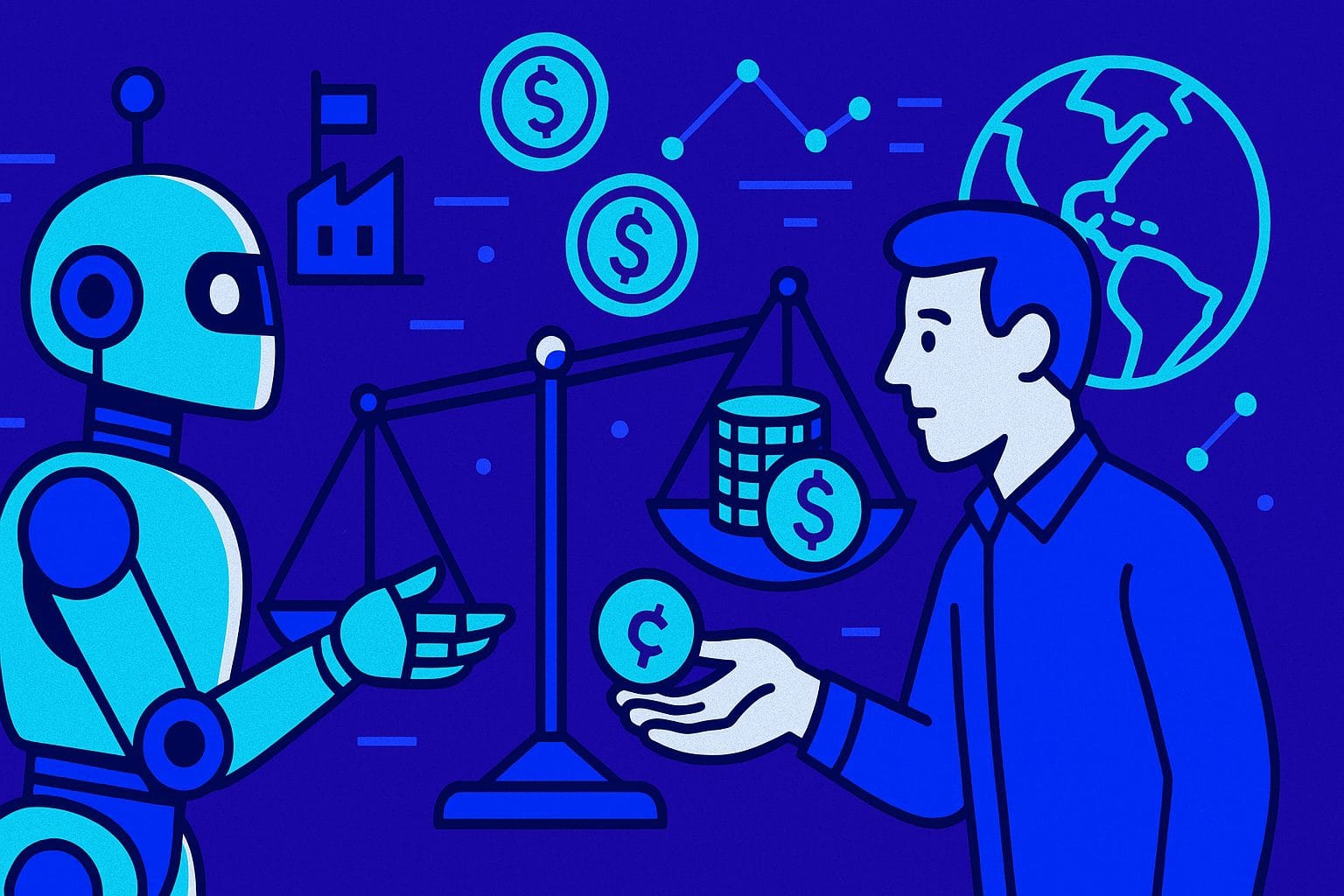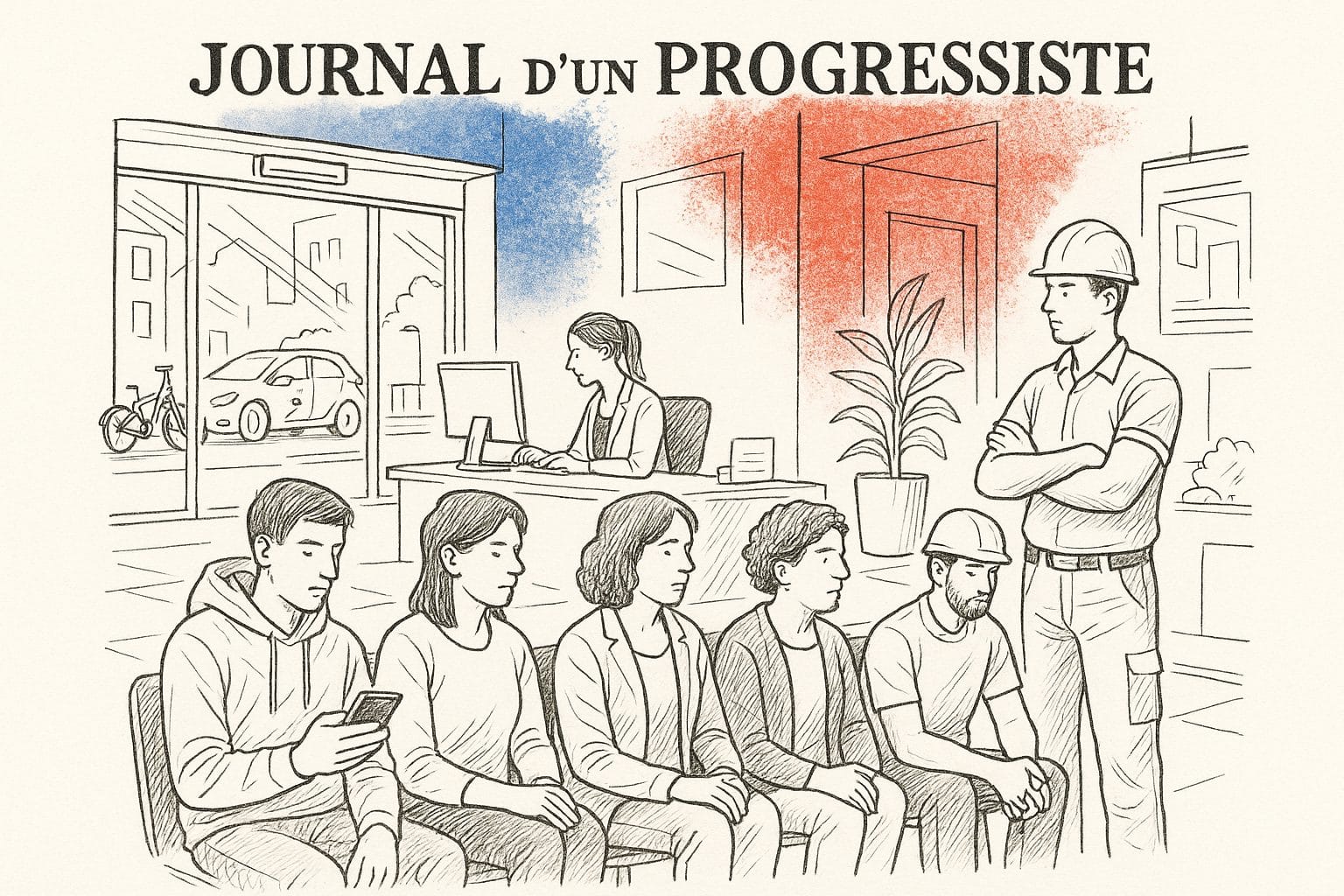
50% of American jobs will be substantially transformed by AI by 2028, but only 10-15% risk being eliminated over five years. This analysis of 165 million jobs by BCG reveals an unexpected reality: artificial intelligence is redesigning work more than it is destroying it. Behind the polarized debate on automation, a silent transformation is underway where tasks evolve massively while positions themselves endure.
This shift is occurring at a new pace. Where previous technological revolutions took decades, AI reshapes professions in two to three years. Between 50% and 55% of jobs should be significantly remodeled by AI in the next two to three years, according to BCG. In contrast, job losses will be more gradual: 10% to 15% of positions should be displaced over a longer horizon.
The Metamorphosis of Tasks, Not the Extinction of Positions
The error lies in confusing task automation with job elimination. This distinction rests on what BCG defines as “remodeling.” Rather than eliminating entire roles, AI changes the composition of work at the task level. Routine or repetitive tasks become increasingly automated, while workers are entrusted with higher-level responsibilities such as supervision, decision-making, and integration of results generated by AI. In practice, this often means that the same job title remains in place, but the expectations attached to it change substantially.
This transformation already touches 43% of American jobs where more than 40% of tasks are automatable, roughly 71 million positions. The remaining 57% depend on physical presence, manual work, or sustained human interaction in ways that current AI cannot replicate.
Goldman Sachs nuances this macroeconomic perspective with more modest projections: AI automation will displace approximately 6-7% of the American workforce over the long term, roughly 11 million workers. A substantial figure but far from the tsunami that has been announced.
Three Models of Professional Evolution Emerge
BCG identifies several categories of professional evolution that are redefining the employment landscape. Some jobs are likely to be substituted, where core tasks are automated and fewer workers are needed. Others will be rebalanced, with AI taking on lower-value work and employees moving toward more complex or creative tasks.
The most revealing category concerns “divergent roles.” In these cases, senior workers will become more productive and take on expanded responsibilities, while entry-level positions will shrink or change in scope. This polarization explains why unemployment among 20-30 year-olds in technology-exposed professions has increased by nearly 3 percentage points since the beginning of 2025, notably higher than for their counterparts in other occupations and for tech workers overall.
The challenge of training becomes critical. If AI systems can handle many routine tasks that traditionally served as training ground for junior employees, organizations may need to rethink how they develop their talent pipelines. The result could be a labor market where experience becomes more valuable but harder to acquire.
The Emergence of “Digital Colleagues”
This transformation masks a deeper shift: the emergence of new models of human-AI collaboration. A similar transformation is already being observed in China where employees train their own AI clones, creating new digital partnerships.
According to the 2026 Futurescape for the future of AI-powered work, approximately 40% of roles in the G2000 will involve direct engagement with AI agents by 2026, fundamentally redefining the structure of entry-level, mid-level, and senior positions. This proportion reveals the scale of a human-machine collaboration that is becoming the norm rather than the exception.
Rather than simply eliminating jobs, generative AI creates new demand in technology-augmented employment. Human-AI collaboration would be the primary driver of this labor market transformation, according to Harvard Business School.
This collaboration redefines the skills sought. The number of skills required for roles subject to automation is decreasing: a 7% reduction in required skills in job postings. Simultaneously, more AI-related skills, such as prompt writing or use of AI tools, are appearing in expanding jobs.
An Invisible Organizational Transformation
The real transformation is taking place in the internal reorganization of companies. Employees of organizations undergoing AI-driven transformation are more worried about job security (46%) than those in less advanced companies (34%). And leaders and managers (43%) are much more likely to worry about losing their job in the next ten years than front-line employees (36%).
The IDC 2025 Employee Experience survey shows that 66% of companies are reducing entry-level hiring as they deploy AI, and 91% report changed or partially automated roles. This contraction in the junior job market structurally transforms career paths.
In parallel, organizations are rethinking their employment models. 41% of global employers plan to use AI to reduce headcount, but the same WEF data shows that 77% of employers aim to train staff to work with AI, and 47% plan to reassign affected employees to other internal positions rather than lay them off.
This apparent contradiction reveals a transformation strategy rather than simple downsizing. BCG warns business leaders who cut their workforce beyond AI’s actual capacity to replace it that they will see productivity drop, institutional knowledge disappear, and critical talent leave. Companies that succeed will reassign roles, not eliminate them.
Unequal Geography of Automation
The impact of AI varies drastically by region and socioeconomic categories. Only 26% of jobs in low-income countries are exposed to AI, compared to much higher rates in advanced economies. This asymmetry is redefining global comparative advantages.
More concerning, automation strikes unevenly by gender. Approximately 59 million women hold jobs highly exposed to AI in the United States, compared to approximately 49 million men. Globally, 4.7% of women’s jobs face high risk of disruption by AI compared to 2.4% for men. In high-income countries, the disparity is more marked: 9.6% of women’s jobs are at highest AI risk compared to 3.2% for men.
This inequality reflects the concentration of women in administrative and customer service roles, precisely those that AI automates most effectively. Legal secretaries (96% women), medical secretaries (94% women), payroll employees (89% women), and receptionists (92% women) all sit at the intersection of high automation risk and limited upward mobility.
The Enigma of Actual Adoption Versus Technological Capacity
A central paradox emerges between technical capacity and effective deployment. McKinsey estimated at the end of 2025 that current technology, what exists now, not future iterations, could in theory automate approximately 57% of current American work hours. This is not 57% of jobs eliminated. It means that within the workforce, more than half of working hours involve tasks that a sufficiently deployed AI system or robotic agent could handle. Deployment is the limiting factor, not capacity.
This distinction illuminates why projections vary so much. The technology already enables massive automation, but organizational adoption, transition costs, and human resistance delay implementation. The McKinsey 2025 workplace survey shows that leaders believe only 4% of employees use AI for 30% or more of their tasks, but the actual figure is closer to 13%. Separately, 20% of leaders expected intensive AI use within a year, while 47% of employees anticipated it themselves. In other words, AI adoption is outpacing leaders’ awareness of it.
Toward Widespread Technological Partnership
This transformation outlines the contours of a new economic model where humans and AI coexist rather than oppose one another. Within five to seven years, AI’s capacity to automate portions of work would be equivalent to adding 16 to 17 million additional workers to the American economy. More than 60% of professions, including nurses, family doctors, high school teachers, pharmacists, human resource managers, and insurance sales agents, will benefit from AI as a tool that amplifies their capabilities.
This vision transcends catastrophic scenarios. Research suggests a more nuanced path than the extremes of media hype: AI has the potential to be a general-purpose technology that increases productivity, reshapes industries, and augments human work rather than replaces it. In short, AI will be neither marginal nor dystopian. Although the potential for job losses exists in more than 20% of professions due to AI-driven automation, the majority of jobs, probably four in five, will result in a mix of innovation and automation.
The question is no longer whether AI will transform work—it already is. The challenge lies in the collective capacity to manage this transformation so that it augments rather than diminishes human opportunities. As illustrated by the automation of scientific research that now allows Kenyan laboratories to rival Harvard, AI can make accessible capabilities previously reserved for the best-equipped.
This silent transformation redefines work without abolishing it. It demands adaptation and training, but promises a future where artificial intelligence amplifies human intelligence rather than substituting for it. The challenge now lies in orchestrating this transition so that it benefits the greatest number.
Sources: