0.1% growth in the first quarter of 2026. Faced with geopolitical turbulence and soaring energy prices caused by the Iranian conflict, Europe displays economic resistance that surprises analysts. While the United States records 2.0% quarterly growth, the eurozone limits the damage and demonstrates the effectiveness of its post-Ukraine diversification strategy.
This modest performance masks a profound transformation. Four years after the Russian shock, Europe has rebuilt its energy and industrial architecture to absorb crises. The 2026 Iranian test validates this mutation: the European economy resists external shocks better than in 2022.
The Essentials
- The eurozone shows 0.1% growth in Q1 2026 despite the Iranian crisis, compared to -0.8% in the same quarter of 2022
- Russian energy imports, which represented 40% of European gas in 2021, fell to zero in 2024
- Germany maintains its industrial production at 98% of its pre-crisis level thanks to energy diversification
- Natural gas prices in Europe peak at 180 euros/MWh in March 2026, but without economic paralysis
Energy Diversification Cushions the Iranian Shock
Europe in 2026 is no longer that of 2022. Imports of liquefied natural gas from America have surged 340% since 2021, reaching 56 billion cubic meters annually according to Eurostat. LNG now represents 45% of European gas imports, compared to 18% before the Russian invasion of Ukraine.
This diversification bears fruit during the Iranian conflict. When Brent prices break through 165 dollars per barrel in February 2026, the impact on European economies remains limited. Germany, the continent’s leading gas importer, maintains its industrial production at 98% of its December 2025 level. France, relying on its renovated nuclear fleet, even records a 0.3% increase in its manufacturing output.
Investments in gas infrastructure explain this resilience. Europe tripled its regasification capacity between 2022 and 2025, bringing the total to 387 billion cubic meters per year. The FSRU floating terminals deployed as emergency measures have become permanent, creating unprecedented supply flexibility.
This strategy is costly. European gas prices peak at 180 euros per MWh in March 2026, four times higher than in the United States. But the European economy absorbs this surcharge without recession, contrary to the catastrophic predictions of 2022.
European Industry Recomposes Its Energy Geography
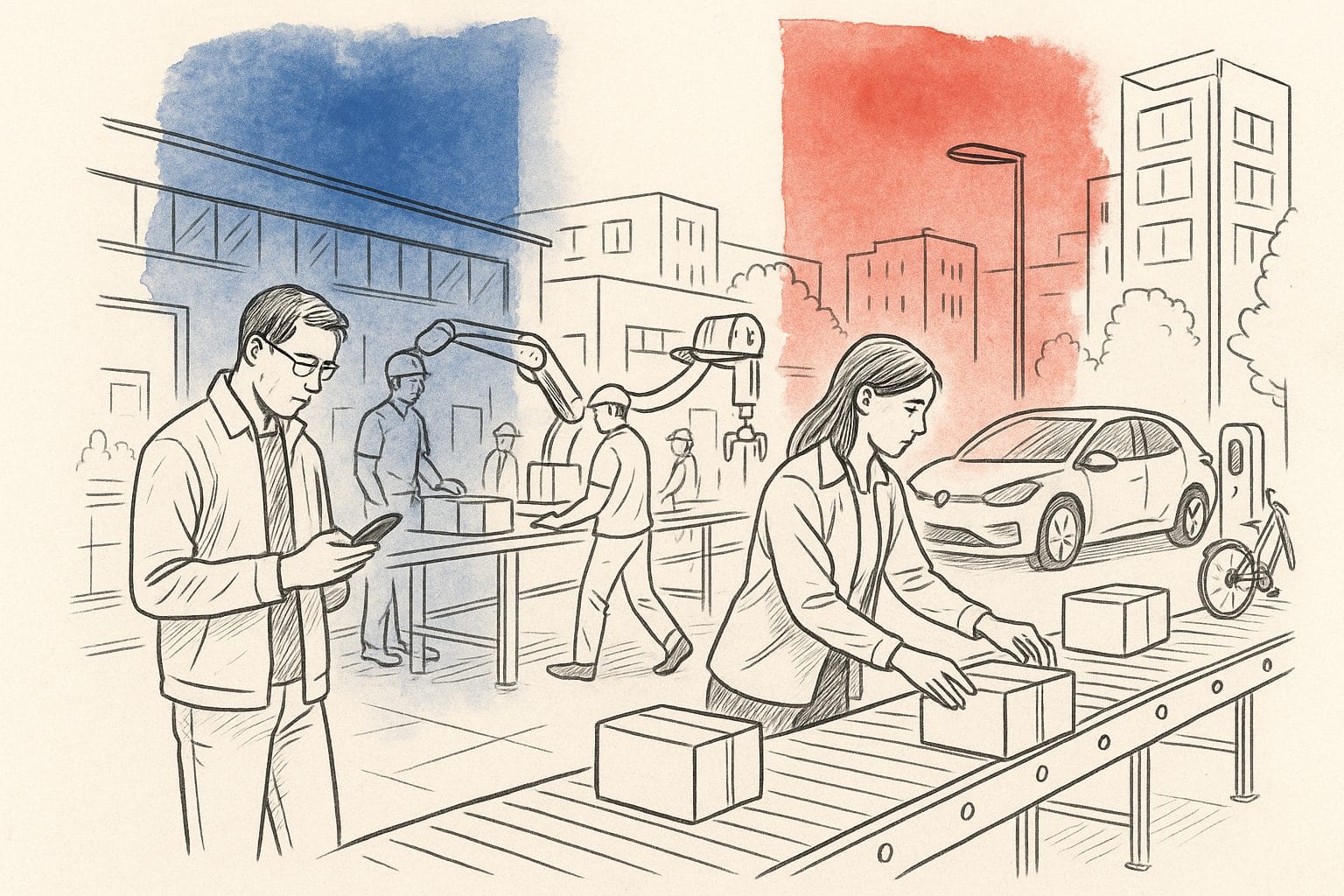
The Iranian crisis reveals European industry transformed. Energy-intensive sectors have relocated their activities or rethought their processes. German chemical industry, symbol of dependence on cheap Russian gas, has reduced its energy consumption by 28% since 2021 according to the VCI association.
This forced sobriety stimulates innovation. BASF announces in January 2026 a 4.2 billion euro investment in its European sites to electrify its chemical processes. ThyssenKrupp accelerates its transition toward green hydrogen with two new production sites planned for 2027. The European steel industry reduces its CO₂ emissions by 18% in 2025, an unmatched performance.
Relocations multiply. ArcelorMittal transfers 15% of its European production to its American and Brazilian sites, but compensates by modernizing Dunkirk and Ghent. This geographic recomposition preserves European industrial employment, stable at 34.2 million jobs at the end of 2025.
Textiles and automobiles adapt differently. Stellantis concentrates its European production on high-end electric vehicles, abandoning low-end thermal models to its Mexican and Turkish plants. This move upmarket compensates for the rise in energy costs through better margins.
The price effect paradoxically stimulates competitiveness. European companies that survive energy shocks emerge more efficient. Industrial productivity advances 2.8% in 2025, partially catching up with the American lead.
Energy Autonomy Advances Quietly
Europe now produces 47% of its electricity from renewable sources, compared to 38% in 2021. This 9-point progression in four years changes the geopolitical equation. Offshore wind reaches 87 gigawatts installed by the end of 2025, exceeding the 60 GW target set for 2030.
Photovoltaic solar is literally exploding. Europe adds 73 GW of solar capacity in 2025, an absolute record according to SolarPower Europe. Spain and Italy lead this race, but Germany surprises with 18 GW installed despite modest sunshine. Industrial and residential roofs are covered with panels at an unprecedented pace.
This renewable power surge transforms European exchanges. Spain exports 34 TWh to France in 2025, a historic record. Portugal irrigates Spain with its wind and solar surplus. These South-North flows reverse traditional energy geography.
Storage accompanies this mutation. Europe totals 24 GWh of installed batteries by the end of 2025, five times more than in 2022. Tesla deploys its Megapacks in fifteen European countries. Northvolt delivers its first stationary batteries produced in Sweden. This storage capacity smooths intermittency and secures supply.
Green hydrogen emerges as an industrial solution. Europe produces 2.4 million tons of renewable hydrogen in 2025, exceeding its targets. Spain concentrates 40% of this production, exporting to Germany via the H2Med pipeline under construction. This sector already employs 127,000 people in the Union.
The Social Costs of Resilience Remain High
This economic performance masks persistent social tensions. European households dedicate 14.2% of their budget to energy in 2025, compared to 9.8% in 2019. This increase hits unevenly: 23% of German households experience energy poverty, defined by an energy effort rate exceeding 10%.
Electricity-intensive companies migrate to countries with lower energy costs. European aluminum loses 340,000 tons of capacity between 2022 and 2025, relocated to Canada and Norway. This selective deindustrialization preserves total employment but impoverishes the industrial fabric.
Governments compensate through massive aid. Germany spends 64 billion euros in 2025 to support businesses and households facing energy costs. France mobilizes 31 billion through its expanded price shield. These expenditures widen public deficits: Germany reaches 3.8% deficit in 2025, France 4.9%.
Territorial disparities intensify. Industrial regions in northern France and western Germany accumulate factory closures and energy poverty. Metropolises resist better thanks to services and skilled jobs. This two-speed geography fuels political tensions.
Energy inflation weighs on purchasing power. Despite general inflation contained at 2.4% in the eurozone, energy shows +18% year-on-year. Middle classes reduce their consumption: -8% for home heating, -12% for car travel according to Eurostat.
Europe Tests Its Energy Sovereignty Against Global Instability
The Iranian conflict constitutes a full-scale test for the European strategy. Unlike 2022, Europe no longer suffers energy blackmail. Its diversified supplies and strategic reserves allow it to navigate geopolitical turbulence.
This relative independence costs dearly. European gas prices remain structurally higher than American or Asian prices. But Europe accepts this sovereignty premium, considering that supply security justifies this surcharge.
Energy alliances strengthen. The transatlantic LNG agreement guarantees 67 billion cubic meters annually until 2030. The Mediterranean partnership with Algeria and Egypt secures 45 billion additional cubic meters. These long-term contracts stabilize supplies despite crises.
Europe simultaneously accelerates its transition toward renewables. The REPowerEU plan, endowed with 300 billion euros, targets 65% renewable energy by 2030. This race against time must definitively free Europe from fossil fuel imports by 2035.
European resilience remains fragile. A prolonged Middle East conflict could exhaust European gas stocks by winter 2026-2027. Renewable capacities advance quickly, but not fast enough to offset a major supply crisis.
Europe in 2026 has demonstrated its capacity for adaptation facing geopolitical shocks. Its 0.1% growth in the first quarter, modest but positive, validates four years of massive investments in energy diversification. This resilience costs businesses and households dearly, but it guarantees strategic autonomy unthinkable in 2021. The real test will come if global geopolitical tensions amplify: will Europe maintain this performance when its new foundations are subjected to even more violent shocks?