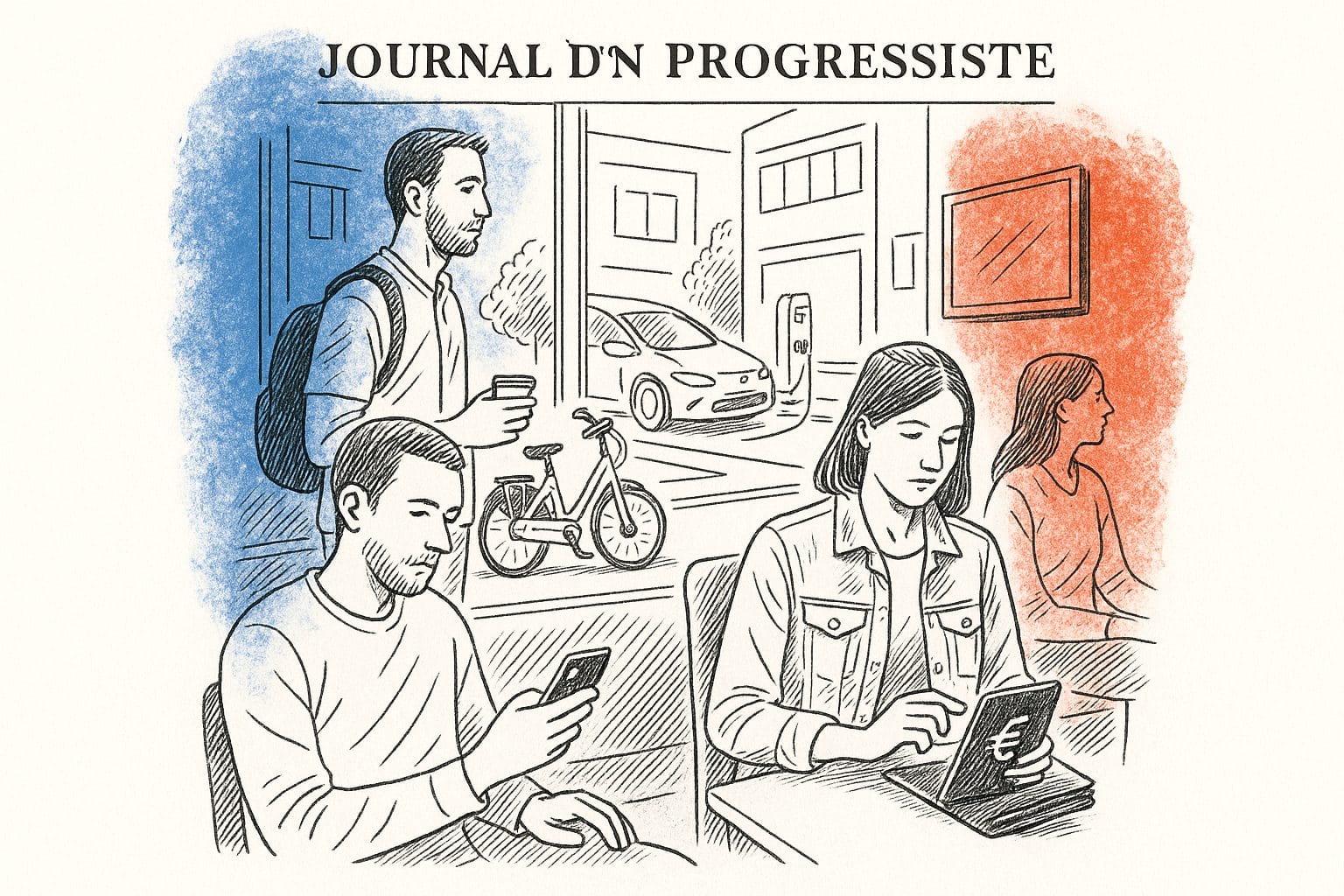
The use of strong authentication on European participatory democracy platforms has experienced significant growth since 2020. This expansion is transforming citizen consultations into critical digital infrastructure, but raises questions about equal access to democratic participation.
Digital identity becomes the key to civic participation
Significant growth in four years: strong authentication is establishing itself as the standard for European participatory platforms. SSO (Single Sign-On) and eID (electronic Identity) systems now allow citizens to participate in public consultations with their certified digital identity, eliminating multiple registrations and duplicate voting.
Estonia is leading the way with its 1.3 million digital identity cards used for 99% of public services. France follows with FranceConnect, which authenticates 40 million users across 1,400 public services. Germany is rolling out its eID system across 16 Länder, reaching 83 million inhabitants.
This standardization addresses a concrete need: guaranteeing the authenticity of participants without compromising the anonymity of contributions. Platforms can thus verify that a citizen actually resides in the municipality being consulted without knowing their real identity.
Public consultations migrate toward fully digital systems
A growing number of European citizens are now participating in authenticated consultations, revealing a profound transformation: civic participation is becoming predominantly digital.
The CitizenLab platform handles 850 active consultations in 150 European cities. Decidim, developed in Barcelona, drives 400 participatory processes in 12 countries. These tools allow municipalities to consult their residents on participatory budgets, development projects, or local public policies.
Strong authentication changes the game. It eliminates fake accounts that plagued unsecured consultations, where up to 30% of contributions came from non-resident users. The result: elected officials now grant institutional credibility to digital results, equivalent to physical citizen assemblies.
The digital divide redefines democratic exclusion
A significant proportion of Europeans over 65 do not master strong authentication. This data reveals a new form of civic exclusion: digital illiteracy. When consultations migrate online, a portion of the population mechanically loses its voice.
The effect is measured in the sociological composition of participants. Authenticated consultations attract a majority of higher education graduates and workers under 50. Retirees, the non-educated, and precarious populations disappear from participatory samples.
Some cities compensate with hybrid systems. Ghent maintains physical offices where municipal staff record oral contributions from unconnected citizens. Helsinki deploys digital mediators in working-class neighborhoods. But these costly systems remain marginal: only 23 European cities out of 400 offer a non-digital alternative to authenticated consultations.
Artificial intelligence automates the processing of contributions
Strong authentication generates a significant volume of citizen contributions—substantial growth since 2020. This deluge makes traditional manual processing by municipal services impossible.
AI emerges as the solution. Natural language processing algorithms automatically analyze, classify, and synthesize contributions in real time. They identify recurring proposals, detect emerging consensus, and flag points of tension.
This automation transforms the role of elected officials and civil servants. Instead of reading 3,000 comments on a development project, they consult a dashboard presenting five main themes, fifteen concrete proposals, and three major objections. The technology filters and prioritizes citizen voices before they reach decision-makers.
But this algorithmic mediation raises unprecedented questions. How can we ensure that AI does not bias the representation of opinions? Who controls the classification criteria? Asia is already widening the technological gap with the West in these areas critical to democracy.
Brussels harmonizes European standards for democratic identity
The European Union is standardizing democratic authentication with the eIDAS 2.0 regulation, which entered into force in 2024. This legal framework imposes interoperability of digital identity systems between the 27 member states, allowing a Lithuanian citizen to participate in a consultation of their municipality of residence in Belgium.
A large majority of European participatory platforms are now eIDAS-compatible. This technical harmonization facilitates cross-border participation but also strengthens state surveillance of civic engagement. Each authentication leaves a digital trace that authorities could theoretically exploit.
The European paradox crystallizes: more technical security enables more legitimate participation, but less anonymity. Citizens accept this equation because it guarantees that their contributions will not be drowned out by external manipulation or automated campaigns.
Toward algorithmically-assisted citizenship
European participatory democracy is entering its industrial phase. Strong authentication stabilizes the legitimacy of digital processes, while AI automates their exploitation. This infrastructure makes it possible to imagine permanent consultations on all public policy issues.
Several municipalities are already testing “liquid democracy”: citizens can delegate their vote on each issue to the expert or elected official of their choice, revoking this delegation at any time. Madrid is experimenting with a system where 500,000 inhabitants can redirect 10% of the municipal budget through continuously authenticated votes.
This evolution questions traditional representation. If citizens can express themselves directly and permanently on all public decisions, what remains of the role of elected officials? The technology democratizes access to public decision-making for those who master its codes, while silently excluding others.
Strong authentication solves the technical problem of massive digital participation. It creates a new one, sociological: a two-speed democracy between connected citizens and analog citizens.
Sources