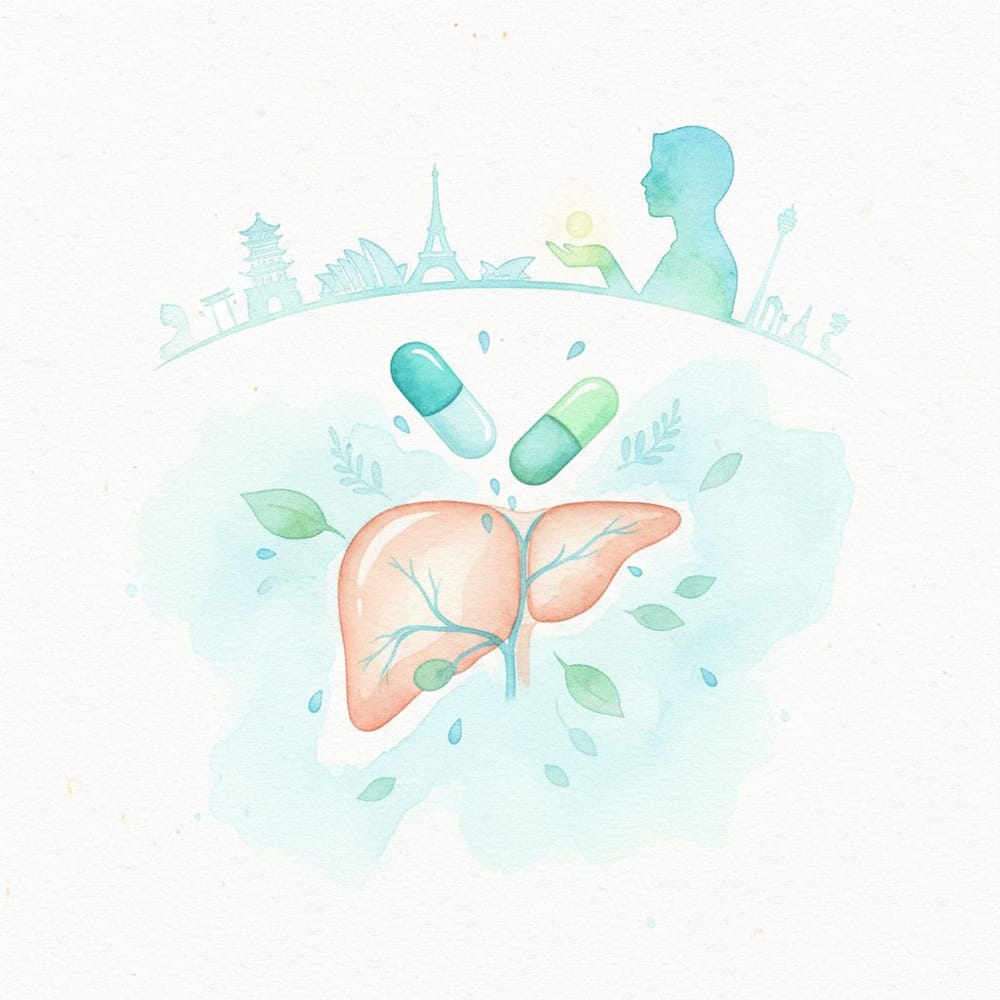
One in four adults worldwide has a sick liver. This silent epidemic reveals the scale of a health crisis that our era is methodically manufacturing. More than half of the 2.9 trillion dollars distributed to shareholders of major food companies between 1962 and 2021 came from ultra-processed food manufacturers. The equation is simple but relentless: we create our own poisoners and allow them to prosper from our diseases.
The Shocking Reality: An Epidemic We Built
From 500 million patients in 1990, we have risen to 1.3 billion in 2023. By 2050, projections estimate 1.8 billion cases, an additional 42% increase. This explosion now affects populations that do not correspond to classic risk criteria, including patients with normal weight.
The disease establishes itself without fever, without pain, without specific symptoms. This silent characteristic explains why 25 to 30% of adults suffer from fatty liver, but fewer than 5% know they have a chronic liver disease. This invisibility makes the condition particularly insidious: the absence of warning signs masks a process that can degenerate into inflammation, fibrosis, cirrhosis, or even liver cancer.
An increasing number of young people are now being diagnosed. Fatty liver has become the most common pediatric liver condition, affecting nearly 8% of children and adolescents and more than 34% of obese children in the United States. Afghanistan tragically stands apart: it is the only country where youth literacy rates are declining, falling from 47% in 2018 to 43% in 2024.
The Culprits: The Food Industry and the Machinery of Addiction
Behind this mass production lies giants of the food industry with every incentive to see ultra-processed food consumption persist. High consumption of ultra-processed foods is not merely the result of individual choices, but also the product of a food system dominated by large multinational corporations that influence food supply, advertising and marketing, public policy, and scientific research.
They represent nearly 8 out of every 10 products on grocery shelves. This industrialization of food is no accident: it generates enormous profits by creating food dependency. Among the main beneficiaries are Nestlé, PepsiCo, Unilever, and Coca-Cola, among others, with some having “doubled or tripled” their margins during this period.
In countries like the United States, the United Kingdom, and Australia, more than half of daily caloric intake now comes from ultra-processed foods. In France, ultra-processed foods represent approximately 35% of our caloric intake (and up to 60% in the United States). On average, children who are active on social media see 111 junk food ads per week, or 5,772 incitations per year to consume foods too high in fat, salt, and sugar.
To maintain their influence, these companies follow a well-worn strategy, an operational manual we have already observed in the tobacco industry. Coca-Cola, Nestlé, and other food giants engage in corporate propaganda by sponsoring sporting events and major exercise programs to divert attention from the impacts of their products.
The ultimate paradox? The investigation reveals that over the past twenty years they have invested in nearly 90 companies in the pharmaceutical, dietary supplements, or weight loss fields, supposedly designed to combat effects—obesity, diabetes, cancer risk, or intestinal disease—increasingly linked by studies to the ultra-processed foods they market. In concrete terms, Nestlé overexposes us to ultra-processed foods, and finances our weight loss program.
The Economic and Social Consequences: A Financial Abyss
According to recent estimates, the total cost of obesity in France was evaluated at approximately 12.7 billion euros in 2024. This cost could reach 15.4 billion euros by 2030 if current trends persist. The medico-socio-economic cost of obesity represents 20 billion euros for patients, complementary health insurance organizations, public authorities, and businesses in 2024. The effects of the disease on the world of work in 2030 are expected to reach 10.0 billion euros.
According to the annual report from the UN’s Food and Agriculture Organization (FAO) published on November 8, 2024, this diet entails hidden health costs totaling 8.1 trillion dollars. Overweight is responsible on average for 70% of all diabetes treatment costs, 23% of cardiovascular disease costs, and 9% of cancer costs in the 36 member countries of the Organization for Economic Cooperation and Development.
With 7.2 million pathologies, treatments, or other health events and 68,000 deaths attributable to obesity in France each year, this disease generated nearly 2 billion euros in losses in 2024 for employers and health insurance in relation to absenteeism, disability, and deaths of working-age people. Socio-economic compensation expenses for conditions caused by obesity and paid by health insurance reach 820 million euros per year.
Social inequality amplifies these costs. In 2024, 273,100 women are unemployed because of their obesity situation in France. The estimated cost of this exclusion amounts to 2.7 billion euros in public spending per year and 2.6 billion euros in lost income for women. The cost related to wage discrimination and exclusion of women with obesity stands at 7.1 billion euros in 2024.
As long as ultra-processed products, loaded with sugar, fat, and salt, remain cheaper than healthier products, it is an illusion to believe that the most disadvantaged households will change their consumption habits. A recent Foodwatch survey shows that the cheapest products are by and large much sweeter than the most expensive products. Distributor brand products are most affected.
What We’re Doing: Between Medicines and Real Solutions
Two medications mark 2026. The first specific treatment for fatty liver approved by the FDA and new molecules confirm therapeutic advances. But these innovations mask a fundamental question: should we treat the consequences or attack the causes?
Real solutions exist and work. By increasing taxes on products like tobacco, sugary beverages, and alcohol, governments can reduce consumption of harmful products and free up resources for essential health services. The soda tax exists in at least 108 countries in 2023, with 105 of these countries applying their tax to sugary carbonated beverages.
Obesity prevention is worthwhile: each dollar spent generates up to six dollars in return on investment, according to OECD analyses. The OECD suggests that a 20% reduction in calories contained in foods high in sugar, salt, calories, and saturated fats could prevent 1.1 million cases of chronic disease per year by 2050.
To reduce the social security deficit, parliament members have adopted several amendments aimed at taxing certain at-risk products such as alcohol, sugary beverages, or advertising. With regard to sugar, the Commission has adopted a new tax on processed food products containing added sugars. Its amount will vary according to sugar content.
The “3 by 2035” initiative, launched in 2025, aims to increase real prices for tobacco, alcohol, and sugary beverages by “at least 50% by 2035” through taxation. As part of its new “3 by 2035” initiative, the WHO calls on countries to raise their taxes and rethink them. This initiative aims to increase the real price of three products (tobacco, alcohol, and sugary beverages) by 2035 to make them less affordable.
Food education and prevention remain essential. Lifestyle change measures, including 7 to 10% weight loss, can significantly improve inflammation. This involves a balanced diet rich in fruits, vegetables, and fiber, and low in added sugars and ultra-processed products.
Perspective: Fatty Liver Disease as a Mirror of Our Societal Choices
Fatty liver reveals our era: a civilization that massively produces pathologies it then claims to cure. Most people with the disease die from cardiovascular disease rather than liver disease, revealing the scale of systemic damage. Fatty liver becomes the visible marker of generalized metabolic collapse.
This progression is linked to “a sharp increase in obesity” because this chronic disease increases the incidence of cardiovascular disease. Obesity has thus “completely nullified the positive impact of reductions in air pollution, smoking, alcohol consumption, and sedentary behavior since 2010.”
This crisis far exceeds the medical framework. Tobacco, alcohol, and obesity are responsible for 137,000 premature deaths per year in France. Added to public health concerns are consequences for public finances. Without coordinated action, fatty liver disease could become one of the great health challenges of the century.
Humanity manufactures its own poisons and discovers their antidotes too late. Between treating and preventing, we must choose. Between allowing the food industry to poison us so it can better sell us its remedies, or regaining control of our diet and collective health. Humanity’s fatty liver is merely the visible symptom of a society that has abdicated its responsibility in the face of merchants of disease.