AI Outperforms Traditional Teaching According to Harvard Study
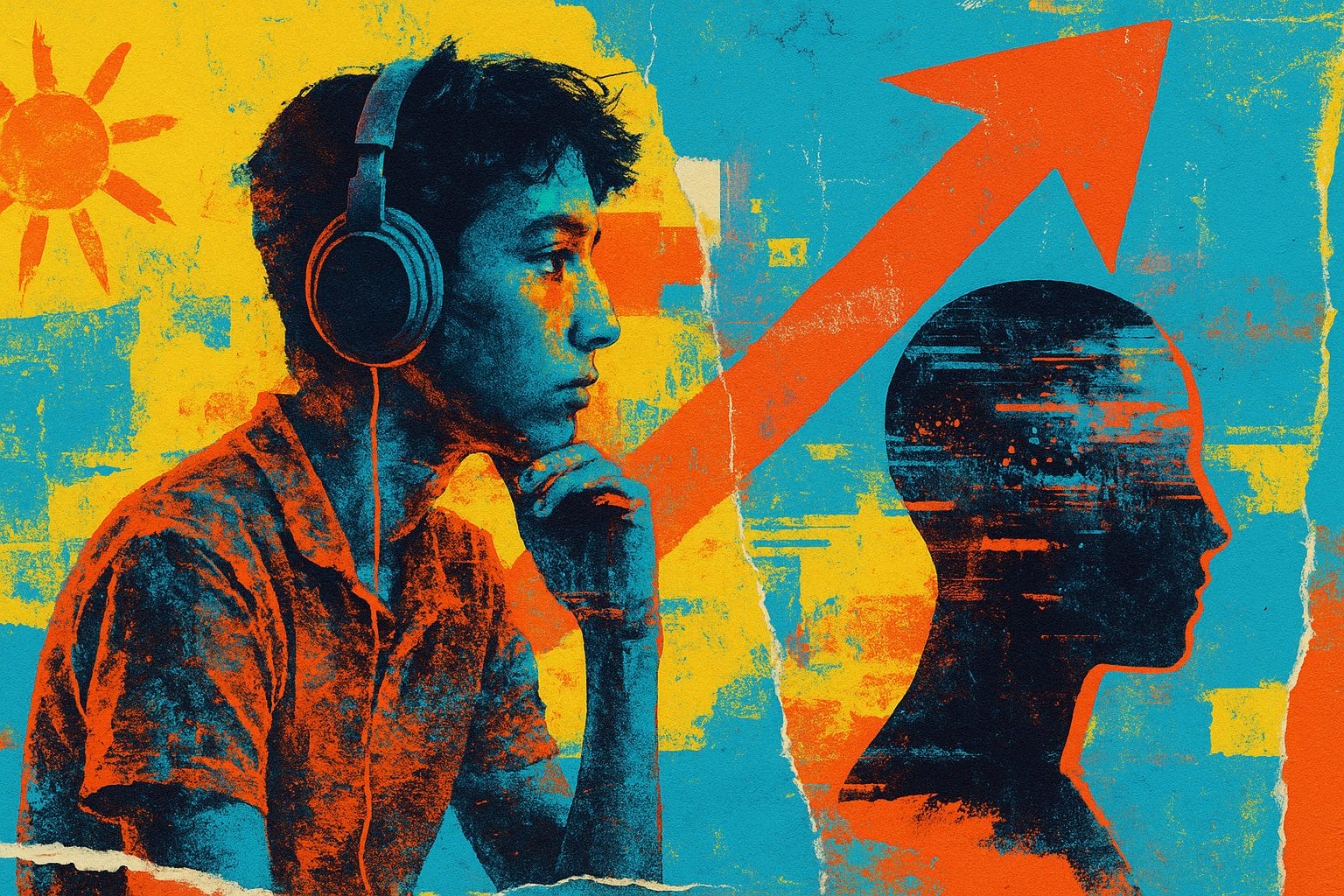
A randomized controlled trial conducted at Harvard reveals that students learn twice as much with an AI tutor than in active classroom learning, while spending 20% less time on lessons. This study published in Nature Scientific Reports marks a turning point in the scientific evaluation of educational artificial intelligence.
The experiment compared 194 students in a physics course at Harvard, some using a personalized AI tutor from their dorm room, others attending a traditional active learning classroom course in person. The results challenge the pedagogical hegemony of face-to-face instruction and raise a fundamental question: if AI optimizes knowledge acquisition, what becomes of critical thinking development in higher education?
Harvard Scientifically Measures the AI Advantage
The AI tutor developed by Professor Greg Kestin’s team follows the same pedagogical principles as in-person courses. Unlike standard ChatGPT, this system is programmed to be concise, reveal only one step at a time, and encourage students to think before providing the answer.
Learning gains are twice as high with AI, particularly effective when introducing new concepts. Students also report greater engagement and motivation than in traditional classrooms, an unexpected result according to researchers who expected efficiency equivalent at best.
The experiment faithfully reproduces Harvard’s active learning method: students work on the same activities and the AI tutor provides the same feedback as planned in class. This methodological rigor distinguishes this research from previous studies on AI tutors.
AI Personalization Surpasses Group Effect
The AI tutor’s success rests on its ability to adapt to individual pace: in traditional classroom settings, some students struggle to keep up while others become bored, but AI responds to questions in real time and guides each student individually.
This individualization reproduces the performance of individual human tutoring, as demonstrated by a meta-analysis from Steenbergen-Hu & Cooper analyzing nearly 40 studies: AI tutors enable students to outperform 75% of those receiving conventional instruction.
The example of Carnegie Mellon’s Cognitive Tutor illustrates this effectiveness: in a study involving 470 students, those using it achieved 15-25% better results on standardized tests and 100% better performance in solving algebra problems.
AI continuously analyzes data to identify each student’s learning style, strengths and areas for improvement, then adapts tests in real time to better measure actual abilities.
Global Adoption Accelerates Despite Resistance
In China, the integration of educational AI benefits from strong government support through platforms like Squirrel AI, which provides personalized tutoring to millions of students. Large-scale studies show 20% improvements in mathematics compared to traditional instruction.
In Ghana, the AI tutor Rori, accessible via WhatsApp, generates learning gains equivalent to an additional school year for just 5 dollars per student per hour of weekly use. This economic accessibility democratizes access to quality tutoring in resource-limited regions.
The World Bank and Stanford confirm this cost-effectiveness: AI tutoring platforms represent promising candidates for large-scale deployment, particularly in countries facing teacher shortages and high attrition rates.
Cognitive Offloading Dangers Raise Concerns
A study involving 666 participants reveals a significant negative correlation between frequent use of AI tools and critical thinking abilities, with cognitive offloading serving as a mediating factor. Research from the University of Pennsylvania with Turkish high school students shows that those using ChatGPT answer 48% more problems correctly but score 17% lower on conceptual understanding tests.
Cognitive offloading involves using external tools to reduce cognitive load on working memory. While freeing mental resources, this practice can lead to declining cognitive engagement and skill development.
Unlike a calculator that offloads specific tasks, AI can offload entire cognitive processes: comprehension, information synthesis, and even aspects of critical thinking. The effect on learning is substantial with a medium to large average effect size.
Some studies report that excessive reliance on AI can reduce critical thinking, creativity, and autonomous problem-solving. Others find only modest gains compared to traditional instruction, or even no significant improvement.
Digital Equity Remains a Major Challenge
Approximately 15% of American children—tens of millions of students—still lack reliable internet access at home, with the gap concentrated disproportionately in low-income, rural, and tribal communities.
A student in a well-funded suburban district benefits from an AI tutor that adapts to their pace, but a student in an underfunded rural or urban district may lack reliable home internet or attend a school unable to afford licenses.
AI systems can perpetuate and amplify biases present in their training data. If AI tools evaluate student work, learners from marginalized backgrounds risk being unfairly disadvantaged by the reinforcement of stereotypes or discriminatory algorithms.
Learners in wealthy countries where these tools are developed benefit more from educational AI than those in poor and marginalized regions, this injustice rooted in structural inequities decades old.
The pedagogical effectiveness of AI tutoring now rests on solid scientific evidence. But its equitable deployment demands constant vigilance against risks of cognitive offloading and worsening digital inequality. The issue is no longer whether AI can teach, but how to preserve learners’ intellectual autonomy in a world where technical efficiency might take precedence over critical thinking development.
Sources: