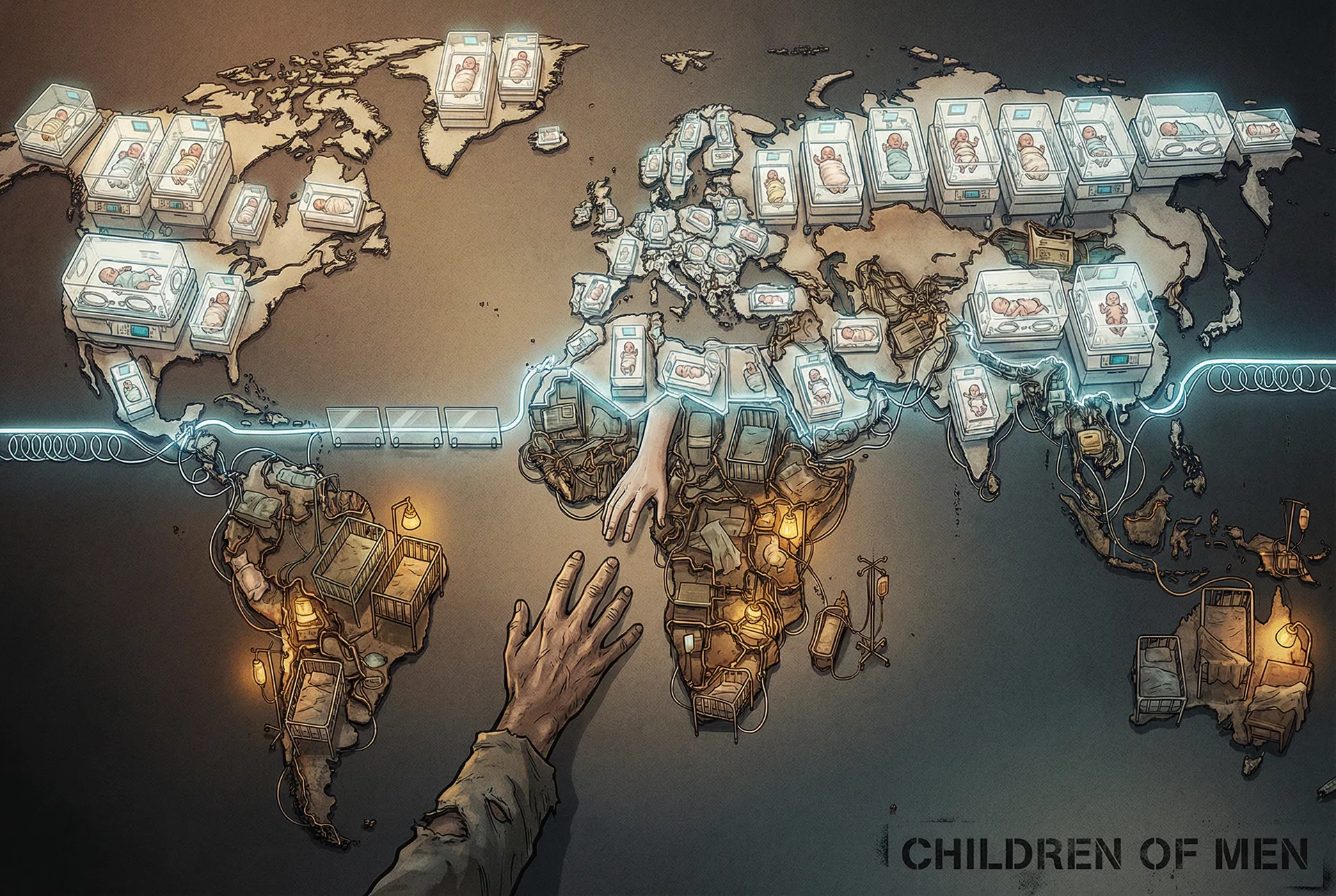
After decades of consistent progress that saved millions of lives, the reduction of infant mortality worldwide is losing momentum. The most recent data, published in 2026, indicates a concerning slowdown that threatens to erase years of effort and leave millions of children behind. This indicator, considered a barometer of global health and social development, reveals the deep fractures in our world. Far from being inevitable, this stagnation results from a convergence of factors: persistent socio-economic inequalities, structurally weak health systems, the consequences of political instability, and the shock wave from the COVID-19 pandemic.
A 60% Decrease Since 1990: A Historic Achievement Under Threat
The figures published by the United Nations Inter-agency Group for Child Mortality Estimation (IGME) paint a mixed picture. In 2024, the world mourned the loss of 4.9 million children under five years old. Added to this tragic toll are 2.1 million deaths of older children, adolescents, and young people, bringing the total number of lives cut short prematurely to 7 million. These numbers, though unbearable, reflect historic improvement. Since 1990, the under-five mortality rate has dropped by 60%, falling from 93 to 37 deaths per 1,000 live births. This victory, one of the greatest public health achievements of our time, is the result of global commitment to vaccination, the fight against infectious diseases like HIV/AIDS and malaria, and improved access to primary care and nutrition.
However, this positive momentum is dangerously weakening. The annual rate of reduction in under-five mortality has considerably slowed, dropping from 3.8% per year between 2000 and 2010 to just 2.1% between 2015 and 2024. This decline directly jeopardizes achieving target 3.2 of the Sustainable Development Goals (SDGs), which aims to reduce neonatal mortality to a maximum of 12 per 1,000 live births and under-five mortality to 25 per 1,000 by 2030. IGME projections are alarming: if current trends continue, 59 countries will not reach the target for under-five mortality, and 64 countries will miss the neonatal mortality target. In total, it is estimated that 27.3 million children under five will die between 2025 and 2030—largely preventable deaths. A child’s survival should not be a lottery determined by their place of birth.
Geographic Inequality: The Primary Risk Factor
The burden of infant mortality is unevenly distributed, concentrated disproportionately in two regions: sub-Saharan Africa and South Asia. These two areas account for more than 80% of child deaths on the planet. Sub-Saharan Africa alone bears the heaviest burden, with 57% of global deaths in 2024, while representing only 30% of live births. The under-five mortality rate there is the highest in the world, with 73 deaths per 1,000 live births. Concretely, a child born in this region is 15 times more likely to die before their fifth birthday than a child born in a high-income country in Europe or North America.
This health divide is even more pronounced in contexts of fragility and conflict. In 2021, the mortality rate in countries affected by armed conflict reached 75 per 1,000 live births, three times higher than in nations at peace. Countries like Chad, Niger, Nigeria, or Somalia display some of the highest rates in the world. Political instability, destruction of health infrastructure, flight of medical personnel, and population displacement undermine the foundations of health systems, depriving children and their mothers of access to the most basic care, from vaccination to malnutrition treatment. Pregnant women cannot access prenatal care, deliveries occur without skilled assistance, and newborns do not receive essential care for their survival. Beyond conflicts, inequalities within countries themselves are glaring. Children born in rural areas and the poorest households have a significantly higher risk of death than those in urban areas and wealthy families.
Prematurity, Infections, and Malnutrition: The Lethal Trio
The causes of death vary by age, but a clear pattern emerges. During the neonatal period (the first 28 days of life), which accounts for 2.3 million deaths—nearly half of all deaths before age five—the main threats are prematurity, birth-related complications (such as birth asphyxia), and neonatal infections (sepsis, meningitis). A premature newborn is particularly vulnerable because their organs are not fully developed, making them susceptible to respiratory difficulties, cerebral hemorrhages, and infections. These deaths are mostly preventable through quality care: adequate prenatal monitoring to detect and manage risks (hypertension, maternal infections), delivery assisted by qualified personnel, and attentive postnatal care for mother and newborn, including skin-to-skin contact (kangaroo method) and breastfeeding support.
For children aged 1 to 59 months, infectious diseases remain the primary killers. Pneumonia, diarrhea, and malaria form a deadly trio, responsible for nearly one-third of deaths in this age group. Pneumonia remains the leading infectious cause of mortality, often due to lack of rapid diagnosis and access to simple antibiotics like amoxicillin. Diarrhea, easily treatable with oral rehydration salts (ORS) and zinc, continues to kill hundreds of thousands of children each year, primarily due to insufficient access to clean water and sanitation. Their impact is often multiplied tenfold by malnutrition. A malnourished child has a weakened immune system, making them more vulnerable to infections and less able to recover. In 2024, more than 100,000 children died from direct consequences of severe acute malnutrition, but this figure represents only the tip of the iceberg. Malnutrition, in its various forms (stunting, wasting), actually contributes to nearly 45% of all deaths of children under five, creating a devastating vicious cycle where disease and malnutrition mutually reinforce each other.
The Pandemic’s Shock Wave on Child Health
The COVID-19 pandemic exerted considerable pressure on health systems worldwide, with potentially devastating indirect consequences for child survival. While the virus itself relatively spared the youngest, disruptions to essential health services posed a major threat. Reallocation of medical personnel, supply disruptions for medicines and vaccines, and populations’ fear of attending health centers led to a decline in coverage of vital services.
UNICEF sounded the alarm about the pandemic’s cascading effects. Routine vaccination campaigns, one of the most effective public health tools, were severely disrupted. An estimated 67 million children missed vaccinations between 2019 and 2021, leaving them exposed to deadly diseases like measles, diphtheria, or tetanus. This vaccination setback, the largest in 30 years, threatens to trigger new epidemics. Similarly, access to prenatal and postnatal care was reduced, and food insecurity increased due to household income loss. While consolidated data for 2020 and 2021 did not show a global statistical increase in infant mortality, caution remains warranted. The long-term effects of these disruptions, particularly vaccination delays and increased poverty, may only appear later, highlighting the need for continued surveillance and massive reinvestment in primary health services.
Proven Solutions for a Profitable Investment
The slowing of progress is not inevitable. Solutions to accelerate the reduction of infant mortality are known, effective, and often inexpensive. They rely on strengthening primary health systems to ensure a continuum of care from pregnancy through childhood. This includes universal access to quality prenatal care, the presence of qualified health personnel (midwives, nurses) at every delivery, postnatal care for mother and baby, and promotion of exclusive breastfeeding during the first six months.
The fight against infectious diseases involves expanding vaccination coverage, access to clean water and sanitation, and distribution of insecticide-treated bed nets to prevent malaria. Integrated Management of Childhood Illness (IMCI), a strategy developed by WHO and UNICEF, has proven effective in improving diagnosis and treatment of common conditions at the community level by trained health agents. Simultaneously, fighting malnutrition requires a multisectoral approach, combining direct nutritional interventions (vitamin A supplements, ready-to-use therapeutic foods), support for local agriculture to diversify diets, and social protection programs for the most vulnerable families.
To these proven approaches are added promising innovations. Telemedicine allows community health workers to connect with distant experts for complex diagnoses. The use of drones for vaccine or medicine delivery to remote areas is beginning to be successfully deployed in countries like Rwanda or Ghana. Mobile applications help mothers and health workers track child growth and vaccination schedules. These tools do not replace physical infrastructure and personnel, but they can improve their efficiency and reach.
A Moral Imperative, A Collective Responsibility
Reducing infant mortality is not just a development objective; it is a moral imperative. Each child’s death is a tragedy that could have been prevented. The current slowdown in progress is an alarm signal that challenges the international community. The gains so hard-won are fragile, and inaction will be paid for in millions of lost lives. Political and financial commitment is the cornerstone of any sustainable progress. Governments of the most affected countries, with technical and financial support from international partners, must make maternal and child health an absolute national priority. This requires increasing national health budgets, better governance, and fighting corruption that sometimes plagues health systems. Investing in a child’s health means investing in a nation’s human capital and in a more just and prosperous future for all. The battle is far from won, and it demands renewed and unwavering commitment.
Receive Journal analyses directly in your mailbox.
Also Read

China’s CO2 emissions have stagnated for 21 months: structural peak or cyclical accident?
China’s CO2 emissions fell by 0.3% in 2025. It’s a modest figure. But it extends a trend that has lasted for 21 consecutive months: since March 2024, emissions from the world’s largest polluter have been “stable or declining.”

AI and employment: two March 2026 studies reveal -13% automatable job postings and +20% augmented roles
Does AI destroy jobs? Two studies published in March 2026—one by Harvard Business School, the other by Anthropic—provide the first solid empirical data. And the answer is more nuanced than public debate suggests.
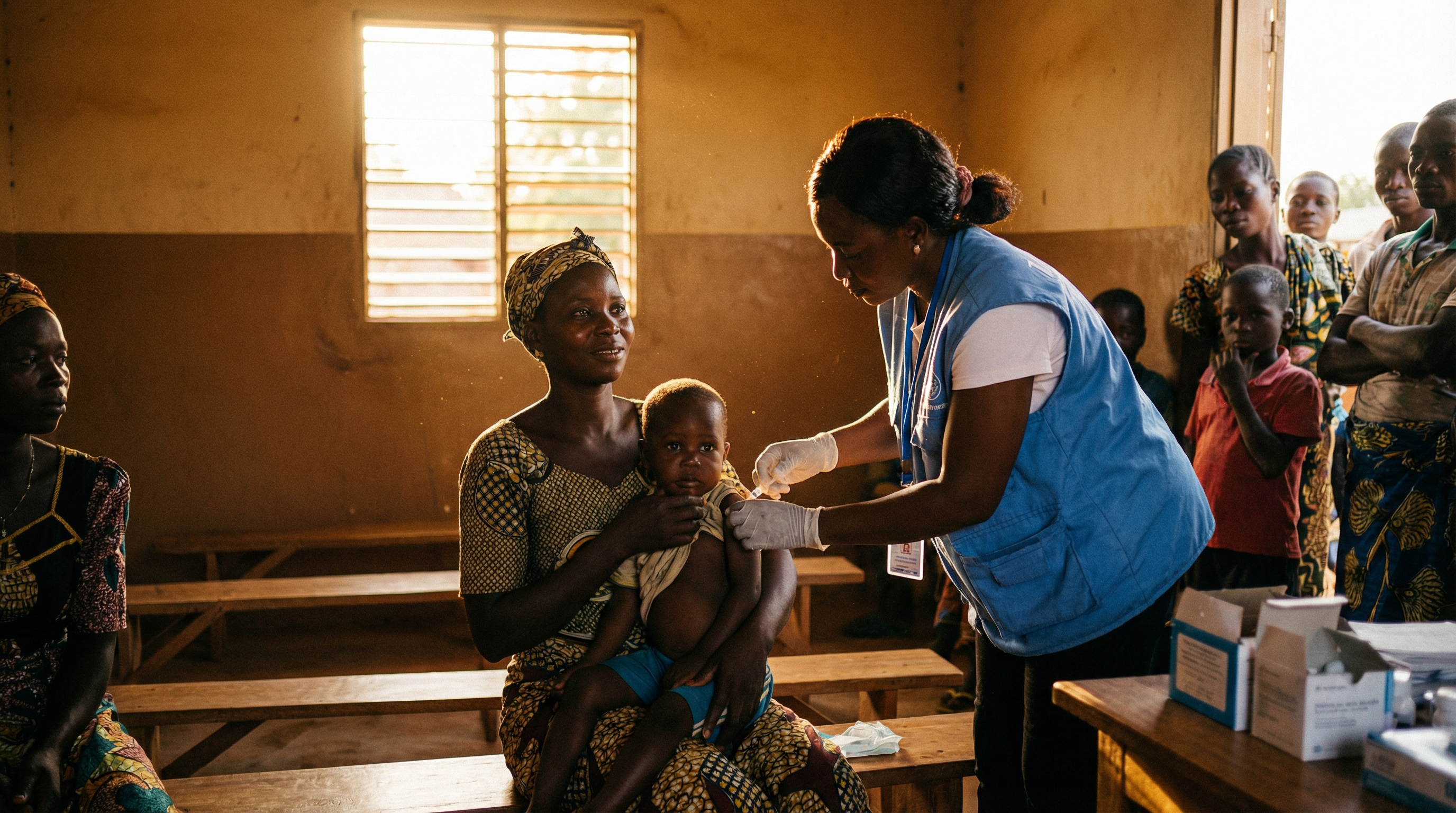
The malaria vaccine in Nigeria: 200,000 children vaccinated and a 50% decrease in cases in Kebbi State
Malaria killed 608,000 people in 2022, 95% of them in sub-Saharan Africa and 78% children under five. And for the first time, a vaccine deployed at scale shows measurable results in the field.