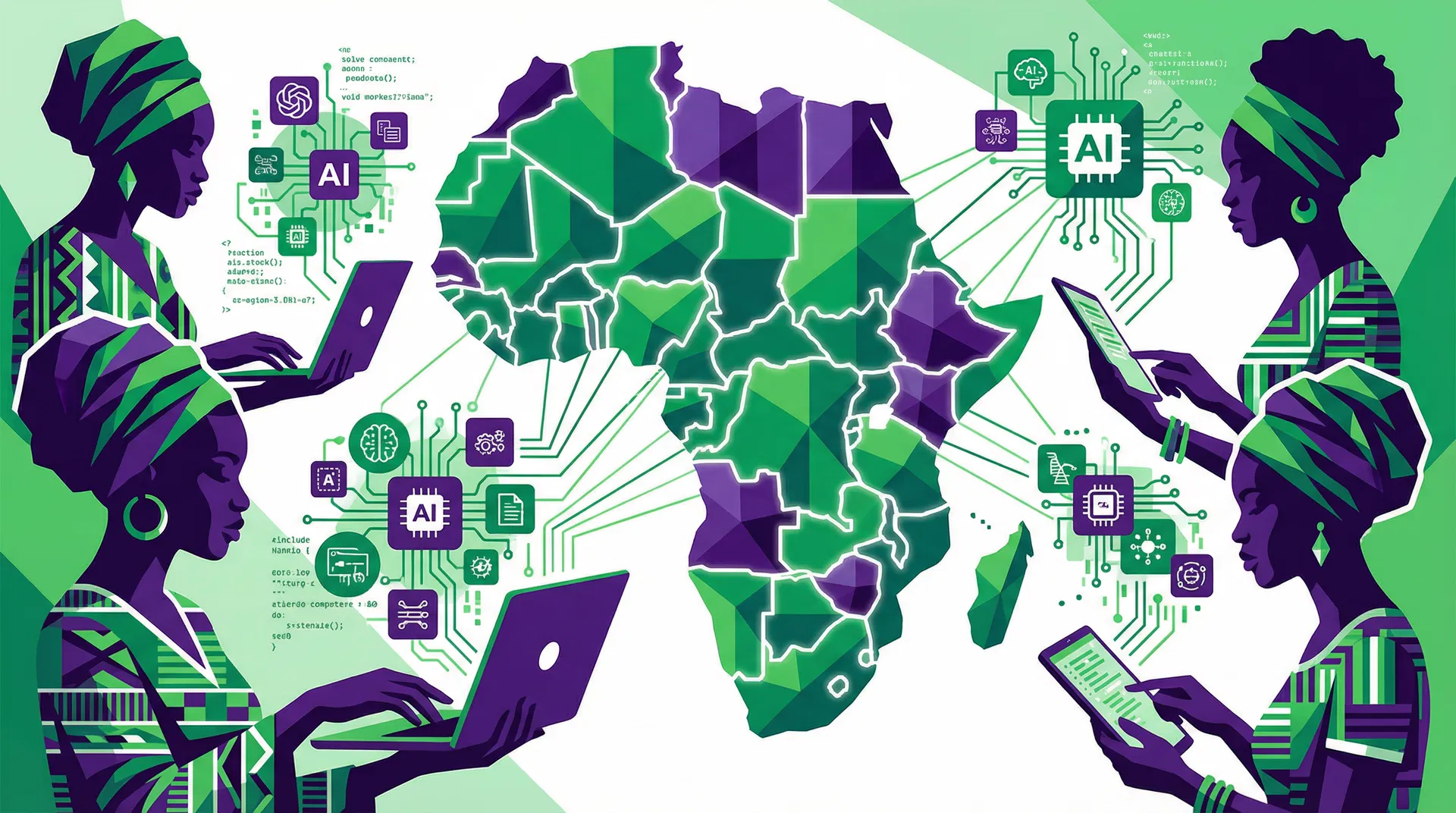
Microsoft launches Empower+ to train young Africans in AI: 21 countries, focus on women
In March 2026, Microsoft and the Education Plus initiative, supported by UNAIDS, launched Empower+, a free digital platform aimed at strengthening artificial intelligence and digital skills among young Africans. This initiative primarily targets girls and young women in 21 countries across the continent, with the objective of reducing inequalities in access to technological training.
21 African countries targeted by free digital training and adapted content
The Empower+ platform, accessible online and on mobile devices, offers modules covering basic digital literacy, emerging AI skills, and the use of technology in professional environments. These courses also integrate links between digital opportunities and HIV prevention, a major public health issue in sub-Saharan Africa. Tiara Pathon, Director of AI Skills at Microsoft Elevate, emphasized that the initiative aims to provide learners with the necessary tools to succeed in a constantly evolving digital economy. The platform's design takes into account local realities, offering relevant content directly applicable to the specific challenges and opportunities of the African continent. The objective is to democratize access to cutting-edge training, often expensive, for a young and rapidly growing population.
Empower+'s training offering is structured in several levels, ranging from digital fundamentals, essential for basic inclusion, to more advanced artificial intelligence skills, which are at the heart of current and future economic transformations. The AI modules cover subjects such as machine learning, computer vision, and natural language processing, preparing participants for technical roles in various sectors. The flexibility of mobile access is crucial on a continent where smartphone penetration is high, but access to personal computers remains limited for a large part of the population. This mobile-first approach ensures maximum reach and increased accessibility, even in remote areas.
230 million jobs in sub-Saharan Africa will require digital skills by 2030: a challenge and an opportunity
The launch of Empower+ comes in a context of growing demand for qualified talent. The World Bank estimates that nearly 230 million jobs in sub-Saharan Africa will require digital skills by 2030 (Ecofin Agency). This colossal figure highlights the urgency of massively training African youth so they can seize the opportunities offered by the global digital economy. Without a qualified workforce, the continent's economic growth potential could be hindered, and African countries risk remaining on the periphery of the fourth industrial revolution.
However, significant gaps persist between genders. UNESCO data reveals that women and girls are 25% less likely to use basic digital tools than men, four times less likely to know how to program, and thirteen times less likely to file a patent in the field of information and communication technologies (Ecofin Agency). These disparities are not just a matter of equity; they represent a significant loss of economic potential and innovation for Africa. By specifically targeting girls and young women, Empower+ seeks to correct this historical imbalance and unleash an untapped reservoir of talent.
Women's empowerment through AI: a lever for economic and social development
The expansion of access to digital skills is therefore perceived as a key factor in reducing these inequalities and promoting economic inclusion, thus opening new professional opportunities for young women in a sector that is still predominantly male. Women's empowerment through technology has repercussions well beyond the individual, positively influencing families, communities, and the national economy. Studies show that investment in women's education and their participation in economic life contribute to faster GDP growth and poverty reduction.
By training women in AI skills, Empower+ does not merely offer them jobs; the platform positions them as key players in innovation and technological development in Africa. They will not only be able to occupy existing positions but also create new businesses, develop solutions adapted to local needs, and contribute to shaping the continent's digital future. The partnership with Education Plus and UNAIDS support also underlines the program's holistic approach, which integrates health awareness into the training pathway, recognizing the interconnection between social well-being and economic opportunities.
A strategic partnership for lasting impact
The success of an initiative of this scale relies on solid partnerships. The collaboration between Microsoft, a global technology giant, and Education Plus, an initiative focused on education and health, is an example of effective synergy. Microsoft brings its technological expertise and training resources, while Education Plus contributes through its deep knowledge of local contexts and the specific needs of young people in Africa, particularly regarding health and well-being. This type of public-private collaboration is essential to overcome structural barriers to access to education and technology.
The commitment across 21 African countries demonstrates the program's ambition and geographical scope. This includes a diversity of socio-economic and cultural contexts, requiring adaptation and flexibility in implementation. The focus on young women is a deliberate strategy to maximize social and economic impact, recognizing their central role in sustainable development. By investing in digital skills and AI for this demographic, Microsoft and its partners contribute to building a more inclusive, innovative, and prosperous Africa, capable of meeting 21st-century challenges with a qualified and diverse workforce.
Receive Journal analyses directly in your mailbox.
Also read
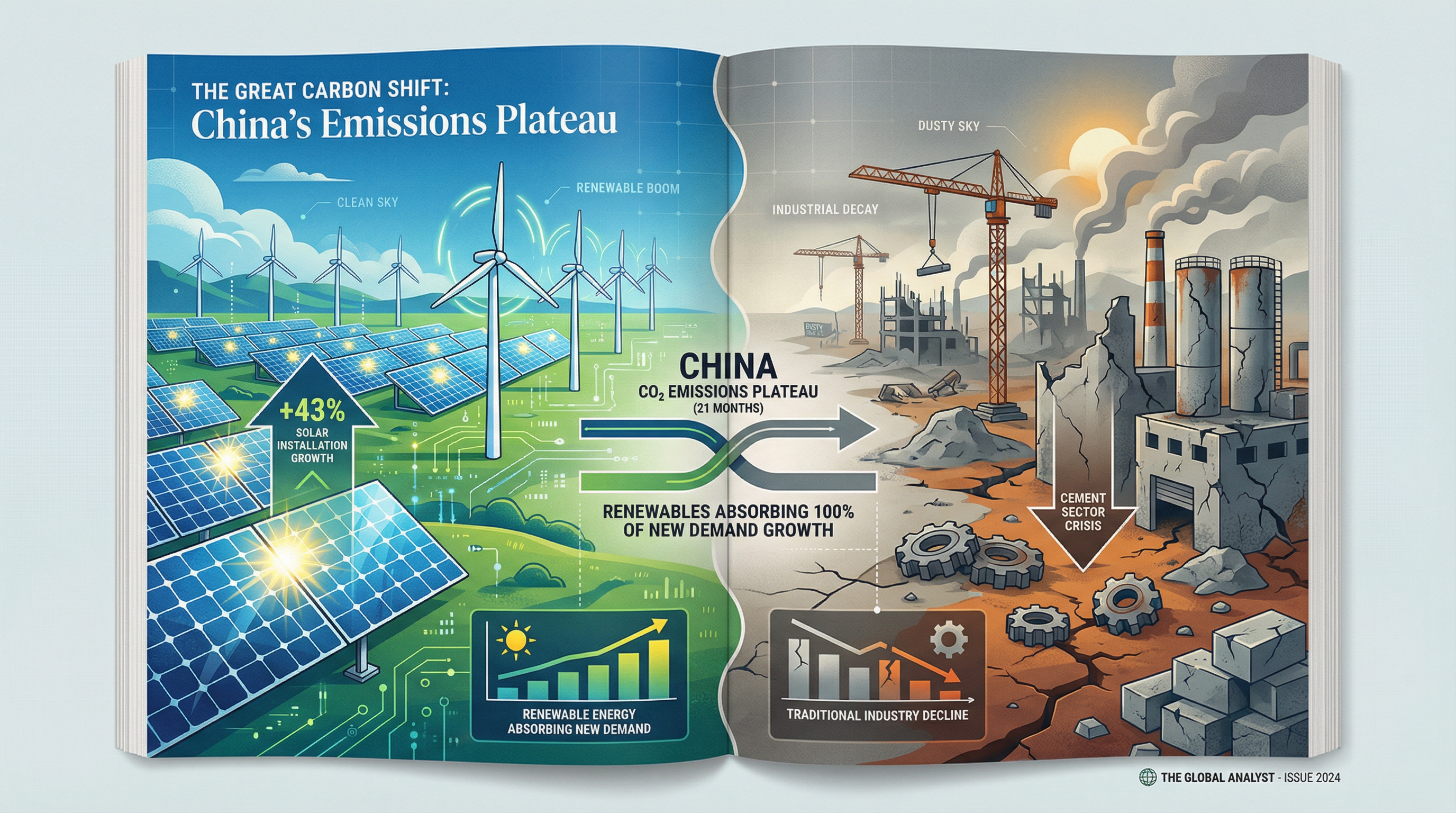
China's CO2 emissions have stagnated for 21 months: structural peak or cyclical accident?
China's CO2 emissions fell by 0.3% in 2025. It's a modest figure. But it extends a trend that has lasted for 21 consecutive months: since March 2024, emissions from the world's largest polluter have been "stable or declining."
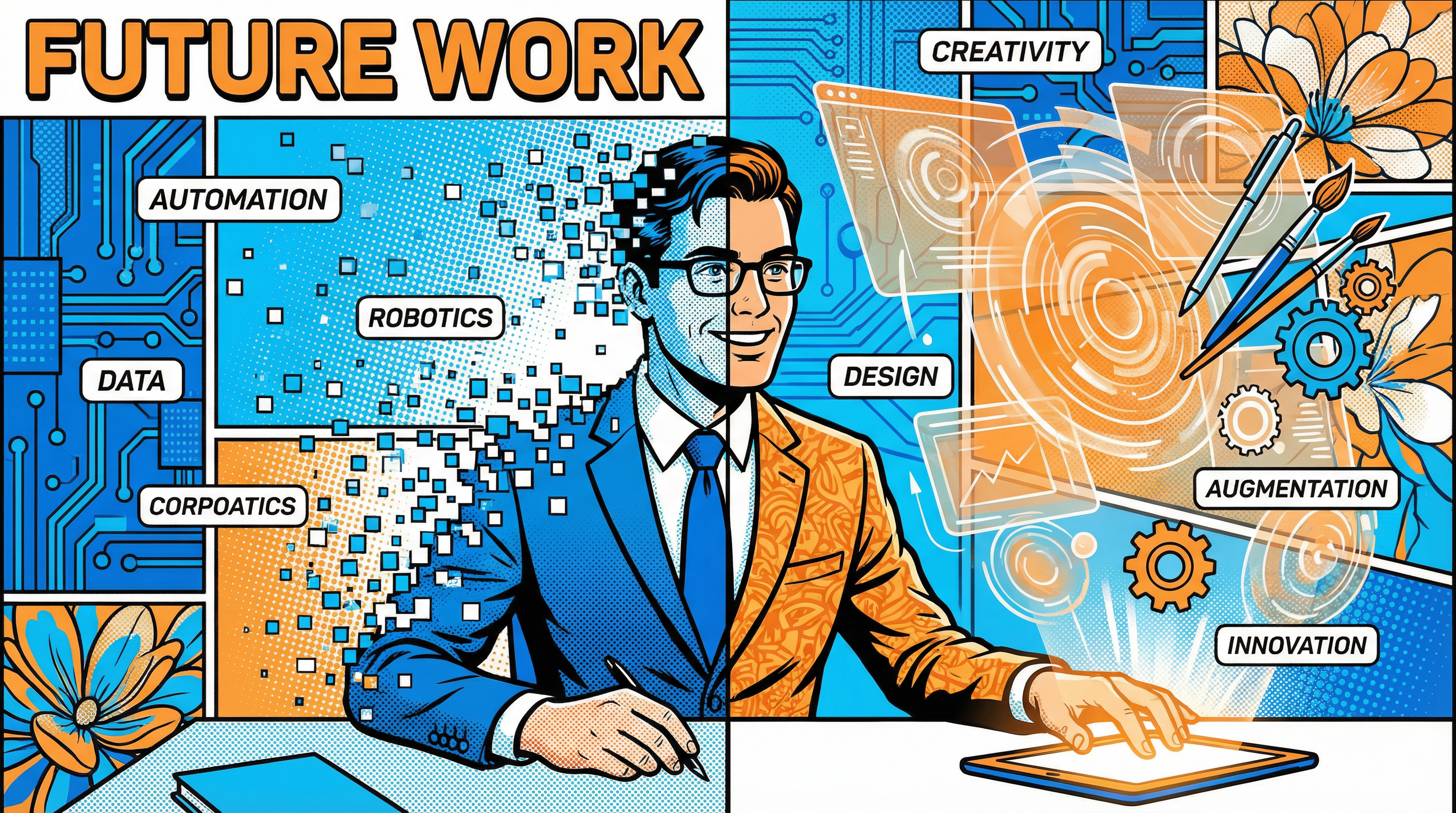
AI and employment: two March 2026 studies reveal -13% automatable jobs and +20% augmented roles
Does AI destroy jobs? Two studies published in March 2026 — one by Harvard Business School, the other by Anthropic — provide the first solid empirical data. And the answer is more nuanced than public debate suggests.

The malaria vaccine in Nigeria: 200,000 children vaccinated and a 50% drop in cases in Kebbi State
Malaria killed 608,000 people in 2022, 95% of them in sub-Saharan Africa and 78% children under five years old. And for the first time, a vaccine deployed on a large scale shows measurable results in the field.