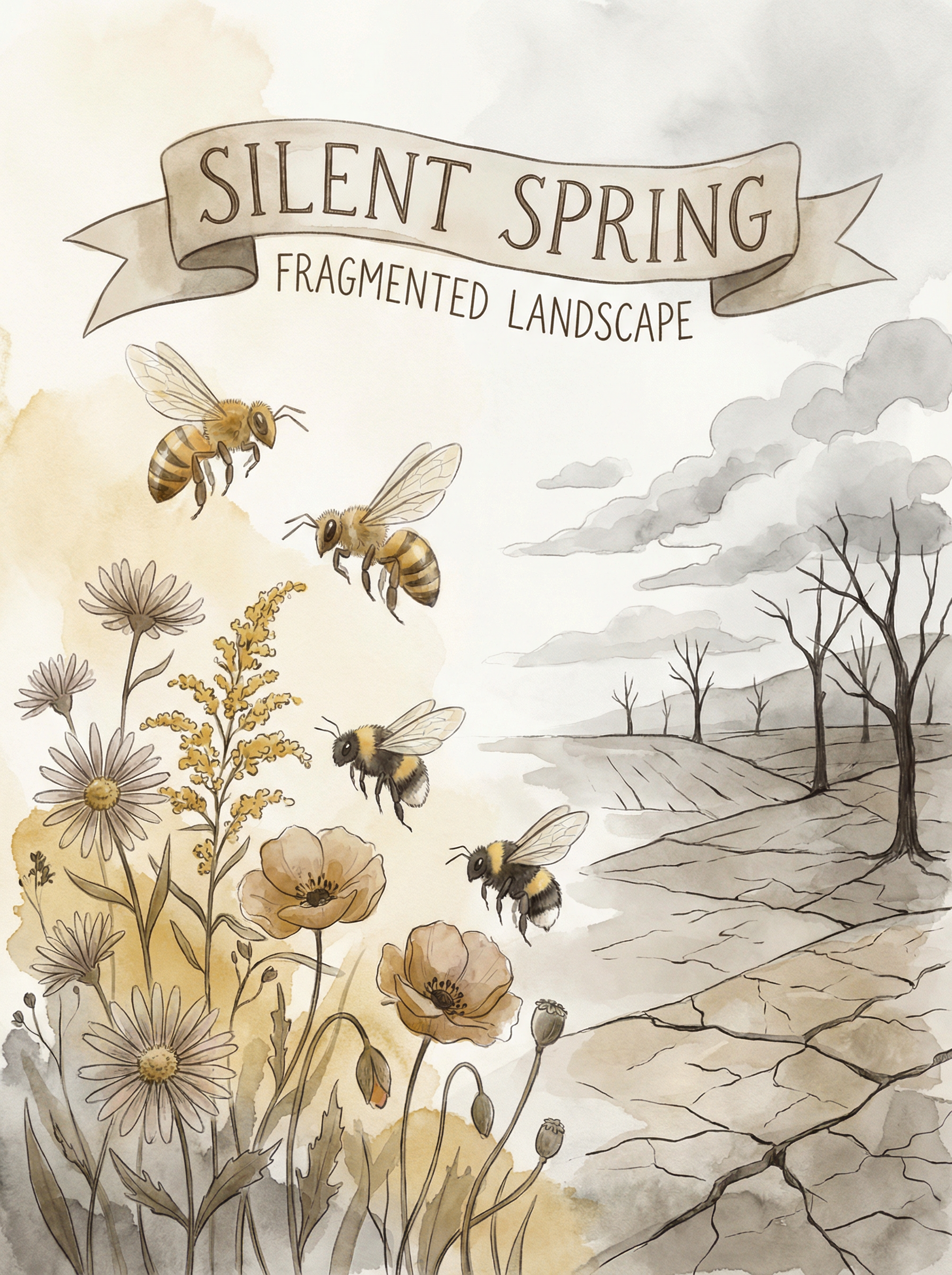
The new European Red List of Bees, published on February 26, 2026, highlights the fragility of a significant portion of Europe's biodiversity. Of nearly 2,000 wild bee species assessed, 172 are now considered threatened with extinction on the continent [2]. This update, a decade after a first partial assessment, confirms a trend of pollinator decline that is intensifying.
More than one in four bee species, among the best documented, is experiencing population decline, while fewer than one in sixty shows positive dynamics [2]. This finding underscores the extent of pressures on these essential insects, whose role extends far beyond the ecological framework to directly affect the economy and food security.
The identified threats are complex and often interconnected, ranging from changes in agricultural practices to the effects of climate change. These combined factors alter habitats, reduce food resources, and disrupt bee life cycles, revealing a degradation of natural environments that calls for urgent attention.
The confirmed decline of 172 wild bee species in Europe
The comprehensive assessment conducted for the 2026 European Red List of Bees reveals precise figures on the situation of wild pollinators. Of the nearly 2,000 bee species studied in Europe, 172 are classified as threatened with extinction [2]. This assessment, more complete than previous studies, offers an updated view of the continent's entomological biodiversity. It follows observations made since the mid-1990s, when beekeepers in Western Europe began reporting significant colony losses [3].
This update follows a first partial assessment conducted in 2014, which had already identified 72 bee species in imminent danger, despite a lack of data for many others [2]. The comparison between these two periods highlights an intensification of the phenomenon. Current data indicates that more than 25% of species for which sufficient information is available show a declining trend. In contrast, less than 2% of species display positive dynamics, illustrating the widespread regression of wild bee populations [2].
These figures do not simply confirm a trend; they quantify it with increased precision. They underscore the urgency of collective awareness and targeted actions to reverse this trajectory.
Agricultural intensification, primary cause of pollinator vulnerability
Intensive agriculture represents the most significant threat to wild bees in Europe. Current practices directly affect 608 species, and 109 of them are now threatened with extinction primarily because of this factor [2]. Monoculture, which consists of cultivating a single plant species over vast areas, reduces floral diversity and the food resources available to bees, often for long periods of the year. These uniform landscapes do not provide the variety of pollen and nectar necessary for feeding different bee species and their reproduction.
The massive use of pesticides and chemical fertilizers constitutes another major component of this pressure. Insecticides have direct toxic effects on bees, even at low doses, by altering their navigation, reproduction, or immune system. Herbicides, meanwhile, eliminate "weeds" that are often essential food sources for pollinators. Finally, soil degradation, often compacted and depleted by intensive agricultural practices, reduces nesting sites for many wild bee species that build their nests in the ground [2].
Adrien Perrard, lecturer-researcher at the University of Paris Cité, emphasizes that these declines are "directly linked to societal choices at the scale of our continent, such as the agricultural models supported" [2]. This observation highlights the responsibility of agricultural policies and consumption patterns in the current situation of wild bees.
Climate change and habitat fragmentation: combined pressures
Beyond agricultural practices, climate change exerts increasing pressure on wild bee populations. The increasing frequency and intensity of extreme events, such as prolonged droughts, floods, or forest fires, profoundly modifies ecosystems [2]. These climatic disruptions can alter the geographical distribution of bee species, forcing them to migrate to new areas or disappear locally if their habitat is no longer viable.
Another effect of climate change is the disruption of the essential synchronization between bees and the plants they pollinate. Early or late blooms, due to abnormal temperatures, can desynchronize bee emergence from the availability of their food resources. This mismatch can lead to colony undernutrition and decreased plant reproduction, creating a vicious cycle for biodiversity [2].
Simultaneously, the destruction and fragmentation of natural habitats, exacerbated by growing urbanization and infrastructure expansion, reduce the vital spaces of bees [2], [3]. The creation of physical barriers and the reduction of ecological corridors isolate populations, limiting their ability to move, find food, and reproduce. The widespread use of chemical pollutants, beyond agricultural pesticides alone, including microplastics, also contributes to environmental toxicity and has direct effects on bee survival [2].
Pollination: a fundamental ecological and economic service
The role of wild bees, and more broadly pollinators, is central to maintaining ecosystems and agricultural production. These insects are responsible for pollinating a vast majority of wild plants, ensuring their reproduction and the genetic diversity of flora. For agriculture, their contribution is significant: four out of five crop and wild flower species depend, at least in part, on pollination by insects, with wild bees being the main actors in this process [1].
The economic benefits of this ecological service are considerable. The value of pollination for European Union agriculture is estimated between 5 and 15 billion euros per year [1], [2]. This figure underscores the importance of bees not only for biodiversity, but also for the economic stability of the agricultural sector. The decline of wild bee populations directly threatens this contribution.
The homogenization of pollinator communities, that is, the decrease in bee species diversity, compromises plant reproduction. This can lead to a reduction in the quantity of seeds produced and a decline in the quality of harvested fruits and vegetables. Such a situation would weaken farmers, potentially increasing their production costs and leading to higher prices for consumers. Beyond economic considerations, bee decline is an indicator of global biodiversity erosion and natural environment degradation [2].
Domestic and wild bees: complementary roles to preserve
It is common to associate pollination with domestic honey bees, raised in apiaries for honey production. However, wild bees, which include hundreds of species with varied behaviors and ecological needs, play a distinct and irreplaceable role in ecosystem resilience. Unlike the domestic bee (Apis mellifera), which lives in large social colonies and is managed by humans, wild bees are mostly solitary or live in small colonies, and generally do not produce honey in exploitable quantities.
Their diversity is a major asset. Each wild bee species often has specific floral preferences and particular pollination techniques, enabling more efficient and diversified plant pollination. Some species are specialized in pollinating specific crops, such as bumblebees for tomatoes or alfalfa. This complementarity ensures better plant reproduction, including those that would not be efficiently pollinated by domestic bees. Moreover, the presence of diverse wild bees ensures better resilience to environmental disruptions: if one species is affected, others can take over, thus avoiding complete collapse of pollination services.
The ability of domestic bees to compensate for wild bee decline is limited. Although they contribute to pollination, they cannot reproduce the same complexity and efficiency as all wild species combined. Overpopulation of domestic bees in certain ecosystems can even compete with wild bees for floral resources, putting additional pressure on already vulnerable populations. Preserving wild bee diversity is therefore essential for maintaining flora richness and agricultural production stability.
The Red List, a compass to guide conservation efforts
The publication of the 2026 European Red List of Bees is not limited to an alarming assessment; it constitutes a strategic tool for action. Adrien Perrard describes it as "a signal and compass to guide decision-makers in their choices of conservation efforts for our natural heritage" [2]. This document provides a solid scientific foundation for identifying the most vulnerable species and priority threats, thus enabling targeted interventions effectively.
This assessment occurs in a context where the European Union has already initiated approaches to protect pollinators. In 2018, the "EU Pollinators Initiative" was launched, aimed at improving knowledge, tackling causes of decline, and raising public awareness [3]. In 2021, a call was made for urgent revision of this initiative to include more robust and binding measures. The new Red List reinforces the relevance of these calls and offers updated data to refine policies.
The action paths emerging from these findings are multiple. They include restoring natural habitats, diversifying agricultural crops to create landscapes more favorable to pollinators, and significantly reducing the use of pesticides and chemical fertilizers. Public and agricultural stakeholder awareness of pollinator biodiversity issues is also an essential lever. The ecological transition of agriculture, toward models more respectful of the environment and biodiversity, appears as a necessary path to ensure wild bee survival and, by extension, the sustainability of the ecosystem services they provide.
The situation of wild bees in Europe, as detailed by the latest Red List, highlights the profound interdependence between human choices and ecosystem health. The decline of one bee species in ten is not just a statistic; it is an indicator of the
Receive Journal analyses directly in your mailbox.
Also read
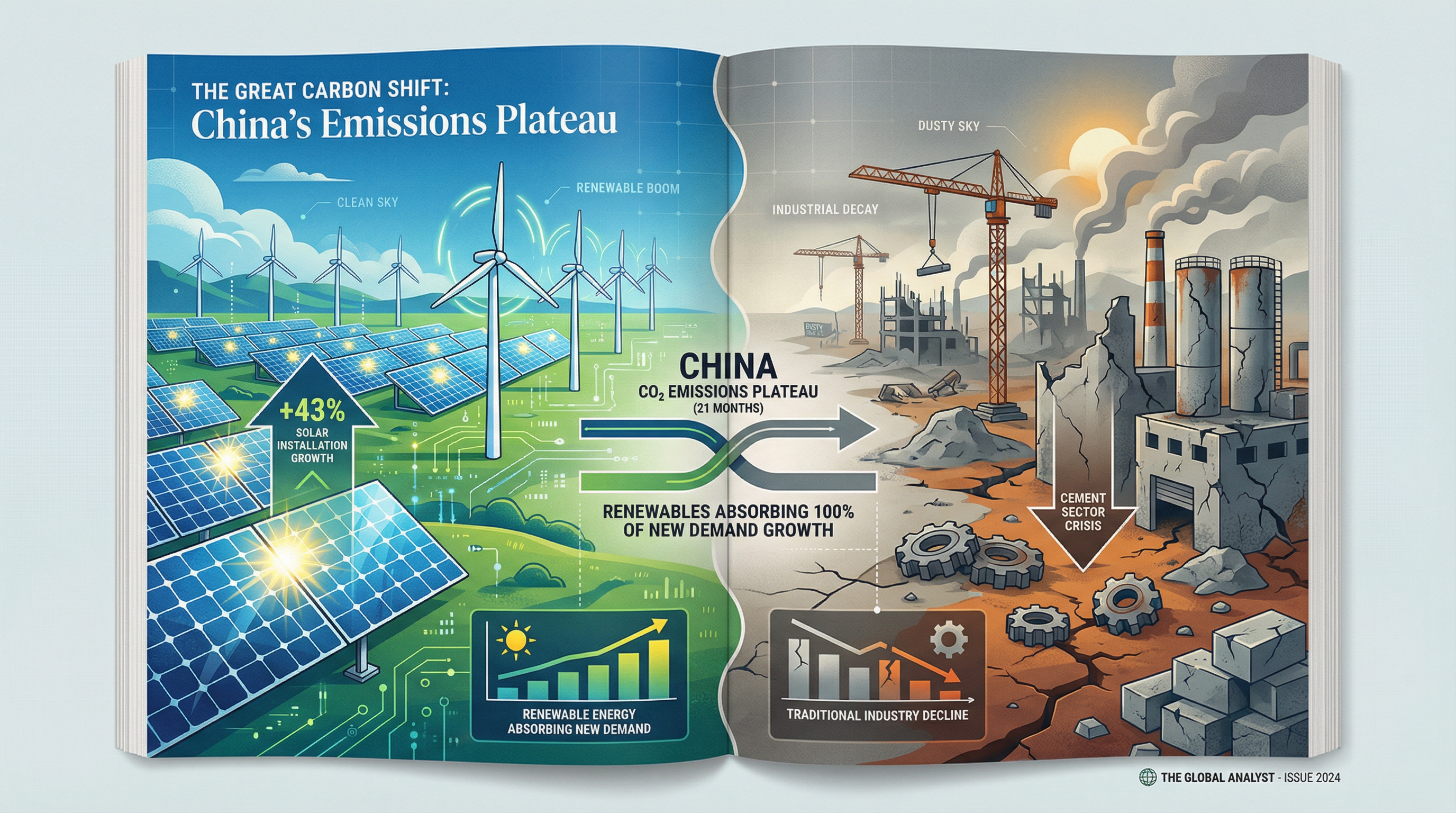
China's CO2 emissions have stagnated for 21 months: structural peak or cyclical accident?
China's CO2 emissions fell by 0.3% in 2025. It's a modest figure. But it extends a trend that has lasted for 21 consecutive months: since March 2024, the world's largest polluter's emissions have been "stable or declining."

AI and employment: two March 2026 studies reveal -13% automatable offers and +20% augmented roles
Does AI destroy jobs? Two studies published in March 2026 — one by Harvard Business School, the other by Anthropic — provide the first solid empirical data. And the answer is more nuanced than public debate suggests.
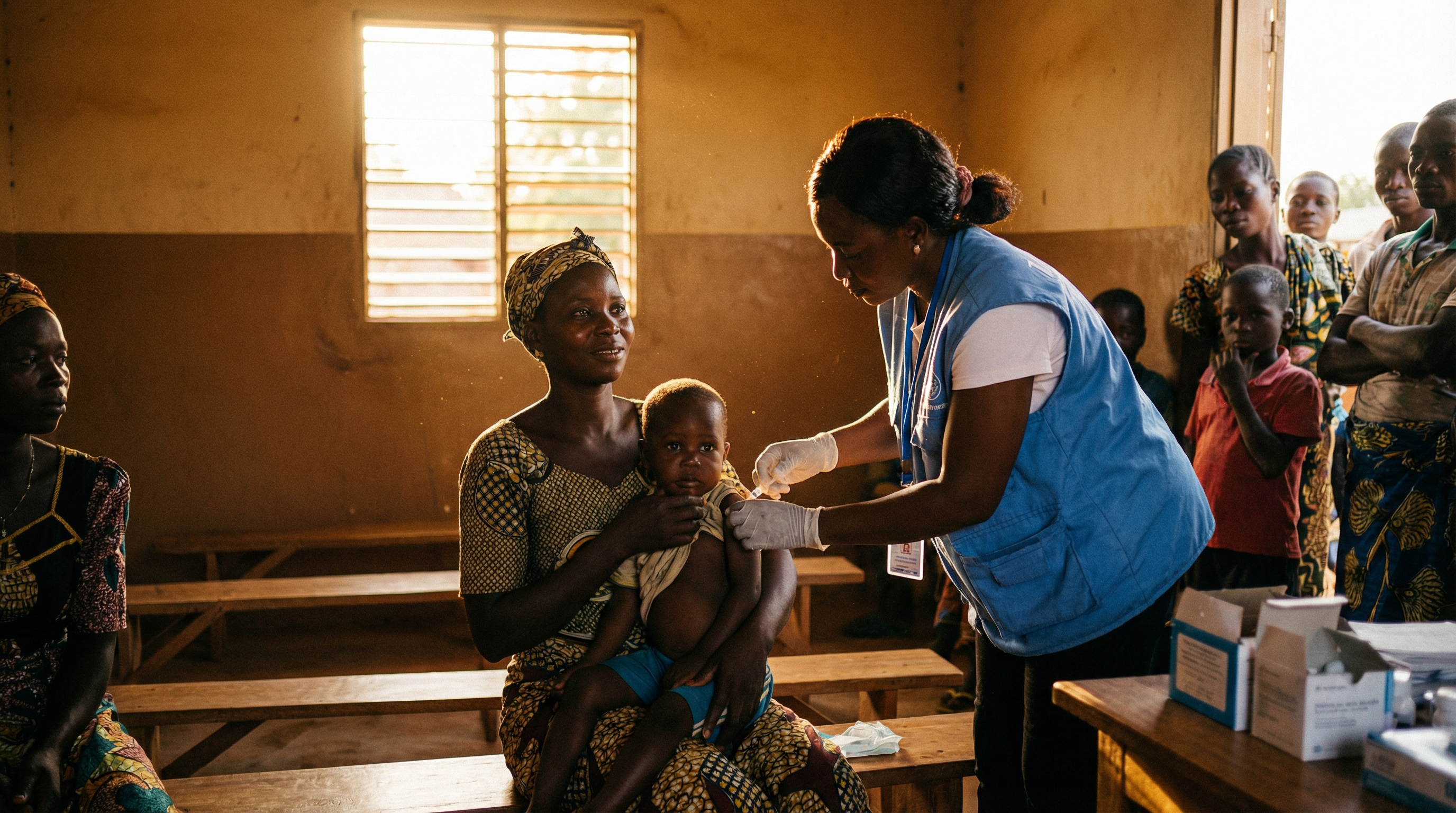
The antimalarial vaccine in Nigeria: 200,000 children vaccinated and a 50% drop in cases in Kebbi State
Malaria killed 608,000 people in 2022, 95% of them in sub-Saharan Africa and 78% children under five. And for the first time, a vaccine deployed on a large scale shows measurable results in the field.