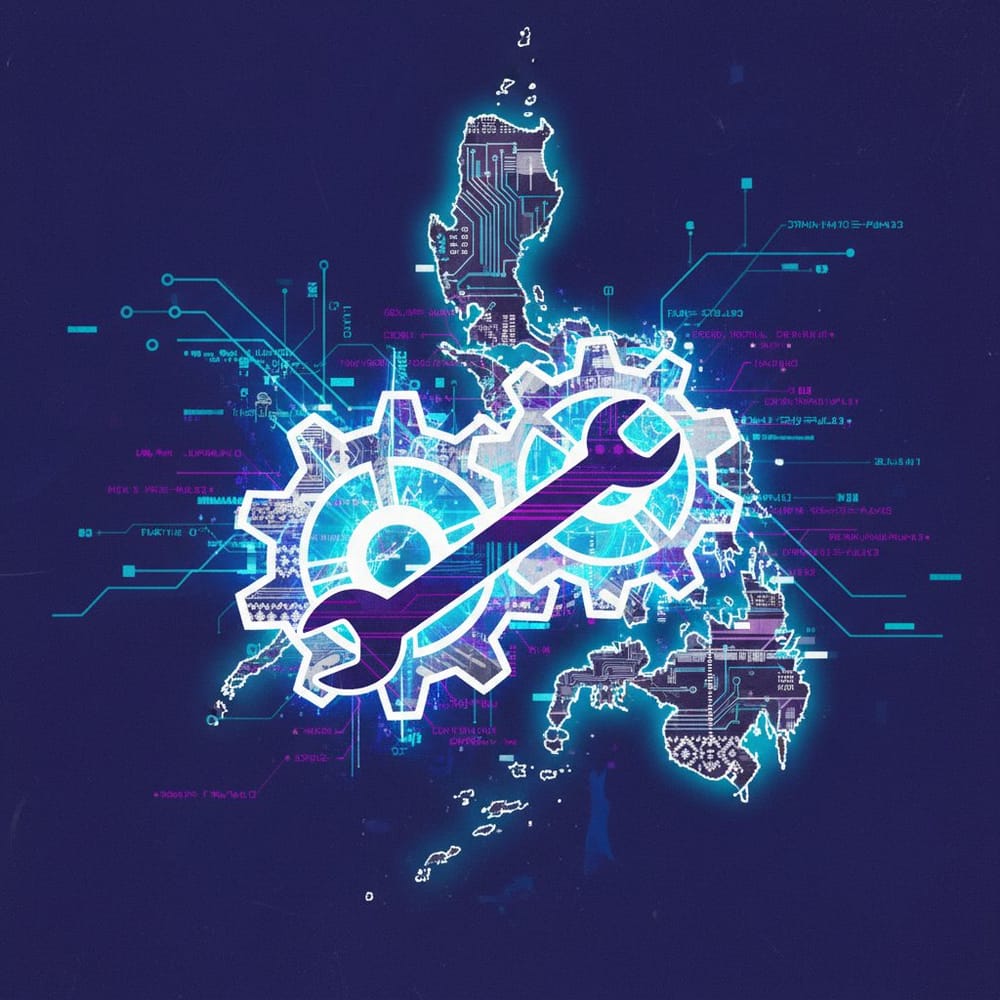
With a population of over 117 million Filipinos and the TESDA-BossJobs partnership launched on February 5, 2026, the platform aims to digitize the skills of workers certified by TESDA. The Philippine government, through its TESDA agency (Technical Education and Skills Development Authority), is launching an AI platform that converts technical certifications into “skills passports” directly connected to employers.
This initiative reveals a strategic reversal: while AI threatens office jobs, the Philippines is positioning its manual trades as complementary to artificial intelligence rather than substitutable by it. A gamble that could redefine the competitive advantage of emerging economies.
The Skills Passport Platform Connects 2.4 Million Technical Graduates
TESDA has just partnered with BossJobs to create the first AI platform dedicated to professional technical skills. The 2.4 million graduates from Philippine technical training centers can now convert their paper certifications into digital profiles enriched by artificial intelligence.
The platform analyzes skills, geolocalizes them, and matches them with employer needs in real time. A certified plumber in Manila can be contacted directly by a company in Cebu that needs their specific skills. The AI evaluates the level of compatibility between supply and demand, eliminating traditional intermediaries.
This massive digitization of manual skills relies on already solid infrastructure: the Philippines train 200,000 technicians per year in 1,800 TESDA centers spread across the archipelago. AI transforms this existing training capacity into a digital competitive advantage.
67% of Technical Jobs Escape Automation
The Philippines are betting on an economic reality: AI excels at repetitive cognitive tasks but struggles with complex manual skills. According to the International Labour Organization, 67% of technical jobs require direct human intervention that automation cannot replace in the short term.
An electrician repairing a failing network in a Quezon City slum mobilizes skills that AI does not possess: instantaneous adaptation to an unpredictable environment, creative problem-solving, social interaction with residents. AI can diagnose the problem, but only human intervention can solve it within a specific social and spatial context.
This complementarity explains why the Philippines are massively investing in technical training. The country is developing its vocational training programs, while its neighbors were reducing their investments in technical education in favor of digital skills. Asia-Pacific is experiencing unequal growth that widens gaps between national strategies.
Brain Drain Reversed by Technology
The Philippines traditionally export their skilled workforce: 2.3-2.55 million Filipino workers live abroad, generating approximately 40 billion dollars in annual transfers (2024 World Bank data). The new platform could reverse this dynamic by making Philippine technical skills visible and accessible from within the archipelago itself.
AI makes it possible to create a unified technical labor market at the national scale. A mechanic trained in Mindanao can work for a company in Luzon without physical migration, thanks to digital networking of skills. Employers identify relevant profiles in minutes instead of weeks of traditional recruitment.
This strategy relies on expanding Philippine digital infrastructure: 77% of the population has access to mobile internet, and the government is investing 14 billion dollars in rural connectivity by 2028. AI transforms this connectivity into a lever for retaining technical talent within the national territory.
BossJobs Has Applied AI to Technical Recruitment Since 2019
The Philippine startup BossJobs already processes 400,000 monthly applications thanks to its matching algorithms. Its partnership with TESDA multiplies its pool of potential candidates by six, by integrating graduates from public training into its private ecosystem.
BossJobs’ algorithm analyzes 47 criteria to evaluate compatibility between a technical profile and a job offer: certified skills, practical experience, geographic mobility, temporal availability. The platform optimizes recruitment processes for technical positions, according to the company.
This efficiency attracts multinationals present in the Philippines. Samsung, Toyota, and Nestlé already use the platform to recruit their local technicians. AI allows them to quickly identify rare profiles, such as industrial maintenance specialists or renewable energy technicians.
Manual Trades Become Digital Strategic Assets
The Philippine initiative reveals a broader transformation: manual skills are acquiring visibility and liquidity comparable to digital skills. AI is already revolutionizing commercial exchanges by optimizing logistics flows, and this logic is now extending to the technical labor market.
A certified plumber becomes a digital asset: their skills are referenced, geolocalized, evaluated, and networked by AI. This transformation changes the very nature of manual work, which shifts from the status of a local resource to that of a globally accessible and valued competency.
Other emerging countries are carefully watching the Philippine experience. Vietnam is preparing a similar initiative for its skilled technical workers, while Indonesia is testing digital passports in its industrial provinces in Java.
The Philippine experience suggests that artificial intelligence can serve economic inclusion rather than marginalization. By digitizing and connecting manual skills, the Philippines transform a supposed disadvantage – their large proportion of technical workers – into a strategic asset. The success of this approach will determine whether other emerging economies can reverse the usual logic of automation.