Brain Cells Reprogrammed Against Alzheimer's Plaques
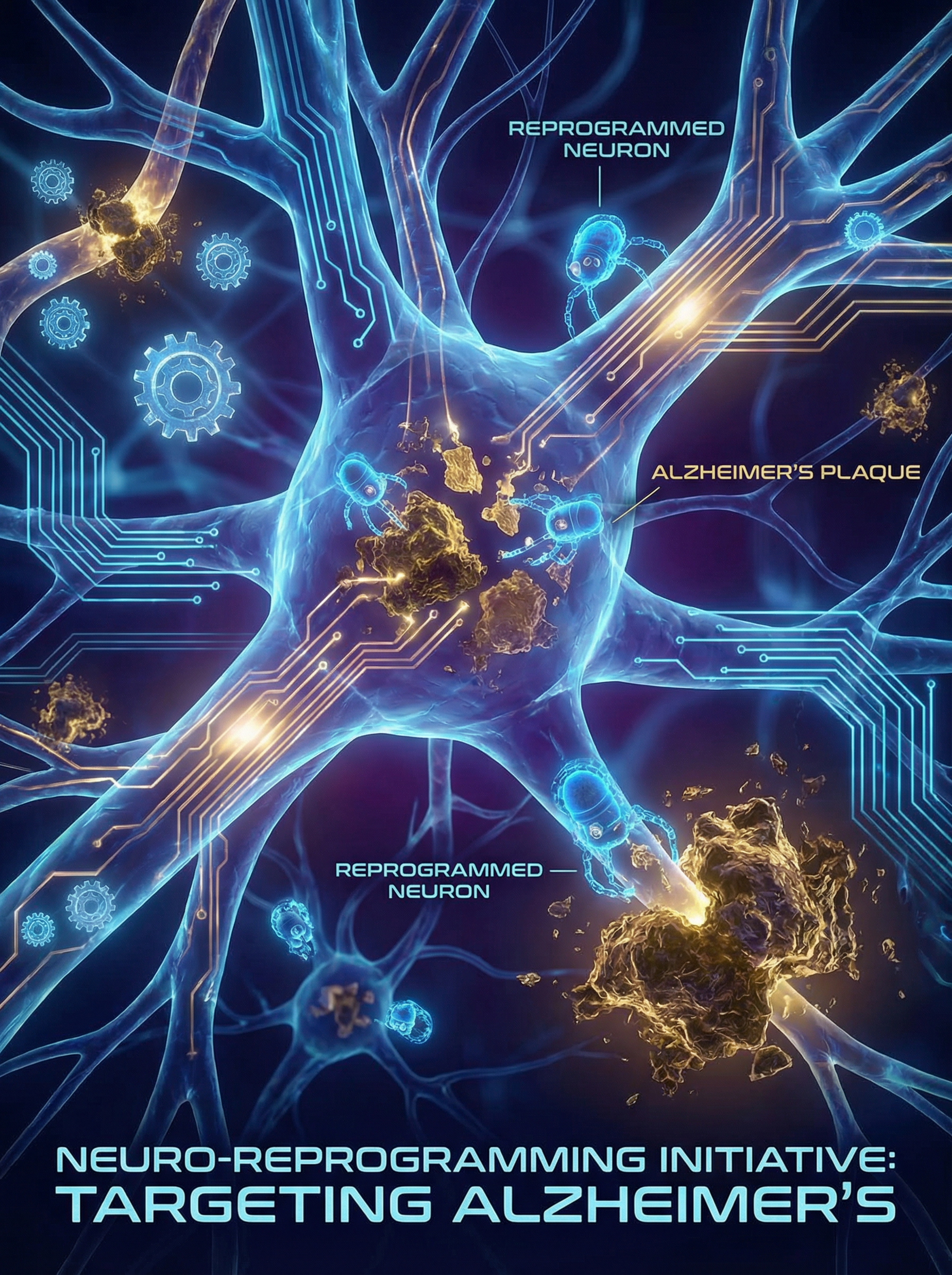
Alzheimer's disease, which affects more than 55 million people worldwide, is primarily characterized by the accumulation of beta-amyloid protein plaques in the brain. These deposits cause progressive neuronal damage and cognitive decline. Despite decades of research, therapeutic options remain limited, and the precise mechanisms of action of certain recently approved molecules were not fully understood.
However, the years 2025 and 2026 have been marked by two significant advances in understanding and potential treatment of this neurodegenerative disease. These discoveries focus on reprogramming the brain's immune cells, microglia and astrocytes, to eliminate amyloid plaques more efficiently. They open new perspectives for more targeted and potentially less invasive immunotherapies.
One of these advances has clarified the functioning of an already approved monoclonal antibody, Lecanemab, by showing how it activates microglia. Simultaneously, a new cellular immunotherapy approach, inspired by oncology, has demonstrated the ability of genetically modified astrocytes to substantially reduce amyloid plaques in mice, suggesting a promising pathway for single-injection treatments.
Microglial Cells, Ineffective Guardians of Neurons Against Amyloid
Amyloid plaques are protein aggregates that accumulate between neurons and are considered a pathological hallmark of Alzheimer's disease. Their presence disrupts neuronal communication and leads to cell death, contributing to the decline of cognitive functions. Within the brain, microglial cells play a frontline role in immune defense. They act as resident macrophages, patrolling brain tissue to eliminate cellular debris and pathogens.
When faced with amyloid plaques, microglia naturally cluster around these deposits. However, in the context of Alzheimer's disease, this response often proves insufficient to effectively eliminate the protein aggregates. Microglial cells fail to adequately phagocytose and degrade the plaques, leading to persistent accumulation of toxic deposits. This observation has raised a central question for research: is it possible to reprogram these cells to perform their cleaning task more effectively?
This question is all the more relevant as the precise mechanisms by which certain anti-amyloid therapies act remained partially misunderstood. Understanding how to activate or "awaken" the cleaning capabilities of microglia has become a central objective for developing new therapeutic strategies targeting amyloid pathology.
Lecanemab Activates Microglia via Its Fc Fragment, a Mechanism Elucidated in 2026
A discovery reported in March 2026 by researchers from the Vlaams Instituut voor Biotechnologie (VIB) and KU Leuven shed light on the functioning of Lecanemab, a monoclonal antibody approved by the FDA for Alzheimer's disease [1]. This study revealed that the efficacy of this antibody relies on its Fc fragment, a part of the molecule that interacts with immune cells. The Fc fragment of Lecanemab acts as a trigger, stimulating the brain's microglial cells to eliminate amyloid plaques.
To reach this conclusion, the scientists used a specially designed mouse model of Alzheimer's, incorporating human microglial cells. This model allowed observation of human-specific cellular responses with previously unattainable resolution [1]. The study demonstrated that the Fc fragment is essential: without it, microglia remain inactive and fail to degrade the plaques. Dr. Giulia Albertini, co-first author of the study, emphasized that "our study is the first to clearly demonstrate how this anti-amyloid antibody therapy works in Alzheimer's disease. We show that the therapy's efficacy relies on the antibody's Fc fragment, which activates microglia to effectively eliminate amyloid plaques" [1].
The microglial reprogramming induced by Lecanemab involves the activation of key cellular processes, notably phagocytosis, which is the ingestion of plaques by cells, and lysosomal activity, which corresponds to their internal degradation. Advanced techniques, such as single-cell and spatial transcriptomics, have enabled identification of a specific gene activity pattern in activated microglia, including strong expression of the SPP1 gene, associated with efficient plaque elimination [1]. This detailed understanding of the mechanism of action provides a foundation for optimizing existing treatments and developing new ones.
Directly Reprogramming Microglia Without Antibodies, a Future Possibility
The discovery of the crucial role of Lecanemab's Fc fragment in microglial activation has significant implications for the development of future Alzheimer's disease therapies. It suggests that it might be possible to directly activate microglia to eliminate amyloid plaques, without necessarily resorting to monoclonal antibodies. Prof. Bart De Strooper, co-senior author of the study, stated that "this paves the way for future therapies that could activate microglia without requiring antibodies. Understanding the importance of the Fc fragment helps guide the design of next-generation Alzheimer's drugs" [1].
Current therapies based on monoclonal antibodies, such as Lecanemab and Donanemab, have shown their ability to slow cognitive decline in certain patients. However, they present limitations. They require frequent intravenous infusions, often every two weeks, which represents a logistical constraint and significant cost. Additionally, they are associated with a risk of amyloid-related imaging abnormalities (ARIA), which can manifest as cerebral edema or hemorrhages.
By directly targeting the signaling pathways activated by the Fc fragment, researchers could design smaller molecules or gene therapy approaches capable of stimulating microglia more selectively and potentially with fewer systemic side effects. The goal would be to reproduce the beneficial effect of Lecanemab, but in a way that is more efficient, less invasive, and safer for patients.
CAR-Astrocytes, a New Immunotherapy Inspired by Oncology
Parallel to understanding Lecanemab, a new cellular immunotherapy approach was developed in March 2026 by scientists from the University of Washington [2]. This method is directly inspired by chimeric antigen receptor T-cell therapy (CAR T-cell therapy), already used in oncology to reprogram immune cells to attack cancer cells. Here, the innovation consists of applying this principle to astrocytes, another type of glial cells present in the brain.
The researchers designed genetically modified astrocytes, called CAR-astrocytes, to specifically target and eliminate beta-amyloid plaques [2]. To do this, they used a harmless virus as a vector to transfer a gene coding for a CAR to astrocytes. This CAR allows astrocytes to recognize and bind to amyloid proteins, thus reprogramming them into "super cleaners" of these toxic aggregates. Marco Colonna, senior author of the study, stated that "this study marks the first successful attempt to engineer astrocytes to specifically target and eliminate beta-amyloid plaques in the brains of mice with Alzheimer's disease" [2].
This approach represents a paradigm shift, as it doesn't merely activate an existing cellular response but genetically modifies cells to confer a new therapeutic function upon them. By leveraging the expertise acquired in CAR T therapies, scientists seek to adapt these techniques to tackle neurodegenerative diseases, offering a new pathway for targeted and potentially durable treatments. The study was published in the journal Science [3].
A Single Injection to Reduce Plaques by 50% in Mice
The preclinical results of CAR-astrocyte immunotherapy are promising. A single injection of this gene therapy prevented the development of amyloid plaques in young mice, suggesting prophylactic potential [2]. More significantly, in older mice that already presented established plaques, the treatment resulted in approximately 50% reduction of amyloid plaques [2]. This substantial reduction in protein deposits is comparable to, or even superior to, that observed with certain monoclonal antibody therapies requiring repeated administrations.
One of the advantages of this approach lies in its administration modality. Unlike monoclonal antibodies that require frequent infusions to maintain therapeutic levels, CAR-astrocyte therapy could potentially be administered in a single injection. David Holtzman, co-author of the study, highlighted this point by stating: "Consistent with antibody drug treatments, this new CAR-astrocyte immunotherapy is most effective when administered in the early stages of the disease. But where it differs, and where it could make a difference in clinical care, is in the single injection that successfully reduced the amount of harmful brain proteins in mice" [2].
The durability of the effect after a single injection, along with the significant reduction in plaques, positions CAR-astrocytes as a potentially less invasive and more effective alternative for patients. If these results are confirmed in humans, this approach could considerably improve the quality of life for affected individuals by reducing treatment frequency and potentially their systemic side effects.
Prospects for Combined Strategies and Personalized Medicine
The two advances, while distinct in their cellular targets (microglia for Lecanemab, astrocytes for CAR immunotherapy), converge toward a common objective: activating or reprogramming the brain's resident immune cells to combat amyloid pathology. The differentiation of cellular targets opens perspectives for combined therapeutic strategies. It is conceivable that a future approach could leverage the strengths of each cell type, simultaneously activating microglia and astrocytes for even more efficient plaque elimination.
These discoveries have a significant impact on future Alzheimer's disease research. They orient therapy development toward gene therapy and cellular reprogramming approaches, which could offer more targeted and durable solutions than current treatments. Understanding the precise molecular mechanisms of microglial activation by Lecanemab's Fc fragment, as well as the ability of CAR-astrocytes to target and degrade plaques, provides a roadmap for designing next-generation drugs
Receive the Journal's analyses directly in your inbox.
Also Read

China's CO2 Emissions Stagnate for 21 Months: Structural Peak or Cyclical Accident?
China's CO2 emissions decreased by 0.3% in 2025. It's a modest figure. But it extends a trend that has lasted for 21 consecutive months: since March 2024, the world's leading polluter's emissions have been "stable or declining."

AI and Employment: Two March 2026 Studies Reveal -13% Automatable Jobs and +20% Augmented Roles
Does AI destroy jobs? Two studies published in March 2026 — one by Harvard Business School, the other by Anthropic — provide the first solid empirical data. And the answer is more nuanced than public debate suggests.

The Malaria Vaccine in Nigeria: 200,000 Children Vaccinated and a 50% Drop in Cases in Kebbi State
Malaria killed 608,000 people in 2022, with 95% in sub-Saharan Africa and 78% children under five years old. And for the first time, a vaccine deployed on a large scale shows measurable results in the field.