Synthetic DNA Makes Vernam Encryption Unbreakable, Even to the Lunar Horizon
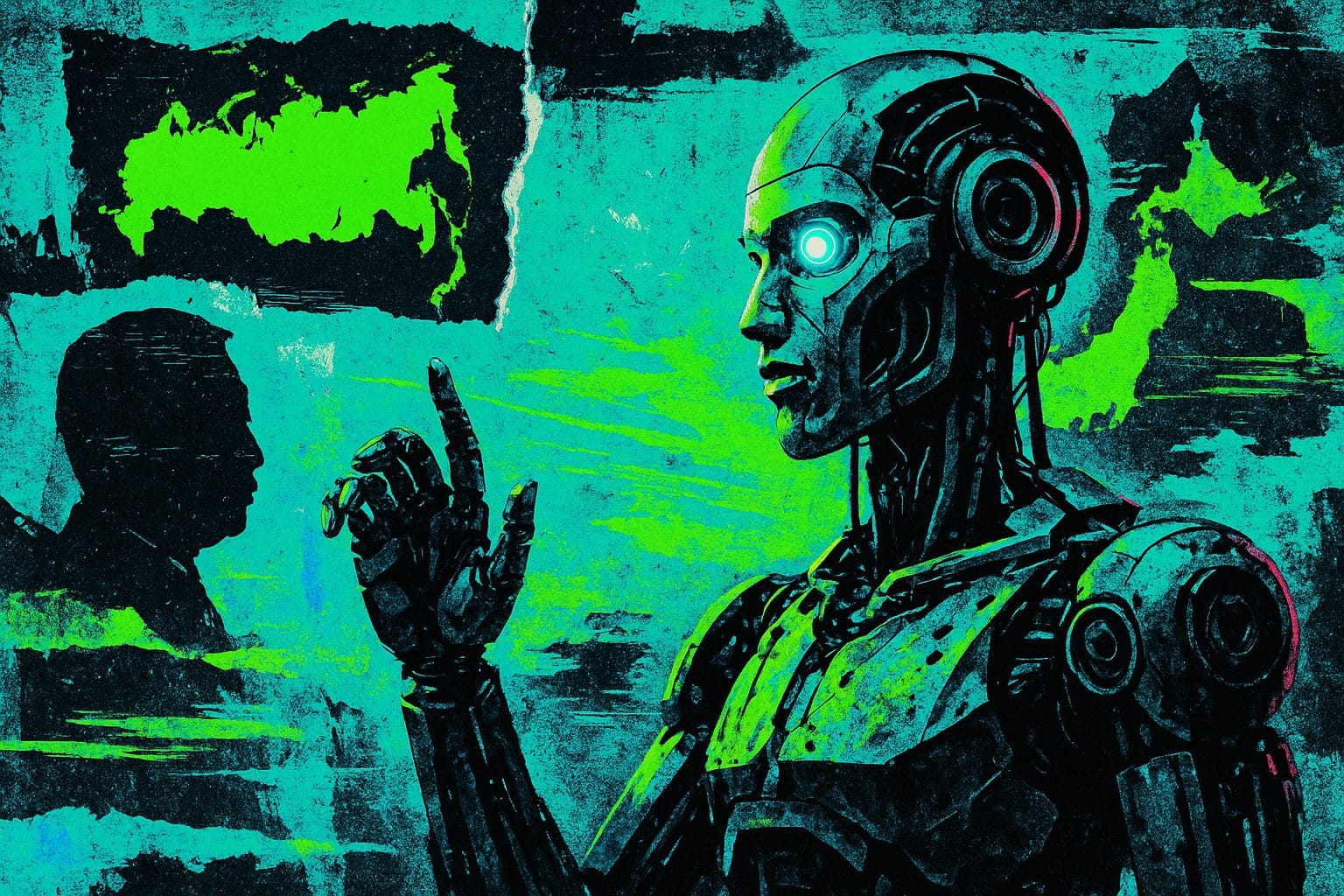
A Franco-Japanese team is testing for the first time under real conditions a cryptography method based on synthetic DNA during the French president’s visit to Japan on April 1, 2026. This approach revolutionizes digital security by making it possible to generate and share random keys for encoding messages, independently of the distance between sender and receiver. The innovation could democratize Vernam encryption, theoretically unbreakable but until now impractical at large scale.
The timing is no accident. Experts estimate that cryptographically relevant quantum computers could emerge within 5 to 15 years, and Shor’s algorithm is mathematically proven to crack RSA, ECC, and Diffie-Hellman on a sufficiently powerful quantum computer. Faced with this threat, this DNA-based approach makes accessible the only cryptographic method whose unconditional security can be demonstrated mathematically, independent of an adversary’s computing power.
The Essentials
- 400 megabits of secret mask generated with a global failure rate of 2⁻¹²⁸, proving the practical viability of the method
- CNRS-University of Tokyo collaboration tested under real diplomatic conditions during the Franco-Japanese presidential visit
- Unconditional security: independent of an adversary’s computing power, unlike RSA and ECC methods vulnerable to quantum computers
- Interplanetary operation: the method can operate between Earth and the Moon thanks to the physical independence of key generation
RSA and ECC Face the Quantum Wall: The Urgency of an Unbreakable Solution
Current widely used cryptographic systems, including RSA, elliptic curve cryptography (ECC), and Diffie-Hellman key exchange, are particularly vulnerable to quantum attacks. Shor’s algorithm poses a direct and powerful threat to public-key cryptography, enabling quantum computers to factorize large integers and solve discrete logarithms exponentially faster than classical computers.
In March 2026, Google’s Quantum AI team published a detailed study showing that far fewer resources may be necessary to attack the elliptic curve cryptography used by Bitcoin and Ethereum: a quantum computer with fewer than half a million physical qubits could crack it in minutes. This is still far from current quantum computers, but about ten times less than previous estimates.
Even more concerning: one of the most immediate and worrying implications of quantum computing for cryptography is the threat of “harvest now, decrypt later.” Adversaries with the foresight and resources to do so are collecting encrypted communications today with the intention of storing them until quantum computers become powerful enough to decrypt them.
Synthetic DNA Solves the Impossible Equation of Perfect Encryption
Vernam encryption (or OTP method, “One-Time Pad”) offers perfect security, in the sense that security does not depend on an adversary’s computing power. This approach imposes, however, multiple constraints: the key used to encrypt the message must be shared in advance between sender and receiver. It must also be as long as the message content itself, used only once, and “perfectly” random, that is, impossible to predict.
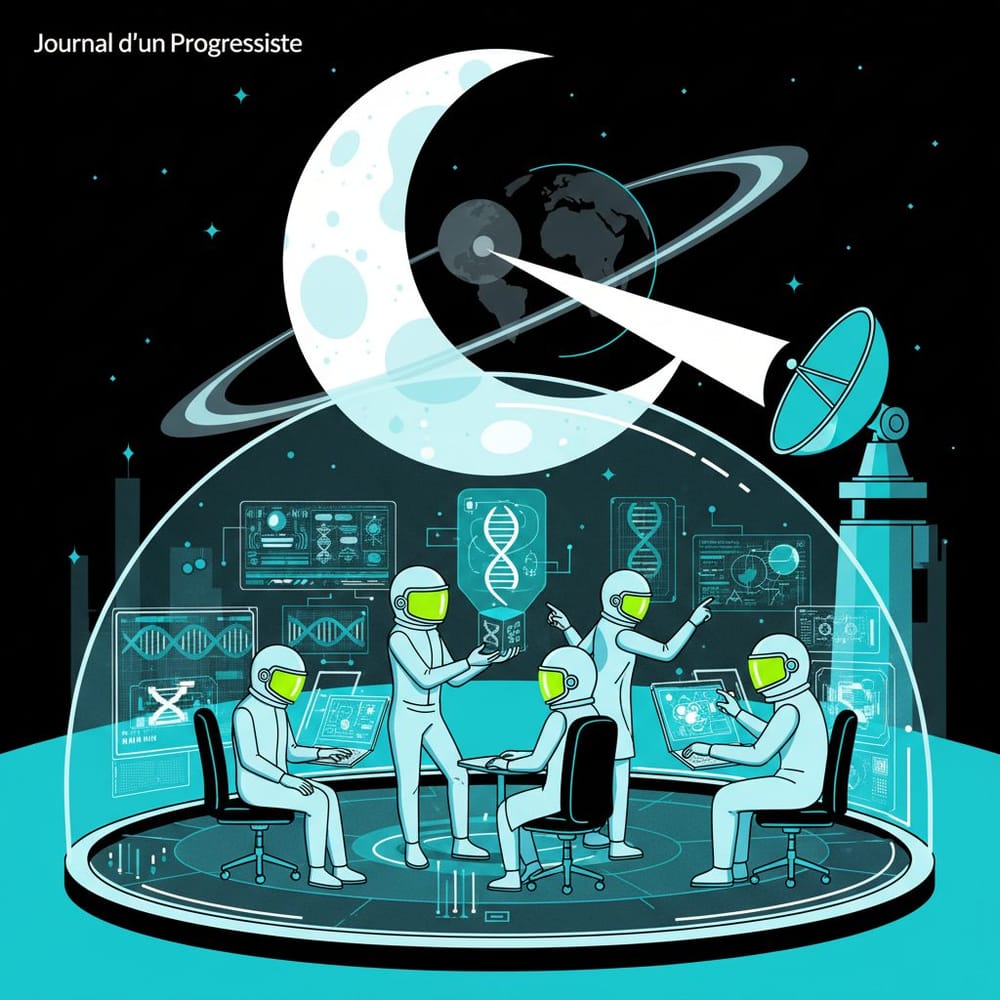
Generating and sharing cryptographic keys based on DNA has the additional advantage of being independent of the distance between sender and receiver. In other words, this method could be used between Earth and the Moon, or beyond. Since DNA fragments are delivered physically in advance, the process can be carried out whether the parties are in the same room, on opposite continents, or, in theory, if one of them is on the Moon.
The strength of this approach is that DNA offers remarkable storage density and stability: properly preserved, the polymer can remain intact for thousands of years, and only a few milligrams are sufficient to store exabytes of binary information, equivalent to a million hard drives. When properly preserved, it can remain intact for millennia, and only a few milligrams of this material are sufficient to store exabytes of binary information, a capacity equivalent to a million conventional hard drives.
A Diplomatic Demonstration Proves Operational Maturity
This approach was tested for the first time under real conditions during the French president’s visit to Japan on April 1, 2026. This research was conducted as part of a collaboration with the CNRS, the University of Tokyo, the University of Limoges, IMT Atlantique, and the School of Industrial Physics and Chemistry of the City of Paris (ESPCI, Paris PSL).
The key data reveals technical performance: 400 megabits of secret mask generated with a global failure rate of 2⁻¹²⁸, or approximately 1 failure for 340 billion billion billion operations. This extraordinary reliability places the method at the level of the most demanding cryptographic standards.
By testing different scenarios, scientists showed that even if the DNA used to generate the keys was intercepted, the channel would remain unbreakable, because there are only two copies of each DNA fragment. The DNA used in cryptography is based on a synthetic production process inspired by the principle of DNA coding; it has no biological, functional, or genetic link with the DNA of living organisms.
Beyond Quantum Cryptography: An Advantage Even Over QKD
This characteristic gives the method an advantage even over quantum cryptography, whose quantum key distribution (QKD) systems are limited by signal attenuation in optical fibers and require reliable repeaters for very long distances. This DNA-based method makes accessible the only family of cryptographic algorithms that offers unconditional security, mathematically demonstrable, freeing it from dependence on an adversary’s computing power.
Quantum cryptography, long considered the ultimate solution to future threats, suffers from practical limitations: prohibitive costs, distances limited by quantum attenuation, and complex infrastructure requiring a controlled environment. The DNA approach circumvents these obstacles by exploiting the physical properties of a stable and transportable medium.
Potential applications cover all domains where absolute unbreakability takes priority over cost considerations: sensitive diplomatic communications, very long-term defense secrets, strategic intellectual property, and space communications where quantum relays are impossible.
Scalability Challenges and Commercial Perspectives
Despite its theoretical robustness, the DNA method must still resolve industrialization challenges. Following the successful test under real conditions during the presidential visit to Japan, researchers estimate that this technique opens concrete perspectives for protecting the most sensitive communications in diplomatic, military, and scientific fields. In the longer term, its applications could extend to extreme contexts such as space communications or the protection of critical digital infrastructure, where the reliability and guaranteed unbreakability of exchanges are fundamental requirements that cannot be compromised.
The economic question remains open: producing synthetic DNA in sufficient quantities for massive encryption keys still represents significant cost compared to conventional methods. But the equation changes radically when compared to the cost of compromising sensitive data in a post-quantum world.
The synthetic DNA production infrastructure, already expanding for biotechnology and data storage applications, could benefit from economies of scale. Automated DNA synthesis laboratories, initially developed for genomic research, find here a new strategic outlet.
This Franco-Japanese breakthrough repositions Europe and Asia on the map of cryptographic sovereignty. While the United States dominates the race for quantum computers, mastery of DNA encryption could offer a credible geopolitical alternative. The diplomatic test in April 2026 may have been merely a prelude to more ambitious deployments between strategic partners.