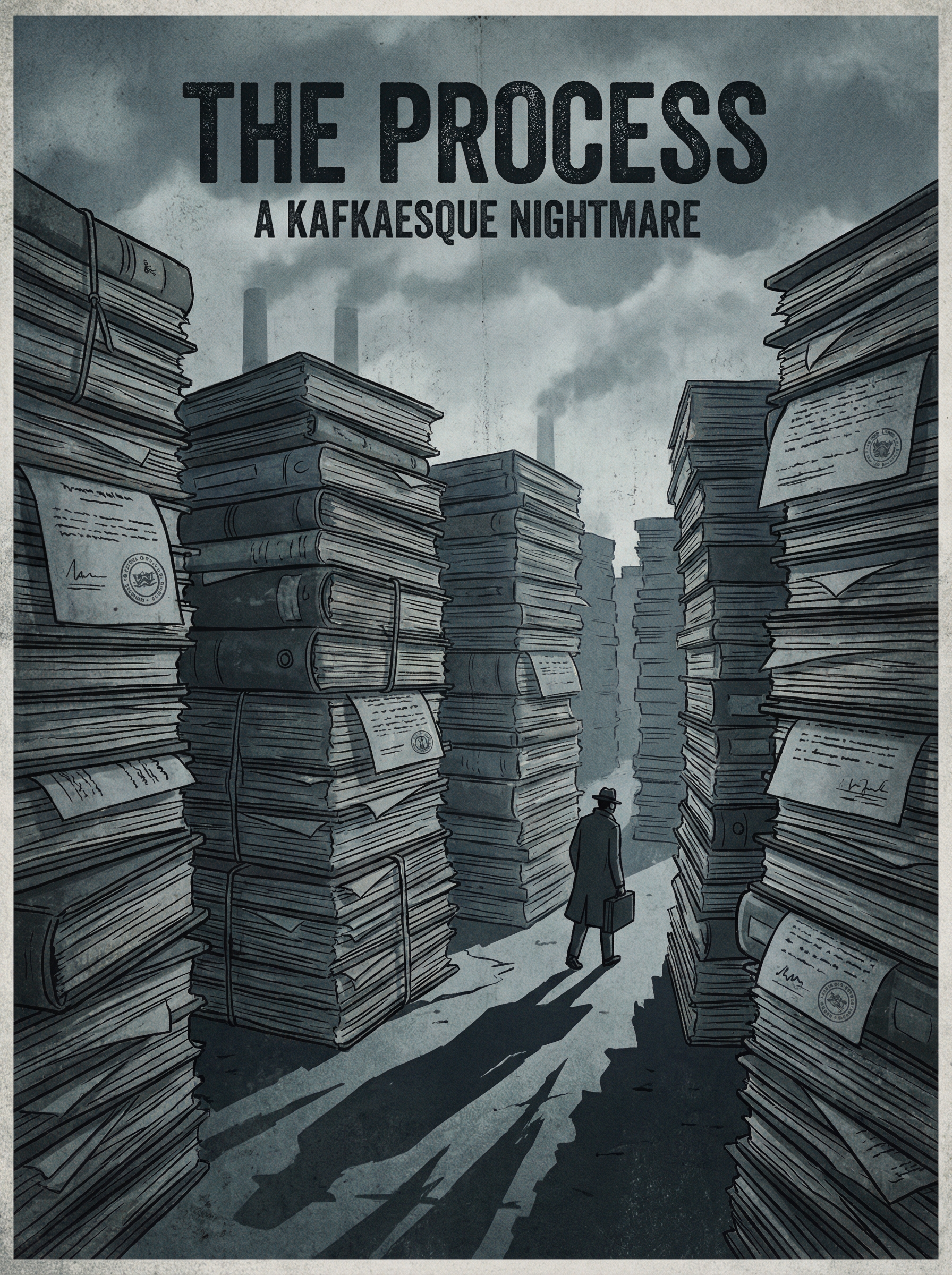
The effectiveness of modern democracies rests on their capacity to meet citizen expectations. Yet a fundamental trend in Europe, the accumulation of public policies, seems to undermine this promise. Rather than consolidating or pruning, governments continuously add new laws and programs, creating an increasingly dense legislative corpus without dismantling existing measures. This phenomenon, studied by European researchers, highlights a fundamental tension between the political will to respond to societal demands and the practical limits of administrative capacity.
This constant growth in rules and public interventions, while aimed at addressing complex problems, paradoxically leads to overload. Administrations struggle to keep pace, threatening to create a growing gap between policy ambition and their effective implementation. It is the very capacity of democratic systems to translate intentions into concrete results that is being challenged, raising questions about the relevance and sustainability of our mode of governance.
The growing weight of laws and programs
The concept of "policy accumulation" describes the process by which governments constantly add new laws and new programs, without dismantling existing measures [1]. This dynamic leads to a continuous increase in legislative and regulatory volume. The ACCUPOL project (Unlimited Growth? A Comparative Analysis of Causes and Consequences of Policy Accumulation), funded by the European Research Council (ERC), examined this phenomenon in 25 OECD countries over a 40-year period, from 1980 to 2020, focusing on environmental and social policies [1, 2].
Research, conducted notably by Christoph Knill, principal researcher of the ACCUPOL project, reveals a general tendency toward policy accumulation, regardless of the sector or country studied [1]. This accumulation constitutes a central characteristic of modern democracies [2]. Christoph Knill explains that "people find it more difficult to understand policies as they become more complex" [1]. Increased complexity that can make the network of rules more arduous to supervise and evaluate. The ACCUPOL project assumes that "modern democracies are potentially trapped by responsiveness" [2], where the desire to respond to each societal demand with a new policy ends up overloading the system.
The gap between policy formulation and implementation widens
Policy accumulation translates into an increasing administrative burden, threatening to create a gulf between formulated policies and available implementation capacities [2]. Policy effectiveness depends not only on their design, but also on the adequacy of implementation agencies in terms of expertise, budget and personnel [1]. Christoph Knill emphasizes that "to implement policies, you need agencies and authorities sufficiently equipped in terms of expertise, budget and personnel" [1].
The lack of coordination between policy formulators and implementers is an aggravating factor [1]. When the concerns of implementation agencies are not fully taken into account during policy formulation, this can hinder the capacity to implement them effectively [1]. There is a risk of a growing gap between policy accumulation and stagnation, or even decline, of implementation capacities [2]. Government agencies are then forced to develop "policy triage" strategies to manage expanding rule portfolios with limited resources, as will be detailed in the book "Triage Bureaucracy: The Organizational Challenge of Implementing Growing Policy Stocks" [2].
France and Italy as examples of administrative overload
The intensity of this accumulation varies from country to country. While Scandinavian states show better alignment between new policies and implementation capacities, France and Italy are distinguished by faster policy accumulation than their administrations can implement [1]. In these countries, the separation between those who formulate policies and those who implement them is often more pronounced, which exacerbates administrative overload [1].
This situation highlights the difficulty of managing a constantly expanding legislative volume. The consequences can be multiple: delays in law application, partial or uneven implementation, and heavier bureaucracy for citizens and businesses. The divergence between political intention and administrative reality can thus erode confidence in the state's capacity to act coherently and efficiently.
Democratic responsiveness under pressure
The desire of governments to respond to societal demands through new policies is a characteristic of democracies, but it can lead to the "responsiveness trap" [1]. If administrative capacities are pushed to their limits and policies become too complex, democracy risks seeing its capacity to respond effectively weakened [1, 2]. The system is then overloaded, and the quality of public response may suffer.
The CRISPOL project, which follows ACCUPOL, also explores how crises affect policy making. It has thus observed that the COVID-19 pandemic led to a "crowding out" effect, where focus on this urgent crisis diverted attention and resources from other important subjects, such as climate change [1]. This concentration of resources on a pressing problem can, over time, contribute to the accumulation of untreated problems in other areas, adding a layer of complexity to public policy management. The capacity of democracies to simultaneously treat several complex problems is tested by this dynamic of accumulation and responsiveness.
Policy accumulation represents a tension for democratic systems. The capacity of governments to formulate and implement relevant and understandable policies is decisive for maintaining citizen confidence. The question remains of how European democracies can navigate between the necessity to respond to society's changing needs and the imperative to maintain administrations capable of acting with effectiveness.
Receive Journal analyses directly in your mailbox.
Also read
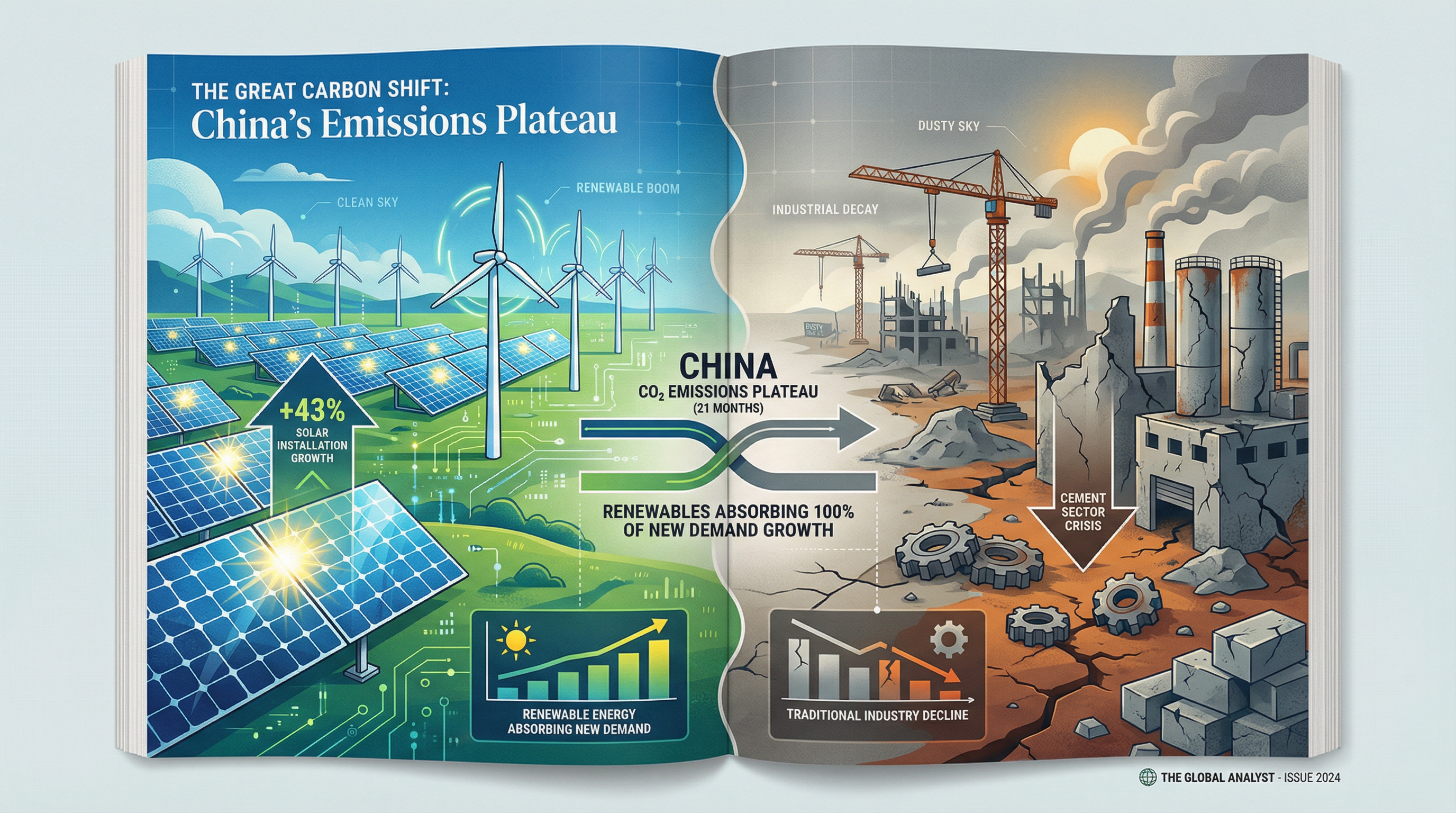
China's CO2 emissions have stagnated for 21 months: structural peak or cyclical accident?
China's CO2 emissions dropped by 0.3% in 2025. It's a modest figure. But it extends a trend that has lasted for 21 consecutive months: since March 2024, emissions from the world's largest polluter have been "stable or declining."

AI and employment: two March 2026 studies reveal -13% automatable job postings and +20% augmented roles
Does AI destroy jobs? Two studies published in March 2026—one by Harvard Business School, the other by Anthropic—provide the first solid empirical data. And the answer is more nuanced than public debate suggests.

The malaria vaccine in Nigeria: 200,000 children vaccinated and a 50% drop in cases in Kebbi State
Malaria killed 608,000 people in 2022, 95% of whom were in sub-Saharan Africa and 78% were children under five years old. And for the first time, a vaccine deployed on a large scale shows measurable results in the field.