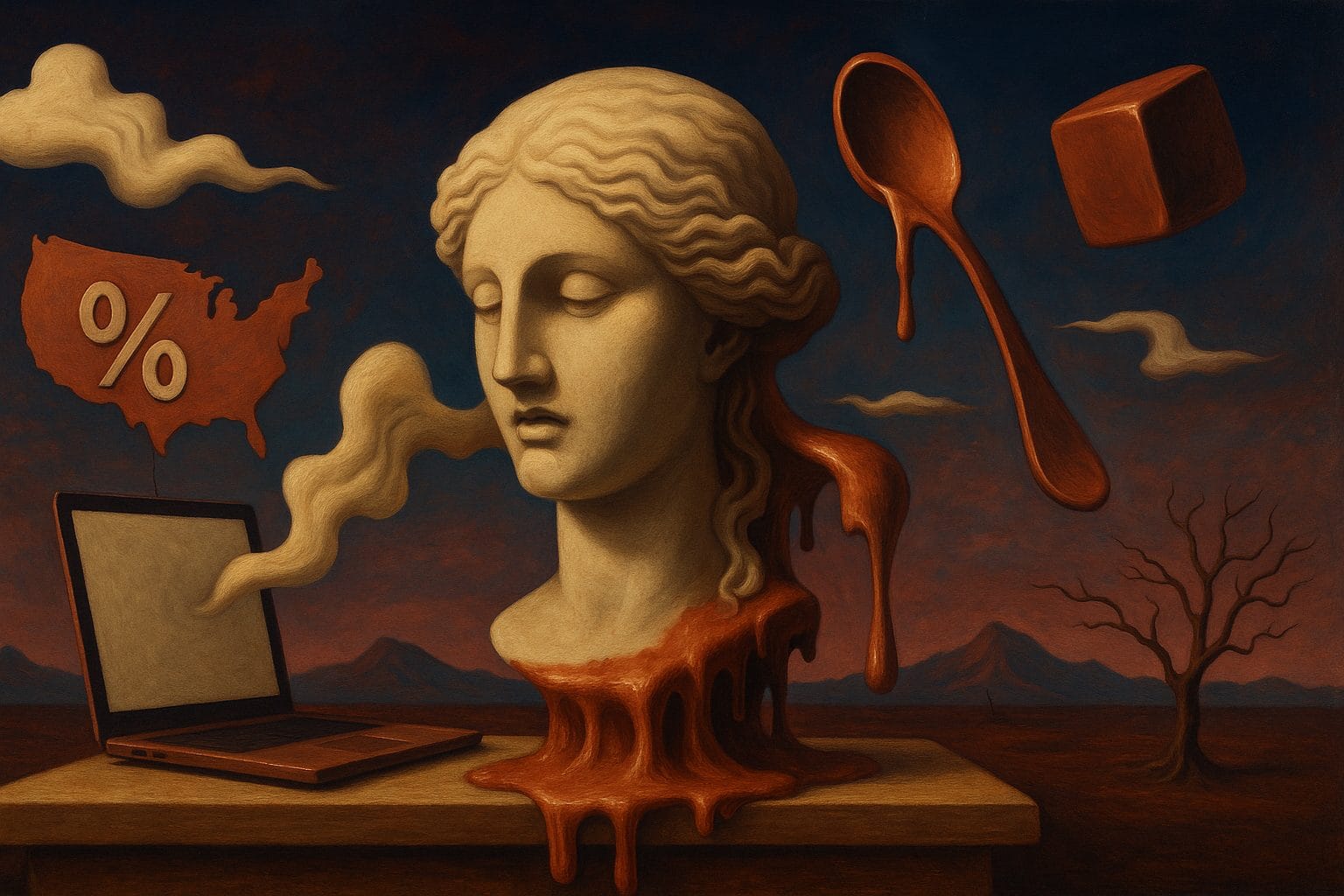
In our world, which has never been more complex than today, the triumph of passion over reason is accompanied by that of brute force over law and morality. This sentence by Dominique Moïsi synthesizes the urgency of his latest work: understanding the emotional springs of current geopolitical chaos. His emotional framework for reading international relations sheds new light on contemporary mutations, going beyond purely rational analyses to grasp the profound forces traversing our era.
The Essentials
- The triumph of passion over reason is accompanied by that of brute force over law and morality according to Moïsi
- The author maintains democratic optimism despite the grim diagnosis: democracy has a future and deserves to be fought for
- 190 pages, published by Robert Laffont, manuscript delivery on January 19, 2026
- Geopolitical analysis through emotions transcends classical frameworks for reading international relations
The Expert on Geopolitical Emotions
A founding member of the French Institute of International Relations (IFRI) in 1979, Dominique Moïsi (born October 21, 1946) embodies a singular approach to geopolitics. A graduate of Sciences Po Paris and Harvard, he obtained a doctorate at the Sorbonne under the direction of Raymond Aron, whose assistant he was. He taught at Harvard University, King’s College London, the ENA, Sciences-Po and joined the Montaigne Institute in September 2016 as special advisor.
His career led him to develop an emotional approach to international relations, theorized as early as 2008 in “The Geopolitics of Emotion,” translated into 26 languages. This analytical framework, which analyzes relations between nations through the feelings of fear, humiliation, and hope, finds in this new work its continuation in the face of contemporary upheavals.
The Diagnosis: When Passions Govern the World
As we enter the second quarter of the twenty-first century, we have witnessed the return of war to Europe, the unleashing of violence in the Middle East, and the abandonment of its role as guarantor of world order by the United States. This observation opens the work and raises the central question: are we experiencing a mere nightmarish parenthesis or are we witnessing the end of one historical cycle and the beginning of another?
Moïsi advances a strong thesis: emotions have supplanted rationality in the conduct of international affairs. This emotional shift would better explain current behavior by major powers than classical geopolitical analyses. Analysis through passions reveals logics of action that escape the traditional rational calculations of international relations.
This approach illuminates contemporary phenomena differently, such as the American radical right counter-culture that now influences mainstream politics, or the geopolitical recompositions observed in South-South trade that defy established balances.
The Instrumentalization of National Emotions
The author develops his demonstration around three structuring passions: fear, humiliation, and hope. Each emotion produces specific geopolitical strategies. In a world totally uninhibited and freed from all rules of international law as well as all moral considerations, it appears that the alliance of wealth and lack of scruples is the key to success.
This emotional analysis allows us to understand the deep springs of behaviors that seem irrational from a strictly geopolitical perspective. It explains why certain actors favor strategies that appear counterproductive but are emotionally coherent with their perception of the world.
The work examines how leaders instrumentalize these collective emotions to legitimize their actions. The feeling of humiliation becomes a catalyst for mobilization, fear a factor of national cohesion, hope an engine of expansion. This emotional framework reveals historical continuities that circumstantial analyses alone obscure.
Democratic Optimism Despite Chaos
Paradoxically, faced with this grim diagnosis, Moïsi maintains an assumed democratic optimism. Yet despite the world’s retreat backwards, nothing would be more dangerous for us than to give in to fear or resignation. I remain convinced that democracy has a future and that it deserves to be fought for; we have a duty to hope.
This optimism is not blind but a deliberate choice. At a time when bad news is mounting, when democracy has never appeared more fragile and peace more distant, the author remains nonetheless optimistic. This position contrasts with the ambient pessimism and constitutes a wager on the capacity of democratic societies to overcome contemporary emotional challenges.
The author seems to plead for a reconquest of political rationality, without denying the power of emotions but proposing to channel them toward constructive objectives. This approach resonates with European efforts to transform its digital regulation into a weapon of sovereignty, seeking to reassert democratic values in the face of geopolitical challenges.
The Blind Spots of Emotional Analysis
While Moïsi’s approach provides original insight, it presents certain limitations. The emotional framework can sometimes oversimplify complex geopolitical situations where economic, technological, and cultural factors intertwine. The author tends to privilege emotional explanation at the risk of neglecting other determinants.
As he submits his manuscript to his publisher on January 19, 2026, he writes: “With Trump, a completely unpredictable president, you cannot know what will happen tomorrow.” Current events were to prove him wrong since Trump instead triggered a war against Iran in February 2026. This critical observation underscores the predictive limitations of analysis, however refined.
The work does not sufficiently address the concrete mechanisms by which emotions transform into public policies. How does one move from collective sentiment to geopolitical decision? This methodological question remains partly in the shadows, weakening the operational scope of the analysis.
Why Read It
This book addresses all those seeking to understand the apparent irrationality of the contemporary world. Moïsi offers a complementary key to reading alongside classical geopolitical analyses, particularly useful for grasping the deep springs of current crises.
The originality of the approach lies in its capacity to reveal emotional continuities behind the apparent unpredictability of events. For the French reader, this analytical framework sheds different light on European issues and France’s position in a world where the limits of European budgetary integration reveal tensions between economic rationality and national emotions.
Moïsi’s democratic optimism, far from being naïve, constitutes a necessary antidote to ambient pessimism. In a context where democracies seem to be retreating before authoritarianism, this reasoned conviction offers a perspective of action rather than resignation.
Bibliographic Information
- Title: The Triangle of the World’s Passions - Understanding the Chaos to Come
- Author: Dominique Moïsi
- Publisher: Robert Laffont
- Publication date: March 26, 2026
- 190 pages