The WHO Reveals the Limits of Its Response to Global Scientific Mistrust
800 scientific institutions from more than 80 countries mobilized by the WHO for World Health Day 2026. This demonstration of institutional strength masks a more complex challenge: converting this mobilization into restored public confidence among populations exhausted by the management of Covid-19.
The World Health Organization is betting on collaborative science to repair shaken confidence. Confidence in science has slightly increased from 76% to 77% between 2024 and 2025 in the United States according to Pew Research, but this apparent stability conceals deep fractures.
The Essentials
- 800 scientific institutions from more than 80 countries participate in the first global meeting of WHO Collaborating Centres (April 7-9, 2026)
- Partisan divisions over scientific confidence intensified during the Covid pandemic, particularly in the United States
- Health misinformation has reduced adherence to public health measures and increased vaccine hesitancy
- The One Health International Summit (April 5-7) and the WHO Forum form “the largest scientific network ever assembled” around a UN agency
Institutional Mobilization Does Not Guarantee Public Adherence
The WHO brought together representatives of more than 800 institutions designated as WHO Collaborating Centres in more than 80 countries at the first Global Forum of these centers. This unprecedented convergence illustrates the organizational capacity of the global scientific establishment, but it also reveals its growing isolation from the general public.
According to a recent study published in Current Opinion in Psychology, there is little evidence of a public crisis of confidence in science at the global level. However, polarization of this confidence is observed in certain countries, revealing that the problem is not uniform but concentrated in specific political contexts.
The network of collaborating centers counts more than 800 institutions in 80 countries, conducting more than 4,000 activities in support of WHO programs. This impressive infrastructure contrasts with American perception: nearly two-thirds of Democrats believe that the United States is losing ground in scientific achievements compared to other countries, against only one-third of Republicans.
Infodemic as a Symptom of Deeper Distrust
The WHO has designated misinformation as one of the main threats to public health. The WHO did not create the term “infodemic” but popularized it. The term was coined by Gunther Eysenbach in 2002 to describe the proliferation of misleading and false information created during a health crisis. This infodemic has led to vaccine avoidance, refusal to wear masks, and use of medications with insignificant scientific data, contributing to increased morbidity.
Trusting science and scientists is associated with a lower probability of expressing a belief pattern that endorses narratives that are definitely or probably misinformed. This correlation suggests that unlike political orientation and religious engagement, which can become part of personal identity, confidence in science is potentially modifiable.
Fighting misinformation requires a multilayered approach involving reactive interventions (fact-checking), proactive interventions (digital literacy, community engagement), and structural interventions (policy and algorithmic transparency). Yet evidence supporting the effectiveness of interventions against Covid-19 misinformation remains variable depending on study characteristics.
The One Health Approach Facing Systemic Challenges
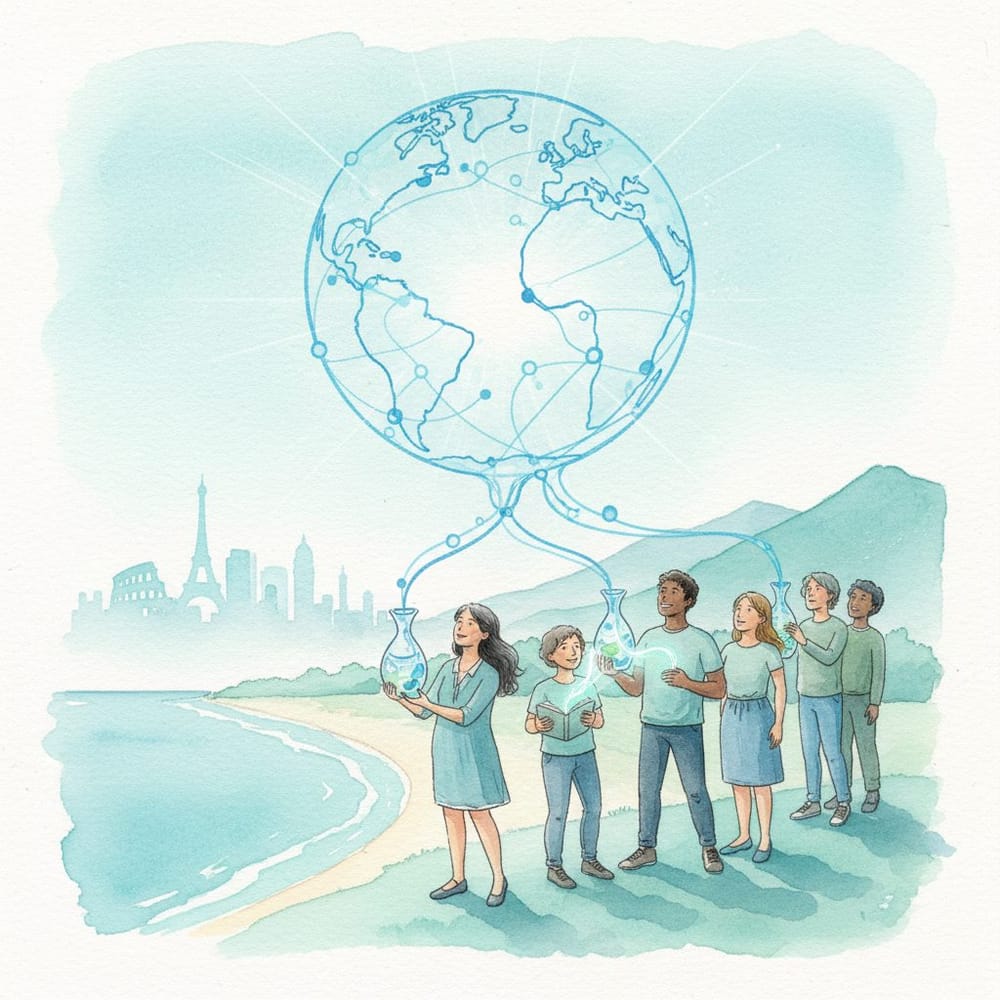
The 2026 theme “Together for Health. Support Science” celebrates the power of scientific collaboration to protect the health of humans, animals, plants, and the planet. This One Health approach recognizes that the health of people is inseparable from that of animals, plants, and ecosystems, requiring coordinated action across sectors.
Approximately 60% of known infectious diseases in humans originate from animals, and approximately 75% of emerging infectious diseases are zoonotic. This interconnection justifies the One Health approach, which treats human, animal, and environmental health as parts of the same system: to prevent the next pandemic, one must monitor not only hospitals, but also forests, farms, wildlife, and climate patterns.
In the South-East Asia region, countries are already putting this approach into practice: Bangladesh is strengthening integrated dengue surveillance, Sri Lanka and Bhutan have made progress on prioritizing zoonotic diseases, India is developing digital surveillance, and Thailand is adopting a comprehensive government approach.
Collaborating Centers Reveal the Geography of Global Science
More than 800 WHO Collaborating Centres in more than 80 Member States work with the WHO on areas such as nursing, occupational health, communicable diseases, nutrition, mental health, and health technologies. In India, there are 58 Collaborating Centres covering various biomedical disciplines and related sciences.
This geography reveals global inequalities in scientific expertise. Among American adults, confidence in scientists differs by education and income: 42% of adults with a graduate degree express great confidence in scientists, compared to 21% of those with a high school diploma or less. 37% of adults at the highest family income level express great confidence, compared to 25% at the lowest level.
The Forum concluded with a renewed sense of engagement across the network, moving beyond rigid scientific projects toward more dynamic and integrated partnerships. The network of Collaborating Centres has strengthened the scientific foundations of the Organization since its earliest years.
The Gap Between Technical Expertise and Political Influence
Americans are divided on the level of activity they want scientists to have in public policy debates on scientific issues. Americans are not convinced that scientists make better policy decisions on scientific subjects than other people, or that they are less biased in their decision-making.
Public support for an active role of scientists in policy remains lower than it was in surveys from 2019 and early 2020. In both of those surveys, 60% of Americans said scientists should play an active role in public policy debates on scientific issues. This share dropped to 48% in September 2022, then slightly increased (+3 points) in the current survey.
If a problem exists, it lies in the limited influence of scientific messages rather than in public distrust of scientists. This observation suggests that the challenge is not so much the credibility of scientists as their ability to translate their expertise into concrete political action.
Confidence in scientific institutions has taken a hard hit. Public health officials observe that an increasing number of entire groups of people are questioning traditional scientific foundations, affecting experts’ ability to build evidence-based consensus.
The WHO Strategy Facing a Multifactorial Challenge
Forum participants emphasized that strong international cooperation remains essential, particularly amid reductions in global health funding. Coordinated global responses, collective investment, and collaboration are critical to preventing local health crises from becoming global emergencies.
The WHO announced that the next global meeting of collaborating centers will take place annually for the first two years, then every two years. The next Forum will be held next year on April 7 in Geneva, then the following one in 2027.
The WHO’s mobilization of 800 institutions constitutes an ambitious bet: to prove that international scientific collaboration can regain shaken public confidence. Confidence in evidence is not given but something that must be cultivated, protected, and extended to every community on earth. The stakes go beyond communication: it is about reconciling technical excellence with democratic legitimacy in a world where science is no longer automatically perceived as neutral.