Finland has just recorded a fertility rate of 1.25 children per woman in 2024, its lowest in history and one of the lowest rates on the planet. This figure places the country on par with Japan and South Korea, two societies known for their demographic difficulties.
The Nordic model is crumbling. For decades, these societies were presented as proof that gender equality, generous family policies, and economic prosperity could maintain dynamic fertility. This certainty is shattering: all Nordic countries are seeing their birth rates collapse at a rate three times higher than the European average.
The Essentials
- Finland’s fertility rate reaches 1.25 in 2024, its lowest level ever
- Nordic rates have declined by 22% to 33% depending on the country since 2010, compared to 8% on average in Europe
- Sweden has gone from 1.94 children per woman in 2010 to 1.67 in 2024
- These societies nevertheless combined gender equality, extended parental leave, and massive financial support for families
The most notable decline affects the best-endowed societies
Data from Nordregio reveal a generalized collapse. Norway, which still had 1.95 children per woman in 2009, has fallen to 1.41 in 2024. Denmark has lost 22% of its fertility over the same period, dropping from 1.87 to 1.55. Iceland is faring better but still declining from 2.20 to 1.74 children per woman.
This evolution directly contradicts dominant demographic theories. Since the work of Frances Goldscheider in the 2000s, researchers believed that gender equality in developed countries could “reconcile” female careers with motherhood. Nordic countries were the perfect illustration: shared parental leave, subsidized childcare, work flexibility, and advanced wage equality.
The paradox strikes even more forcefully because these societies are maintaining their family policies. Sweden offers 480 days of paid parental leave. Finland subsidizes childcare costs by 80%. Denmark allows fathers to take up to 34 weeks of leave. These measures cost between 3% and 4% of GDP, double the OECD average.
Young Nordic people are abandoning the traditional family ideal
The collapse of Nordic fertility is accompanied by a generational shift. Young people are becoming lonelier than the elderly and reversing 60 years of social policy, a phenomenon particularly marked in Scandinavia.
In Finland, 41% of women born in 1990 still have no children at age 34, compared to 28% for the generation born in 1980 at the same age. In Sweden, the average age at first birth now exceeds 30 years. More revealing: surveys show that fertility intentions of young Nordic adults have dropped 30% since 2015.
This transformation affects all social categories, including the most educated and highest-earning. University-educated women, who nonetheless benefit from the best opportunities to balance work and family, are massively postponing their plans for children. Many definitively abandon the idea after the second child.
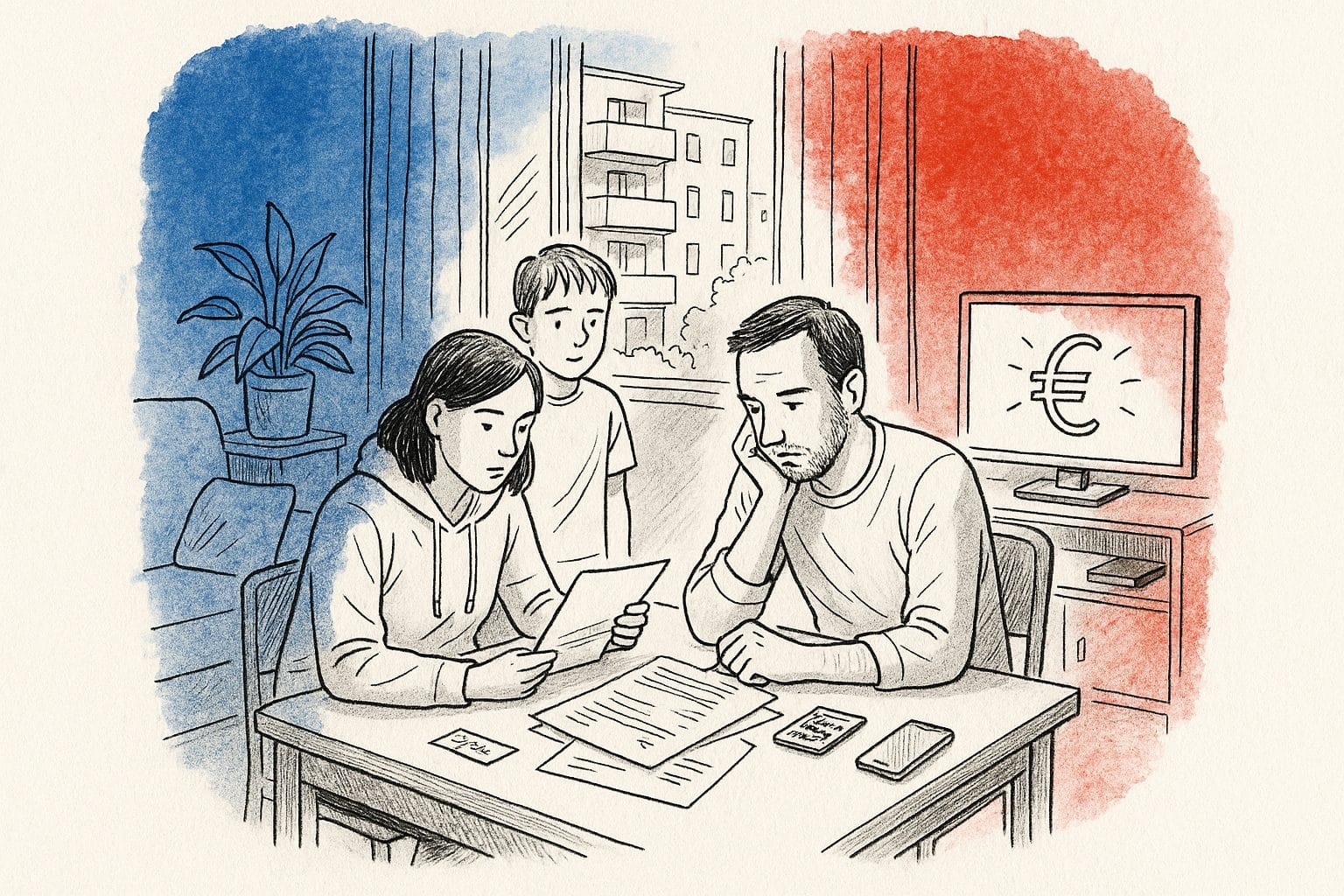
The phenomenon goes beyond economic considerations. Contrary to popular belief, financial insecurity is not the primary brake. Young Nordic people enjoy stable employment, high salaries, and solid social safety nets. Their disaffection with parenthood stems from other factors: the pursuit of individual autonomy, the priority given to leisure and travel, climate anxiety, and geopolitical uncertainty.
Demographic Expertise in Crisis After Prediction Failures
The Nordic collapse places demographers in an awkward position. Their models predicted a stabilization of fertility around 1.8 children per woman in these advanced societies. Reality has shattered these projections.
Gunnar Andersson, a demographer at Stockholm University, admits that “we have overestimated the impact of family policies on reproductive behavior.” The correlations observed in the 1990s and 2000s between gender equality and fertility prove to be more fragile than expected. The Finnish Institute of Demography has revised its projections downward three times since 2020.
This intellectual crisis touches the entire scientific community. The conceptual tools developed to explain the “second demographic transition” no longer allow us to understand current dynamics. Researchers struggle to distinguish between cyclical factors—Covid crisis, inflation, geopolitical tensions—and lasting structural mutations.
The hypothesis of a “third demographic transition” is timidly emerging. It would correspond to a post-materialist society where parenthood becomes a consumer choice among others, subject to individual cost-benefit logic. Within this analytical framework, the child enters into direct competition with other sources of personal fulfillment.
Economic consequences are already transforming Nordic societies
The decline in births is reshaping Nordic political economy. Finland faces a deficit of 50,000 births annually compared to replacement level. By 2040, the ratio of active workers to retirees will shift from 2.1 to 1.6 across the entire region according to Nordregio.
This demographic contraction erodes tax bases. Nordic countries’ generous social protection systems rest on large working populations funding fewer retirees. The inversion of this pyramid threatens the viability of the social model. Finnish public debt already represents 80% of GDP, partly because of accelerated aging.
Governments are attempting to compensate through immigration but are encountering political resistance. Populist parties—the True Finns, Sweden Democrats—exploit tensions between reception policies and the preservation of cultural homogeneity. This opposition complicates long-term migration strategies.
The private sector is already adapting. Nordic companies are automating massively to compensate for labor shortages. The rate of industrial robotization reaches 400 units per 10,000 employees in Sweden, double that of Germany. This race for technical productivity is becoming vital to maintain economic competitiveness.
The Search for Solutions Reveals the Impasse of Pro-natalist Policies
Facing the urgency, Nordic governments are testing new approaches. Finland launched a “baby bonus” of 10,000 euros in 2024 paid at the birth of the second child. Sweden is experimenting with three-year parental leave fully reimbursed. These measures cost several billion euros but show no measurable impact on fertility intentions.
Historical experience suggests the ineffectiveness of financial incentives. France has distributed allowances and tax reductions for 80 years without preventing its own demographic decline. China is experiencing the collapse of the authoritarian demographic model despite abandoning the one-child policy. Government levers seem poorly suited to profound cultural mutations.
Some researchers advocate for “assisted fertility” policies: state-funded egg freezing, expanded medically assisted reproduction, support for single-parent families. These measures target technical obstacles to late parenthood rather than classic financial incentives.
Others are exploring the path of social innovation. Family-friendly urban planning, companies certified as “parent-friendly,” shared childcare networks are emerging as alternatives to top-down policies. These experiments remain marginal but testify to a search for new solutions.
Adaptation remains possible. Japan, confronted for 30 years with the demographic challenge, is developing technologies to assist the elderly, reorganizing its cities to optimize public services, and rethinking how work is organized. These innovations could inspire Nordic societies in their own demographic transition.
Nordic countries are discovering that gender equality and economic prosperity are no longer sufficient to guarantee generational renewal. This reconsideration challenges all developed societies on their ability to reconcile individual fulfillment and collective reproduction. The answer will determine the future of the European social model.