Tech Giants Become the World’s Leading Clean Energy Buyers
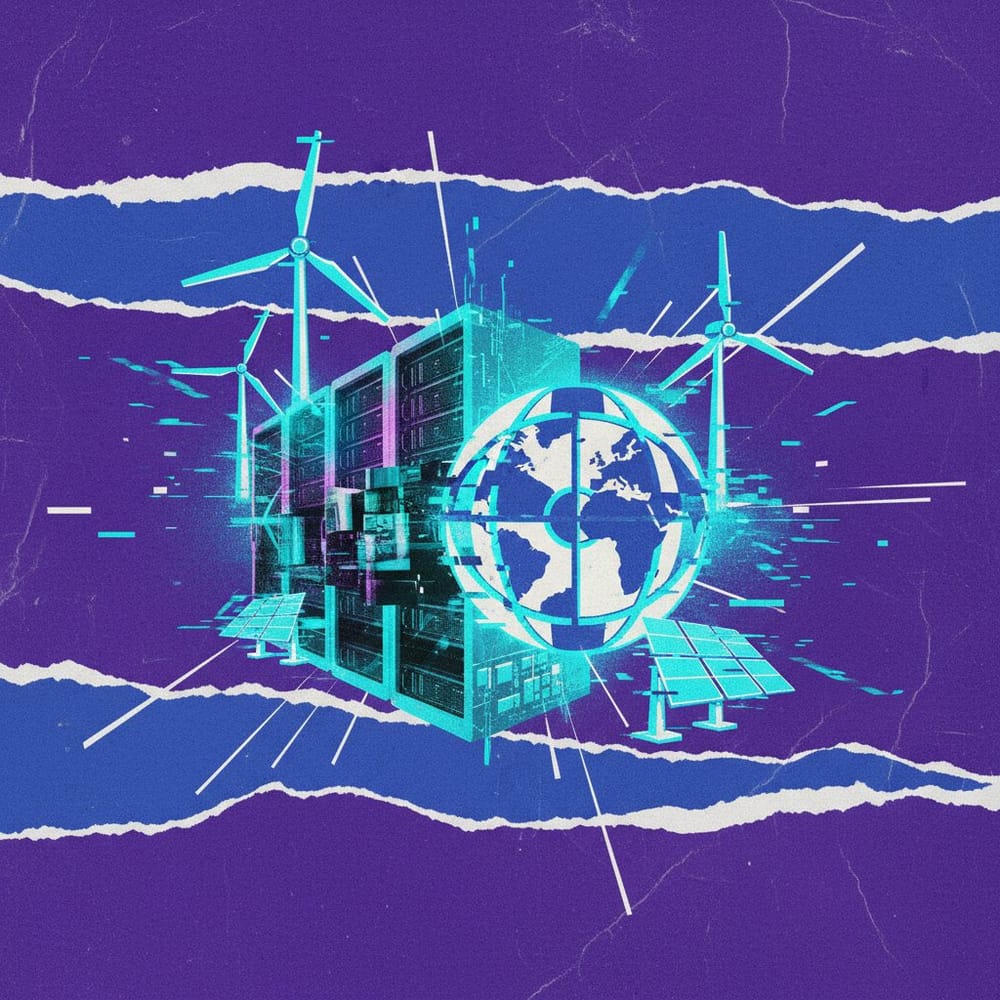
6% of national electricity. That is the share now consumed by data centers in the United Kingdom and United States, according to the International Data Center Authority. A 15% increase over two years that propels Google, Microsoft, Amazon, and Meta to the rank of leading corporate buyers of renewable energy worldwide. This explosion in AI energy demand forces a complete reinvention of the energy sector, from reactivated nuclear reactors to innovations in advanced geothermal energy.
The Essentials
- Data centers consume 6% of national electricity in the UK and US, up 15% over two years
- Tech giants have become the world’s leading corporate buyers of renewable energy, surpassing traditional utilities
- Microsoft reactivates Three Mile Island, Google invests in geothermal energy, Amazon orders 20 GW of capacity
- This demand reshapes global energy geography and accelerates innovations in storage and production
Energy Appetites That Redefine the Market
The explosion in artificial intelligence’s energy needs is reshaping the global hierarchy of energy buyers. Google concluded renewable electricity purchase agreements in 2024 for 2.9 GW, equivalent to two nuclear reactors. Microsoft follows with 2.5 GW contracted, exceeding Luxembourg’s annual electricity consumption. Amazon Web Services has ordered 20 GW of new renewable capacity — enough to power 15 million American homes.
These volumes place tech giants ahead of traditional electric companies in clean energy corporate purchases. Bloomberg New Energy Finance puts corporate renewable energy contracts signed in 2024 at 23.7 GW, of which 67% are from technology companies. A historic reversal: ten years ago, utilities represented 85% of these purchases.
Demand is intensifying. Training OpenAI’s GPT-3 model consumed 1.3 GWh of electricity, equivalent to the annual consumption of 120 American homes. GPT-4 required approximately ten times more energy, while future general AI models could multiply these needs by 100. Nvidia estimates that by 2030, training a single advanced AI model could require the equivalent of Argentina’s annual electricity production.
Nuclear Power Emerges from Lethargy Thanks to Tech Giants
Faced with these energy appetites, tech giants are reviving entire sectors. Microsoft signed a 20-year agreement with Constellation Energy to restart Three Mile Island nuclear power plant, closed in 2019 for economic reasons. The 1.6 billion dollar investment will breathe new life into this 837 MW facility, renamed Crane Clean Energy Center.
Amazon concluded three major nuclear agreements. The company is investing 500 million dollars in X-energy to develop advanced modular reactors of 80 MW each. It is also financing Virginia Electric and Power Company to study the deployment of modular reactors near its Virginia data centers. In West Virginia, Amazon acquired a data center directly powered by Beaver Valley nuclear power plant.
Google is betting on advanced geothermal energy with a 350 MW contract from Fervo Energy. This technology exploits Earth’s heat through directional drilling borrowed from the oil sector, allowing access to previously untapped geothermal deposits. Fervo’s first site in Nevada already produces 3.5 MW with 95% availability, surpassing solar and wind performance.
A Technological Race That Stimulates Energy Innovation
This massive demand is stimulating energy innovations that remained experimental. Meta is financing the development of sodium-ion batteries by CATL, a Chinese technology less expensive than lithium and suited to stationary storage. These batteries display a cost of 40 dollars per kWh compared to 120 dollars for equivalent lithium-ion batteries.
The emerging financial multipolarity is also reshaping energy supply chains. American companies are diversifying their clean technology suppliers, reducing their dependence on Chinese equipment. Google invested 2 billion dollars in European and American start-ups developing alternatives to Asian solar panels and batteries.
Energy optimization of data centers is progressing simultaneously. Nvidia’s latest chips consume 40% less energy than the previous generation for equivalent performance. Microsoft is testing server immersion in dielectric fluids, reducing cooling needs by 45%. Amazon is experimenting with outside air cooling in its Nordic facilities, saving 60% of climate energy.
These optimizations remain insufficient in the face of growing needs. The energy efficiency of data centers improves by 3% per year, while their computing needs grow by 15% annually. The gap is widening, forcing the industry to rethink the very architecture of AI systems.
Electrical Grids Under Structural Strain
This explosion in demand exposes structural weaknesses in Western electrical grids. In the United States, data center connection requests represent 200 GW in network managers’ queues — equivalent to 200 nuclear reactors. Connection delays are lengthening: 5 years on average compared to 2 years in 2015.
In Virginia, the American epicenter of data centers with 70% of global internet traffic, Dominion Energy predicts electricity demand growth of 85% by 2038. The state is considering building 25 GW of new capacity, primarily renewable, to meet the needs of tech giants located in the Washington-Richmond corridor.
Europe faces the same challenges. Ireland, which hosts European data centers for Apple, Google, and Microsoft, saw their electricity consumption rise from 5% in 2015 to 18% in 2023. EirGrid, the Irish network manager, now imposed a moratorium on new connections in the Dublin region until 2028.
Network managers are adapting their infrastructure. In Germany, 50Hertz is investing 10 billion euros to strengthen the transmission network oriented toward regions hosting data centers. France is developing dedicated lines directly connecting offshore wind farms to areas of intensive data center consumption.
A World Energy Geography Being Recomposed
This massive demand is reshaping global energy geography. Iceland, powered 100% by geothermal and hydroelectric energy, attracts European data centers. Data center consumption now represents 22% of the country’s national electricity. Verne Global, an Icelandic specialist in high-performance data centers, is fully booked until 2027.
Canada is capitalizing on its hydroelectric potential. Québec Hydro-Electric signed contracts with Microsoft and Amazon for 3 GW of capacity dedicated to data centers. Quebec is banking on its winter hydroelectric surpluses and naturally cold temperatures to attract intensive AI infrastructure.
Norway is following the same strategy. With 98% of electricity from hydropower, the country hosts Nordic data centers for Microsoft and Google. Equinor, Norwegian energy giant, is developing offshore sites combining maritime wind and floating data centers to optimize transmission costs.
Geopolitical Challenges and Energy Sovereignty
This concentration of energy demand raises geopolitical questions. American giants are monopolizing global renewable capacity, creating tension in European and Asian markets. In Europe, the average price of renewable electricity purchase contracts rose 23% in 2024, partially attributable to competition from American technology companies.
The emergence of new economic players is reshaping the balance of power. India is developing its own technology champions with growing energy needs. Reliance Industries announced 10 billion dollars in investments in solar-powered data centers. Tata Group is launching geothermal data centers in Himachal Pradesh.
China is adopting a different approach. ByteDance, Alibaba, and Tencent prioritize energy efficiency over pure expansion. Alibaba Cloud displays an energy efficiency ratio (PUE) of 1.09 compared to 1.25 global average. This Chinese optimization strategy contrasts with the Western approach of massive capacity expansion.
The European Union is preparing specific regulation. The 2024 revised Energy Efficiency Directive requires data centers to improve their energy efficiency by 4% per year and use 50% renewable energy by 2027. A constraint that could slow the deployment of intensive AI infrastructure in Europe.
The traditional energy sector is adapting. European utilities are creating subsidiaries specialized in powering data centers. Engie launched Engie Digital with 2 billion euros dedicated to energy infrastructure for data centers. EDF is developing modular nuclear micro-grids specifically designed to power AI installations.
This energy transformation driven by AI illustrates how technological innovation can accelerate the transition to clean energy, while creating new supply and sovereignty challenges. Tech giants, who have become major energy players by necessity, are stimulating innovations that could benefit the entire global energy system.
Bonn, January 14, 2025