Loneliness now disproportionately affects adolescents and young adults, reversing six decades of social paradigm. While studies from the 1970s-1980s showed an ascending curve — the older one became, the greater the risk of being alone — this trend has inverted over the past two decades. This generational rupture is disrupting the very architecture of French public policy.
More than 1 in 3 young active people aged 25 to 39 feel particularly lonely, twice as many as those aged 60-69. Young adults aged 18-24 are most affected by chronic loneliness at 40%, far more than people over 65 at 7%. This demographic inversion of social suffering calls into question the entire model of French social protection.
The essentials
- Studies from the 1970s-1980s showed an ascending curve of loneliness with age, but this trend has inverted over the past two decades
- 35% of young active people aged 25-39 feel lonely, compared to 17.5% of those aged 60-69
- Loneliness is affirming itself as a more pronounced feeling among younger generations
- Despite policies and strategies put in place, there is no real improvement perceived in combating isolation among the elderly
- This problem affects different demographic categories, notably young people, the elderly, and artisans, making it a mass problem comparable to mass unemployment
A shift that defies public policy
France has built its social policies since the 1960s around preventing isolation of seniors. Fighting isolation constitutes a priority of the future “Ageing Well” roadmap through the development of a new strategy aimed at strengthening intergenerational bonds. But this architecture is becoming obsolete in the face of the new geography of social suffering.
This major transformation challenges contemporary social structures. Sociologists are attempting to understand how structural factors such as competition, pressure to succeed academically, mobility, and unemployment contribute to this growing loneliness among younger generations.
Public programs remain massively oriented toward the elderly. Deployed measures include support for civic service solidarity with seniors, cohabitation and intergenerational twinning, or the production of detection tools for the elderly. This budgetary and conceptual asymmetry creates a dramatic blind spot on juvenile distress.
Youth, new laboratory of social isolation
Among young people in particular, it is often the transition from secondary school to higher education that is cited as a tipping point that isolates and encourages withdrawal. Institutional transitions — the end of secondary school, entry into higher education, first professional experience — fragment social bonds without proposing substitute structures.
Loneliness strikes young people more forcefully at night, when the intensity of social relationships diminishes and support structures close their doors. This nocturnal temporality reveals the insufficiency of support systems adapted to contemporary lifestyles.
There exists a gap between the injunction to happiness in one’s twenties and the overwhelming feeling of loneliness experienced in daily life. Support for these young people by peers of their own age makes it possible to transform perceptions and break the silence around this phenomenon. This contradiction between social imagination and lived reality partially explains the political invisibility of this suffering.
The collapse of the French model of sociability
22% of the population has relationships in only a single family, friendship, or neighborhood network, and 3 out of 4 French people believe that social cohesion is “weak” in our country. This social atomization particularly affects younger generations who no longer benefit from traditional mechanisms of integration.
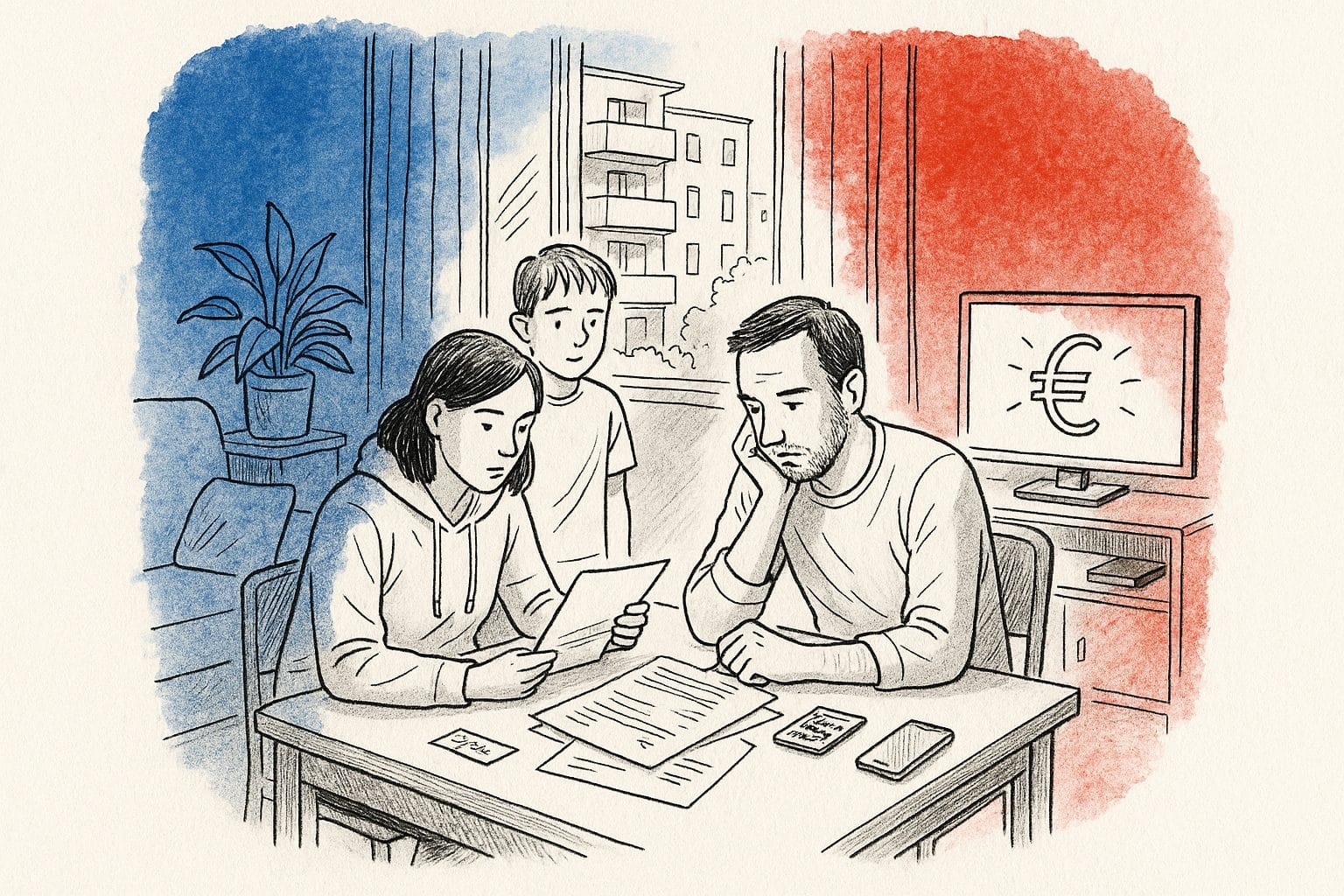
In 2024, 17% of people with low incomes are isolated, compared to only 7% of those with high incomes. This gap increased by 4 points in one year. Youth economic precarity — unpaid internships, short-term contracts, entry-level wages — mechanically amplifies relational isolation.
This sustained increase in loneliness reflects a structural evolution, notably marked by the rise of remote work and the accelerated digitalization of exchanges. Post-Covid transformations in work are widening a generational gap between those who experienced office sociability and those discovering the professional world at a distance.
The elderly, paradoxical victims of the reversal
Paradoxically, the emergence of youth loneliness does not improve the situation of seniors. Despite policies and strategies put in place, there is no real improvement perceived. Fighting isolation among the elderly remains a major issue of public policy. Competition for public attention between generations could even weaken existing achievements.
Charlotte Parmentier-Lecocq is already the seventh minister in charge of the elderly in five years. This simple figure says much about the difficulty in anchoring these policies in the long term. This institutional instability prevents any transversal strategic vision.
The elderly experience a progressive loss of their social relationships, aggravated by deaths or family distance. Their isolation proceeds from an inexorable demographic logic that public policies struggle to counteract.
The urgency of generational overhaul
Growing recognition that these factors are shaped by structural conditions has prompted several OECD governments to act. Countries such as the United Kingdom and Japan have appointed ministers dedicated to loneliness. France lags behind conceptually on this silent revolution.
7 out of 10 French people criticize public authorities for not being sufficiently mobilized on this issue. This massive distrust reveals the extent of the inadequacy between inherited policies and emerging needs.
The real question is therefore not to “do more for the old,” but to rethink society in all its intergenerational dimension, at a time when falling birth rates are added to ageing. This overhaul requires deconstructing sixty years of segmented approach to build transversal policies.
Toward an all-ages social policy on loneliness
Only 3% of isolated people reach out to associations, held back by feelings of shame or lack of knowledge of available programs. The study proposes four areas of action. The underutilization of existing programs reveals their inadequacy to new forms of social suffering.
In 2024, Nightline received 18,000 calls, of which 20% mentioned loneliness and 16% mentioned suicidal ideation. These figures attest to the health emergency that youth isolation represents, comparable to major public health crises.
In May 2025, the WHO World Health Assembly approved a historic resolution making social bonds a global public health priority. This international recognition opens the way to renewed public policies, disconnected from traditional age categories.
The generational reversal of loneliness constitutes one of the most profound social mutations of the twenty-first century in France. It requires a complete rethinking of public policies designed for a world that no longer exists, where old age monopolized relational suffering. The stakes go beyond simple budgetary reallocation: it is about inventing a new social contract adapted to contemporary atomization.
Sources
-
LONELINESS AND ISOLATION BAROMETER FOR THOSE OVER 60 IN FRANCE IN 2025 - Petits Frères des Pauvres
-
When growing old rhymes with loneliness: how to combat social isolation? - Fondation Jean-Jaurès
-
35% of young people aged 25 to 39 feel lonely - Fondation de France
-
Solitudes Study 2024: isolation tested by time - Fondation de France
-
2025 Loneliness Barometer: a persistent fracture, silent legacy of the health crisis - Astrée