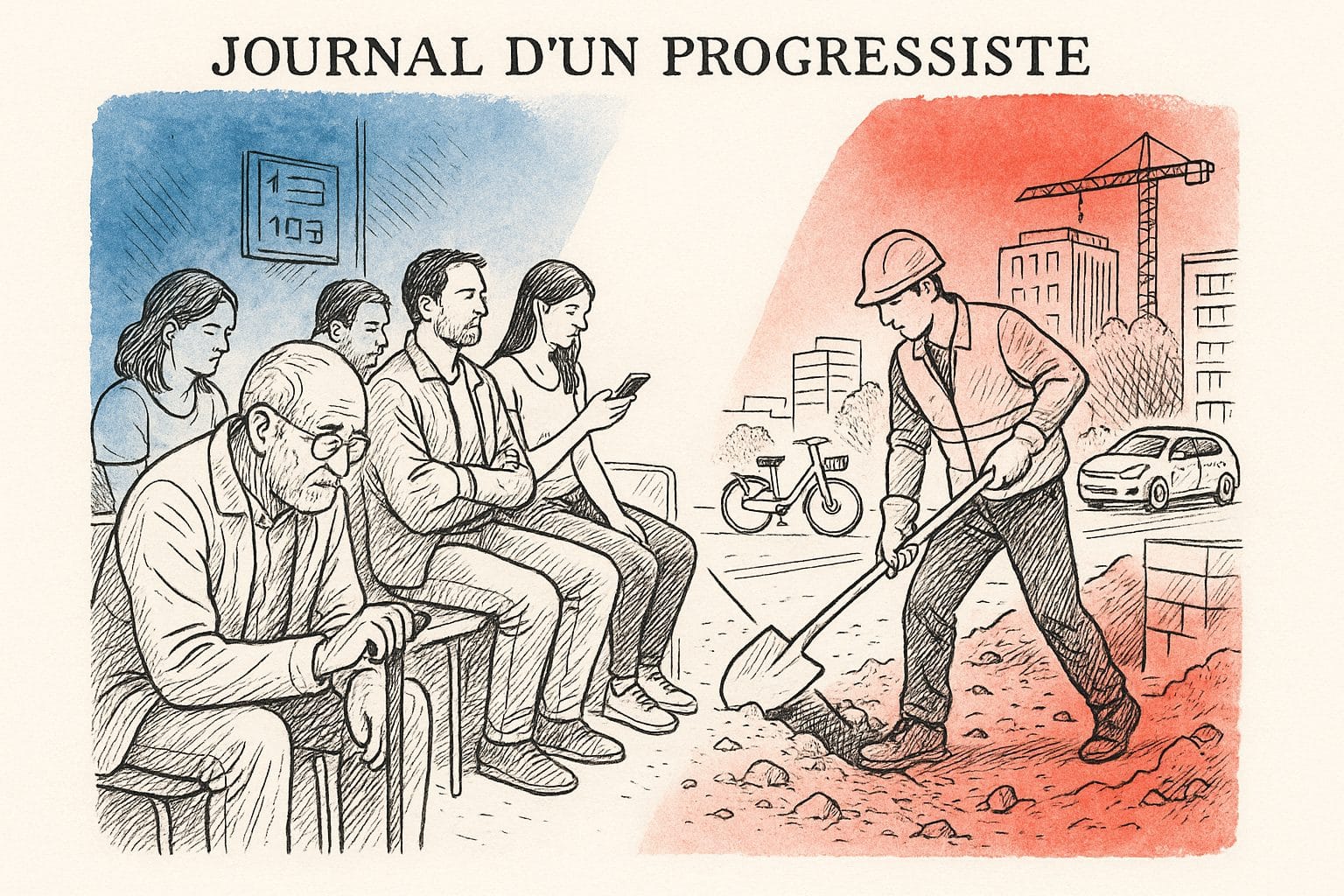
France trains fewer medical graduates per capita than the European Union average. France seeks to steer physician placement through targeted incentives and commitments, without organizing a mandatory general distribution. Paris has 702 specialists per 100,000 inhabitants as of January 1, 2025, compared with significantly lower numbers in Eure. The Ségur health agreement introduced a baseline revaluation of 183 euros net per month for non-medical staff, with distinct measures for hospital physicians, without differentiated geographic bonuses.
The essentials
- France concentrates its specialists in major cities: Paris has far more specialists than Eure, and the density of general practitioners was approximately 1.6 times higher in Paris than in Seine-et-Marne in 2018 (Commonwealth Fund, 2026).
- The Ségur health agreement (2020) provided a flat revaluation for non-medical staff and specific measures for hospital physicians, with no differentiated geographic bonus: salary revaluation alone does not correct medical deserts.
- The blockage is institutional: geographic freedom to establish practice subject to professional and administrative formalities, training concentrated in urban areas, absence of general installation constraints, though certain voluntary arrangements include territorial obligations.
- Several countries use targeted tools against territorial shortages: mandatory rural internships, conditional bursaries for installation, delegation of tasks to advanced practice nurses, with variable effectiveness and still limited evidence depending on the tools.
- Political calibration remains open: regulating physician placement carries a risk of student exodus toward other careers or other countries.
A well-equipped country, unevenly distributed
Concentration has continued. The blockage is institutional, not budgetary.
In 2023, France has 3.9 practicing physicians per 1,000 inhabitants, at the same level as the OECD average of 3.9. The Drees projects stagnation in physician numbers through 2027, then growth; standardized density would temporarily decline and return to its 2021 level around 2032. The 2025 profile from the European Observatory on Health places France below the European Union average for physicians per capita.
The problem combines territorial distribution, workforce evolution, available medical time, and population needs.
Paris concentrates 702 specialists per 100,000 inhabitants as of January 1, 2025. Eure, a Normandy department of 600,000 people, has significantly lower numbers. For general practitioners, the gap between Paris and Seine-et-Marne is substantial, according to the Commonwealth Fund France Country Profile 2026.
These figures do not compare France to other countries. They compare France to itself.
The Ségur did not relocate doctors
In July 2020, the government signs the Ségur health agreement. The accord provides notably 183 euros net per month for non-medical staff. The ministry calculates annual revaluations from the Ségur at 8.2 billion euros, while 7.5 billion concern priority structural investments.
Geographic distribution of doctors remains very unequal after the Ségur. Geographic distribution of doctors remains very unequal after the Ségur.
The reason is mechanical. The Ségur did not uniformly increase the compensation of all hospital physicians; its measures varied by category and status. A uniform increase does not modify the relative compensation gaps across territories. A specialist in Paris earns more in absolute terms after the Ségur, as does their counterpart in Normandy.
The decision to establish practice follows other variables: proximity to professional networks, access to cutting-edge equipment, perceived quality of life, and patient population concentration. These variables cannot be corrected by a uniform salary bonus.
The effects of freedom to establish practice
France has not imposed a general constraint on physician placement, but it uses binding territorial commitments for signatories of certain arrangements. A general practitioner enjoys geographic freedom to establish practice, subject to applicable professional and administrative formalities.
This freedom produces allocation rational from an individual perspective. Doctors establish themselves where their networks live, where their children can attend school, where university hospitals offer continuing education, where patient density guarantees stable income quickly. These logics favor concentration toward major metropolitan areas.
The Commonwealth Fund places France in the group of countries that delayed implementing differentiated geographic incentives. Germany, Australia, and Canada have tested various mechanisms: capping reimbursement in oversupplied areas, bonuses for establishing in undersupplied areas, mandatory rural internships during training. France has primarily favored voluntary financial incentives over binding mechanisms.
Multidisciplinary health centers, supported since 2007, have progressed: more than 2,700 are counted in 2024 according to the Health Ministry. They improve working conditions in rural areas by enabling team-based work. But they do not solve the question of initial attraction: a health center without a doctor to staff it remains an empty shell.
Tools that work elsewhere
Several health systems have implemented documented mechanisms to influence territorial distribution of physicians.
Australia conditions Medicare reimbursement on location of practice for foreign-trained physicians: affected physicians are subject for at least ten years to restricted access to Medicare, except for practice in designated areas or obtaining an exemption. Japan notably regulates training and specialization capacity to limit urban concentration, without a general ceiling on physician installation. Some Canadian provinces have experimented with repayable study bursaries conditioned on professional practice in designated regions.
These arrangements have in common the modification of incentives before practice establishment, during training. Acting after graduation, on already-established practitioners, is politically and practically more difficult.
Task delegation represents a complementary lever. Advanced practice nurses, authorized in France since 2018, can manage chronic disease follow-up, prescription renewals, and certain procedures previously reserved for physicians. In 2024, France has approximately 6,000 advanced practice nurses, according to Health Ministry data. Deployment remains modest relative to needs. In the United Kingdom, nurse practitioners now deliver nearly a third of primary care consultations.
The potential of this delegation for undersupplied areas is real, provided that compensation and legal recognition follow.
The issue of complementary health insurance, already analyzed in these pages, connects here with the question of territorial access: when an insured person cannot see a doctor due to lack of nearby physicians, even good coverage is useless.
Rural aging complicates the equation
The phenomenon reinforces itself over time. When an area ages and loses physicians simultaneously, working conditions degrade for those who remain: patients per practitioner increases, on-call shifts multiply, administrative burden grows for lack of shared secretarial support. These conditions discourage young physicians from practicing there, which intensifies the burden on remaining practitioners and accelerates their retirements without assured succession. The circle is vicious and becomes entrenched because it alters the territory’s reputation in the eyes of residents seeking a place to establish. An area identified as difficult to practice in repels candidates before they even evaluate actual conditions.
Reputation precedes facts and amplifies them. Correcting this dynamic therefore requires acting well upstream of practice establishment, during training, so that residents build direct experience of these territories rather than inherited perceptions, which precisely aligns with the lever of mandatory rural internships that several reports have recommended without yet being imposed.
Undersupplied areas are often rural and may experience marked aging, but they are not systematically those aging fastest. Eure, Creuse, Ariège, Haute-Marne combine an older population, low medical density, and median incomes below the national average.
This combination produces growing burden. An older population consumes more care, particularly chronic management: diabetes, heart failure, respiratory disease. These conditions require regular consultations, not occasional emergencies. When the physician is not accessible, patients turn to hospital emergency departments, which are dimensioned for acute care, not chronic. Cost per care episode increases.
Patient quality of life deteriorates.
Life expectancy already reflects these geographic gaps. Health inequalities by place of residence align with health inequalities by income that we documented in a previous article on retirement and workplace hardship: the two often overlap on the same territories.
The point successive governments have not settled
Since 2004, governments have primarily favored incentives, while using certain voluntary arrangements with obligations.
The brake is political. Liberal physician unions have substantial mobilization capacity.
Partial consensus exists nonetheless on several levers: conditioning installation aid to undersupplied areas, strengthening existing zoning since 2012, making a rural internship mandatory during residency.
The question of numerus clausus, abolished as of the 2020-2021 academic year in favor of numerus apertus, adds a new variable. Increasing the number of medical students takes ten years before producing established physicians. Effects on geographic distribution will depend notably on incentives, but also on training location, mobility, and exit from practice. Training more without changing incentives will reproduce the same map.
This report’s contribution
The Commonwealth Fund 2026 and the WHO Europe Observatory 2025 profile do not produce a new diagnosis. They quantify with precision a known gap and provide an international benchmark that makes it difficult to continue treating the problem as inevitable.
Comparable countries, with universal health systems, have measurably reduced their medical deserts. The tools exist. They involve trade-offs that France has not yet generalized: France already conditions, for signatories of the public service commitment contract, training allocation to a territorial exercise commitment; it remains to expand these arrangements and the prerogatives of paramedical professionals.
The next cohort of residents will graduate into a system slightly more open in numbers. Practice logics will depend on incentives implemented. The challenge for the coming decade is whether France will choose to accompany this additional physician cohort with tools that shift the map, or reproduce the same concentration at greater scale.
Sources
- Commonwealth Fund, France Country Profile 2026
- WHO Europe Observatory, France Health Profile 2025 (European Observatory on Health Systems and Policies)
- French Government, Ségur Health Agreement Follow-up Report 2020–2024
- OECD, Health Statistics 2025
- High Council for the Future of Health Insurance, Annual Reports 2012–2024 (recommendations on medical zoning)
- Ministry of Health and Prevention, Data on Multidisciplinary Health Centers and Advanced Practice Nurses, 2024