All articles

Book Review. "Our Brain Under Influence. How AI" by Nadia Guerouaou
WhatsApp can propose a text response drafted by AI in a conversation. Certain platforms display a warning before publication to encourage the user to modify a potentially offensive comment. This filtering seems harmless. Nadia Guerouaou analyzes how this filtering institutes an affective norm, which
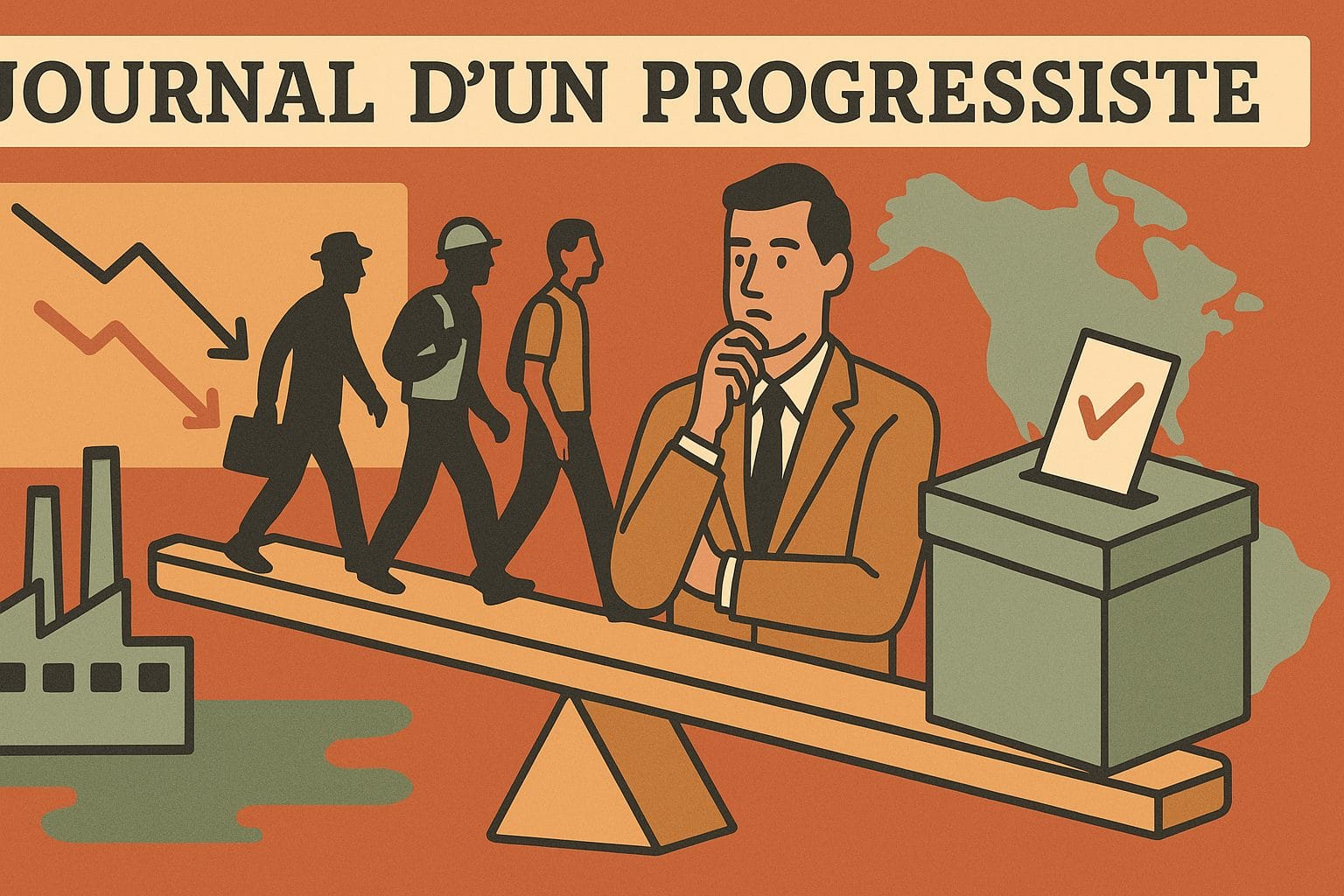
Active Population in Decline: What Political Choices in OECD Countries?
In 2023, approximately one in five Canadian workers was 55 years old or older. In 2000, it was one in ten. This silent shift is now irreversible: an increasing number of Canadians born between 1956 and 1965 are retiring. Aging increases pressure on labor supply in many democracies with low fertility
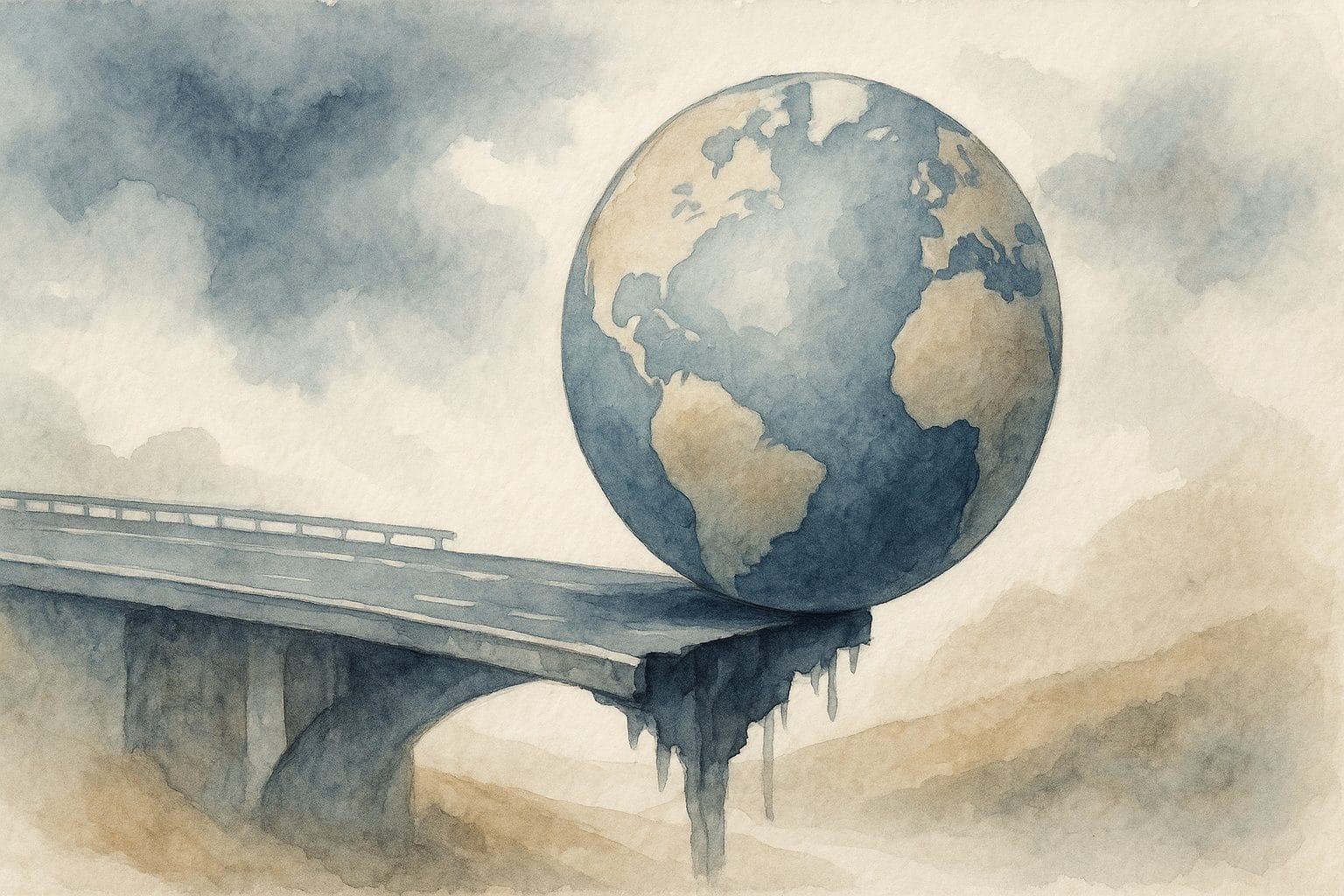
Global Trade Has No Emergency Route
In 2026, the Panama Canal recorded increased demand for passage slots. This figure illustrates a limit of commercial resilience models: when multiple chokepoints tighten simultaneously, the remaining straits risk becoming overload points. Global maritime trade relies on a handful of passage points,

Price signal closes 15 GW of Australian coal and gas
In 2025-26, 9.1 GW of new generating and storage capacity was connected to the NEM, marking a recent record. The country is closing 15 GW of coal and gas without having adopted a phase-out law, while the NEM has a pipeline of 40 GW of generating and storage projects in development or anticipated. AE

Gulf Oil Companies Decarbonize Hydrocarbon Production (if...) While Demand Rises
The major national oil companies of the Gulf are deploying significant billions of dollars to decarbonize their production without reducing its volumes. This bet rests on a conviction: according to scenarios, oil and gas retain an important role, but their weight and trajectory diverge sharply by 20

Predictive Analytics Widens Gaps Between Sports Clubs
In Asia, sports data divides faster than it progresses. Some Japanese, South Korean, and Chinese clubs have invested in predictive analytics systems. Meanwhile, continental results are highly unequal: Thailand ranks ahead of China in the AFC standings, while Indonesia is significantly lower. The que

Tenants More Exposed to Heat Waves
- An L'ObSoCo / Grand Paris Aménagement study from May 2026 indicates that 28% of French people judge their housing poorly adapted to heat waves. - Priority neighborhoods can combine poor insulation, high mineral content, and fewer green spaces, factors associated with greater heat exposure. - MaPri

More Elderly Patients, One-Third of Doctors Over 55: European Medicine Under Strain
One in three European doctors is over 55. According to an estimate based on minimum thresholds for universal health coverage, the EU had an approximate deficit of 1.2 million doctors, nurses, and midwives in 2022. Demand for care increases as the population ages, while the medical workforce approach

Cars consume one-fifth of income for the poorest households, with no alternative in sight
In peri-urban and rural areas, 87% of journeys are made by car [3]. For the most modest households, this means dedicating 21.3% of available income to mobility [5]—twice what the wealthiest 10% spend. In 2025, fifteen million French people face mobility precarity [2]. The 2027 decision is structural

Housing in Canada: Inheritance Replaces Credentials as a Driver of Mobility
In Canada, parental homeownership is strongly associated with children's access to homeownership. In a market where price-to-income ratios have increased significantly, children of homeowners have documented advantages in accessing property. - Among Canadians born in the 1990s, having homeowner pare

AI Agents in Supply Chain: No One Answers When They Make Mistakes
An algorithm blocks a shipment of electronic components to Seoul, and no one knows who to send the bill to. The 2026 Alpega report notes that roughly one shipper in five has none of the fundamental resilience capacities, while documenting 45% of Asian companies testing AI agents. Some agents can aut

Research: France Exports Its Talent and Imports Its Lag
A junior researcher on a permanent contract receives approximately 28,300 € gross annual salary from base pay, excluding bonuses. This entry-level salary reflects a context of limited international competitiveness that the OECD 2026 report places within a broader lag in private-sector innovation. Fr

In Research, France Watches the World Accelerate
Thirty years on the same plateau. In 2023, France devoted 2.18% of its GDP to R&D [1]. The United States and China each crossed the 1 trillion dollar mark in spending [4]. The research tax credit costs 8.06 billion euros in public finances in 2025 [6]. The ANR's competitive budget represents less th

AI Closes the Entry Door to the Job Market for Young Graduates
Qualified cognitive tasks, long considered beyond the reach of automation, are now on the front lines. Training budgets are contracting at the precise moment when the transition would require them to expand. The 2027 trade-off is clear: tax the productivity gains from AI to fund retraining, or leave

Book Review. "Face au mur" by Agnès Verdier-Molinié
France spends 57% of its GDP on public expenditure. France ranks among OECD countries with the highest public spending, with the OECD average at 42.6% of GDP in 2023; it had reached 48.3% at the pandemic peak in 2020. Agnès Verdier-Molinié, director of iFRAP, draws a conclusion that many avoid stati

More Sports Infrastructure, Not More Athletes
Between 2015 and 2024, the proportion of implementation indicators achieved by EU member states rose from 65% to 82%, according to the WHO Europe Physical Activity Monitoring Framework. In 2022, 19% of 15-24 year-olds reported never exercising or playing sports. This gap between policy performance a

Between Two Crises, Southeast Asia Remembers
Meanwhile, ten Southeast Asian countries cooperated to strengthen a regional infrastructure for epidemic surveillance. The gap between these two trajectories says something precise about how democracies manage invisible risk: the kind that is not yet killing. Southeast Asia decided to invest in stre

Drought Threatens China's Massive Reforestation Efforts
China has transformed millions of hectares of degraded land into forests and grasslands. After 2015, certain ecosystem services fluctuated under the effect of climatic factors and land use, while drought episodes affected some of the gains achieved. The Three-North Shelterbelt program, the largest e
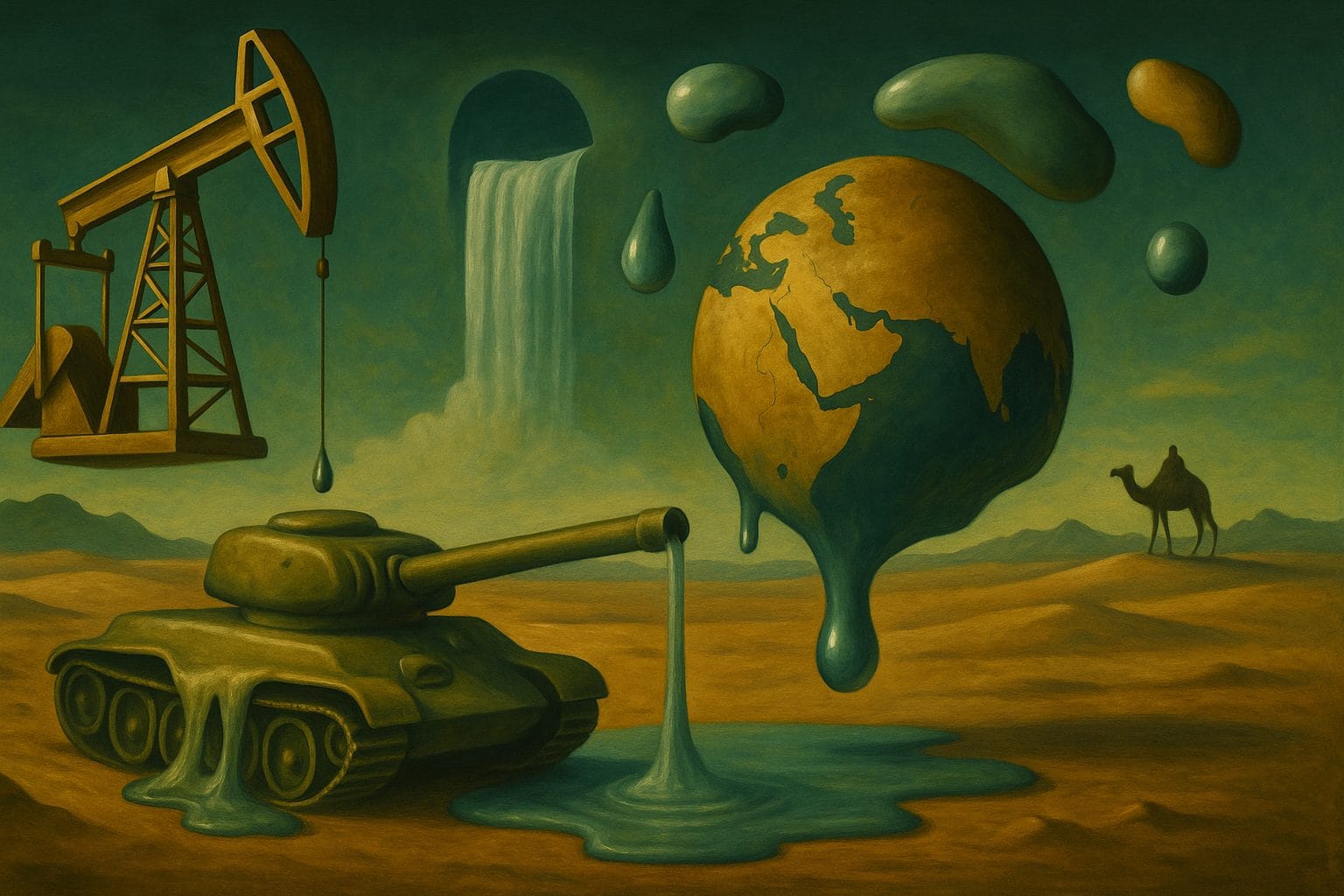
The Gulf's Wars Are More About Water Than Oil
Security incidents have targeted desalination facilities, highlighting the vulnerabilities of critical infrastructure. Shuqaiq 3 produces 450,000 m³/day and includes at least one storage facility corresponding to a day's production along with dedicated electrical infrastructure. The Gulf has built o
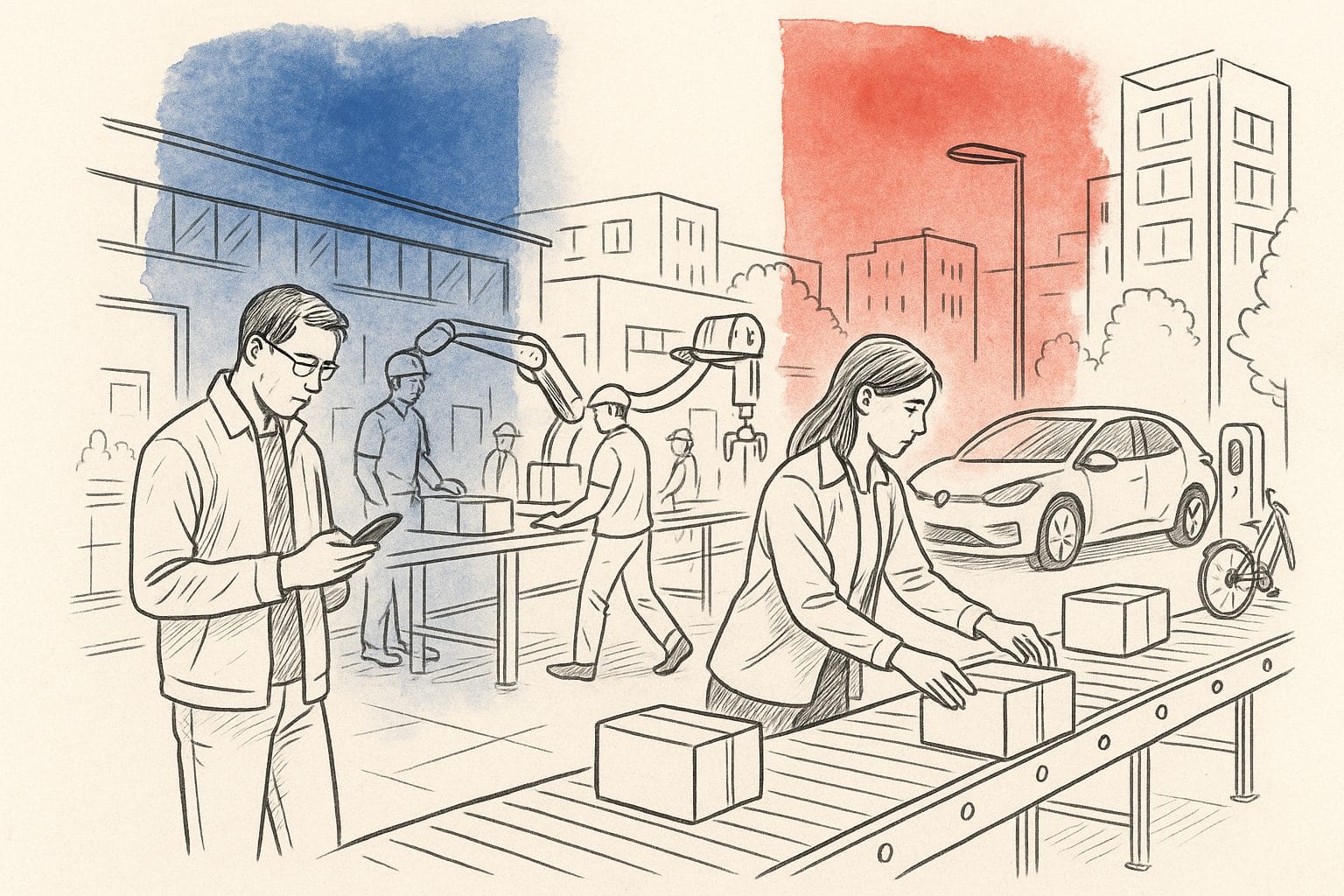
French Industry Weighs Less Than Greece's
France has lost half its industry in half a century. Its share of GDP has fallen to 9.38%, at the level of Greece [1]. In 2024, for the first time since the state began keeping records, more factories closed than opened [3]. The choice to be made in 2027 is straightforward to name, difficult to sust

The Technologies to Exit Coal Exist; the Challenge Is Making Them Profitable
Asia still burns 1,667 GW of coal, three-quarters of global capacity. The technique for closing these power plants exists. Financial arrangements can make certain early closures profitable, but they alone constitute neither the sole bottleneck nor a universal solution. - Asia accounts for 78% of glo

Roboticization: Africa misses the industrial ladder that Asia climbed
In South Korea, a robotic arm on an assembly line is surrounded by technicians capable of programming it, maintaining it, and improving it. In Nigeria, some equipment operates with limited local maintenance capacity. The gap can depend on both training institutions, economic conditions, and the char

Too Many Specifications Kill French Rail
A government report launched in early 2025, with conclusions announced on May 18, 2026, examines delays observed on several recent contracts. The Dugué-Feugier-Ramette mission identifies a range of causes, including unrealistic schedules, technical complexity, homologation, project management and in

The Greatest Wave of Urban Construction in History Is Not Repeating Itself
Three-quarters of the urban infrastructure that will exist in 2050 remains to be built. This architectural choice, made today in many cities in the Global South and North alike, will affect energy bills, air quality, and thermal resilience for large urban populations across several decades. Several