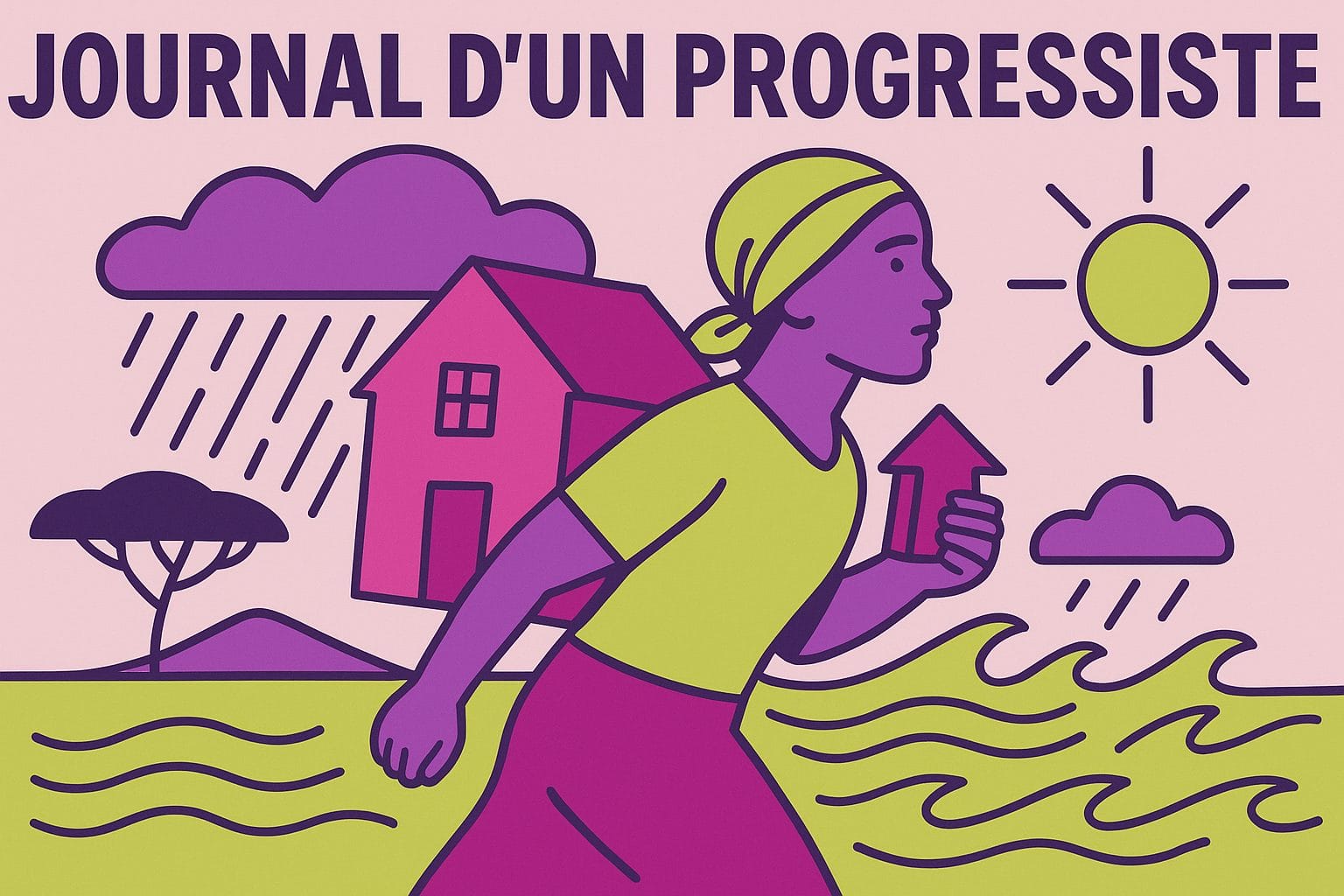
Africa has long imported economic models designed elsewhere. It also exports them. Fractional payment systems adapted to irregular incomes and low banking penetration can also be offered in other markets. M-Pesa, initially launched in Kenya, was also deployed in India; this deployment illustrates the circulation of an innovation launched in Kenya between two Southern markets, via infrastructure and the Vodafone group, of British origin.
The Essentials
- African innovation under constraint produces exportable models, not only local solutions.
- M-Pesa, launched in Kenya by Safaricom in 2007, was successfully transferred to India, reversing the usual direction of technology transfer.
- African pay-as-you-go models (domestic solar energy, micro-insurance, mobile credit) are based on a micro-payment architecture adapted to irregular incomes, which neither traditional banking nor Western fintechs had constructed.
- The continent’s startup ecosystem concentrates its strengths on access to financial services, agricultural yields, and digitalization of education, according to 2026 data from demarrez-votre-entreprise.com.
- The ability of these models to scale in markets with denser financial regulation, without losing the lightness that makes them effective, remains to be demonstrated.
Constraint as a Design Brief
This reconfiguration process produces a less visible consequence: constraint acts as a robustness filter. A product designed to function in an environment with low connectivity, discontinuous incomes, and without easy legal recourse can be engineered to withstand these constraints. This robustness can contribute to the commercial viability of the product. It can facilitate the transfer of these architectures to different markets: they have been tested under demanding conditions.
Everything stems from an architecture problem. Financial systems designed for stable, monthly incomes—bank loans, subscriptions, fixed-premium insurance—may be less suited to populations whose incomes are irregular: the harvest, the construction job, the weekly market sale. In sub-Saharan Africa, approximately 76% of adults did not have an account in 2011; this share was about 66% in 2014. The problem was not a lack of need. The inadequacy of banking supply was one of several possible obstacles, alongside constraints of access, income, cost, distance, and documentation.
The African response was architectural. Rather than waiting for behavior to align with existing models, entrepreneurs and operators reconfigured products around client reality: pay-as-you-use, fractional payments aligned with revenue cycles, guarantees backed by mobile payment history rather than a bank statement. Solar pay-as-you-go is the most documented example: a company like M-Kopa Solar allows a household to acquire a solar panel through daily micro-payments of a few tens of cents, debited directly from a mobile money account. The panel activates with each payment, locks if payment fails. The innovation can be summarized in one sentence: the guarantee is built into the product.
This design responds to local constraints. It arises from local constraints. And it is precisely this that gives it exportable value.
M-Pesa, First Proof of the Reversed Flow
The M-Pesa case remains the most complete demonstration of this reversal. Launched in 2007 by Safaricom in Kenya with initial support from Vodafone and the British government, the service allowed money to be sent by SMS without a bank account. In 2023, Safaricom reported 32.11 million active M-Pesa customers on a monthly basis in Kenya; the figure of over 51 million referred to M-Pesa customers in seven countries and did not correspond to an addressable market potential. The product was subsequently deployed in India, where Vodafone presented it as a tool for mobile inclusion, but the service could also rely on bank accounts and cards.
From 2016 onwards, M-Pesa also had to contend with the rise of UPI, India’s national interoperable payments infrastructure. The Indian launch shows that an adaptation of M-Pesa was possible in a large market with more developed financial infrastructures, without demonstrating country-wide adoption. This is an example of international deployment of this model.
The underlying logic extends beyond M-Pesa. African fintechs offer services based on alternative identity, fractional payment, and local aggregation. These practices can be adapted to other markets.
Three Sectors Where the Model Exports
Domestic energy is the most advanced case. African solar pay-as-you-go, championed notably by M-Kopa, SunCulture, and Bboxx, relies on fractional financing of solar equipment. The model is based on a combination of low-cost hardware, mobile money, and a credit contract integrated into the object itself. The GSMA 2025 report addresses mobile money trends; it cannot be cited as evidence, without a specific page, of solar PAYG tests in Bangladesh and Myanmar.
Agriculture is the second sector. Startups like Apollo Agriculture in Kenya or Farmerline in Ghana offer input credits coupled with agronomic advice via SMS, with repayment aligned to the harvest. The model of fractional agricultural credit, a product that Western commercial banks had largely abandoned for smallholder farmers, is being reborn in mobile form. Development organizations in South Asia and French-speaking Africa are actively seeking to reproduce its architecture.
Education is the third. Platforms like uLesson in Nigeria or Eneza Education in Kenya have developed models of fractional access to educational content, payment by the week, by the lesson, sometimes via mobile credit. In countries where annual tuition fees represent a structural obstacle, the granularity of payment is not a commercial detail: it is the condition of access. This model interests edtech actors in Southeast Asia facing the same realities. This reversal of the innovation flow directly challenges thinking about the stratification of access to digital services observed in other sectors as well.
The African Startup Ecosystem in 2026: Concentrated Strengths
The African startup ecosystem has matured rapidly. Lagos, Nairobi, Cairo, and Johannesburg concentrate most fundraising and talent, according to 2026 data from demarrez-votre-entreprise.com. Investments are deliberately concentrated in sectors where informality is the norm and traditional models have failed: financial services for the unbanked, agricultural productivity, access to education. This concentration reflects a market strategy coherent with the environment.
International funding followed. The continent has attracted growing investment from specialized funds, the International Finance Corporation (IFC), and actors like Partech Africa or TLcom Capital. The IFC, in its 2026 report on Africa’s startup ecosystem, emphasizes the rise of hybrid models, digital and physical agent, as a factor of differentiation compared to purely mobile fintechs.
African models often operate in loose regulatory spaces, sometimes ahead of regulation: M-Pesa preceded Kenya’s mobile money framework by several years. In more regulated markets, in Europe and North America, these same models face compliance requirements that increase the cost of entry. Transfer there therefore requires more extensive local adaptation.
Contributions from Developed Markets Facing African Models
Interest in African frugal innovation extends beyond international development circles. Fractional payment features can address the needs of people with irregular incomes, particularly self-employed, seasonal, or precarious workers. In France, the debate on banking inclusion for platform workers has brought forth proposals that resemble, in their logic, architectures developed in Nairobi or Lagos.
The parallel with other innovation transfers in services is instructive. Risk-pooling systems being restructured in Europe under algorithmic pressure present tensions comparable to those that African models have resolved differently: covering populations whose risk profile escapes classical actuarial categories. The African response—micro-premiums, progressive coverage, and mobile behavioral data as a solvency indicator—is an option European insurers have not yet seriously explored.
Not all African models are exportable. Many respond to infrastructure deficits absent from developed markets. Solar PAYG is particularly relevant off-grid, but can also play a financing or relief role in officially connected areas. Financing arrangements can be adapted to other contexts.
It is the architecture: the granularity of payment, the guarantee built into the object, the assessment of solvency through mobile behavior. These principles are transferable. The specific solutions, not always.
The Reversed Flow as a Test of an Idea About Progress
The question of authorship raises a symmetrical limitation. When a model designed under constraint is adopted in a market of abundance, it tends to be reformatted to match regulatory expectations and preferences of local investors. This reformatting can erase its most original characteristics, precisely those that ensured its effectiveness under difficult conditions. The reversed flow then risks transferring only the surface of the model, the granularity of payment, without preserving its deep logic, the integration of the guarantee into the product itself. It is this loss, more than regulatory obstacles, that constitutes the least discussed limit of transfer.
The direction of technical progress has never been as linear as dominant narratives suggested. Studies of progress, from Steven Pinker to Hannah Ritchie, document that human gains arrive from everywhere on the planet, not only from historical R&D centers. But the idea that economic models designed under severe constraint can become references for relatively abundant markets remains more recent, and less well empirically established.
M-Pesa in India constitutes an example of international circulation of a service first launched in Kenya toward another Southern market, piloted by Vodafone, whose results must be evaluated with precise indicators. Solar pay-as-you-go can be adapted in other contexts. Institutional and regulatory conditions are important, but they add to technical, commercial, and operational conditions. Regulators in host markets must create experimental spaces comparable to those that allowed M-Pesa to develop in Kenya without being strangled by rules designed for classical banks.
Initiatives like financial regulatory sandboxes, deployed in the United Kingdom, Singapore, and more recently in several EU countries, move in this direction. The challenge joins other transition challenges where the structuring of economic flows between producer countries and developed markets redraws established hierarchies.
The ability of African actors to pilot these transfers themselves remains uncertain: their models could be absorbed and repackaged by better-capitalized operators in Europe or Asia. The difference between exporting an innovation and losing its authorship often lies in the speed of internationalization and the strength of intellectual property protections. This is the next test for an ecosystem that has demonstrated its capacity to innovate.
Sources
- Demarrez-votre-entreprise.com, Entrepreneurship Africa 2026
- Safaricom, Annual Report 2023 (safaricom.co.ke)
- World Bank, Global Findex Database
- World Bank, Africa Innovation Report 2025
- IFC, Startup Ecosystem Africa 2026
- GSMA, Mobile Money Report 2025