All articles

Educational AI Between Learning Acceleration and Dependency
Students who learn with AI progress faster, then struggle when it disappears. The OECD documents this in 2026: AI improves feedback during learning, but the student who becomes too dependent arrives at evaluation unprepared, without the habit of working independently. The problem affects several gro

Robots at Work: How to Redistribute the Gains?
In the United States, income concentration has increased significantly, according to US Bank Economics in 2026. Automation has produced real productivity gains over forty years. But these gains have often translated into dividends rather than wage increases. The question that imposes itself is not w

Clubs Equipped with Wearables Show 15 to 20% More Serious Injuries
In the United States, elite clubs equipped with wearables have recorded increases in serious injury rates compared to earlier periods, contrary to what the technology promised. Studies suggest a potential link to behavioral changes induced by data access rather than technical failures of the sensors

In Lens or Roubaix, Birth Still Determines Income
In France, six generations separate a poor family from Lens or Roubaix from average income [5]. In Nordic countries, two to three are enough [1]. This gap is the product of inverted educational spending, a riddled wealth tax system, and a labor market that AI is restructuring from the bottom up. For
France Is Aging Faster Than Its Pension System Can Absorb
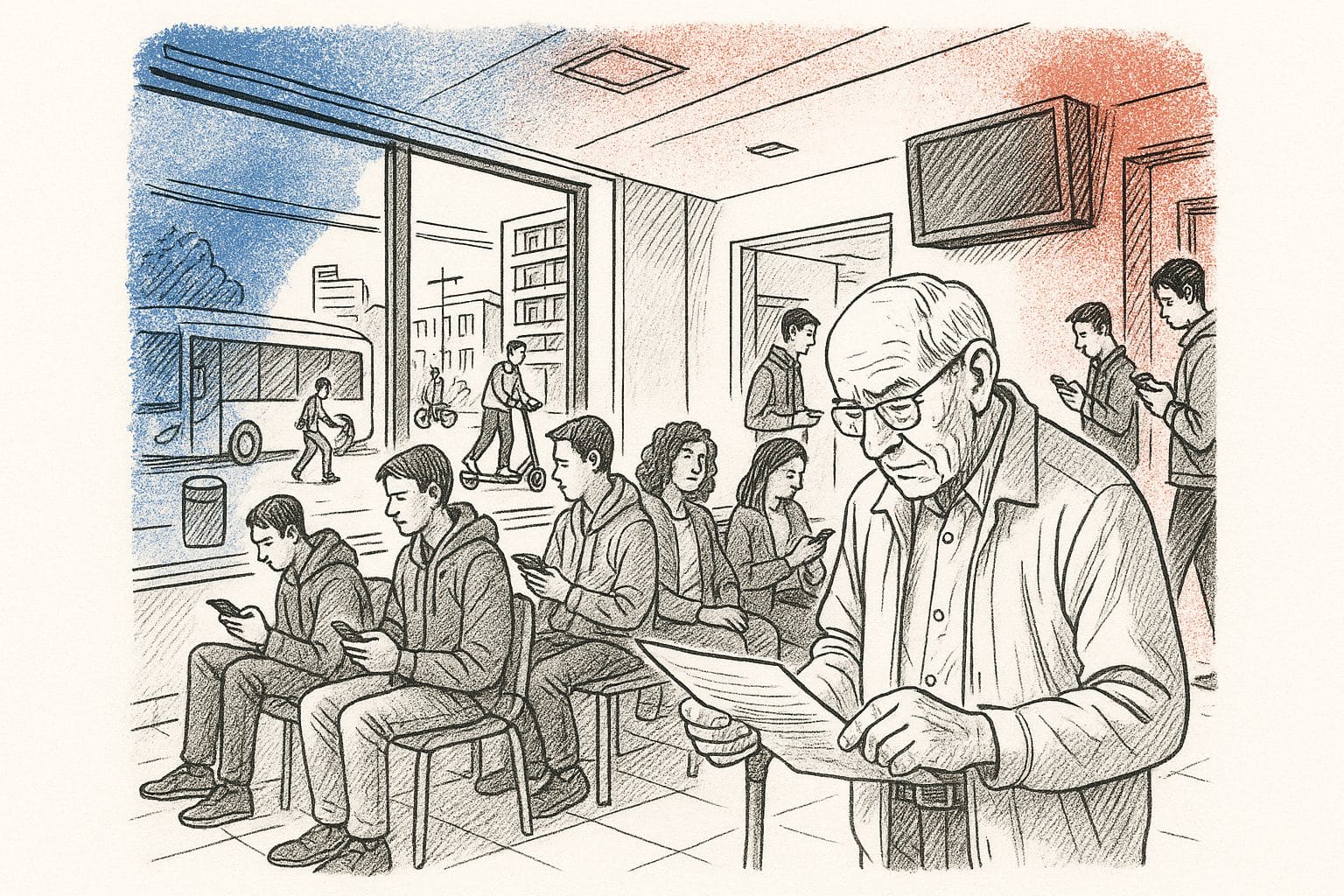
In 2024, France records the lowest fertility rate since the end of the First World War [1]. The Retirement Advisory Council is revising its projections downward. Without a change in demographic or employment trajectory, the deficit in the pension system will reach 2.4% of GDP by 2070 [2]. The decisi

How Schools Can Turn Demographic Decline Into an Opportunity
Enrollment in primary education has been steadily declining since the mid-2010s, while secondary education continued to grow between 2015 and 2025. According to the Institute for Public Policy (IPP), maintaining current teacher staffing levels would reduce average class size from 22.4 to 18.2 studen

40% of Climate Displaced Persons on a Continent That Emits Only 2% of Gases
Chad recorded more than 1.3 million internal displacements in 2024 linked to flooding, the highest level ever recorded for disasters in a country that barely contributes to global emissions. At the end of 2024, sub-Saharan Africa counted 38.8 million people living in internal displacement, roughly 4

The State Subsidizes Wage Stagnation
In 2024, 17.3% of French employees earn the minimum wage (SMIC) [4]. This rate, never reached since 1991, is explained by 39.4 billion euros in annual reductions on low wages [6]. These reductions make any wage increase costly for employers. The decision to be made for 2027 is architectural: turning

86% of PFAS Discharges Come From Industries Not Covered by the Law
France banned PFAS-containing textiles in January 2026. It is real progress, and insufficient. The European chemicals agency estimates annual PFAS discharges into the environment at 70,000 tonnes: industrial fluorinated gases make up a significant share, and French law does not touch them. - French

Automation Deepens Racial Inequalities in the Labor Market
In the United States, robotization does not destroy jobs uniformly. Data spanning twenty years show that job losses hit non-white workers twice as hard as white workers, and men twice as hard as women. These gaps reflect, in the numbers, the unequal position workers face when bearing the cost of tec

The Rise of Robots, or When China Depends on Germany
In China, the stock of industrial robots has grown from 256,000 units in 2015 to 2,027,000 in 2024—nearly eight times more. This surge masks a structural fragility: a significant portion of speed reducers comes from Germany and Japan, and dependence on these imports exposes the supply chain to delay

2027 Can Make France's Imported Carbon Binding
Reducing emissions by 32.5% over thirty-four years is a real result [1]. But 284 million tonnes of CO₂ produced abroad to feed French consumption appears in no official climate commitment [2]. Half the carbon that the French place on the planet remains invisible in the tallies. In 2027, France can c

Europe Could Prevent a Third of Its Deaths but Does Nothing
Hundreds of thousands of Europeans die each year from diseases that medicine can prevent. In 2022, approximately 14% of all deaths in the EU, and 725,625 deaths before age 75, stemmed from preventable causes according to Eurostat. The gaps involve financing, in addition to policy implementation. The

Pro-Natalist Aid Does Not Change the Norms That Produced Low Birth Rates
South Korea recorded a total fertility rate of 0.80 in 2025 (provisional), according to Statistics Korea. After a long decline, South Korean fertility rose slightly in 2024 and 2025. Japan shows 1.14 in 2025; the Chinese figure of 1.15 is not established in the national statement consulted. Accordin

Marine Restoration in the Mediterranean: Projects Without Follow-Up
French Mediterranean waters are home to significant shallow coastal zones between zero and twenty meters deep—nurseries for fish, bulwarks against erosion, active carbon sinks. Restoration programs have been launched. Yet according to a state-of-the-art assessment based on LITTOREX, developed by the
Water Will Cost Asia 12% of Its GDP by 2050
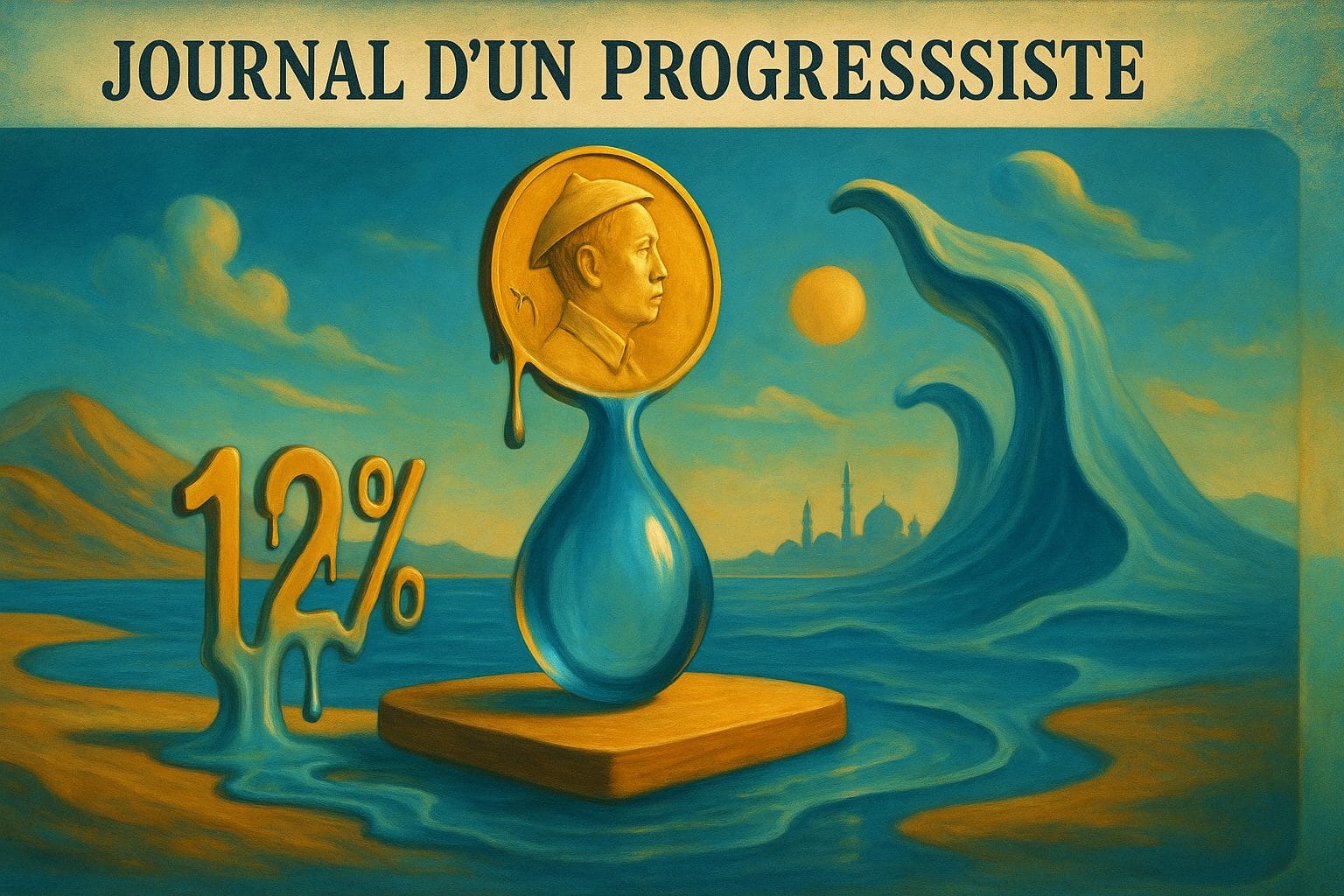
In India, between 2017 and 2021, thermal power plants lost 8.2 TWh of production due to insufficient water for cooling. Water shortages severely disrupt multiple economic and social activities. According to the Global Commission on Adaptation, cited by the WRI, the GDPs of India, China, and Central

Medicare's Hospital Fund Runs Out and Forces a Choice Between Generations
By 2033, Medicare's hospital trust fund will run out of money, according to the program's trustees—a figure cited by the Peter G. Peterson Foundation and the Pew Charitable Trusts. Each year of delay makes rebalancing more costly and more severe for the insured with no other safety net. One in five

Semiconductor Market Fragmentation Comes With a 35% Cost Markup
Securing an advanced chip supply chain comes with additional costs depending on the regulatory regime in place. Since January 2025, the BIS has tightened certain controls and expanded the Entity List, contributing to the fragmentation of the global semiconductor market. The surcharges associated wit

Rising Budgets, Collapsing Clearance Rates
In 2024, funding allocated to police and gendarmerie reaches 24.4 billion euros, 33% more than in 2016 [8]. Over the same period, clearance rates decline for nearly all indicators of serious violence [8]. The choice facing the state in 2027 is direct: redirect this spending toward a genuine investig

Controlling the Excesses of Renewables
In 2025, France produced 2.9 TWh of solar and wind electricity that it could not use. Excess production triggered episodes of negative prices for 513 hours during the year, and RTE ordered production adjustments. The law of April 30, 2025 requires, starting January 1, 2026 and above a threshold, the

Book Review. "The Common Good Economy: A New Compass" by Mariana Mazzucato
Mariana Mazzucato argues that fiscal redistribution happens after value has been created and distributed, and that it comes too late. She proposes partnerships in which access to public resources is conditional on a measurable contribution to the common good. The book examines how to implement this

22% of Jobs Exposed to AI in Asia-Pacific, and Women Are Already Paying the Price
In ASEAN, the ILO does not yet observe widespread employment disruption linked to generative AI, while productivity gains are being reported in certain tasks. But this favorable window masks a widening fracture: women are more exposed to generative AI in many countries, but the actual distribution o

$200 Billion to Catch TSMC, a Gap of Twenty to Thirty Years to Close
In 2024, China represented approximately 28% of global capacity measured in 200 mm equivalent wafers according to SEMI. Chinese public funding devoted to the sector is estimated at approximately $150 billion since 2014, according to the CSIS. Maintaining a coalition-based blockade over the long term

Retirement Is Lost in the Years Before Departure
Only 42 percent of people aged 60-64 are employed in France. The system spends 388 billion euros per year, or 14 percent of GDP [1]. Three days of social benefits out of thirty are financed by borrowing passed on to future generations [12]. Raising the retirement age without making the end of career