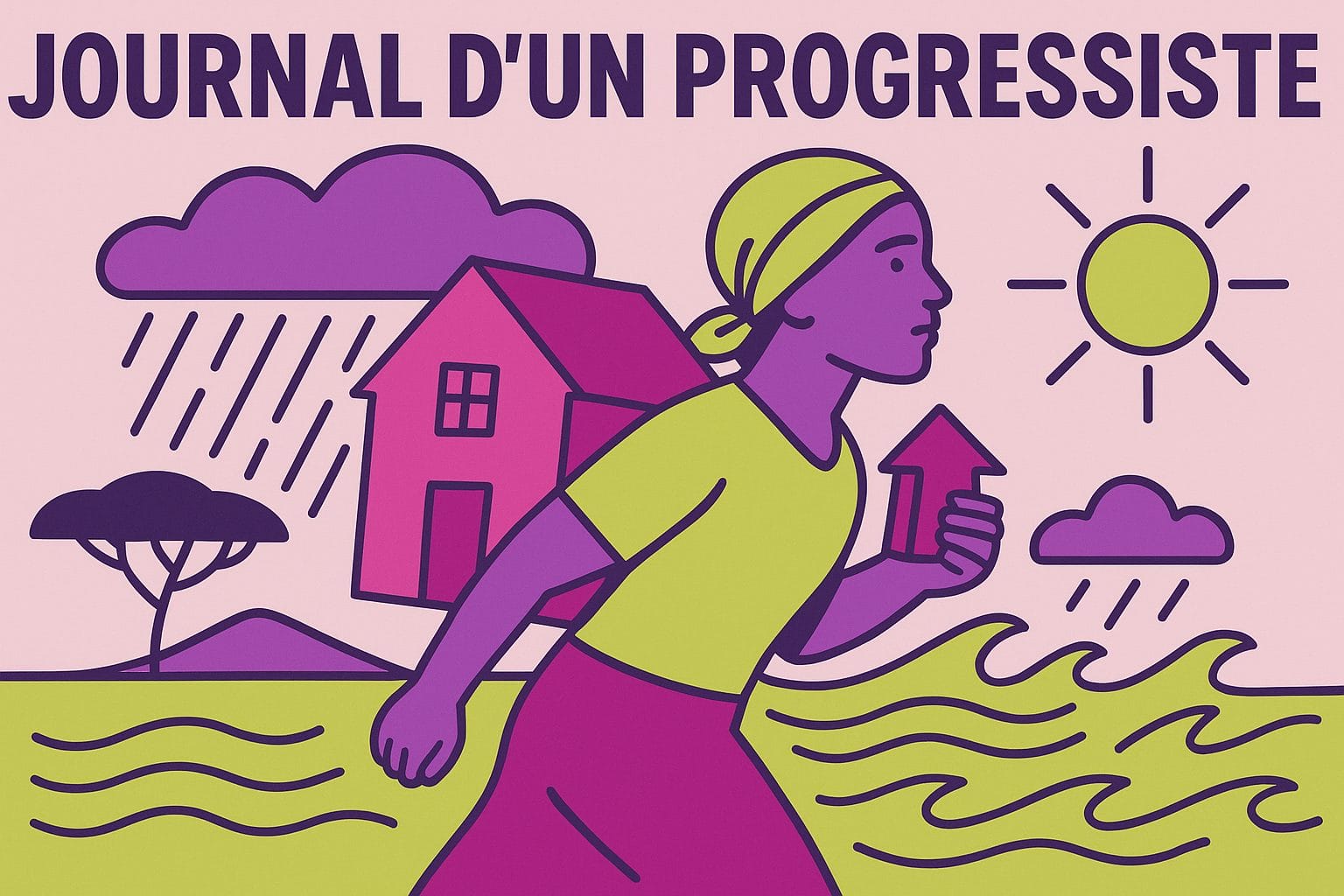
In certain contexts, freelancers can use language models to accelerate specific tasks. Their incomes may be lower than those of an equivalent formal employee, and platform workers often face significant social protection gaps. AI can improve their individual performance, while their status under labor law depends on national rules.
The Essentials
- In Asia-Pacific, 1.3 billion workers operate in the informal economy, representing 66% of total employment, according to the ILO.
- Bangladeshi and Indian freelancers integrating LLMs into their workflow see their productivity multiplied by two to three times, according to UNDP data and platform data from Upwork and Fiverr.
- Their incomes remain structurally 20 to 30% below those of a formal employee with equivalent skills, with no access to health coverage or unemployment benefits.
- The deployment of AI thus creates an emerging category of workers who are technologically more productive but institutionally invisible.
- Extending social rights to these workers without slowing adoption of tools that make their activity viable constitutes both a political and economic challenge.
Sixty-Six Percent of Asian Employment Outside Formal Law
Asia-Pacific is home to the world’s largest concentration of informal work. According to the ILO, 1.3 billion workers in Asia-Pacific were in informal employment; these jobs are insufficiently covered by formal mechanisms and often come with deficits in contracts, social protection, and representation. This represents two workers out of three in the region. This figure is not a historical accident in the process of being resolved: in economies like Bangladesh, India, or Pakistan, informality is the structural norm of the labor market, not a residual exception.
This foundation existed well before generative AI. But it entirely determines the conditions under which the technological wave unfolds there. Understanding what is happening today with language models in these markets requires starting from there: AI does not arrive in an institutional void that it could fill. It arrives in an already organized institutional void, with its actors, its platforms, its income equilibriums, and its absences of rights.
On-demand work platforms—Upwork, Fiverr, Toptal—provided part of these workers with a window of access to the global market starting in the 2010s. A developer in Dhaka or a writer in Chennai could sell their services to American or European clients without going through local intermediaries. This integration was real and measurable: Bangladesh’s digital services export revenues increased significantly over the past decade. It did not necessarily modify the legal framework for these workers. They are generally classified by platforms as independent contractors, which often excludes them from employment benefits, subject to national rules and possible public protections.
LLMs as a Skill-Catching-Up Tool
It is from this point that language models began to concretely change practices. The UNDP reports, in a small qualitative sample in India and Indonesia, contrasting perceptions of AI and uses that can shorten certain tasks; it does not demonstrate average or generalized efficiency gains.
The measured productivity gain is striking. Upwork data indicates differentiated effects depending on categories and contract values; they do not demonstrate a general doubling or tripling of work volume. A writer can produce more short articles thanks to language models. A developer can fix certain bugs more quickly thanks to language models.
This gain has a precise logic. Language models fill specific deficits that penalized these workers compared to providers in developed markets: mastery of professional English syntax, speed of reformulation, capacity to produce text variations. A worker whose technical competence was real but whose limited linguistic fluency limited pricing positioning can now deliver deliverables indistinguishable from those produced in London or Toronto. AI functions here as a surface equalizer: it erases part of the presentation gaps without touching deep analytical competencies.
The UNDP qualifies this phenomenon as “productive empowerment.” This is accurate, insofar as empowerment concerns the capacity to produce, not the capacity to negotiate one’s position within the larger economic system.
Productivity Rises, Revenue Gap Persists
The data examined does not allow establishing the evolution of the revenue gap with formal work. Revenues of freelancers using LLMs and formal employees may differ depending on markets and situations. Several mechanisms explain this persistent gap.
The first is structural: competition on global platforms is global. AI improves the productivity of these workers, but it simultaneously improves that of their competitors in other markets. The freelancer in Dhaka who produces twice as fast finds themselves in competition with a freelancer in Nairobi or Manila who has access to the same tools. The price compression that characterized these platforms before LLMs does not disappear; it applies to a higher volume of work.
The second mechanism is informational. These workers generally do not have access to detailed data on equivalent formal market prices. They set their rates compared to their competitors on the platform, not compared to what a Paris or New York agency charges for the same service. AI does not improve their information about their own market value.
The third is institutional, and it is the most important. A formal employee costs their employer social contributions, paid leave, partial job security. A freelancer without status costs only their billing rate. Revenue gaps may also reflect differences in status, social protection, and bargaining power. For the client side, this is explicit savings.
For the worker, it is a hidden cost: that of the absence of health coverage, retirement savings, and compensation in case of activity stoppage.
Arquié’s Thesis Put to the Test
Axelle Arquié, in her work for the Institut Montaigne on substitution and complementarity between AI and work, poses the question of deployment pace and compensations based on particularly concrete Asian data. Her thesis is that public policy must simultaneously anticipate threatened jobs and emerging jobs, and deliberately choose transition mechanisms.
The case of AI-augmented freelancers in South Asia constitutes an interesting test of this analytical framework, but it partially escapes it. Arquié reasons within a framework where formal employment exists, identifiable employers exist, negotiable collective agreements exist. Complementarity between human and AI exists in certain tasks, while institutions have regulatory levers, social protection, training, and formalization. There is no employer to tax to finance the transition. There is no labor contract to modify through legislation.
There is no union to consult.
In India, recognition and implementation of protections for gig and platform workers remain incomplete; the sources examined do not show that law specifically recognizes human-AI complementarity. Institutions face coverage and enforcement difficulties, but have levers to extend social protection and redistribute some of the gains.
A competing reading, the one defended by Daron Acemoglu in his work on institutions and technology gain-sharing, suggests that this blind spot is not accidental. Acemoglu and Restrepo show that productivity gains from automation do not necessarily translate proportionally into wages and can reduce labor’s share; they do not specifically demonstrate this capture by Asian platforms. The question is thus not only whether AI increases or replaces: it is whether institutions in place are structured so that the worker captures part of the productivity gains they generate. The effects of AI and available protections vary strongly depending on countries, sectors, platforms, and qualifications. The distribution of gains among platforms, clients, and workers varies depending on markets and contractual conditions.
Experiments Exist, but Their Scale Remains Modest
Saying that nothing is changing would be inaccurate. Several initiatives attempt to create bridges between the productivity generated by AI and minimal institutional recognition. They deserve to be documented, even if their current scope remains limited.
In Bangladesh, the government program “Smart Bangladesh” has included since 2023 a digital tools training component for freelancers, with the explicit objective of improving their positioning on global markets. Training in LLMs is now part of the curriculum of certain affiliated training centers. This program does not create social rights, but it invests in skills development for a population that derives real income from it.
In India, mutual aid associations of independent workers in the digital sector are experimenting with collective health coverage mechanisms, financed by voluntary contributions on a cooperative model. These initiatives draw inspiration from precedents like SEWA (Self-Employed Women’s Association), which has demonstrated since the 1970s that collective protection is possible without a formal employer. Their challenge is scale: they reach a few thousand workers in a market with millions.
The UNDP, through its Social Innovation Platform for Asia-Pacific, documents and supports experiments of this type in several countries in the region. The challenge is to build proof of concepts robust enough to guide national public policies. This is a long-term undertaking, in institutional contexts where governments have little administrative capacity to rapidly extend social protection to informal workers.
There is also a lever on the platform side. Upwork and Fiverr have direct visibility into their providers’ revenues: they could, if incentivized or required to do so, facilitate access to portable insurance or retirement savings products. A few experiments exist in this direction, particularly in the United States. Their extension to emerging markets is not yet on these platforms’ agenda, but it is a concrete lever that national regulators or multilateral frameworks could activate.
This subject moreover joins a broader question about the governance of digital platforms: regulating without building productive capacity of one’s own remains insufficient. On-demand work platforms call for regulation that does not merely monitor competition conditions, but creates concrete obligations toward the workers who make them function.
Augmented Without Rights: The Social Contract Test on the Horizon 2035
The current situation is unstable. When technology raises the productivity of workers insufficiently covered by law, the effects on their medium-term situation depend notably on available protection mechanisms.
Two trajectories deserve serious examination, without attributing them to a single source or presenting them as predictions.
In the first, price compression accelerates. LLMs enable increasingly numerous workers to achieve a delivery quality level formerly reserved for providers in developed markets. Supply on global platforms expands massively. Rates fall. Individual productivity gains are absorbed by competition rather than converted into additional income.
The 20 to 30% gap with formal employment does not close: it persists or widens. In this scenario, AI has improved workers’ competitiveness without improving their condition.
In the second trajectory, skills development accelerated by LLMs creates differentiation. Freelancers who master the most advanced tools no longer compete on low-end segments. They reposition themselves on tasks with higher analytical value-added: consulting, system architecture, complex project management, where price competition is less direct. A segment of workers gradually exits price compression. Their income converges toward the formal, not because their status has changed, but because their market positioning has evolved.
This is the optimistic trajectory, and it is plausible for a fraction of the most adaptable workers.
These two trajectories are not mutually exclusive. They can coexist in the same economy, producing a bifurcation: a minority of augmented informal workers who gain value, and a majority whose productivity gains are absorbed by competition and whose social vulnerability remains entire.
The two scenarios have in common the absence of automatic response regarding rights. Technology does not create social protection by itself: it does not generate retirement contributions and does not trigger health coverage. These mechanisms suppose deliberate political decisions: extending social security to independent workers, creating intermediate statuses between employee and contractor, requiring platforms to contribute to portable protection funds.
Several European countries have experimented with directions in this sense. In South Asia, where state administrative capacity is more constrained and informality is structural, these reforms are technically more difficult and politically more complex.
The signal to watch for until 2030, as suggested by ILO and UNDP work on the informal economy, is less the rate of AI adoption than the evolution of income dispersion among augmented informal workers. If incomes concentrate among a minority of highly skilled workers while stagnating for the majority, this will confirm Acemoglu’s thesis on gain capture. If instead progressive convergence toward formal incomes engages, even partial, this will validate the hypothesis of skill-based mobility.
AI can offer individual gains and new possibilities to certain workers, but the scale of these gains and their diffusion to millions of people remain uncertain and unequal. The UNDP and platforms document this concrete progress. Social protection, training, and better income security are important conditions for an equitable transition, but their majority absence among Bangladeshi and Indian freelancers using LLMs is not demonstrated.
Long-term funding for programs that survive their subsidy corresponds precisely to the need of these workers: institutional mechanisms capable of crossing political cycles, not three-year pilot projects. Social cohesion as a health variable recalls that the costs of absence of protection exceed the individual and diffuse throughout the social fabric in the proper sense.
The true measure of AI deployment in Asia’s informal economy will not be the number of workers who have adopted an LLM. It will be the share of them who, in ten years, will have seen their material condition and social security move closer to what formal work offers. This measure does not yet exist. Building it is the first step to acting on it.
Sources
- UNDP Asia-Pacific Social Innovation Platform, https://www.undp.org/asia-pacific/social-innovation-platforms/social-innovation-platform
- ILO Informal Economy Report, International Labour Organization, report on the informal economy (available on ilo.org)
- Axelle Arquié / Institut Montaigne, AI and Work: Substitution or Complementarity, https://www.institutmontaigne.org
- Daron Acemoglu & Simon Johnson, Power and Progress, Basic Books, 2023
- SEWA (Self-Employed Women’s Association), institutional documentation available on sewa.org