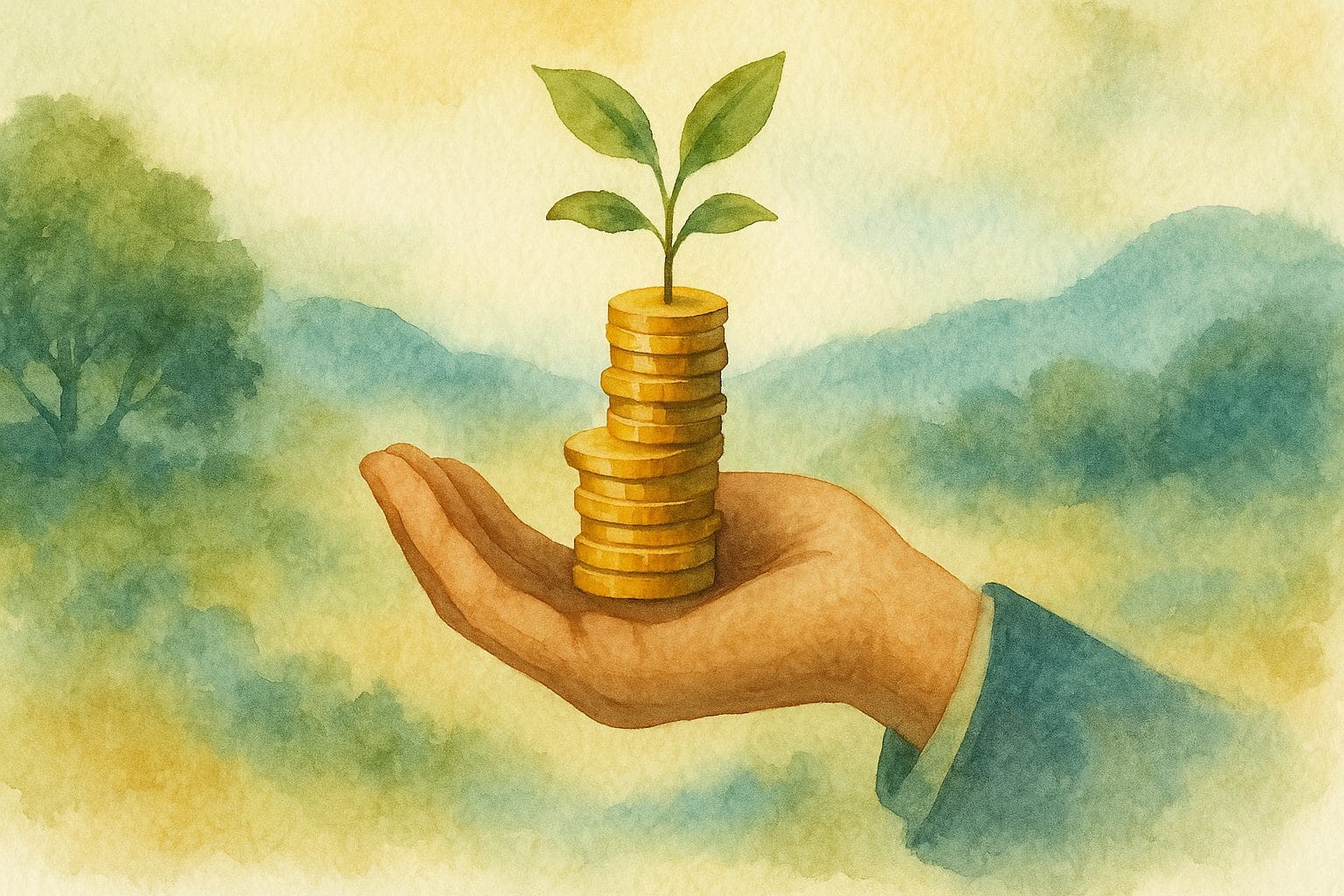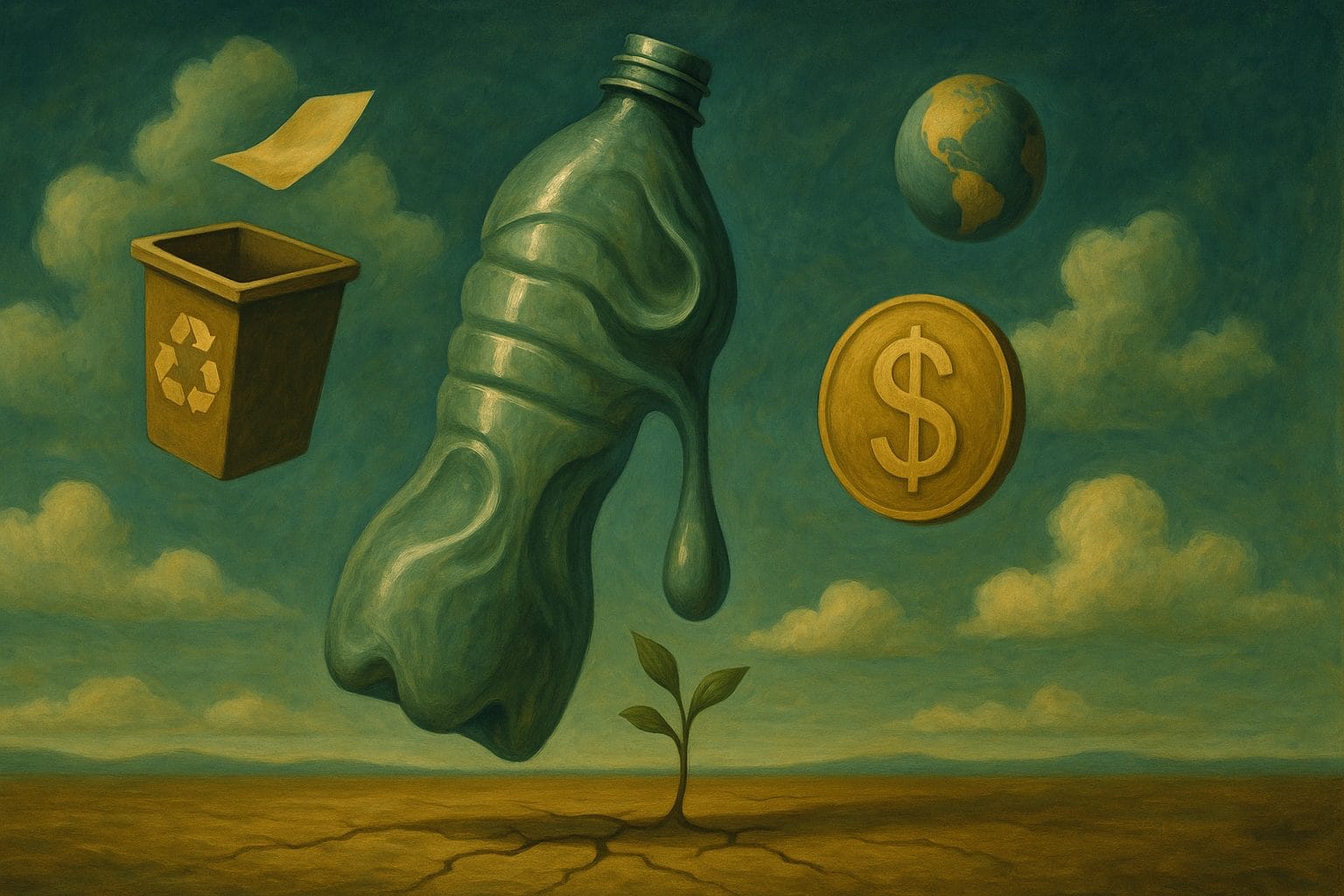
Across 18 million hectares in Africa, degraded landscapes are becoming productive again thanks to a restoration and management initiative involving multiple interventions, actors and local communities. WWF reports approximately 55,000 households as direct beneficiaries of its 2021–2025 initiative. The estimated economic return of between 7 and 30 dollars per dollar invested is cited by CIFOR-ICRAF and UNCCD, reflecting the diversity of restoration contexts. The financial and coordination architecture creates blockages among institutional, political and operational obstacles.
The Essentials
- The WWF programme reports 18 million hectares under restoration in nine countries and 55,000 direct beneficiary households since 2021; the range of 7 to 30 dollars per dollar invested is a global estimate (FAO SOFO 2026, WWF FLR Initiative).
- The Great Green Wall illustrates the difficulties of turning promises into disbursements and projects: 33 billion dollars requested, 14.326 billion announced at the One Planet Summit in January 2021 and 19 billion promised in total in 2021, but actual access to funds by local actors proved uneven.
- The problem is structural: the architecture of North-South financial transfer fragments funds among agencies and conditionalities that exclude small African actors.
- Voluntary carbon markets and sovereign green bonds offer pathways to close the gap without waiting for additional public transfers, provided that certification standards become accessible.
- The signal to watch: the share of the 19 billion promised that is actually disbursed and accessible to local actors, year by year until 2030.
The 18 Million Hectares That Prove It Works
The Sahel long served as an argument for catastrophism. Decades of drought, erosion, desert encroachment. Then something changed. In Niger, Burkina Faso, Ethiopia, millions of farmers began allowing trees to grow rather than cutting them down, a technique called farmer-managed natural regeneration. Results visible from space: vegetation has receded in some zones that were considered lost.
These local dynamics found a continental framework. WWF counts more than 18 million hectares under effective restoration in its African initiative between 2021 and 2025. This figure measures surfaces where concrete restoration practices are underway, not zones where a government merely signed a commitment.
Behind the hectares are households. WWF reports approximately 55,000 households directly benefiting from its 2021–2025 initiative. This figure includes measurable agricultural gains: improved soil water retention, rising yields, revenue diversification through gathering and agroforestry. Restoration produces goods that farmers can sell or consume, not just abstract ecosystem services.
The return on investment of between 7 and 30 dollars per dollar invested, an estimate drawn from economic work cited by FAO/CIFOR-ICRAF, reflects this productive reality. The wide range reflects the diversity of contexts: soils, rainfall, types of restoration, project duration. The range suggests high potential economic benefits, without enabling robust ranking among all development programmes.
The Great Green Wall, Mirror of an Unfulfilled Promise
The Great Green Wall is the best-known restoration project at continental scale. The ambition: a vegetation belt 8,000 kilometres long traversing Africa from east to west, from Senegal to Djibouti, to contain desert encroachment and stabilize Sahelian ecosystems. Officially launched in 2007, the project took a decade to reach cruising speed.
At the One Planet Summit in January 2021, 14.326 billion dollars were announced; total pledges then reached 19 billion dollars in 2021, against an estimated need of 33 billion. A gap remained to be bridged, but the roughly 19 billion USD were commitments, mostly handled within individual donor programmes; by March 2023, approximately 2.5 billion USD of the 19 billion promised had been disbursed.
The distinction is essential. A financing pledge at an international conference generally takes the form of a political intention, subject to conditions. The money then passes through multilateral agencies, intermediary funds, eligibility procedures. At each stage, compliance costs accumulate. Timelines extend.
Complex administrative and financial requirements can constitute a significant barrier for small local projects.
Access to international financing can be lengthy due to programming, approval and negotiation procedures. A farmer restoring a plot needs to know that water will be available in three years, that seedlings will arrive the following season, that expected agroforestry income will materialize. Fragmentation of international financing is incompatible with this long-term logic.
Who Plants, Who Decides, Who Finances
The geography of power in African restoration deserves to be named clearly. The beneficiaries are African, the 55,000 households, Sahelian rural communities, states that inscribed commitments in their national plans. Local willingness exists. The techniques work. Results are measurable.
Financiers are largely external. The European Union, the World Bank, bilateral donors and the Bezos Earth Fund have supported the Great Green Wall and associated initiatives. This geography of decision-making, where a significant share of financing comes from external institutions, lengthens and complicates the transmission chain to local actors.
Conservation International, one of the organizations providing technical support to African restoration, documents this problem in its approach to nature-based solutions. The TerraFund of the Bezos Earth Fund attempted a different approach: financing African ground organizations directly, with simplified procedures. Early results suggest that reducing intermediaries accelerates actual deployment, but volume remains modest relative to needs.
The question of who decides certification standards is equally structural. Voluntary carbon markets offer a pathway to attract private financing toward restoration. But certification, verification, validation and audit costs are calibrated for large-scale industrial projects. A village group restoring significant areas can produce real carbon credits, but will often need to dedicate a substantial share of its potential revenues to paying for compliance with international standards.
Proven Profitability Is Not Enough to Trigger Financing
A return of 7 to 30 dollars per dollar invested should, in theory, spontaneously attract private capital. Green finance seeks assets with this return profile. Yet capital is slow to arrive. Understanding why illuminates the nature of the blockage.
African restoration projects accumulate several characteristics that institutional investors handle poorly. Geographic dispersion: thousands of small sites scattered across a continent, not a centralized infrastructure. Political risk: states whose credit ratings reflect real or perceived instability, even when local projects work well. Time horizon: restoration produces benefits over ten to twenty years, while financial cycles are often shorter. And climate risk itself: severe drought can destroy years of restoration, and appropriate insurance mechanisms are rare.
These obstacles are real. But they are solvable, provided financing architectures are designed to address them rather than ignore them. Multilateral sovereign guarantees can reduce perceived political risk. Mutualized climate insurance mechanisms can protect project actors against hazards. Sovereign green bonds, issued by African states and backed by diversified restoration project portfolios, can aggregate small projects into volumes sufficient to interest large funds.
These instruments exist elsewhere. Green bonds issued by European or Asian governments mobilize tens of billions. The question is whether the international architecture will accept transferring these mechanisms to African issuers, with necessary adaptations to their specific constraints. This transfer of financial expertise is as important as the transfer of capital.
Two Trajectories for the Coming Decade
African restoration approaches a crossroads. The economic model is proven. Local technical capacity is real. The 18 million hectares under effective restoration demonstrate that the passage from promise to action is possible when conditions are met. The question is whether these conditions can be replicated at continental scale; the AFR100 initiative targets 100 million hectares restored in Africa by 2030, while the global target is 350 million hectares.
In a first scenario, mechanisms for tracking flows and preparing projects are established or piloted. The roughly 19.7 billion USD were partner commitments, tracked and programmed through projects, without a centralized mechanism establishing their direct access as local credit lines. Estimated profitability can support private investor interest, but complementary capital would not automatically flow in. Landscape restoration would require approximately 232 billion dollars in additional funding per year to meet global targets; this need could be partially covered through private capital and innovative mechanisms without waiting for additional public transfers. In this scenario, the 55,000 currently beneficiary households form the nucleus of a much larger network, and African rural employment in restoration becomes a development lever in its own right.
In a second scenario, the transfer architecture remains fragmented. A significant share of pledges was committed or disbursed, but flows were deemed slower than expected by participating countries. Local actors continue to encounter procedures designed for actors they are not. More than 18 million hectares were under restoration in 2025, and WWF estimates that additional sustainable resources and investments are needed to extend efforts. The programme already has multinational and continental reach, even though WWF estimates that additional financing, investment and coordination are needed to expand it.
Sahelian states, deprived of resources for restoration, face mounting climate pressure without the safety nets that restored landscapes would have provided.
The difference between these two trajectories depends largely on institutional decisions. The first: create a multilateral sovereign guarantee mechanism to facilitate African actors’ access to promised financing. The second: improve carbon certification standards for small-scale restoration projects.
Both decisions fall within existing institutions, the World Bank, UN agencies, major climate initiatives like Verra or Gold Standard. They require no new funds, but a reorientation of the rules of the game.
The Signals That Will Indicate If the Turn Is Taken
By 2030, two indicators will allow reading the actual trajectory. The first: the level of actual disbursements relative to announced commitments, as well as their actual accessibility to local actors. Published data distinguish programming from disbursement, but traceability to local actors remains incomplete. Transparency on actual disbursements, not merely commitments, is a minimum condition for political pressure to be exercised.
The second: the number of additional hectares placed under effective restoration each year. If the curve accelerates, scaling is underway. If it stagnates despite announced commitments, the financing architecture has failed to reform.
The WWF programme reports 18 million hectares under restoration in nine countries and 55,000 direct beneficiary households since 2021; the range of 7 to 30 dollars per dollar invested is a separate global estimate. Community expertise is established. International financial institutions must improve and adapt existing mechanisms to facilitate African communities’ access to funds.
Sources
- Conservation International – Africa’s restoration drive gaining momentum as communities reclaim degraded landscapes (2026): https://ippmedia.co.tz/the-guardian/features/read/africas-restoration-drive-gaining-momentum-as-communities-reclaim-degraded-landscapes-2026-06-02-162305
- FAO – State of the World’s Forests 2026 (SOFO 2026), United Nations Food and Agriculture Organization
- WWF – FLR Initiative Africa Report 2025, World Wildlife Fund
- Bezos Earth Fund – TerraFund data, direct financing data for African restoration organizations
- One Planet Summit (January 2021) – Financing announcements for the Great Green Wall, synthesis of commitments