Choosing Between Bits and Wheat
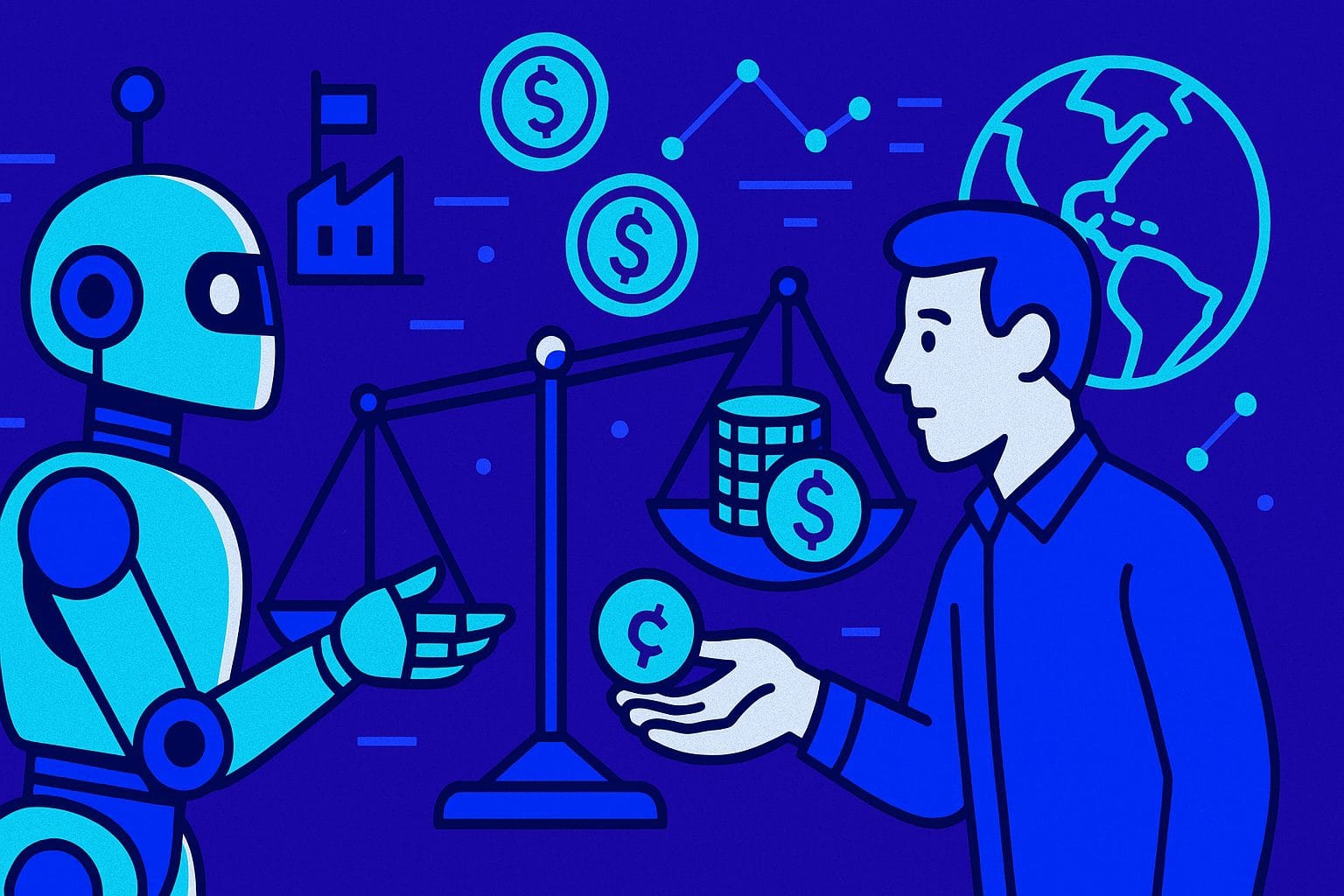
While agriculture seeks to feed 8 billion humans with dwindling water resources, artificial intelligence has emerged as an unexpected competitor for access to fresh water.
This collision between two vital sectors is reshaping local priorities. Agriculture monopolizes 70% of the world’s fresh water, but projections place AI data center consumption at significant levels in the coming years. A race is underway between chips and corn.
The Essentials
- Data centers consume growing volumes of water for cooling
- Agriculture currently uses 70% of global fresh water resources
- AI data center consumption continues its rapid growth
- New cooling technologies and local regulations are emerging to limit this competition
- The conflict crystallizes around local aquifers rather than at the global level
Electronic Chips Thirsty in Agricultural Arizona
Arizona crystallizes this water tension. TSMC, the Taiwanese semiconductor manufacturer, will pump several million liters per day from its new Phoenix plant. The state nevertheless produces 90% of America’s winter vegetables and has suffered structural drought since 2000. Farmers in Maricopa County see their water allocations reduced while technology plants negotiate long-term supply contracts.
This asymmetry reveals an economic imbalance. A ton of silicon generates far greater added value than a ton of wheat. Water profitability heavily favors the technology industry. Microsoft is investing massively in its data center in Goodyear, Arizona, with a commitment to create hundreds of permanent jobs. Facing this prospect, local authorities arbitrate between immediate tax revenues and regional food security.
Nevada follows a similar trajectory. Google and Amazon are building mega-centers near Las Vegas, in a state that already rations water for individuals and limits agricultural irrigation. Data from the Bureau of Reclamation show that Lake Mead levels have declined significantly since 2000, but technology projects continue to receive exploitation permits.
AI Transforms Irrigation But Worsens Shortage
Paradoxically, artificial intelligence revolutionizes agricultural efficiency while drying up its resources. The coming industrial golden age comes with innovations that optimize every drop of water. John Deere equips its tractors with AI sensors that adjust irrigation plot by plot. These systems reduce agricultural consumption according to initial field reports from Iowa.
Predictive algorithms analyze soil moisture, weather forecasts, and specific crop needs to schedule watering. Farms in California save millions of liters annually thanks to this technological precision. The irony lies in the fact that these agricultural water savings indirectly feed the thirst of computing centers running these same algorithms.
This efficiency does not compensate for the explosion in demand. Data centers will consume ever-increasing volumes in the coming years, representing significant growth. Agriculture is progressively optimizing its consumption, but AI is growing much more rapidly. The equation cannot be solved by technology alone.
Solutions Emerge From Air Cooling
The technology industry is developing alternatives to break free from water dependency. Microsoft is testing immersion cooling in synthetic oil baths, eliminating much of the water needs. Intel is experimenting with floating data centers that use seawater for cooling, without drawing from continental aquifers.
Google is betting on artificial intelligence to optimize its own water consumption. DeepMind significantly reduces cooling needs by predicting heat peaks and preemptively adjusting ventilation. These efficiency gains maintain performance while easing pressure on local resources.
Geothermal energy is emerging as a promising solution. Facebook is building a data center in Iceland powered by geothermal energy and cooled by arctic air. This approach completely eliminates the need for fresh water for cooling. Similar projects are developing in Norway and Canada, where natural climate replaces water-intensive air conditioning systems.
Local Regulation Catches Up With Technology
Local communities are responding with targeted restrictions. Virginia, which concentrates a significant portion of American data centers, is voting for water quotas by sector of activity. New data centers can no longer exceed consumption thresholds without equivalent environmental compensation.
Some states impose high water recycling ratios for technology installations. Amazon responds by building water treatment stations integrated into its data centers. Water used for cooling is treated and redistributed to local farmers, creating an unprecedented industrial symbiosis.
China is adopting a more dirigiste approach. Beijing prohibits new data centers in provinces suffering from severe water stress. Chinese technology giants are moving their infrastructure to less populated regions with more abundant water resources.
The Choice Between Bits and Wheat is Made Territory by Territory
This competition for fresh water will not be resolved by a global arbitration but by a mosaic of local solutions. Each region develops its own balance between technological development and food security. California prioritizes water efficiency, Virginia bets on recycling, Iceland exploits its climate advantages.
Current innovations suggest that this tension stimulates rather than paralyzes innovation. AI could also optimize water use without drying up agriculture. The question remains whether these solutions emerge quickly enough to avoid irreversible usage conflicts.