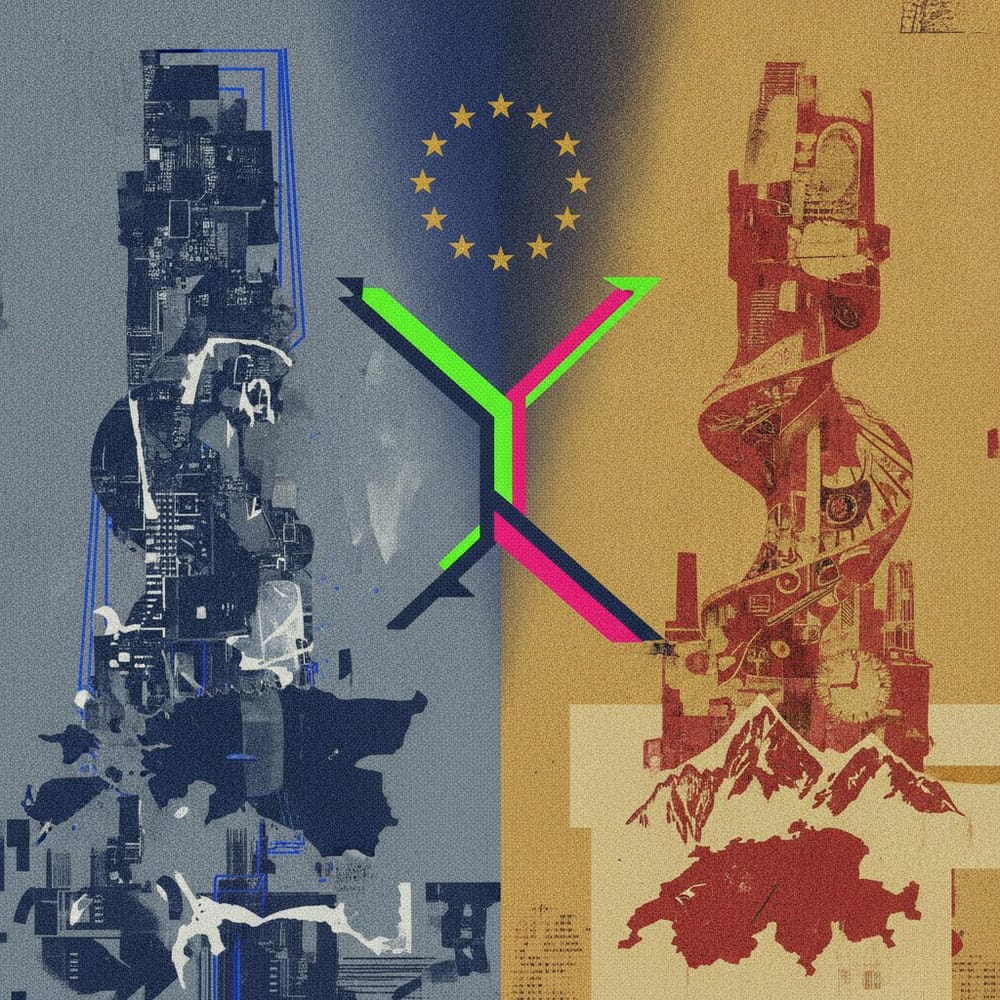
Twenty years after its first online elections, Estonia recorded 51% of its votes cast via the internet in its latest national ballot. Switzerland, which organizes more referendums than any other country in the world, is still cautiously testing an electronic voting system on limited populations. These two trajectories illustrate more than just a difference in pace. They pose a more fundamental question: does the digitization of democracy change democracy itself, or does it merely change democracy for those who were already voting?
A comparative study published in February 2026 covering nine European countries brings new data to this debate. It notably shows that political parties actively engage in only a significant portion of referendums, regardless of the platform used. This finding unsettles those who champion digitization as a panacea for participation. It suggests that the central problem of direct democracy is not technical.
The Essentials
- Estonia has organized online elections since 2005; internet voting now represents more than half of votes cast in national ballots.
- Switzerland, whose electorate has been called to the polls 331 times since 1848 at the federal level — approximately 700 votes broadly speaking according to the Aarau Center for Democracy — has been experimenting with electronic voting on restricted populations for more than a decade, with interruptions and resumptions.
- A comparative study of nine European countries (February 2026) reveals that political parties actively engage in only a significant portion of referendums, regardless of the digital or paper medium used.
- Estonian digital infrastructure is often cited among reference models for public digital identity, but its relationship to other national projects such as India’s Aadhaar system represents two distinct architectures with different origins and logics.
- The true fracture is not between fast and slow countries, but between democracies that treat digitization as an end and those that treat it as a tool.
Estonia: Twenty Years of Trust Built Stone by Stone
Estonia in 1991 is a country of 1.3 million inhabitants that regains its independence with a ruined Soviet administration and without debt inherited from a welfare state to finance. This context is decisive. It explains why the Estonian government was able to choose, from the mid-1990s onward, to build its public infrastructure from scratch, on digital foundations, without having to manage the conversion of a decades-old paper system.
The X-Road program, launched in 2001, is the skeleton of this architecture. It interconnects public databases — civil registry, health, taxation, justice — via a secure exchange layer that every citizen can query and that every administration can feed. Practical consequence: a doctor accesses a patient’s file with their consent in seconds; a tax official does not need to ask a taxpayer for their income, since the data is already there. Tax returns take less than five minutes for the majority of Estonians.
Online voting, introduced in 2005, was grafted onto this infrastructure of trust. It did not precede it. This is a point that discussions about digital democracy regularly omit: Estonian i-voting is not an isolated product, it is a service among others in a coherent ecosystem. When an Estonian votes online, they use the same digital identity card that allows them to sign contracts, access their doctor, or retrieve their driver’s license. Trust in voting rests on trust in digital identity, built on twenty years of daily use.
The result is measurable. In the 2023 parliamentary elections, 51.4% of votes were cast online according to the Estonian National Electoral Committee. Even more significant: participation of 18-34 year-olds in local elections showed notable progress between 2001 and 2021, a period that precisely covers the deployment and scaling up of internet voting. This is not proof of causation, but it is a correlation that few other countries can document over a comparable timeframe.
Switzerland: The Art of Slowness as Political Choice
Switzerland represents the exact opposite. Not for lack of digital ambition, but because its direct democracy is so refined, so ramified, so integrated into the country’s political culture, that any change in infrastructure becomes itself a political act subject to deliberation.
Since 1848, the Swiss electorate has been called to the polls 331 times at the federal level, with approximately 700 votes broadly speaking according to the Aarau Center for Democracy. These federal ballots are only the visible part of Swiss direct democracy. To these are added hundreds of cantonal and municipal votes annually. Switzerland is the country that has voted most often on its own political organization in the history of modern democracies. This deliberative density has a cost in time and a value in legitimacy that the Swiss understand better than anyone.
The first Swiss federal online vote took place in 2004 in the Canton of Geneva, using a system developed by Geneva — not by Swiss Post. Swiss Post only developed its own system (sVote) later. This system operated for fifteen years, then was suspended in 2019 after independent researchers — Sarah Jamie Lewis, Vanessa Teague, and Olivier Pereira — discovered critical security flaws when examining the source code released by Swiss Post as part of a public penetration test. This suspension was not a failure: it was Swiss democracy functioning. A public system was subjected to independent examination, the results were published, and consequences were drawn without delay.
Swiss Post resumed development of a new system, audited in open source, and pilot trials resumed from 2023 in volunteer cantons. As of early 2026, only 4 cantons — Basel-City, St. Gallen, Graubünden, and Thurgau — participate in online voting trials, according to official sources. The trajectory is slow. It is also transparent to a degree that few countries achieve.
This pace is not timidity. It is the logical consequence of a democracy where every voting mechanism is itself subject to citizen control. In 2021, a popular initiative nearly imposed a referendum on electronic voting itself. It ultimately led to an in-depth parliamentary debate rather than a ballot, but it illustrates well that Switzerland will not digitize its democracy without its citizens having a say in how and why.
A Significant Share of Partisan Engagement: The Ceiling That Technique Does Not Cross
The comparative study of February 2026, covering nine European countries, introduces data that should cool techno-optimist enthusiasm. Regardless of the medium used, political parties actively engage in campaigns only for a significant portion of referendums organized. This finding is stable regardless of country, regardless of voting mode, regardless of the sophistication of the digital platform.
This stability says something important. Citizen participation in a referendum does not depend first on ease of access to the ballot. It depends on the mobilization of intermediate bodies, parties, unions, associations, local media that do the work of political translation of often technical text. When these intermediate bodies are absent, participation rates collapse, whether voting on paper at the village town hall or on a mobile application.
This result supports Acemoglu and Johnson’s analysis of technological capture: digital tools amplify existing capacities, they do not create those that are lacking. An online voting system does not replace a party that explains a complex bill to its members. It facilitates the final act of voting for those who have already understood the stakes and decided. That is valuable. It is insufficient if the objective is to transform the deliberative quality of a democracy.
Switzerland, precisely because it has accumulated data from hundreds of ballots and decades, provides the most robust data on this effect. Ballots where parties engage massively see participation rates around 55-60%. Technical ballots, even important for public policy, struggle to exceed 40% even with the most accessible digital tools. The digital has not changed this dynamic.
What Aadhaar Teaches About Model Transposability
The reference to the Aadhaar project deserves a pause. India and Estonia are often compared as two reference models for public digital identity infrastructure, but their architectures and origins are fundamentally different. India deployed a centralized biometric digital identity system for 1.4 billion people in less than ten years. The scale is incomparable to Estonia. So are the conditions.
Aadhaar enabled direct social transfers to move from a system of opaque intermediaries to direct deposits into bank accounts. The Direct Benefit Transfer program saved, according to the Indian government, approximately 33 billion dollars in leakage in social aid between 2013 and 2022. This is public governance improved by digital, not direct democracy. The nuance is important.
Aadhaar also drew documented criticism: exclusions linked to biometric recognition problems for manual workers with worn fingerprints, risks of mass surveillance, absence for a long time of robust personal data protection legislation. India’s personal data protection law was only adopted in 2023, twelve years after Aadhaar’s launch. This reverse sequencing is precisely what Estonia did not do: Estonia’s data protection legal framework precedes the infrastructure, it does not follow it.
What India teaches is that public digital infrastructure can deliver considerable efficiency gains in contexts where administrative corruption is structural. It is not sufficient to create a participatory democracy, and it can even weaken civil liberties if institutional safeguards are not put in place beforehand.
What European Democracies Can Build
Several European countries are currently debating digital participatory platforms: France with its application for public consultations, Finland which has been experimenting with online citizen initiatives since 2012, Germany which is testing deliberation tools at the municipal level. These experiments are useful. They are also incomplete if they are not accompanied by reflection on what digitization cannot do.
The Estonian lesson is first and foremost a lesson in trust infrastructure. I-voting succeeded because it relies on quality digital identity, on a transparent X-Road, on a culture of systematic public audit, and on political continuity over time. Building the equivalent in a large country first requires building the digital identity layer, which takes years and encounters legitimate resistance on privacy grounds. France is still debating digital identity; the issues raised by the digitization of public governance directly touch the conditions under which citizens trust their institutions.
The Swiss lesson is different. It says that digitization can be progressive, conditional, auditable, and that this pace does not prevent it from succeeding. It also says that the deliberative quality of a direct democracy does not reside in the voting tool but in the civic ecosystem surrounding it: parties that engage, media that explain, associations that mobilize.
These two lessons do not contradict each other. They complement each other. Estonian speed was possible because the starting state was small, new, and politically aligned around a national modernization project. Swiss slowness is productive because it rests on a century-old deliberative culture and a commitment to systematic audit. Neither model transplants as is. But together, they sketch the conditions for a digital democracy that holds: prior infrastructure of trust, data protection legal framework upstream, open audit, and refusal to believe that technique resolves what politics must resolve.
The real question for countries considering these undertakings is not “should we digitize voting?” but “what layer of institutional trust must we build so that this digital vote is legitimate?” It is a political question, not a computer question. And depending on the answer a society gives it, digitization can strengthen democracy or further widen the distance between citizens and their representatives.
Sources
- SWI swissinfo — “Is Cautious Digitization Better for Democracy? Insights from Estonia and Switzerland”: https://www.swissinfo.ch/fre/democratie-numerique/…
- Estonian National Electoral Committee — Results and Statistics on Internet Voting in the 2023 Parliamentary Elections (valimised.ee)
- X-Road Program — Documentation and Deployment History, Estonian Information Systems Authority (RIA)
- Government of India, Ministry of Finance — Direct Benefit Transfer 2022 Report
- Comparative Study on Direct Democracy in Europe (9 countries, February 2026) — cited in SWI swissinfo
- Swiss Post — Documentation on Electronic Voting System e-voting, Open Source Audit Reports (post.ch)
- Estonian Electoral Committee — Internet Voting Statistics: https://www.valimised.ee/en/archive/statistics-about-internet-voting-estonia
- IPU Parline — Estonian Parliamentary Elections 2023: https://data.ipu.org/node/57/elections
- Swiss Federal Chancellery — Popular Votes: https://www.admin.ch/en/popular-votes
- Swiss Post — e-voting (Official Source): https://www.post.ch/en/about-us/profile/swiss-post-and-politics/swiss-post-in-the-digital-world/e-voting-electronic-vote-casting-for-switzerland
- Wikipedia X-Road / x-road.global: https://en.wikipedia.org/wiki/X-Road
- Swiss Federal Chancellery — e-voting Flaws 2019: https://www.bk.admin.ch/bk/en/home/dokumentation/medienmitteilungen.msg-id-74307.html
- SWI swissinfo — Frequency of Swiss Votes: https://www.swissinfo.ch/eng/business/the-swiss-vote-often-but-frequency-isn-t-everything/48660116
- Swiss Federal Council — Renewal of e-voting Licenses 2025: https://www.babs.admin.ch/en/newnsb/ZLw6w1GV_UdJKDocuT0sX