For half of the French, democracy has only kept half of its promises
In 2026, 51% of French people believe there is nothing to be proud of in their democratic system. This is the figure from the CEVIPOF annual barometer, and it deserves careful attention. Not because it signals an imminent collapse, but because it says something precise about the nature of democratic distrust in Europe: it is not irrational, it is not cultural, it is the accounting of a gap.
A gap between what democracy promised and what it delivered.
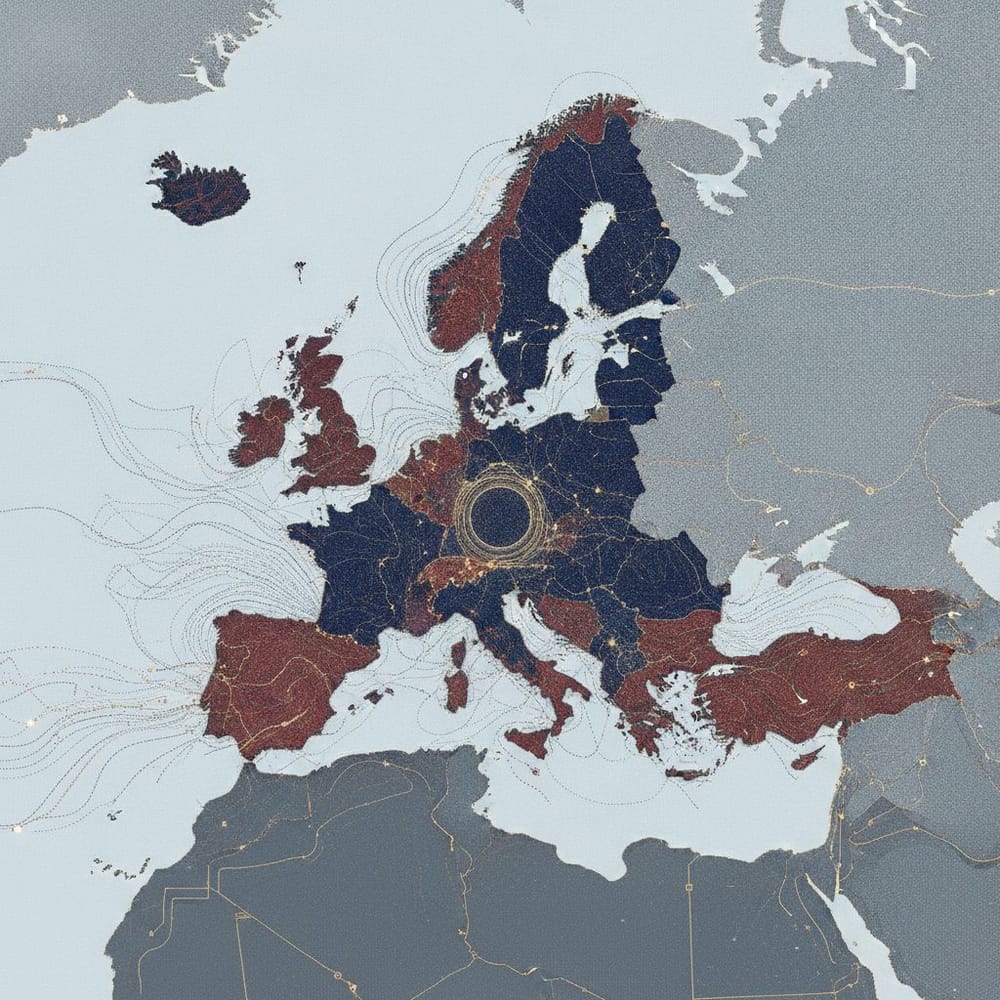
France is not alone. Italy shows 40%, Germany 34%, the United Kingdom 32%. Different levels, a common logic. Bulgarian political scientist Ivan Krastev, one of the most lucid observers of European democracies, has spent twenty years documenting this phenomenon from its epicenter in Central Europe. His thesis: what resembles a cultural or identity crisis is primarily the product of an unfulfilled promise — the promise of material convergence after 1989.
This diagnosis has a direct consequence for politics. If distrust comes from a measurable gap, it can, in theory, be reduced through measurable results.
The essential points
- 51% of French people judge there is nothing to be proud of in the democratic system, according to the 2026 CEVIPOF barometer — the highest proportion among major European democracies surveyed (Italy 40%, Germany 34%, United Kingdom 32%).
- Ivan Krastev argues that the rise of illiberal voting in Central Europe does not reflect a rejection of democracy as a principle, but disillusionment with the gap between the promise of post-1989 material convergence and the reality of lived trajectories.
- Central counter-argument: researchers such as Francis Fukuyama emphasize that democratic institutions also suffer from deliberate erosion by political actors, not merely economic disappointment — which distinguishes two possible types of interventions.
- Over thirty years, the generation born in the 1980s in Central Europe voted for the first time in a context of promised convergence; it votes today with a lived trajectory radically different from that of its western neighbors.
- The most solid lever remains the improvement of the quality of public services perceived in daily life — available data show a strong correlation between concrete institutional satisfaction and overall democratic trust.
1989, or the promise as an implicit contract
The fall of the Wall did not only redistribute a geopolitical map. It established an implicit contract between liberal democracies and their new adherents: you adopt our rules, you will join our prosperity. This contract was never signed, but it was understood as such by millions of people in Poland, Hungary, Slovakia, and the Czech Republic.
Krastev formulated it this way in his work for the Journal of Democracy: the problem is not that Central European citizens rejected liberal democracy. The problem is that they believed in it so much that they bet everything on it. The shock of disappointment, when convergence proved slower, more selective, and more unequal than expected, was all the more violent because hope had been intense.
Convergence figures are real but they mask a brutal distributive reality. Polish GDP per capita has indeed progressed, moving from a level significantly below the European average in 1990 to nearly 80% today according to Eurostat data. But this average conceals very divergent trajectories depending on regions, education levels, and generations. The inhabitant of Warsaw converged. The inhabitant of Łódź or rural Mazovia often converged much more slowly, or not at all relative to their expectations.
What Krastev calls the “feeling of being left behind” is not therefore an illusion. It is the correct reading of a statistical reality that governments and European institutions long preferred to read through national averages rather than through actual distributions.
Distrust and disillusionment are not the same thing
We must distinguish between two types of democratic discontent, because they call for different responses.
The first is cyclical distrust: I am dissatisfied with the government in place, its policies, its results. This type of discontent is the normal engine of democratic renewal. It changes majorities, not regimes.
The second is structural disillusionment: I doubt that the system itself can deliver what it promises. This is no longer a protest vote, it is a questioning of the framework itself. The CEVIPOF barometer measures more of the latter than the former. “There is nothing to be proud of in the democratic system” is not the same statement as “this government disappoints me.”
Krastev’s thesis applies here with surgical precision: in Central Europe, the shift toward illiberal parties did not occur despite democracy, but within it and through its own mechanisms. Viktor Orbán’s Fidesz won free and regular elections. Poland’s PiS did too. This is not a rejection of the democratic procedure, it is its hijacking by actors who understood that the unfulfilled promise created exploitable political space.
Francis Fukuyama, in his recent work on the resilience of liberal democracies, brings an important complement to this reading. For him, economic disillusionment is not sufficient to explain institutional erosion: we must also account for the deliberate strategy of political actors who, once in power, systematically dismantle checks and balances — press, independent judiciary, civil society. This second factor is autonomous from the first. Hungary and Poland have not only had citizens disappointed by economic convergence. They have had governments that used disappointment as fuel for a planned institutional transformation.
The tension between the two readings is fruitful: if Krastev is right, improving material results may be sufficient to reduce the electoral base of illiberal parties. If Fukuyama is right, we must also actively defend institutions, independently of economic cycles. The two readings do not exclude each other, but they prioritize urgencies differently.
Thirty years of data, a generation forged in the gap
The most robust aspect of Krastev’s diagnosis is its generational dimension. The generation born between 1980 and 1990 in Central Europe voted for the first time in the 2000s-2010s, in a context where the promise of convergence still lay before them. This same generation votes today, at 35-45 years old, with complete biographical experience: education, labor market entry, housing, mobility.
What they experienced is not absolute failure. But it is often relative downward mobility: compared to their Western European neighbors of the same age, compared to their own expectations of youth, and sometimes compared to those of their generation who chose to emigrate to Germany or the United Kingdom. Emigration is moreover one of the most painful markers of this gap: according to Eurostat, Romania and Bulgaria have lost between 10% and 20% of their total population since 2000, primarily young skilled workers.
For these societies, the departure of young people is not only an economic signal. It is a narrative wound: the most capable left, those who stayed feel abandoned twice — by the promises of convergence and by their own most mobile compatriots. This dynamic is self-reinforcing. It reduces the tax base, weakens public services, and deepens disappointment with local institutions.
The question of irreversibility arises seriously here. A generation’s trajectory is relatively stable data. Men and women of 40 who structured their political preferences in a context of disillusionment will not easily change them if material conditions improve modestly in coming years. What political psychologists call generational imprinting operates here in full: values and mistrust acquired in one’s twenties and thirties tend to persist.
For France, this is a lesson to read with care. French democratic distrust does not come from the same historical place as Hungary’s, but its effects could follow similar logic if an entire generation — that of 25-40 year-olds — calcified structural distrust before experiencing lasting positive institutional results.
What democracies that are getting it right do differently
The picture is not uniformly dark, and this is where lucid optimism regains its foothold.
Democracies have reduced distrust by improving the concrete quality of public services and the clarity of institutional results. Comparative data available in the work of the Bertelsmann Transformation Index or the OECD on institutional trust suggest several solid determinants.
The first is consistency between promises and actions. Nordic countries maintain high levels of institutional trust not because they have no problems, but because their citizens perceive that the state does what it says. Budget transparency, the quality of health and education services, the weakness of perceived corruption: these elements create a stock of trust that better resists cyclical shocks.
The second is institutional responsiveness. Democracies that maintain trust are those that demonstrate visible capacity for adaptation: judicial reform, improvement of digital public services, mechanisms for citizen participation that actually work. This is not participatory demagoguery — it is concrete proof that the system can correct itself.
The third is the management of territorial inequalities. The Netherlands and Sweden have invested massively in reducing gaps between metropolises and peripheries, between university centers and reconverting industrial territories. It is no accident that democratic distrust there is structurally lower than in countries where these gaps have widened without visible institutional response.
The European Commission has begun to measure these indicators systematically in its annual democracy scorecard, the Democracy Compass — an imperfect instrument but one that represents recognition that democratic health is measurable and actionable, not merely observable.
The leverage of perceived results
The CEVIPOF figure — 51% — does not only express a political opinion. It measures a perception of efficacy. Surveys in political science on institutional trust, notably the work of Pippa Norris on democratic failure, systematically show that the first predictor of satisfaction with democracy is not attachment to abstract liberal values, but the perception that institutions deliver concrete results in daily life.
Health, education, safety, justice: when citizens believe these services function reasonably, their overall democratic satisfaction resists political turbulence. Bruno Cautrès, researcher at CEVIPOF, emphasizes this in his analyses of French public opinion: distrust of “politicians” precedes and exceeds distrust of “democracy” as a system, but the two end up contaminating each other mutually if the first is sufficiently durable and deep.
This points toward a concrete agenda. Not a constitutional reform, not an institutional revolution, but an improvement in the quality of state execution in daily life. It is less spectacular than refounding the Fifth Republic. It is more difficult to sell politically. And it is probably more effective at reducing the gap between promise and reality that citizens measure, often correctly, through their own experience.
The question posed by the CEVIPOF figure is not “do the French still love democracy?” The answer to that question is yes, overwhelmingly. The question is: “To what extent does the democracy they know resemble the one they thought they understood?” And on that terrain, the gap exists, it is measurable, and it is reducible.
Krastev’s lesson is not pessimistic. It is demanding: democracy is not defended only by speeches about its values. It is defended by its results. And results, unlike values, can be improved.
Sources
- Ivan Krastev, analyses and contributions to the Journal of Democracy: journalofdemocracy.org
- Ivan Krastev & Stephen Holmes, “Imitation and Its Discontents”, Journal of Democracy, 2018: journalofdemocracy.org
- CEVIPOF Political Trust Barometer 2026 — Sciences Po / OpinionWay: sciencespo.fr
- Eurostat — Polish GDP, 80% of EU average: trade.gov.pl
- Eurostat, demographic statistics Bulgaria/Romania: romania-insider.com
- OSW — Romanian Demographics (Eurostat data): osw.waw.pl
- Francis Fukuyama, Liberalism and Its Discontents (summary): davidlabaree.com
- Pippa Norris, Why Electoral Integrity Matters and work on democratic failure — Harvard Kennedy School (no direct URL link)
- Bertelsmann Transformation Index, editions 2020-2024: bti-project.org