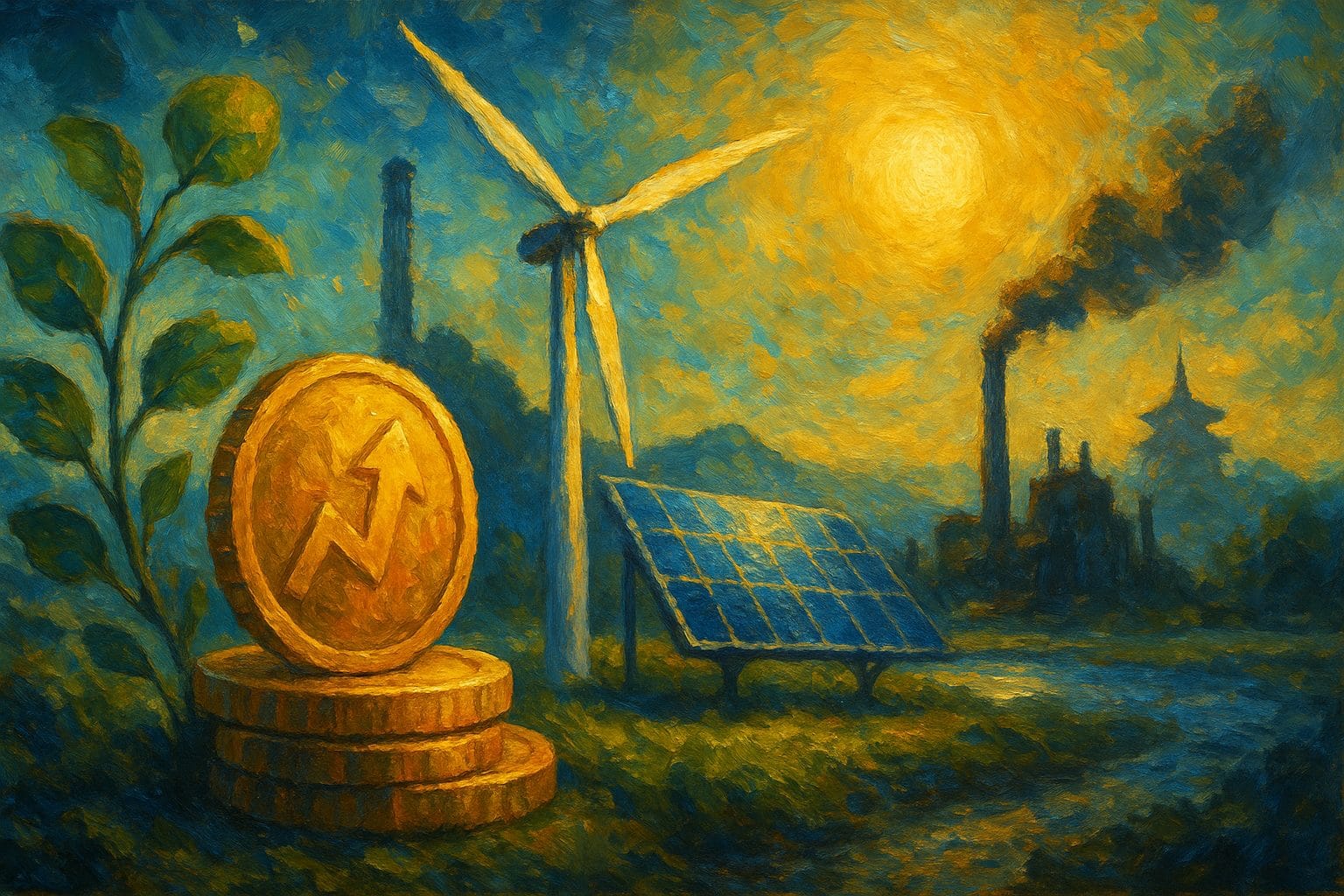
In 2023, the Gulf petromonarchies announced plans for low-carbon hydrogen exports with significant funding amounts. Two years later, many projects remained announced but their execution was slowed by the lack of secured buyers, regulatory uncertainties, and infrastructure needs. Cost, financing, and infrastructure constraints led producers to combine strategies of local uses, shared infrastructure, and, for some projects, export.
The Essentials
- Low-carbon hydrogen is not liquefied natural gas: its transport and infrastructure costs impose competitiveness challenges against domestic industrial use and regional outlets.
- As of late 2025, the MENA Energy Outlook 2026 report lists 127 active hydrogen projects in the MENA region, with continued regional investment dynamics.
- Developers and governments are increasingly turning to shared infrastructure and regional industrial outlets, while production ambitions remain largely unchanged.
- EU member states that built their supply plans on hydrogen imports by 2030-2035 must revise their basic assumptions.
- The question posed by this rebalancing goes beyond the Middle East: when a low-carbon energy becomes competitive, the regions that produce it optimize for their own industrial transformation before supplying export markets.
LNG Took Forty Years to Become a Global Market
Hydrogen does not follow the same trajectory as liquefied natural gas, because LNG logic rests on a linear chain: liquefaction, transport by methane carrier, regasification. Each step is standardized, costs are known, and long-term contracts were able to rely on tariff certainties.
Hydrogen resists this linearity. Produced in gaseous form, it must be converted to travel: into ammonia, into cryogenic liquid hydrogen, into LOHC (liquid organic hydrogen carriers). The costs of conversion and reconversion depend on the vector and its end use; they do not apply to each supply chain. The chain multiplies by the number of transformations. Sources consulted note a significant gap between initial projections and realized costs, which complicates the viability of many business models founded on export.
LNG also benefited from port infrastructure already partially adapted to large-scale maritime trade. Pure hydrogen still requires many new infrastructures, but it is not starting from zero for all vectors and port equipment. This cost, technically surmountable, has often been underestimated in several initial projections.
84 Projects, a Single Profitable Outlet
Growth figures remain impressive. According to the MENA Energy Outlook 2026, the MENA region has 127 active hydrogen projects, reflecting continued investment dynamics. The real dynamism of regional investment is beyond doubt; it is its direction that has changed.
As early as 2023, several Middle Eastern countries were positioning their hydrogen projects toward export outlets. NEOM planned to export green ammonia to international markets, with reconversion to hydrogen by the buyer. The Emirates signed memoranda of understanding with Japanese and South Korean buyers. Oman advanced export hub projects. Announcements followed one another, amounts accumulated.
The MENA Energy Outlook 2026 report describes market consolidation and implementation difficulties. Identified outlets include ammonia, synthetic fuels, steel and chemicals, which can be used locally or exchanged internationally. Ammonia, steel products, and derived fuels can be used locally or exchanged; these chains allow regional optimization of flows.
The industrial clustering that is emerging constitutes an adaptation to real costs. Producers are considering the export of hydrogen and derivatives, although projects are hampered by costs and infrastructure. This distinction is considerable.
Europe Built Its Plans on a Hypothesis That Is Fading
European energy strategies of 2022-2024 rested on a postulate: imported hydrogen, principally from North Africa and the Middle East, would provide a significant share of needs by 2030-2035, with a target of 10 Mt of annual imports. The European Commission, several member states, and their national agencies integrated this supply into their decarbonization plans for steel, chemicals, and maritime transport.
These projections were not irrational in 2022. They were based on real memoranda of understanding, bilateral political commitments, and cost models whose logistical realities were not fully measured. Sources consulted show a gap between initial assumptions and real costs that complicates supply models.
The complete costs of importation can penalize competitiveness in certain cases, but imports can also be competitive depending on origin, distance, vector, and electricity prices. The sectors concerned face a risk of cost overruns and competitiveness that depends on prices, carbon, public aid, and supply contracts.
This situation is not without precedent. As with nuclear power, whose real costs systematically exceed initial projections in countries that restart it without robust governance, low-carbon technologies produce significant cost gaps between models and deployment. The difference is that for imported hydrogen, the cost gap chiefly affects the buyers.
The Logic of Ammonia on Clean Energy Markets
The export of ammonia deserves particular attention. Ammonia is the principal hydrogen vector already having dedicated international commercial infrastructure. Ammonia has been traveling for decades: ships are designed for it, terminals exist, prices are known. Its conversion to fertilizer is direct. Its reconversion to hydrogen at destination remains technically feasible, although costly.
The Middle East already exports conventional ammonia. The pivot toward green ammonia, produced from renewable hydrogen, fits within a logistical continuity. Japan, which is engaging in projects related to green ammonia and energy transition, is betting on this logistical continuity.
What is emerging looks less like LNG than agricultural commodity markets: standardizable volumes, established corridors, structural global demand, and prices that vary according to investment cycles in production capacity. The market and much of pure hydrogen infrastructure remain to be developed, but some existing infrastructure can be repurposed.
This bifurcation between ammonia, a vector that is finding its markets, and pure hydrogen, a vector struggling to cross national borders, constitutes a major lesson from the 2023-2025 period. European planners who had wagered on large-scale imported pure hydrogen had to revise their assumptions. Actors who had anticipated green ammonia and fertilizers are better positioned.
European Domestic Production, the Only Credible Short-Term Alternative
Facing this readjustment, the logical response for European industrialists is to relocate production. Hydrogen produced in Europe, from renewable or nuclear electricity, avoids transport costs and supply chain uncertainties. Its production cost remains higher than fossil hydrogen today, but the gap is narrowing as renewable capacity expands.
Spain and Portugal, with their abundant solar resources, have become targets for investment in green hydrogen production for the continental European market. France is betting on nuclear electricity to produce low-carbon hydrogen at predictable cost. Germany, which had built its strategy on imports, finds itself accelerating its own electrolysis projects.
This recomposition is not unrelated to the dynamics of renewable energies in general. Regions with abundant and inexpensive low-carbon resources can develop both local industrial transformation and export projects, depending on economic conditions and available outlets. Hydroelectricity follows similar logic: countries that possess it use it to attract electricity-intensive industries rather than to export electrons beyond their borders.
Europe combines domestic production, imports, infrastructure, and support mechanisms. REPowerEU sets hydrogen objectives and involves investment needs of several hundred billion euros to reach domestic production targets.
Toward Which Global Market Will Hydrogen Converge by 2035?
The question posed by the Middle Eastern pivot goes beyond the short term. It forces a reformulation of the starting hypothesis of climate strategies of importing countries: will low-carbon hydrogen become a global commodity, or will it remain primarily an instrument of regional industrial transformation?
Two trajectories seem plausible without yet being distinguished by available data.
The first is one of progressive commodification, driven by vector standardization, ammonia foremost, and by the reduction of logistical costs as volumes increase. In this scenario, a global hydrogen market does indeed emerge, but over a horizon of fifteen to twenty years rather than ten, and for specific vectors rather than pure hydrogen. Japanese, South Korean, and European buyers who invested in memoranda of understanding starting now would be best positioned to benefit from this maturation. The signal to watch: the first long-term green ammonia contracts with price clauses indexed to renewable production costs, rather than to oil prices.
The second trajectory is that of lasting regionalization. Comparative advantages in renewable energy are so marked, the Middle East produces solar electricity at costs inaccessible to Northern Europe, that producing regions permanently optimize for their own industrial transformation. Hydrogen becomes an input in a regional value chain rather than an export product. Several Middle Eastern producers are considering the production of hydrogen-derived products with added value. Producers are aiming primarily for derivatives, notably ammonia, but some projects and shipments also concern hydrogen itself.
In this scenario, global hydrogen markets remain thin and specialized, and Europe must invest more in domestic hydrogen production.
The two trajectories probably overlap: a green ammonia and fertilizer global market expands, while pure hydrogen remains primarily a national or regional phenomenon. The Japanese METI, which is closely following these developments in its 2026 update of the Long-term Energy Outlook, appears to have integrated this bifurcation into its own strategic revisions.
For importing countries, prudence dictates not betting on a single trajectory. Building domestic production capacity, developing green ammonia corridors with reliable partners, and avoiding locking industrial decisions on the hypothesis of a pure hydrogen global market that could take two decades to fully materialize, is probably the configuration that exposes least to forecast errors.
This readjustment is uncomfortable for governments that had sold their industrialists a vision of imported abundance. It nonetheless sketches a more realistic market, founded on vectors that actually travel, supply chains that exist, and industrial outlets that absorb volumes. The maturity of a market, even when it differs from its initial promises, is better than persistence in a trajectory that real costs have made untenable.
Sources
- SolarQuarter, Middle East Energy Outlook 2026: Investment, Innovation and Decarbonization Drive Global Stability (January 2026)
- Wood Mackenzie Energy Transition Outlook 2026 (report, without publicly verifiable URL)
- IRENA, Cost database and hydrogen reports 2025-2026 (International Renewable Energy Agency)
- METI, Japan Long-term Energy Outlook 2026 (Ministry of Economy, Trade and Industry of Japan)