European parliaments abandoned by their citizens
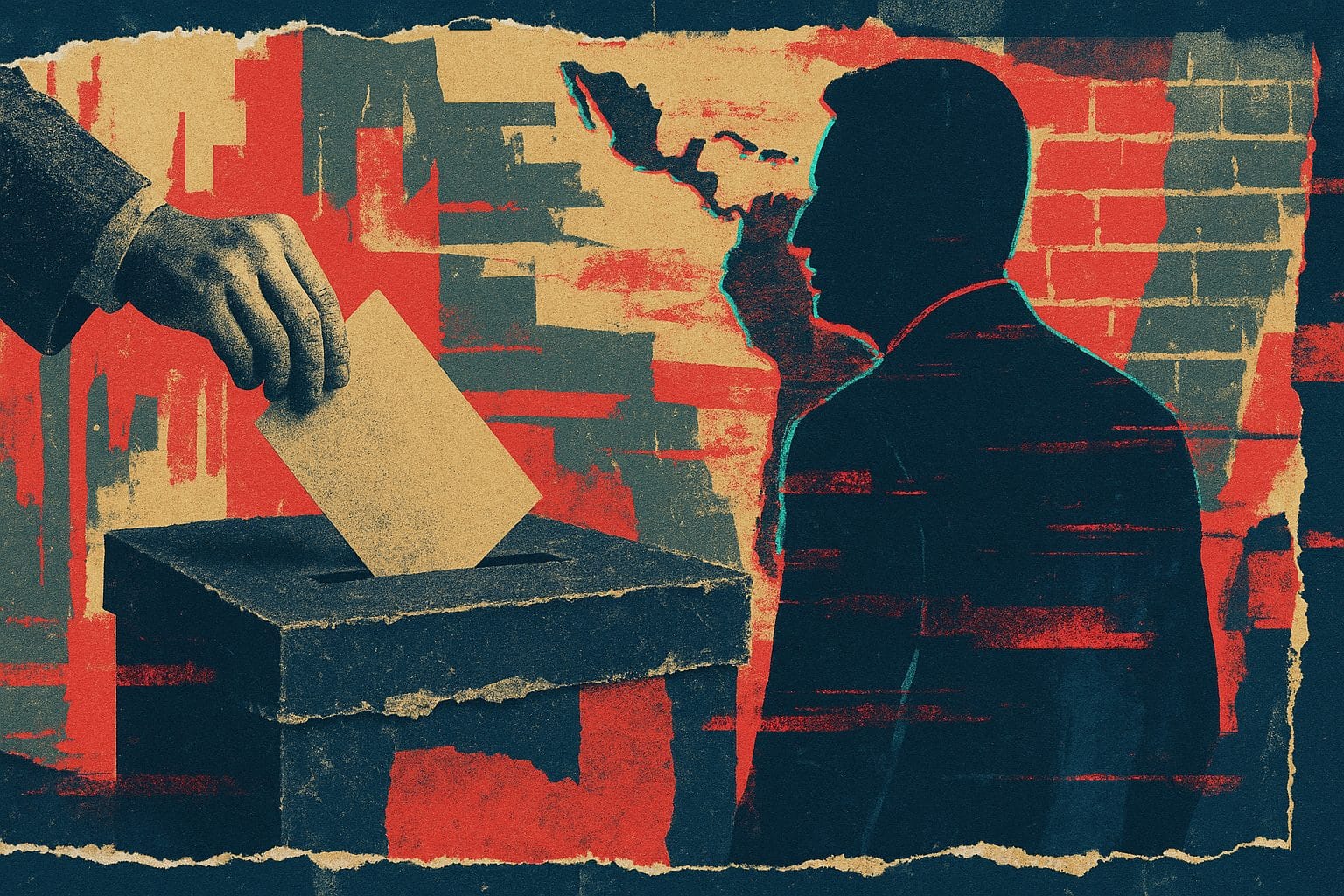
Only 20% of French people still trust their National Assembly, a historically low score that crystallizes a troubling European trend. For the first time since 2009, distrust of parliamentary institutions has reached levels never before observed in stable democracies. This erosion of parliamentary legitimacy accompanies a silent transformation of governmental practices: faced with repeated crises, European executives govern increasingly through decrees, states of emergency, and accelerated procedures, progressively draining democratic deliberation of its substance.
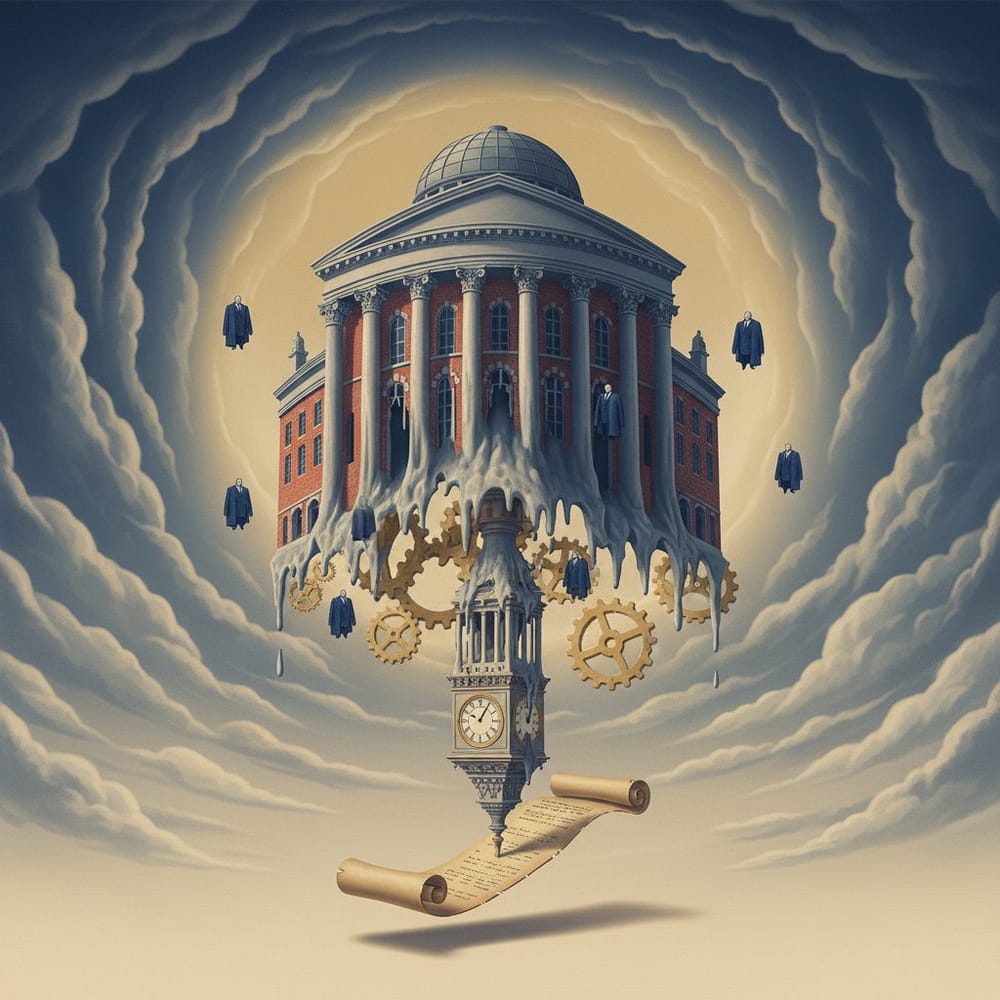
The issue is not the collapse of institutions but the emergence of a gray technocracy that preserves democratic forms while systematically circumventing parliamentary debate. This mutation sketches out a new governance model where administrative efficiency takes priority over public deliberation.
The essentials
- In France, trust in the National Assembly has fallen to 20%, its lowest level since 2009
- European governments are multiplying emergency procedures and decrees to avoid parliamentary debates
- This technocratic drift preserves the appearance of democracy while stripping institutions of their deliberative power
- The European Union itself functions according to this model where technical negotiations replace public debate
Parliamentary trust collapses across Europe
The annual CEVIPOF-Sciences Po political trust barometer confirms a heavy trend: the French no longer believe in their representatives. With 20% trust, the National Assembly registers its lowest score since systematic measurement began in 2009. This decline is not circumstantial but inscribes itself in a constant erosion of parliamentary legitimacy.
The phenomenon extends far beyond French borders. In Germany, the Bundestag registers 31% trust according to the Forsa institute, down 8 points in two years. Italy shows even more concerning scores with 18% for the Chamber of Deputies according to the Ipsos institute. Only Scandinavian parliaments maintain trust levels above 50%, but even the Swedish Riksdag has lost 6 points since 2022.
This generalized distrust accompanies a concrete transformation of governmental practices. European citizens observe that their representatives debate less and less about decisions that directly affect them. Major reforms pass through ordinances, crises are managed through emergency decrees, and parliaments are consulted after the fact, when they are at all.
Executives govern through circumvention
France perfectly illustrates this technocratic drift. Since 2020, Emmanuel Macron has used Article 49.3 of the Constitution 23 times, more than his three predecessors combined. This procedure allows a text to be adopted without a vote, except for a motion of censure. The Barnier government is already resorting to it for its 2025 budget, confirming that this practice transcends partisan divisions.
The 2020-2022 health emergency normalized government by decrees. For 26 months, the French executive issued more than 400 decrees to manage the pandemic, systematically bypassing parliamentary debate. This habit persists: the 2024 immigration law was adopted through an accelerated procedure that limits amendments and reduces debate time.
Germany is not immune to this trend. Olaf Scholz is multiplying “Notverordnungen” (emergency ordinances) to circumvent Bundestag blockages. His 200 billion euro plan to address the energy crisis was adopted without thorough parliamentary debate. Italy under Giorgia Meloni sets records with 47 decree-laws adopted in 2023, compared to an average of 25 under her predecessors.
This practice of parliamentary circumvention responds to a logic of administrative efficiency. Successive crises—health, energy, migratory—demand rapid responses that classical parliamentary procedures do not allow. But this efficiency comes at a price: it progressively empties representative institutions of their substance.
The European Union, a model of assumed technocracy
The EU has functioned since its origins according to a model that privileges technical negotiation over public debate. The European Commission, the sole body authorized to propose laws, is not directly elected. The European Council negotiates behind closed doors. The European Parliament, the only institution elected by universal suffrage, can only approve or reject texts without substantially amending them.
This institutional architecture produces efficient but opaque decisions. The European Green Deal, a 1,000 billion euro ecological transition plan, was drafted by the Commission without prior parliamentary consultation. National parliaments discover environmental directives that they must transpose, having had no part in their design.
Management of the Ukrainian crisis illustrates this logic. The 12 packages of sanctions against Russia were negotiated in the European Council and adopted by written procedure, without public debate. The 50 billion euro military aid to Kyiv was decided by the same method. European citizens largely support Ukraine according to Eurobarometer polls, but they were never involved in choosing the means.
This European technocracy contaminates national practices. Governments invoke “European constraints” to justify unpopular reforms, transforming Brussels into a permanent alibi. This abdication of responsibility paradoxically feeds Euroscepticism: citizens reproach the EU for deciding without them, but it is their own governments that choose to govern through circumvention.
Democratic deliberation shifts toward networks
This evaporation of parliamentary debate does not eliminate political deliberation: it displaces it. Real discussions about societal issues now take place on digital platforms, in the media, and during citizen mobilizations. The yellow vests in France, climate protests, mobilizations against pension reform reveal a democratic vitality that finds no institutional expression.
Social networks amplify this phenomenon. Twitter and TikTok become new sites of political debate, with their advantages—accessibility, responsiveness—and disadvantages—polarization, misinformation. This migration of deliberation toward the digital creates a vicious circle: the more parliaments lose relevance, the more citizens seek their spaces for political discussion elsewhere.
Polls reflect this contradiction: 67% of Europeans according to Eurobarometer 2024 believe their voice does not matter in European decisions, yet 74% regularly participate in political debates online. European democracy is not dying, it is mutating toward less institutional but more participatory forms.
This transformation raises the question of representativeness. Social network algorithms create information bubbles that fragment public debate. Digital deliberation favors entrenched positions at the expense of compromises, the very essence of parliamentary democracy.
Counter-models emerge at the margins
A few European experiments attempt to reconcile governmental efficiency and democratic deliberation. Ireland has used citizen assemblies selected by lot since 2012 to address sensitive subjects. These panels of 100 citizens prepared referendums on abortion (2018) and divorce (2019), enabling calm debates on divisive issues.
France timidly experiments with this path through the Citizens’ Convention for the Climate (2019) and a renovated Economic, Social and Environmental Council. But these innovations remain marginal against the weight of administrative technocracy.
Estonia pushes democratic innovation further with its “Rahvakogu” platform where citizens propose and debate laws before parliamentary examination. This direct digital democracy complements rather than replaces representative institutions. The Estonian Parliament systematically examines proposals that gather more than 1,000 citizen signatures.
These experiments reveal a possible path: reinventing democratic deliberation by combining representation and direct participation. But they require a rare political will, that of sharing power rather than concentrating it.
Technocratic efficiency founders on legitimacy
This drift toward technocratic governance produces contrasting results. On one hand, Europe efficiently manages crises: Covid vaccines distributed in months, coordinated aid to Ukraine, planned energy transition. On the other, these technical successes do not prevent the rise of populisms that thrive on criticism of Brussels technocracy.
The paradox is striking: the more European governments become technically efficient, the more they lose democratic legitimacy. This contradiction is not sustainable in the long term. History shows that regimes that lose their popular foundation, even if competent, ultimately collapse or mutate authoritarily.
The challenge in coming years will be to reconcile governmental efficiency and democratic deliberation. This requires rethinking the relationship between technical expertise and public debate, between decision-making speed and the time required for democracy. Solutions exist but they demand that governing elites renounce their technocratic reflexes to reinvent European democracy.
Sources
- CEVIPOF-Sciences Po Political Trust Barometer
- Forsa Institute - 2024 German institutions trust poll
- Ipsos - 2024 Italian political trust barometer
- Standard Eurobarometer 100 - Autumn 2024