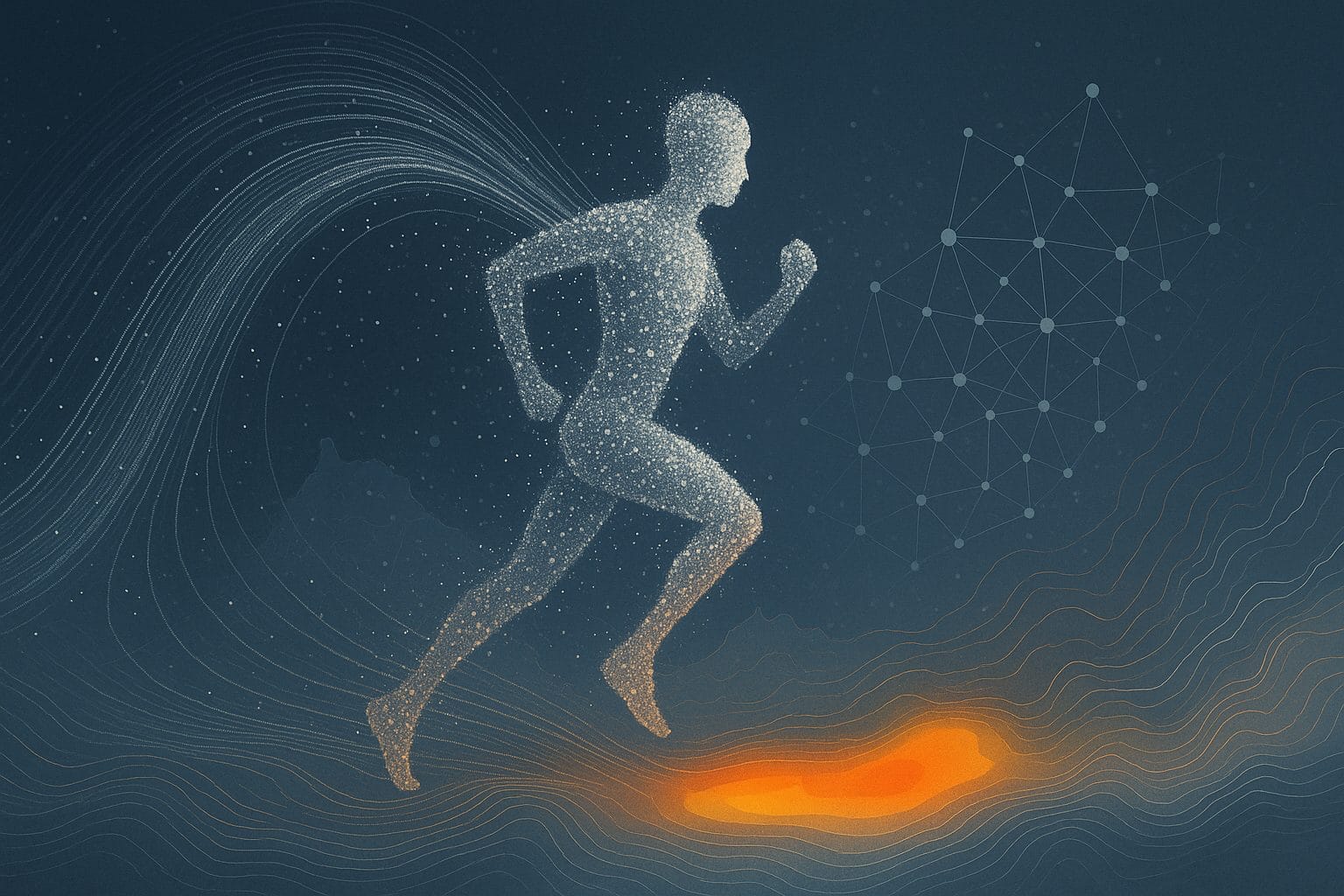
The athlete’s body becomes data that the club owns
A considerable number of musculoskeletal injuries occur each year in global professional sport. This is the figure that wearable manufacturers wave around to justify a market that reaches 98 billion dollars in 2026 and grows by 4% annually. The promise is compelling: sensors fixed to an athlete’s body, algorithms that predict neuromuscular fatigue in real time, and an objective arbiter to say when a player must leave the field before tearing their hamstrings.
The promise has partly materialized. The tools work. Predictive models are improving. But as the technology gains precision, another question becomes pressing: who owns the data produced by a professional’s body during their employment contract? This question, professional sport is only just beginning to ask. Sports labor law has not yet answered it.
The essentials
- The global market for sports wearables reaches 98 billion dollars in 2026, according to market data compiled by Mordor Intelligence, with an annual growth rate of 4.1% projected through 2031.
- AI models, including a systematic review published in Frontiers in AI (May 2026) and an SEM-PLS study in Scientific Reports (November 2025), confirm significant advances in predicting musculoskeletal injuries by exploiting workload, movement asymmetry, and real-time neuromuscular fatigue.
- Biomechanical data is not protected by existing collective agreements in most professional leagues: it belongs by default to the clubs that hold the contracts and equipment.
- Two countries, Australia and certain U.S. states, have undertaken specific regulatory processes; in Europe, while the CNIL recognizes that certain data (heart rate, injuries) constitute health data under the GDPR, the classification of purely biomechanical or performance data remains to be clarified by specific legislation.
- The question extends beyond sport: it prefigures decisions about governance of bodily data in all heavily surveilled professional environments.
Predictive models have won their scientific wager
For a long time, injury prevention in professional sport was as much art as science. An experienced strength coach, an attentive physical therapist, and a great deal of subjectivity. Wearables began to change this in the 2010s with simple GPS and accelerometers. The current stage is of a different nature.
A systematic review published in Frontiers in AI in May 2026 explores broadly the contributions of AI and wearables in sport, notably covering performance, injury risk, and athlete well-being. In Scientific Reports, a November 2025 study on professional football data uses an SEM-PLS method on GPS data to model factors associated with injuries.
Precision remains variable depending on context. Models perform better on certain types of injuries (hamstrings, tendons) than others (traumatic impacts). They are more reliable when data is continuous and dense, which requires permanent or near-permanent sensor wearing. And this is where the debate shifts from scientific ground to political ground.
For the model to be precise, abundant data is needed. For data to be abundant, the athlete must wear the sensor during training, during matches, and potentially at rest. What was once measured during exertion is now beginning to be measured continuously. The boundary between medical monitoring and continuous surveillance is porous.
Who owns what your body produces during your contract
The question of data ownership in sport is not abstract. It has direct and immediate economic consequences.
A club with several years of fine biomechanical data on a player knows things that the player themselves sometimes ignores. It knows fatigue patterns, postural asymmetries, recovery cycles. This data has considerable value at transfer time: it informs the decision to buy or sell, allows for more precise pricing, and can reveal physical fragility that the player — and their agent — would prefer to keep private.
In virtually all professional leagues worldwide, this data currently belongs to the club. The player signs an employment contract; the club provides the equipment and training infrastructure; the data produced by this equipment are, according to most existing collective agreements, property of the employer. It’s the same logic applied to professional emails or documents produced on company tools — but applied to the human body.
This asymmetry has precedents in other sectors. A similar tension exists in the broader debate on algorithmic surveillance in the workplace, where employees’ behavioral data are collected by platforms the employer controls. Sport is an extreme version of this, because what is measured is not productivity or communications, but the body itself, with all the medical information that implies.
NBA players were among the first to formalize this resistance. The 2017 collective bargaining negotiations resulted in clauses limiting the use of wearable data in sports management decisions. Wearing a sensor is entirely voluntary: a player can refuse or cease wearing it at any time, and data cannot be used against them in contract negotiations. This is real progress. But it remains the exception, not the rule.
Can the algorithm decide that a player is too tired to play
The following scenario is no longer hypothetical. A biomechanical tracking system signals, two hours before a major match, that a starter shows a high neuromuscular fatigue index and increased injury risk. The coach sees this information on their dashboard. The club doctor too. The sports director, who paid 40 million euros for the player’s transfer, also does.
Who makes the final decision?
In theory, it’s the coach, advised by medical staff. In practice, the data creates a new type of pressure. If the coach plays the player and that player gets injured, the digital trace shows he had been alerted. The legal risk changes in nature. If the club doctor approves participation despite the algorithmic alert, they engage their liability differently than they would have without this tool.
Objective data does not replace medical judgment. But it constrains it. It creates an obligation to respond where none existed before. And this obligation can point in contradictory directions depending on who invokes it: the club will sometimes want the player to play despite the signal; the independent doctor will want to protect them; the player themselves might want to play, even fatigued, because their playing time conditions their market value.
This conflict of interest is not new in professional sport. What is new is that it is now documented in real time by technology that no one truly controls in a neutral way.
Australia and the United States seek a framework, Europe lags
A few jurisdictions have begun seriously tackling the problem.
In Australia, where Australian football and rugby league are highly structured sports with powerful player associations, recent collective bargaining has explicitly integrated biometric data. The AFL (Australian Football League) adopted principles under which players retain a right of access to their own data, and use for non-medical purposes requires explicit consent. It’s not perfect, but it’s an operational starting point.
In the United States, the California Consumer Privacy Act (CCPA) opened a legal angle that some athletes have begun to explore. If biomechanical data is personal data, it potentially falls within the protections granted to California consumers — and by extension, to all athletes playing in California franchises. The reasoning is not yet consolidated in jurisprudence, but several sports law firms have begun building cases along these lines.
In Europe, the situation is paradoxical. The GDPR is the world’s most ambitious personal data regulation. It explicitly classifies health data as sensitive data, subject to very restrictive processing conditions. The CNIL thus recognizes that certain data collected on athletes — heart rate, injuries, test results — constitute health data within the meaning of GDPR Article 9. On the other hand, the classification of purely biomechanical or performance data remains to be clarified by specific legislation. Most European professional leagues have not modified their collective agreements to integrate this question.
UEFA strictly regulates data collected during its competitions, which it exclusively owns and which clubs can only use for team training purposes. However, it has no specific rules for data collected by clubs outside its competitions — during training weeks, during domestic matches, on proprietary systems they have purchased from Catapult, STATSports, or Apple.
Technology providers have become unavoidable actors
Catapult is now present in more than 4,000 sports organizations worldwide. STATSports equips several leading national football teams. Apple Watch Ultra has crossed the threshold of professional clubs that use its data in recovery protocols. These companies are the true holders of the infrastructure that produces and processes data.
This point is critical and often omitted from the debate. When a club buys a Catapult system, it is not merely collecting its players’ data: it is entrusting them to an external platform that stores, processes, and analyzes them. The contract between the club and the provider determines who can access what, how data is aggregated, and whether it can be anonymized and then resold to train broader predictive models.
This value chain is opaque to athletes. A Ligue 1 player wearing a Catapult GPS during training generally does not know whether their data contributes to improving a global model sold to a hundred other clubs worldwide. They do not sign an informed consent for this level of use. Their employment contract with the club makes no mention of subcontracting to a technology company based in Australia.
Here we find a dynamic that the digital sector has established in other domains: data produced by a user — here a worker — becomes an asset for a chain of actors of which that user is unaware. The difference from social networks or streaming platforms is that the data in question describes the intimate functioning of a human body in extreme performance conditions.
Leagues that regulate early show it is possible
The picture is not entirely bleak. Several examples show that balanced frameworks are possible, when player associations are powerful and leagues willing.
Major League Baseball integrated the question of biometric data into collective bargaining in 2022. Players obtained the right to refuse certain types of off-game collection, and a parity committee examines new technologies before they are deployed. This process is slow, but it creates legitimacy that unilateral club decisions cannot produce.
In rugby union, World Rugby published guidelines on the use of biometric data that explicitly recognize the dual medical and sporting nature of this information. Without strong legal constraints, these guidelines remain recommendations, but they create a reference standard that national federations can adopt.
What these examples have in common is a governance architecture that associates athletes with decisions, not just clubs and regulators. This is the minimum condition for technical progress to truly serve player protection rather than their surveillance.
Moreover, as shown by the rise of consumer wearables that now give amateurs the analysis of Olympic champions, the democratization of these technologies is accompanied by a broad movement: athletes themselves collect their own data, on their own devices, outside the club’s control system. This dual data flow — that of the club and that of the player — will further complicate the debate on ownership, but will also create a counterweight that players did not have five years ago.
Sport prefigures a debate concerning all employees
The question posed by sports wearables extends well beyond sport. Amazon warehouses, UPS delivery trucks, surgical teams in certain hospitals: wherever physical performance is continuously measured, the same tensions appear between medical protection, performance optimization, and managerial control.
Professional sport is a particularly visible laboratory for this debate, for two reasons. First, the financial stakes are enormous, which pushes actors to formalize and negotiate what other sectors leave vague. Second, athletes have relatively powerful professional associations, capable of weighing in collective bargaining in a way that platform delivery workers or logistics agents cannot yet do.
What sports leagues invent today in terms of governance of body data will be watched by other sectors. The principles emerging there, regarding informed consent, workers’ right of access to their own data, separation between medical and managerial use, are potentially transferable well beyond playing fields.
The real advance will not be measuring better, but collectively deciding what we do with what we measure. This is a governance problem, not a technology problem. And professional athletes, because they are visible, contractualized, and represented, are probably best positioned to force this clarification first.
Sources
- Frontiers in AI — Artificial intelligence and wearables in sport: performance, injury risk, and wellbeing, Alkasasbeh et al. (May 29, 2026): https://www.frontiersin.org/journals/artificial-intelligence/articles/10.3389/frai.2026.1838507/full
- Scientific Reports (November 2025) — SEM-PLS study on GPS data in professional football (Nature Publishing Group): https://www.nature.com/articles/s41598-025-30359-w
- Mordor Intelligence — market data on sports wearables 2026-2031 (proprietary report): https://www.mordorintelligence.com/industry-reports/wearable-devices-in-sports-market
- Major League Baseball — 2022 Collective Bargaining Agreement, section on biometric data: https://journals.library.columbia.edu/index.php/lawandarts/announcement/view/685
- World Rugby — Welfare and Biometric Data Guidelines (World Rugby, no exact verifiable URL)
- California Consumer Privacy Act — official text: https://oag.ca.gov/privacy/ccpa
- NBA CBA 2017 — restrictions on wearables: https://www.si.com/media/2017/02/02/nba-data-analytics-new-cba-wearable-device
- CNIL — data collection for measuring individual physical performance of elite athletes: https://www.cnil.fr/fr/la-collecte-de-donnees-pour-la-mesure-de-la-performance-physique-individuelle-des-sportifs-de-haut
- UEFA Champions League Regulations 2025/26: https://documents.uefa.com/r/Regulations-of-the-UEFA-Champions-League-2025/26-Online
- AFL CBA and Australian Privacy Act — player rights on data: https://hwlebsworth.com.au/the-ownership-and-use-of-athlete-data-analytics-in-sports/