When Self-Checkout Machines Cost More Than They Generate
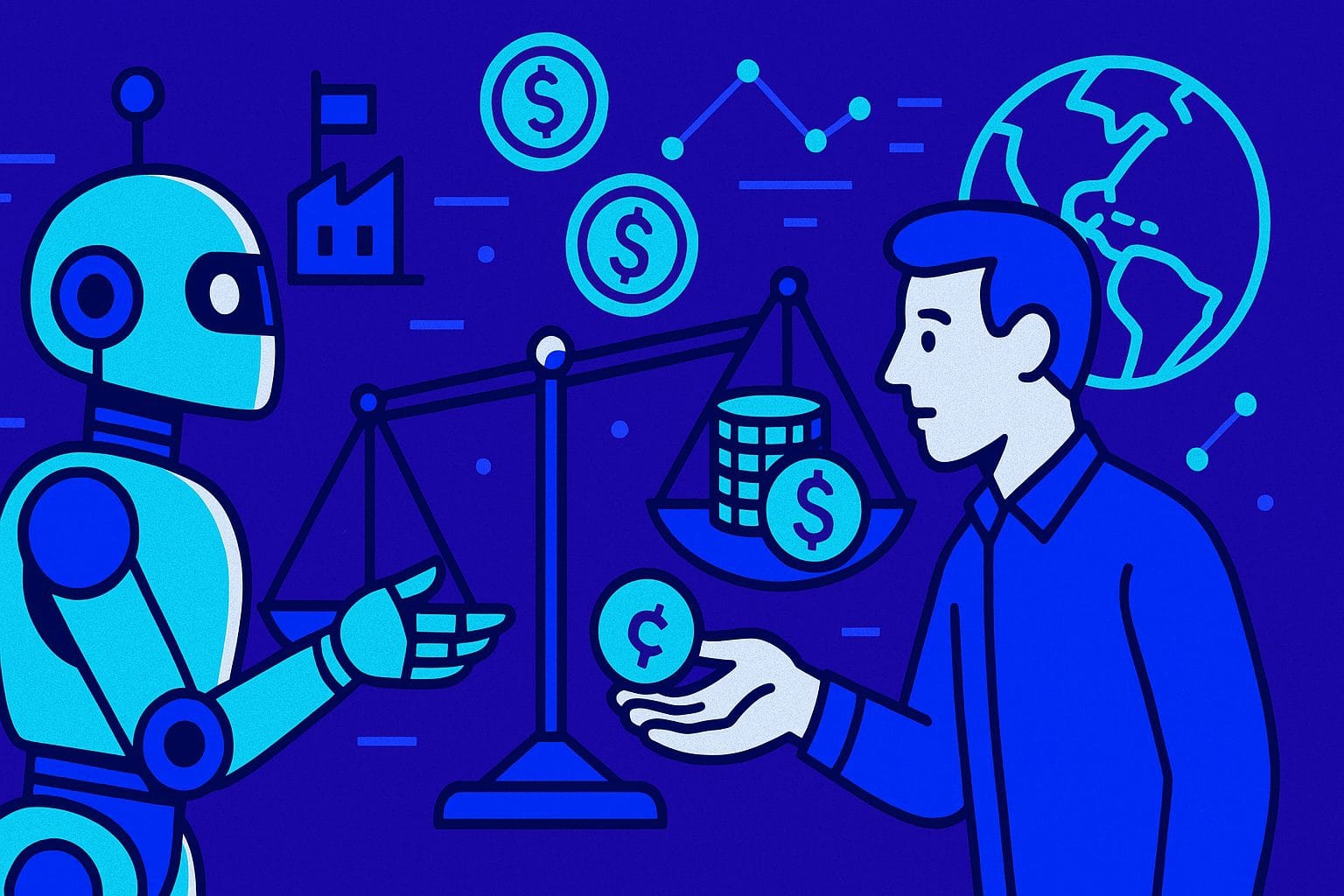
In 39 European retailers representing a combined trillion euros in revenue, self-checkout machines increase losses by 22% in the first year of installation. The theft rate reaches 4% of revenue—more than the average net margin for retailers on the continent, which caps at 3%. In other words: in some stores, each self-checkout machine installed erases the profit of the entire point of sale.
These figures come from the most rigorous study ever conducted on the subject, published in June 2026 by ECR Retail Loss and the University of Leicester under the direction of Professor Matt Hopkins. They illuminate a decision being made simultaneously and independently by the world’s largest retail chains: Dollar General, Walmart, Target, Amazon. The removal of self-service checkouts.
This movement is not a technological capitulation. It is an economic recalibration based on real data.
The Essential Points
- An ECR Retail Loss study covering 39 retailers and a combined €1 trillion in revenue establishes that self-checkout machines increase losses by 22% in the first year, with theft rates potentially reaching 4% of revenue (ECR Retail Loss / University of Leicester, June 2026)
- Dollar General is eliminating self-service checkouts in approximately 12,000 of its more than 20,000 American stores (roughly 60% of the network); Walmart, Target, and Amazon are conducting partial or complete removals depending on store format
- The Amazon “Just Walk Out” case illustrates the symmetrical limit: presented as pure artificial intelligence infrastructure, the system actually relied on approximately 1,000 Indian subcontractors tasked with manually validating transactions
- The real issue is not whether humans beat machines, but in which specific functions and at what verification cost each excels
Dollar General Removes 12,000 Self-Checkouts
Dollar General is the largest chain of dollar stores/general merchandise stores in the United States by number of locations. Its more than 20,000 points of sale cover primarily rural areas and lower-income suburban neighborhoods where major retailers do not install supermarkets. In 2022, the chain had massively rolled out self-service checkouts in response to pressure on labor costs, deploying the system in approximately 19,000 stores and testing 100% self-service formats. A few years later, the company announces the removal of the system in approximately 12,000 of its stores.
The reason given by management is accounting: losses generated by organized theft and scanning errors exceed savings realized on payroll. It is an equation that retailers took several years to document, because the causal link between self-checkout and increased theft is difficult to isolate in operational data. The Hopkins study fills this methodological gap by relying on longitudinal data covering five years and several dozen retailers.
The result is unambiguous: self-service checkouts structurally generate more “shrinkage”—technical term for losses related to theft, errors, and damage—than checkouts staffed by cashiers. According to the Hopkins study, losses increase by 22% in the first year, but do not continue rising indefinitely: the study notes that losses are no higher today than in 2018, a sign of progressive management by retailers.
Walmart and Target adopted more nuanced approaches. Walmart eliminated self-checkouts in several store formats, particularly small-format stores, while retaining them in large-format stores where customer volume still justifies the ratio. Target closed its self-service zones in several hundred stores since 2023, officially citing “organized theft” issues without quantifying losses.
Why Theft Explodes at Self-Checkouts
The technical explanation is simple. A checkout staffed by a human creates an information asymmetry in favor of the seller: the cashier sees what passes on the conveyor, hears the validation beep, and perceives unusual behavior. A self-checkout reverses this asymmetry. The customer controls the scan pace, article orientation, and interaction with the verification scale. The opportunities to not scan an article, to scan a cheaper article instead of a more expensive one, or to slip a product under the basket are structurally more numerous.
The Hopkins research distinguishes three categories of losses. Intentional theft represents the most visible portion, but it is not the most significant by volume. Unintentional errors, particularly poorly scanned or forgotten products, constitute a substantial fraction of losses. Finally, “sweethearting”—a term designating letting an article pass without scanning, often done by the customer themselves without malicious intent in a fluidity context—completes the picture.
What the study reveals is that the very design of the self-service system makes these three phenomena statistically inevitable at scale, regardless of individual customer morality. It is a problem of social engineering, not criminology.
Retailers attempted to address this through technical solutions: weight verification scales, cameras with item recognition, visual alerts. These devices add infrastructure costs and create friction in the customer experience without solving the fundamental problem. The rate of “false alerts” is high enough to discourage systematic deployment.
Amazon “Just Walk Out” or the AI That Didn’t Exist
The Amazon case is particularly instructive because it touches on the most radical promise of retail automation. Launched in 2018, the “Just Walk Out” system allowed customers to enter an Amazon Go, take items, and leave without checking out. Cameras and weight sensors identified selected items and automatically charged the customer’s Amazon account. The technology pitch was flawless.
In 2024, The Information revealed that the system relied on approximately 1,000 subcontractors based in India, tasked with viewing camera footage and manually validating ambiguous transactions. Approximately 70% of transactions required human intervention to be properly recorded.
Amazon subsequently announced the abandonment of “Just Walk Out” in its Amazon Fresh grocery stores, replacing it with intelligent “Dash Cart” shopping carts. This is not a withdrawal of AI from retail—it is a withdrawal from infrastructure that presented AI as more capable than it actually was.
The phenomenon has a name in automation literature: the “mechanical Turk problem,” referring to the famous 18th-century automaton that concealed a human chess player within its mechanism. The idea that behind many supposedly autonomous AI systems lie poorly visible human workers is not anecdotal. AI agents are entering enterprises with similar promises of complete autonomy, and the question of hidden human verification will arise in the same way in other sectors.
The Economic Calculation That Retailers Took Six Years to Make
It is useful to understand why these chains maintained their self-checkouts for so long before removing them. Accounting for losses in retail is complex. “Shrinkage” is difficult data to attribute precisely: in-store theft, warehouse theft, administrative errors, shipping damage—all of this is aggregated. Isolating the portion attributable to self-checkouts requires comparative protocols that most operators were not putting in place.
The initial promise was convincing. A self-checkout replaces, depending on format, one to two full-time equivalents. At the American minimum wage of $7.25 (federal amount, many states are higher), a cashier costs approximately $15,000 to $20,000 per year in direct costs. A self-checkout pays for itself in a few years. The reasoning was economically sound under one central assumption: that customer behavior would remain equivalent.
This assumption was wrong. Not because customers are dishonest, but because the self-checkout structurally modifies the commercial exchange environment. Removing human presence does not simply reduce a cost: it changes the implicit rules of the transaction.
Behavioral economist Dan Ariely documented this phenomenon in his work on dishonesty: the presence of another human being, even without formal sanctioning power, significantly reduces deviant behavior. The cashier is not merely a worker—she is social infrastructure.
The Jobs That Survive Are Not the Ones We Thought
This retreat of self-checkouts reopens a question that labor economists have debated for a decade: which jobs can automation truly replace, and at what cost?
The dominant thesis since the work of Daron Acemoglu and Pascual Restrepo, particularly their 2019 study on robots in American manufacturing, distinguishes routine tasks, assumed to be automatable, from non-routine tasks, assumed to be resistant. Supermarket checkouts clearly fell in the first category: scanning items, processing payment, giving change. All of this is mechanically reproducible.
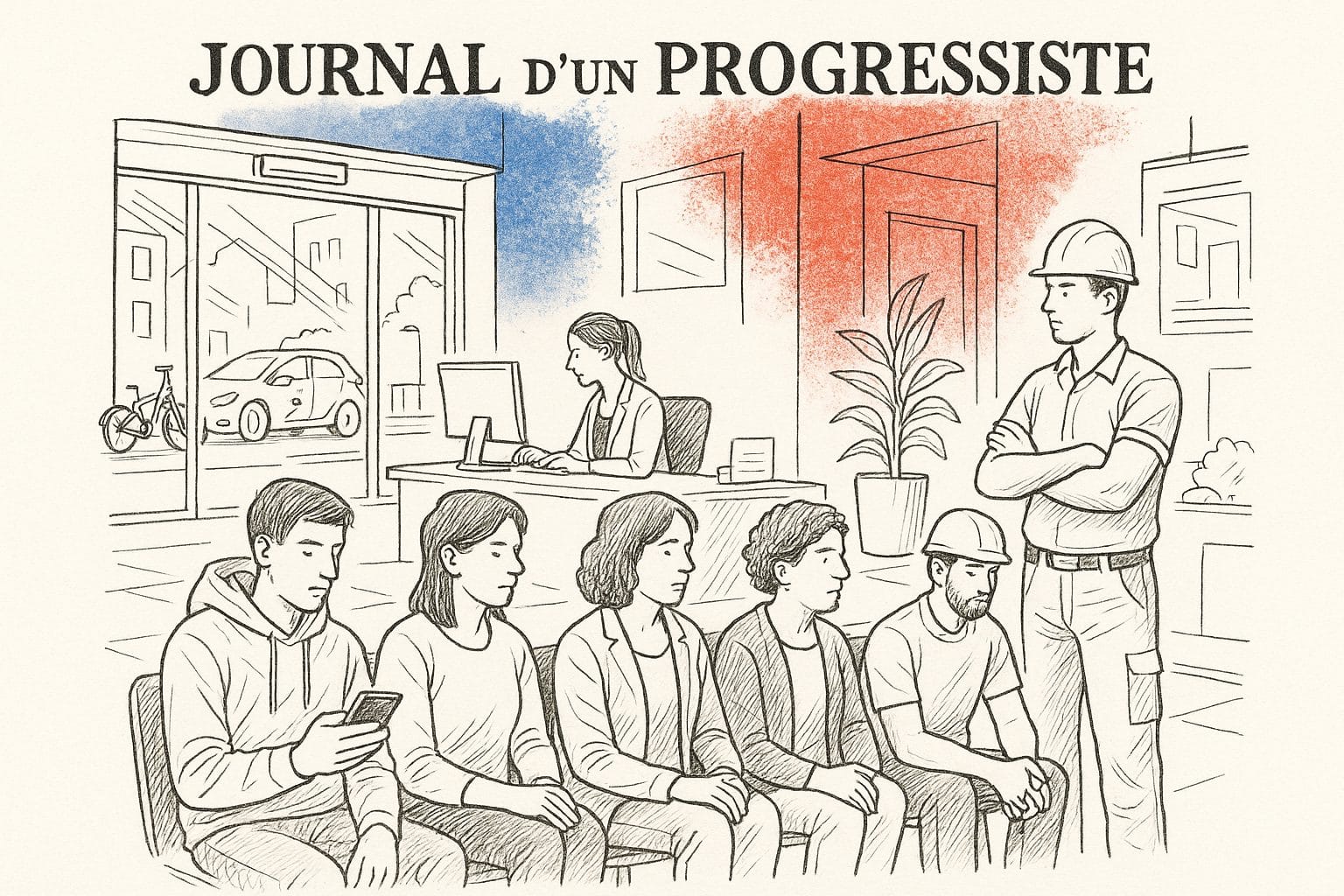
What the ECR Retail Loss study documents is that this taxonomy misses a dimension: the social signaling function of certain jobs. A cashier does not merely scan articles—he makes the act of paying public and interpersonal. This publicity of exchange is what makes theft cognitively and emotionally costly for most individuals. Automating the checkout also automates the disappearance of that cost.
The resilience of cashier jobs is therefore not due to the technical incapacity of machines to scan barcodes. It stems from a latent function of the job that standard economic models did not capture. It is a methodological lesson: evaluating the replacement cost of a job requires mapping all its functions, including the most implicit ones.
This reality connects to broader debates about introducing AI into very different sectors. When AI agents insert themselves into work organization, the social and relational functions of human positions—often invisible in job descriptions—remain the blind spot of overly rapid deployments.
What Retailers Are Doing Instead
The removal of self-checkouts does not mean returning to the status quo of 1995. Chains are reinvesting the supposed savings in different devices, which target loss reduction without eliminating the human friction point at checkout.
Dollar General is experimenting with aisle-locking systems for the most-stolen products. Several American retailers, including Walmart, have generalized security cases on mid-value items—cosmetics, electronics, razors. These devices shift friction from the payment moment to the point-of-sale moment, without eliminating cashier presence at exit.
Others are experimenting with hybrid formats where self-checkouts are reserved for baskets with fewer than fifteen items—reducing exposure time and theft surface area—while full baskets go through traditional checkouts. Walmart is also testing camera systems with alerts to human cashiers, who retain intervention power without processing each item themselves.
On a more structural level, some chains are hiring dedicated prevention agents for self-service zones, an employment category that did not exist at this scale ten years ago. This is employment displacement, not net destruction: self-checkouts created a need for human supervision that traditional checkouts did not have, at least not in the same proportions.
The question now facing retailers is that of the optimum. Not “automation or no,” but “what proportion of each type of checkout, for which store format, which customer base, and what level of acceptable loss.” This is an operational engineering problem, and several chains are tackling it methodically.
Humans as Infrastructure, Not as Adjustment Variable
There is an intellectual temptation to read this movement as a victory of human labor over machines, or as proof that automation is an illusion. Both readings would be incorrect.
Retail has succeeded in automating entire sections of its supply chain with real and lasting gains: inventory management, order processing, delivery route optimization. Automation of Amazon warehouses, for example, has allowed for significant reduction in processing times without generating comparable losses. The difference with checkouts lies in the nature of the interaction: in the warehouse, the human is absent from the main value chain. At checkout, she was at the center of a social exchange that had its own economic function.
What the Hopkins study teaches is that automation is efficient when it replaces an isolatable technical task. It becomes problematic when it eliminates a social interaction that played an undocumented economic role. Mapping these hidden functions before deploying is less spectacular than announcing a wave of automation, but it is what distinguishes a profitable investment from an expensive mistake.
For the 350,000 cashiers that the United States has according to the Bureau of Labor Statistics, this recalibration changes the trajectory. The Bureau of Labor Statistics projected in 2022 a 10% decline in checkout jobs by 2032. It is likely this projection will be revised downward in the coming exercises, given the decisions made by major industry players.
The real question is not whether machines will replace cashiers. It is which functions of which jobs generate economic value that replacement models do not yet know how to measure—and how many years and billions it will take to learn.
Sources
- ECR Retail Loss / University of Leicester, Professor Matt Hopkins, June 2026: https://le.ac.uk/news/2026/june/retail-loss-self-checkout
- The Information, revelations about Amazon Just Walk Out Indian subcontractors, 2024 (no guaranteed URL)
- Daron Acemoglu and Pascual Restrepo, Robots and Jobs: Evidence from US Labor Markets, Journal of Political Economy, 2020
- Dan Ariely, The (Honest) Truth About Dishonesty, HarperCollins, 2012
- Bureau of Labor Statistics, Occupational Outlook Handbook, Cashiers, 2022 edition
- Dollar General - Official Website
- Payments Dive - Dollar General earnings call (May 2024)
- Chain Store Age - Amazon Just Walk Out / Dash Cart (official confirmation)
- McKinsey State of Grocery Retail Europe 2026
- ESM Magazine - ECR Retail Loss Study 2026