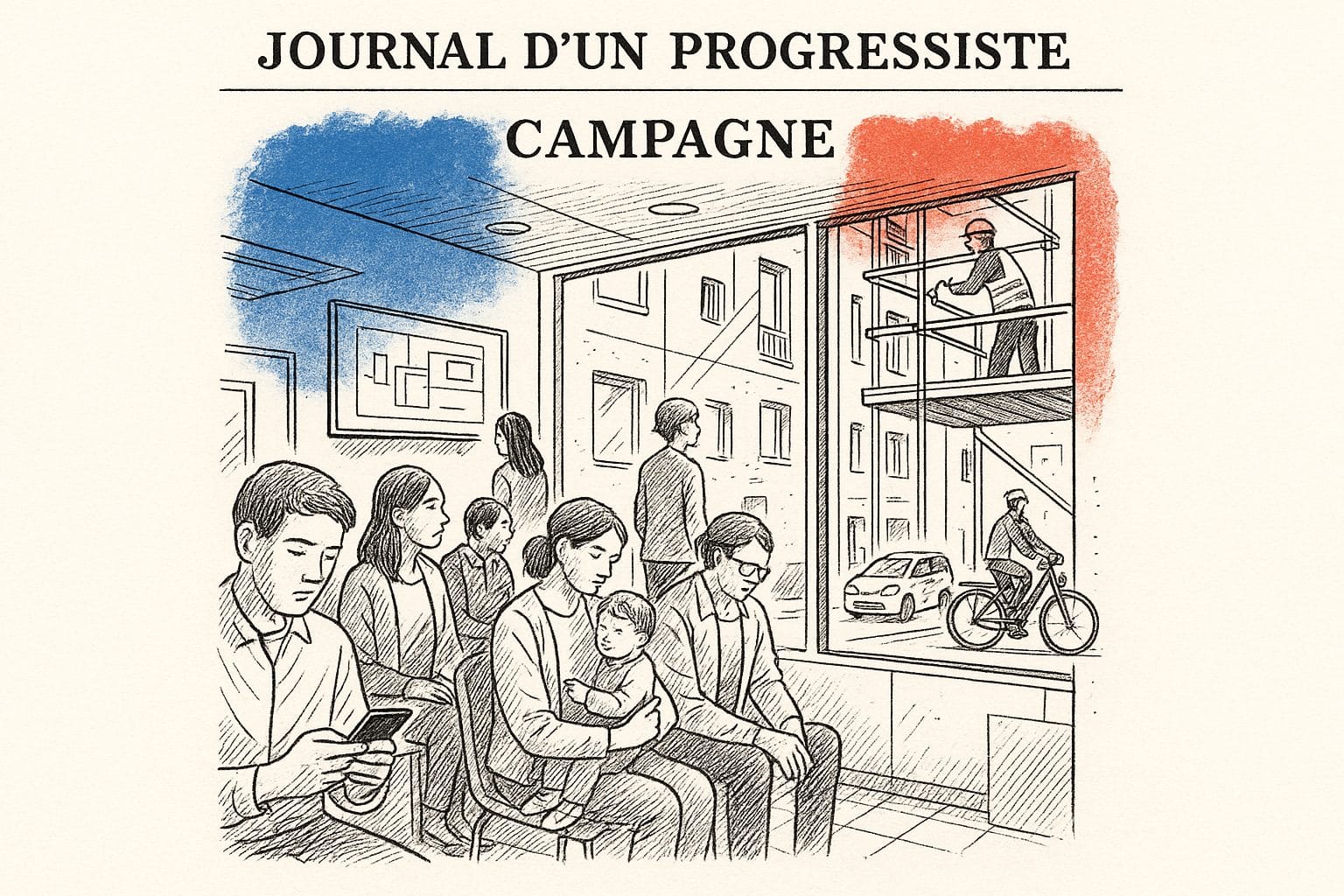
98.7% of salary for housing. That is what a young Spanish person must devote on average to rent alone a one-bedroom apartment in 2026, according to Eurostat data compiled by Euronews. This proportion, which makes residential independence mathematically impossible, illustrates the scale of a crisis that now affects the entire European continent. From Madrid to Amsterdam, from Lisbon to Berlin, an entire generation finds itself structurally excluded from the housing market.
Facing this massive exclusion, an unprecedented mobilization is emerging. Young Europeans are no longer content to suffer passively: they organize coordinated occupations, create alternative housing networks, and force the European Union to intervene directly in a domain previously exclusive to the national level. The EU has mobilized 43 billion euros through various financial instruments, while the European Investment Bank plans 4.3 billion euros in annual loans from 2025-2026 onwards. A transformation that reveals how a crisis can become the engine of European integration from below.
The Essential Points
- In Spain, renting alone costs 98.7% of the median salary of young people aged 18-29 according to Eurostat May 2026
- A growing number of European minors live without fixed housing, a situation particularly concerning in France
- The EU mobilizes 43 billion euros through various European funds to support affordable housing
- Coordinated mobilizations affect numerous European capitals since September 2025
Spain Reveals the Scale of Continental Exclusion
The Spanish figures do not constitute a national exception but rather the vanguard of a continental phenomenon. In Madrid, the average rent for a studio reaches 1,247 euros monthly when the median salary of 18-29 year-olds caps out at 1,263 euros net. The equation makes any autonomous life impossible: after housing, 16 euros remain for food, transportation, and healthcare.
This mathematical impossibility is found in fifteen other European capitals. In Amsterdam, the proportion climbs to 94% of salary. In Lisbon, it reaches 87%. Even Berlin, long a refuge for precarious young Europeans, sees its rents absorbing 73% of income for those under 30 according to data from the European Centre for Social Research.
Exclusion no longer affects only traditionally vulnerable categories. The profiles concerned reveal an unprecedented generational divide: 34% of university graduates under 30 still live with their parents in Italy, compared to 18% ten years ago. In France, 47% of 25-29 year-olds cohabit due to financial constraints, according to INSEE. This prolonged dependency reshapes European family structures and massively delays autonomous life projects.
The phenomenon is accompanied by growing residential precarity particularly affecting the youngest. This situation, in sharp progression in recent years, counts neither young people in emergency housing nor those forced into cohabitation.
Coordinated Mobilizations Transform Protest into Political Program
The mobilization emerging since September 2025 breaks with traditional forms of student protest. Simultaneous occupations of public buildings in numerous European capitals reveal an unprecedented level of transnational coordination for a social demand. Collectives organize their actions through encrypted platforms and share standardized occupation methods.
This coordination produces concrete results. In Barcelona, occupying the seat of the Generalitat of Catalonia for 72 hours forces the adoption of a moratorium on tourist rentals in the city center. In Prague, mobilization achieves the conversion of 1,200 empty municipal housing units into student residences. In Warsaw, it leads to the opening of 400 emergency housing places financed by the municipality.
These local victories rely on a deliberately European strategy. Collectives organize “housing caravans” between capitals, document disparities in public policy, and confront national governments with their comparative practices. This transnational pressure forces executives to justify their choices before a Europeanized public opinion.
The programmatic dimension of these mobilizations goes beyond simple demands. Collectives publish precise technical proposals: European rent controls, taxation of second homes, obligation for social diversity in new real estate programs. These proposals, translated into fifteen languages, circulate between national parliaments and inspire the first common legislative initiatives.
The European Union Discovers a Social Competence Through Crisis
European intervention marks a major institutional break. Housing previously fell exclusively under national and local competences. The crisis forces Brussels to create from scratch direct intervention instruments. The EU mobilizes 43 billion euros through various European funds for affordable housing, while the European Investment Bank plans 4.3 billion euros in annual loans to directly finance local programs.
This institutional innovation circumvents traditional national resistances. Seventeen European cities, from Barcelona to Warsaw, sign directly with the Commission financing conventions that escape capital control. These “European urban pacts” create a precedent for integration by bypassing member states.
Financial mechanisms reveal the scope of commitment. The funds mobilize European budget surpluses and raise loans guaranteed by member states to finance 89,000 social housing units by 2027. This common borrowing capacity, unthinkable in other sectors, becomes acceptable in the face of documented social urgency.
The European approach privileges technical innovation over regulatory harmonization. Brussels finances experimentation with modular, prefabricated, and transportable solutions between countries. These “standardized European housing units” use common technical standards that facilitate rapid deployment. 15,000 units of this type will enter service between January and June 2026.
This direct intervention transforms young people’s relationship with the European Union. Where traditional family structures erode, Europe becomes a concrete recourse against national shortcomings. Eurobarometer surveys show a 18-point increase in the confidence of 18-29 year-olds in European institutions between 2024 and 2025.
Emerging Solutions Reshape Europe’s Residential Ecosystem
Innovation does not come only from institutions. Young Europeans create their own residential alternatives that escape traditional speculative logic. Participatory housing cooperatives are multiplying: 127 projects emerge in 2025 compared to 34 in 2023, according to the European Observatory of the Social Economy.
These initiatives mobilize hybrid financing that combines collective savings, solidarity-based bank loans, and European subsidies. In Toulouse, the “Habitat Partagé Sud” cooperative offers rents at 480 euros all-inclusive thanks to a structure that associates 89 young co-owners, Crédit Coopératif, and a 1.2 million euro European subsidy. This model inspires 23 replications in other French cities.
Technical innovation accompanies social innovation. “Adaptive micro-housing” of 25 to 35 m² uses mobile partitions and modular furniture to optimize space. These solutions, developed by the European Housing Lab network, cost 40% less than traditional studios while offering more functionality. 3,400 units of this type open in 2026 in twelve European cities.
The digital dimension facilitates access and management. European roommate matching platforms allow young people to search for housing throughout the EU with standardized criteria. These tools, financed by the expanded Erasmus+ program, facilitate student and professional mobility while pooling residential costs.
Companies are also adapting. Employers across Europe develop housing aid programs to attract young talent. 340 companies now offer “residential packages” that include help with deposit guarantees, a network of partner housing, and pooled default insurance.
Resistances Reveal the Issues of Redistribution
This transformation does not occur without tensions. Private landlords organize resistance to new regulations. The National Union of Real Estate Property contests before the Court of Justice of the European Union the directives on rent controls, arguing a violation of property rights guaranteed by European treaties.
Local authorities find themselves caught between contradictory injunctions. On one hand, they must respond to documented social urgency. On the other, they depend on tax revenues generated by real estate appreciation. This tension explains significant variations between European cities: where Amsterdam blocks new tourist rentals, Prague multiplies them to finance its public investments.
The geographic issue complicates the equation. European metropolises concentrate qualified jobs but generate land speculation that excludes their own workers. This contradiction pushes 67,000 young active people to leave Paris each year according to APUR, weakening the knowledge economy these cities seek to develop.
National resistances persist as well. Eight European governments still refuse to sign the “urban pacts” that would allow their cities direct access to European financing. This opposition reveals fears of durable circumvention of national sovereignties through direct Brussels-metropolis relations.
Financial arbitration remains complex. Public investment in social housing generates documented positive externalities: reduction in precarity, improvement in public health, stabilization of professional trajectories. But these benefits, diffuse and deferred, struggle to justify immediate spending to voters who are property owners concerned with preserving their real estate wealth.
Europe’s Social Housing as Integration Laboratory
This crisis catalyzes an unprecedented form of European integration. Unlike previous stages of community building, this one emerges from transnational social mobilization rather than political elite initiative. Young Europeans create in effect a continental solidarity that precedes and forces institutional action.
This dynamic transforms the very nature of the European project. Social housing Europe responds to a concrete, daily need where monetary or commercial Europe remained abstract for most citizens. This tangibility explains growing young generational adhesion to European solutions.
The ongoing experimentation prefigures other European social interventions. The success of housing funds inspires similar projects for youth employment, professional training, and ecological transition. These new European instruments function according to the same principle: direct territorial financing, circumvention of national resistances, technical standardization of solutions.
The 2027 horizon sketches an emerging social Europe. The 89,000 housing units financed by European funds certainly represent a drop in the ocean compared to needs, but they create a durable institutional precedent. This European social housing infrastructure, once established, can scale up rapidly according to political needs.
The transformation of mindsets accompanies institutional evolution. A generation of young Europeans grows up considering Europe a normal recourse against national failures. This Europeanization of social expectations structurally modifies continental political power dynamics and nourishes demand for deepening European social integration.