More than 60% of British GDP already consists of non-market or imputed elements: government, fictional rents, financial services. Diane Coyle builds on this striking figure to demonstrate that our tools for measuring economics no longer align with reality. In “The Measure of Progress,” this Cambridge economist proposes two alternative frameworks for capturing the true wealth of modern societies.
Coyle asks “how to measure progress in a way that captures the improvement in well-being and lived experiences of populations.” The statistical instruments used today, developed in the 1940s to address completely different economic challenges, now function “like a distorting lens, or even like blinders” in the face of the modern digital economy.
The essentials
- More than 60% of British GDP consists of non-market or imputed elements, revealing the growing inadequacy between our measurements and economic reality
- Coyle proposes two alternative frameworks: comprehensive wealth accounting (including natural, human, and social capital) and time-use accounting
- In a dematerialized world where “elements that are difficult to measure now dominate those we know how to measure,” GDP becomes inadequate
- Technological innovations save time for both producers and consumers, but these well-being gains remain invisible in GDP
The author
Diane Coyle is the Bennett Professor of Public Policy at the University of Cambridge. A former economic journalist and later academic, she is notably the author of “GDP: A Brief but Affectionate History,” a historical analysis of this indicator that she describes with irony as an “affectionate history.” This prior expertise on GDP naturally led her toward this more systemic critique of economic measurement tools. Co-director of the Bennett Institute, she directs research on progress and productivity, while also advising the British Office for National Statistics.
The central thesis: a distorting lens
Coyle argues that “the framework underlying current economic statistics is so obsolete that it functions like a distorting lens, or even like blinders.” GDP can no longer “measure societal progress or even economic activity accurately in an economy dominated by digitization, services, and intangible assets.”
The central argument rests on a fundamental temporal inadequacy. The 2020s economy bears no resemblance to that of the mid-twentieth century, “when the formalization of the economy in the 1950s and 1960s occurred in the context of a manufacturing sector driving growth and employment, producing standardized goods.”
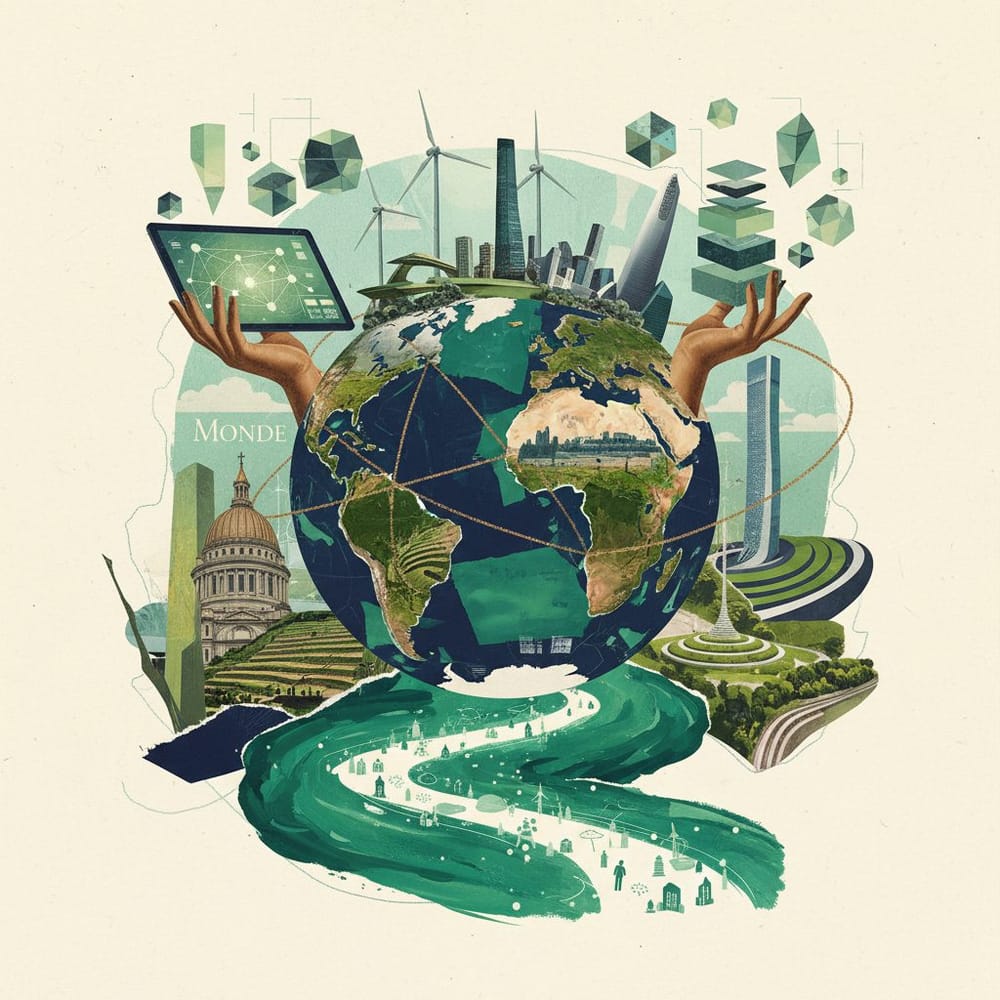
Today, “in a world of dematerialized production, digital clouds located nowhere but used everywhere, supply chains involving dozens of countries, and unpriced but critical natural goods, the utility of GDP diminishes.” This structural transformation creates a statistical paradox: what truly improves people’s lives may not count in national accounts, while what harms our collective future may appear as economic growth.
The invisible economy: intangibles and time
The explosion of intangibles
The digital economy is an economy of intangibles: “data, software, interfaces, brands, reputation, shared knowledge.” These “goods” do not wear out through use, reproduce at near-zero marginal cost, and depend more on attention than on physical capital. Yet national accounting still focuses on what can be touched, weighed, or stored. This undervaluation of intangible assets distorts investment decisions and renders invisible investment in creativity, education, and research.
Modern production is “increasingly intangible in terms of economic value added,” even if material inputs remain omnipresent. Even manufacturing firms that produce tangible goods, such as aircraft engines and agricultural equipment, derive the bulk of their revenues from repair services integrated into these physical goods. Moreover, production is now so geographically dispersed that it becomes nearly impossible to determine what value was added at each stage of the complex supply chain.
Time as a forgotten measure
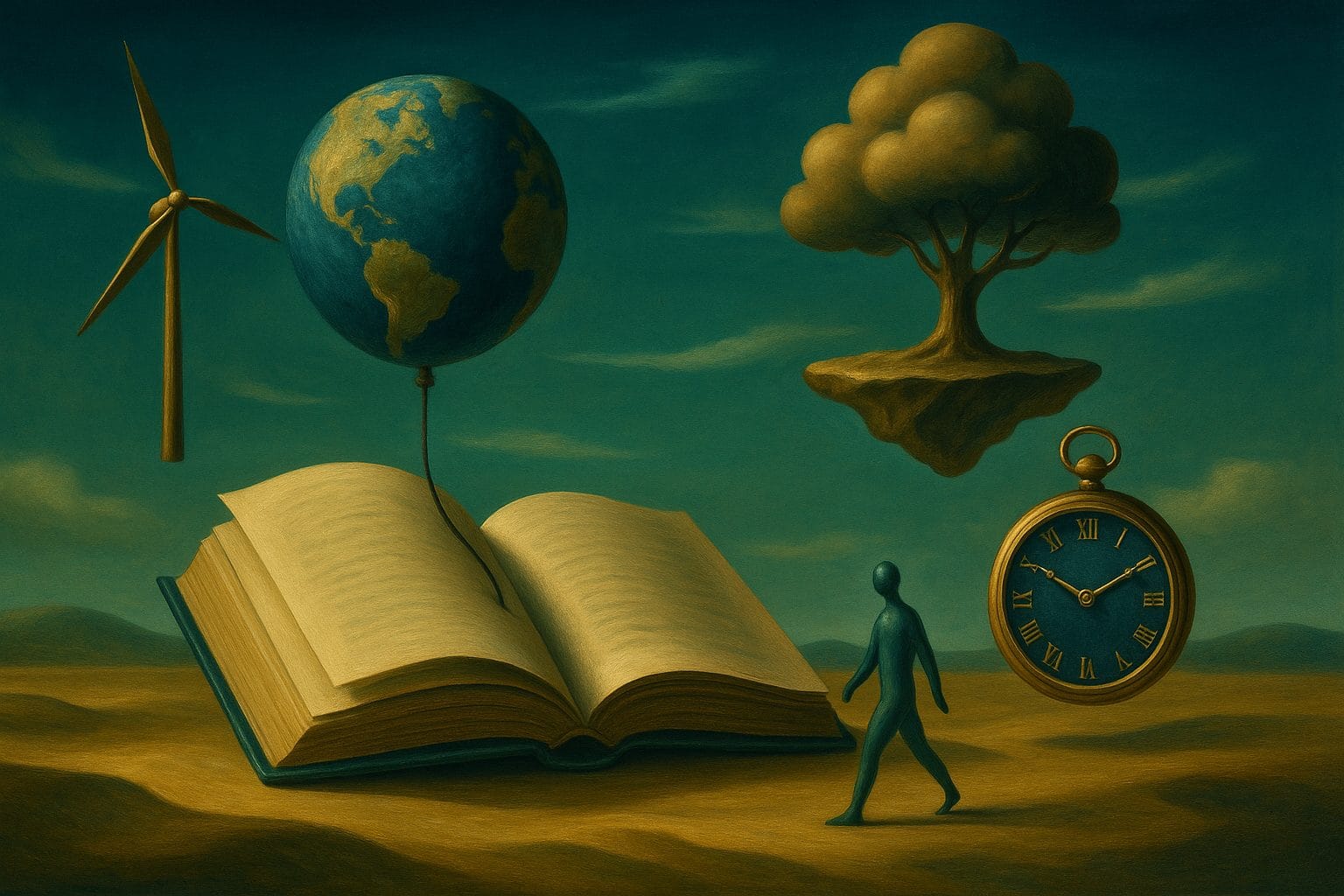
A recurring and powerful theme runs through the book: time. “Technological and service innovations often save time for both producers and consumers, but these well-being gains are invisible in GDP.” Coyle mentions “the substitution of consumer time for that of producers (not only supermarket checkout lines, although that is the most obvious example), and more spectacularly the rise of ‘free’ digital goods. Since we have not figured out how to value them, they do not appear in the conceptual framework of GDP.”
This omission of time reveals a major blind spot. When a digital service allows one to accomplish in a few clicks what previously took hours, this improvement in well-being completely escapes official statistics.
The two transformative alternatives
Comprehensive wealth accounting
“Comprehensive wealth” accounting examines “all the assets an economy needs to continue producing GDP growth in the future.” The “Six Capitals”—physical capital, natural capital, human capital, social/institutional capital, and knowledge—should constitute our wealth, but most are not currently well-measured.
This approach operates according to familiar accounting logic: “One can conceive of the system of national accounting and GDP as a company’s income statement. Time use can be seen as a cash flow statement that monitors things on a daily basis. And the missing piece is the balance sheet.” Comprehensive wealth accounting fills this gap by inventorying all productive assets.
Coyle emphasizes the major failure of the GDP focus that “ignores what happens to wealth, when we should pay much more attention to the loss of wealth currently occurring due to the depletion of our natural resources.”
Time-use accounting
The second proposed framework, time-use accounting, “recognizes that time is a fundamental constraint in all economic activity. Integrating time use into National Accounts could help reveal the complete economic contribution of unpaid work, care, and digital activities.” This approach already finds resonance: the 2025 System of National Accounts now provides international standards for measuring non-market household production and temporal allocation.
This methodological innovation would finally make it possible to quantify the domestic economy, volunteering, and these “free” digital activities that create value without generating monetary flows.
The blind spots: between idealism and pragmatism
Despite the relevance of her diagnosis, Coyle underestimates several practical difficulties. Evaluating diverse forms of capital is extremely complex. “Assigning ‘fictional prices’ to trust, ecosystems, or future environmental risks pushes the limits of statistical feasibility.” How can one objectively quantify social trust or biodiversity without introducing a subjectivity that would undermine the credibility of statistics?
Furthermore, although she explores in depth the economy under neoliberalism, Coyle refrains from examining “its driving force and the upheaval of the governing ideology that has occurred in recent years.” This omission is surprising, as measurement tools are never politically neutral. Reforming economic measurement without questioning the power relations that determine what counts can limit the scope of the proposed transformation.
The author remains evasive on institutional resistance as well. Official statistics structure public policies, budgets, and international comparisons. Who has an interest in maintaining the status quo, and how can these resistances be overcome?
Why read it
This book addresses a broad audience: policymakers frustrated by the inadequacy between their measurement instruments and contemporary challenges, economists seeking to renew their toolkit, but also citizens concerned with understanding why the economy can be doing “well” statistically while generating social unrest and environmental degradation.
The work constitutes “a treasure trove of insights at the intersection of economics, statistics, and ethics” and “launches the beginning of a new conversation.” Coyle avoids the academic trap: she renders accessible complex technical concepts while proposing concrete solutions.
Its strength lies in the combination of a thorough critique of the current system and precise alternative proposals. Unlike other critiques of GDP, she “sketches an alternative framework. Based on comprehensive accounting of public, private, and natural assets, and valuation based on how people use their time, this new approach could provide better guidance for policies and future growth.”
The reader will find here not yet another pamphlet against growth, but a practical roadmap for measuring progress differently. As global investments shift toward digital infrastructure and Europe bets on manufacturing industry to reclaim its economic sovereignty, this reflection on our measurement instruments becomes crucial for understanding the transformations underway and their geopolitical implications.
Bibliographic information
- Title: The Measure of Progress: Counting What Really Matters
- Author: Diane Coyle
- Publisher: Princeton University Press
- Publication date: 2025
- Pages: 344