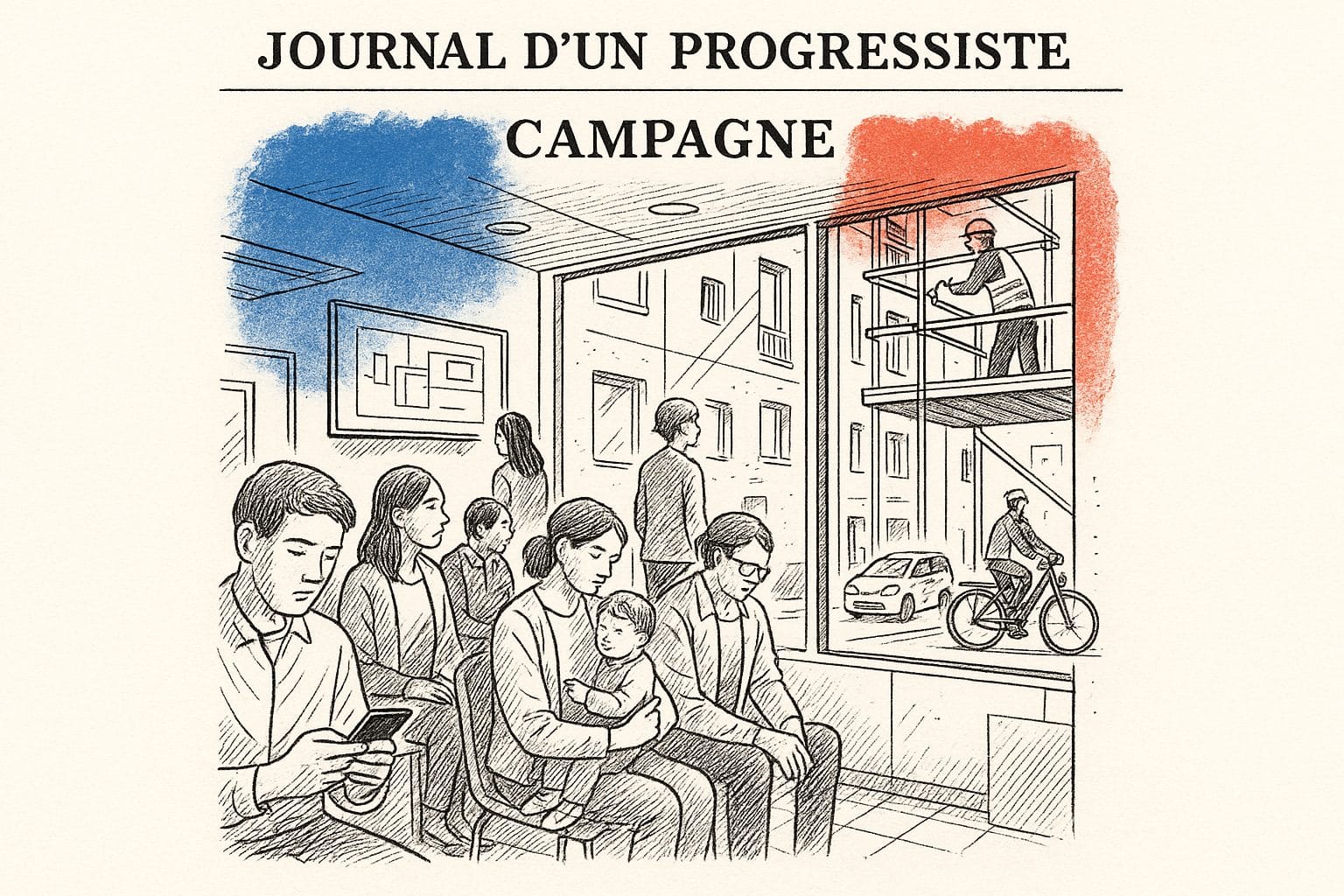
A 52% increase in anxiety disorders among those aged 10-24 between 1990 and 2021. This explosion strikes precisely those societies that have eliminated famine, reduced urban violence by 90%, and doubled life expectancy in a century. The West is discovering that material prosperity does not vaccinate against psychological suffering; it transforms it.
This dissonance reveals one of the major contradictions of contemporary human progress. While objective indicators of safety reach historical highs, anxiety has become the dominant pathology of developed societies.
The Essentials
- Anxiety disorders affect 301 million people worldwide, with a 25% increase since 2020
- Young people aged 15-29 concentrate the strongest progression, particularly in high-income countries
- Western Europe registers the highest anxiety rates despite record safety levels
- Women are twice as affected as men, with a peak between ages 30 and 34
- The economic cost exceeds 1,000 billion dollars annually for OECD countries alone
Western Europe Combines Record Safety with Maximum Anxiety
The Global Burden of Disease 2021 study documents a counter-intuitive reality: Western Europe simultaneously displays the highest levels of objective safety and the strongest rates of clinical anxiety in the world. The region registers 4,100 disability-adjusted life years per 100,000 inhabitants linked to anxiety disorders, 40% higher than the global average.
This paradoxical performance contrasts sharply with Eastern Europe, where anxiety rates remain 30% lower despite more precarious socio-economic conditions. Bulgaria, Romania, and Hungary—countries with per capita GDPs three times lower—present rates of clinical anxiety systematically lower than Germany, France, or the Netherlands.
Eurostat data confirms this surprising geography of psychological distress. In 2023, 15.3% of Germans report experiencing anxiety most of the time, compared to 8.1% of Poles and 6.7% of Bulgarians. This inversion of conventional expectations raises questions about the links between economic development and mental well-being.
Young People Concentrate the Anxiety Explosion in Prosperous Societies
The progression of anxiety disorders follows a marked generational curve. Between 1990 and 2021, those aged 15-29 saw their exposure to clinical anxiety surge by 48% in high-income countries, compared to 31% for the entire population. This acceleration intensifies from 2010 onwards, with an average annual progression of 3.2% among young adults versus 1.8% across all ages.
Women aged 30-34 constitute the epicenter of this silent epidemic. Their rate of anxiety disorders has climbed 67% over three decades, reaching 8.9% of this age group in Western Europe. This period coincides with career choices, motherhood, and homeownership—traditional milestones of social success transformed into sources of systemic anguish.
Adolescence reveals even deeper fractures. European teenagers aged 15-19 present clinical anxiety rates of 6.2%, twice that of their Southeast Asian counterparts and 80% higher than their parents at the same age in 1995. This divergence suggests that early exposure to performance standards and personal optimization generates pathologies specific to societies of abundance.
Hyperconnectivity Amplifies Permanent Performance Anxiety
The emergence of social media coincides temporally with the acceleration of youth anxiety. Between 2007, the year the iPhone launched, and 2021, anxiety disorders among those aged 10-19 progressed by 134% in OECD countries. This chronological correlation masks more complex mechanisms than simple screen exposure.
The World Health Organization identifies three specific vectors of this digital anxiety. Permanent social comparison transforms self-esteem into a fluctuating metric, fueled by the accumulation of external validation signals. Instant access to global information generates a feeling of perpetual urgency, where each news item becomes potentially threatening for the individual. The quantification of existence—steps, likes, performances—converts subjective experience into objective data constantly evaluated.
This dynamic finds particular resonance in technology companies, where new forms of work organization reproduce these logics of permanent optimization. The metrification of daily life, initially designed to improve performance, becomes a source of anguish when it extends to the entirety of personal existence.
Material Prosperity Displaces Sources of Anguish Without Eliminating Them
The progressive abolition of ancestral fears—famine, epidemics, conflict—paradoxically liberates mental space for new forms of anxiety. Maslow had anticipated this phenomenon in his hierarchy of needs: the satisfaction of physiological and safety needs displaces attention toward esteem and self-actualization needs, which are intrinsically more subjective and therefore more anxiety-provoking.
OECD data illustrate this displacement of vulnerabilities. In 1950, 89% of Europeans cited war, illness, or poverty as main sources of worry. In 2023, these concerns affect only 23% of respondents. The new dominant anxieties—professional performance, children’s education, social success—reflect societies where primary needs are largely satisfied.
This mutation of fears explains why clinical anxiety progresses despite the objective improvement of living conditions. European life expectancy has gained 12 years since 1990, infant mortality has plummeted by 75%, median income has doubled in real terms. These collective victories do not protect against the individual anguish of not sufficiently optimizing one’s existence in societies that have made personal fulfillment a moral imperative.
Cognitive Therapies Industrialize Facing Explosive Demand
The explosion in mental health demand radically transforms therapeutic supply. The European market for clinical psychology services has tripled in value since 2015, reaching 14.8 billion euros in 2024. This growth drives innovation toward standardization and partial automation of treatments.
Cognitive-behavioral therapies (CBT) are being digitized extensively. The Sanvello application serves 2.3 million active users in Europe, delivering standardized CBT protocols with 89% efficacy compared to in-person therapies for mild anxiety disorders. The British NHS now prescribes these digital solutions as first-line treatment, reducing access wait times from 18 to 3 weeks on average.
This industrialization of therapy responds to a structural shortage of clinical psychologists. Europe has 94 psychologists per 100,000 inhabitants, well below the 180 recommended by the WHO for effectively treating mental health disorders. France trains 3,400 clinical psychologists annually facing an estimated demand of 8,200 new practitioners per year until 2030.
Anxiety Becomes a Major Issue of Economic Productivity
The economic cost of anxiety disorders now exceeds that of many physical pathologies. The OECD estimates 1,200 billion dollars annually as the direct and indirect economic impact of anxiety in its member countries, representing 4.2% of combined GDP. This bill includes medical care, absenteeism, reduced productivity, and work absences.
European companies are beginning to quantify these impacts on their performance. According to a study conducted by Deloitte on 2,400 companies in the CAC 40 and FTSE 100, employee anxiety reduces productivity by 18% on average. The most affected sectors—finance, consulting, technology—register declines of 25%. This silent erosion of economic performance is pushing HR directors toward preventive strategies.
Investment in mental well-being becomes a measurable competitive advantage. Companies that have invested more than 1% of their payroll in mental health programs display an absenteeism rate 35% lower than the sector average and turnover reduced by 28%. This economic equation transforms anxiety management into a management imperative, beyond humanitarian considerations.
Public Policies Experiment with Early Prevention
Facing this silent epidemic, several European governments are testing new preventive approaches. Finland has deployed since 2023 a national early detection program for anxiety in 450 schools, reaching 78,000 students aged 12 to 16. Early results show a 31% reduction in anxiolytic prescriptions among participants after 18 months of follow-up.
Iceland is experimenting with a more radical strategy: banning smartphones in classrooms for all students under 16, accompanied by legal limits on daily screen time. Implemented in September 2023, this policy has produced a 23% drop in adolescent consultations for anxiety disorders within six months. These preliminary results are inspiring similar projects in Denmark and Norway.
France is launching in 2025 the “MonPsy Extended” program, which fully reimburses eight psychotherapy sessions per year for ages 16-25, without prior medical prescription. Endowed with 340 million euros over three years, this program aims to treat anxiety before it becomes chronic. The stated objective: reduce hospitalizations for severe anxiety disorders by 40% by 2030.
The digital therapeutic revolution accelerates alongside public initiatives. Companies are developing preventive solutions reminiscent of the automation underway in other sectors, where technology gradually complements human intervention without entirely replacing it.
Western societies are discovering that their historical success—the elimination of ancestral fears—generates new psychological challenges. Modern anxiety reveals the blind spots of material progress: optimizing the objective conditions of existence does not protect against subjective suffering. This lesson is progressively transforming public policies, which are learning to measure mental well-being with the same rigor as economic growth.
Sources
- Global Burden of Disease 2021 Study - Frontiers in Psychiatry
- WHO Annual Report on Global Mental Health 2024
- Eurostat Data on Well-being and Mental Health in Europe 2023
- OECD Study “Mental Health and Work” 2024
- Deloitte Report “The Mental State of the World” 2024