82% false positives. That is the maximum error rate committed by artificial intelligence systems moderating digital platforms when attempting to identify illegal content, according to an Oxford University study published in 2024. In the best cases, these algorithms still make mistakes 58% of the time, deleting millions of perfectly legal posts.
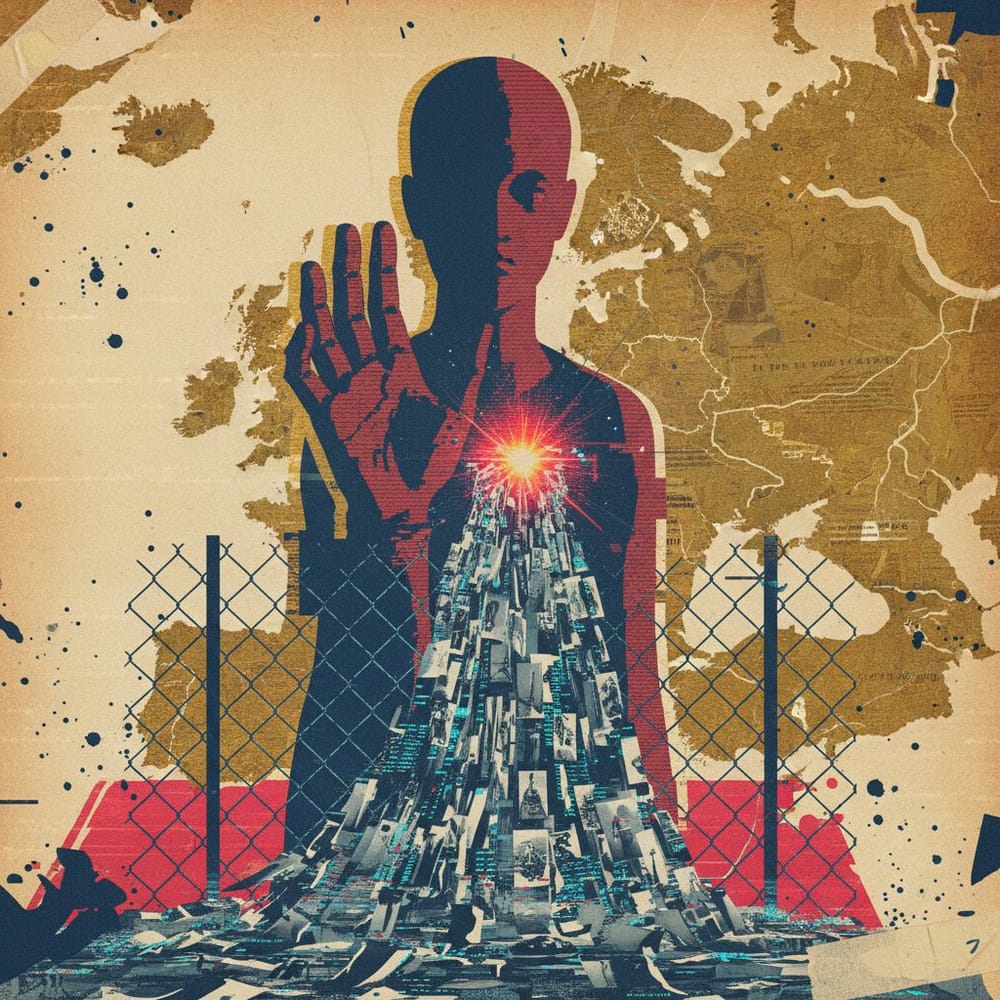
The Digital Services Act (DSA), which came into force in February 2024, forces the largest platforms to massively deploy these defective tools under threat of fines reaching 6% of their global revenue. Europe is thus establishing a system of preventive censorship that bypasses traditional judicial oversight and transforms digital giants into automated censors.
The Essential Points
- AI moderation systems generate between 58% and 82% false positives according to the 2024 Oxford study
- The DSA imposes fines up to 6% of global revenue for moderation failures, driving over-censorship
- 19 very large platforms are affected, touching 3.5 billion European users
- The European Commission can now directly impose technical measures without judicial oversight
AI Moderation Massively Fails on Legal Content
The study conducted by Oxford researchers on GPT-4 and GPT-3.5 reveals the extent of technological failures. When testing these models on detecting hate speech, disinformation, and violent content, the algorithms systematically over-censored. GPT-3.5 reaches 82% false positives on certain categories, while GPT-4, despite being newer, maintains an error rate of 58%.
These figures are explained by the very nature of the tasks assigned to machines. Distinguishing irony from hate, political debate from disinformation, or art from pornography requires contextual understanding that current algorithms do not possess. A satirical message about a politician can be classified as harassment, a contemporary art photograph as explicit sexual content.
The platforms know this. An internal Meta study, revealed during hearings before the US Congress, already showed in 2021 that their automated systems deleted 10 times more legal content than genuinely problematic content. YouTube acknowledges that 70% of appeals filed by creators result in restoration of deleted videos.
The DSA Transforms Fines Into An Incentive for Over-Censorship
The DSA drastically shifts this equation by imposing severe financial sanctions. The 19 very large platforms identified by the European Commission—from Meta to TikTok, from Amazon to Pornhub—risk fines reaching 6% of their global revenue. For Meta, this would represent up to 7.5 billion dollars. For Google, 18 billion.
This financial threat completely reverses incentives. Rather than risk a fine for letting illegal content pass through, platforms now prefer to over-censor massively. Deleting 100 legal posts to eliminate 1 illegal post becomes economically rational.
Article 16 of the DSA requires platforms to implement “risk mitigation measures” that are proportionate and effective. In practice, this translates into the deployment of increasingly aggressive algorithms. X (formerly Twitter) has quadrupled its automatic deletions since the DSA came into force. TikTok now applies preventive filters to 40% of European content before it is even published.
Brussels Bypasses National Courts
The DSA establishes an unprecedented control mechanism that circumvents national jurisdictions. The European Commission can directly impose “provisional measures” on platforms without going through a judge. These measures can include service suspension, algorithm modification, or bans on certain types of content.
This centralization worries legal experts. “The DSA creates a European super-regulator that can unilaterally decide what is acceptable online,” analyzes Christophe Geiger, director of the Center for International Studies of Intellectual Property. Platforms do have a right of appeal before the Court of Justice of the European Union, but this procedure can take years.
The example of X illustrates this evolution. In December 2024, the Commission threatened Elon Musk with a fine of 3.5 billion euros for failure to comply with moderation obligations. Without waiting for any judgment, it demanded immediate modification of recommendation algorithms and suspension of certain features. X gave in within 48 hours.
European Content Creators Face Systematic Censorship
The consequences are already measurable on the ground. European content creators see their posts deleted without explanation, their accounts suspended for phantom violations. Appeals, when they exist, take weeks. Meanwhile, visibility is lost, advertising revenue evaporates.
Biased algorithms are already transforming access to essential services, and this logic now extends to freedom of expression. Small creators, who lack the legal means to contest automated decisions, are the first victims of this over-moderation.
The European association of digital creators records a 340% increase in deletions “by mistake” since February 2024. Content in minority European languages is particularly affected: algorithms, trained primarily in English, poorly interpret the linguistic nuances of Catalan, Gaelic, or Maltese.
Europe Exports Its Automated Surveillance Model
The DSA is being copied beyond Europe. Australia is preparing an Online Safety Act directly inspired by the European model. Canada is studying the application of similar fines in its forthcoming Bill C-11. India, which already regulates 500 million users through its own rules, is carefully observing European methods.
This global convergence toward automated moderation worries digital rights defenders. “We are witnessing the normalization of preventive censorship,” warns Rebecca MacKinnon, director of Ranking Digital Rights. Governments are discovering that it is simpler to delegate censorship to machines than to legislate precisely.
Turkey has already adapted its own sanctions: 5% of revenue for platforms that do not moderate enough. Russia has applied similar fines since 2021. Even the United States, traditionally attached to the First Amendment, is debating a “Digital Platform Accountability Act” that adopts certain European mechanisms.
The False Solutions of “Ethical” Artificial Intelligence
Faced with criticism, platforms promise improvements. Meta announces GPT-5 for 2025, “specially trained for contextual moderation.” Google is developing Gemini-Moderation, “capable of understanding irony and second-degree meaning.” TikTok is testing a “collaborative moderation” system between AI and humans.
These technological promises mask a reality: no automated system can grasp the complexity of human language with sufficient reliability. Irony, satire, art, political debate require cultural and contextual understanding that machines do not have.
Worse, improving algorithms does not solve the fundamental problem. As long as economic incentives push toward over-censorship, platforms will configure their tools to delete massively rather than risk fines. A 95% precision algorithm will be deliberately degraded to 70% to avoid any regulatory risk.
The European paradox crystallizes: attempting to protect democracy by automating censorship produces exactly the opposite effect. The European Union, which already struggles to effectively regulate the digital economy, is installing a system of control over expression that escapes all democratic oversight.
Sources