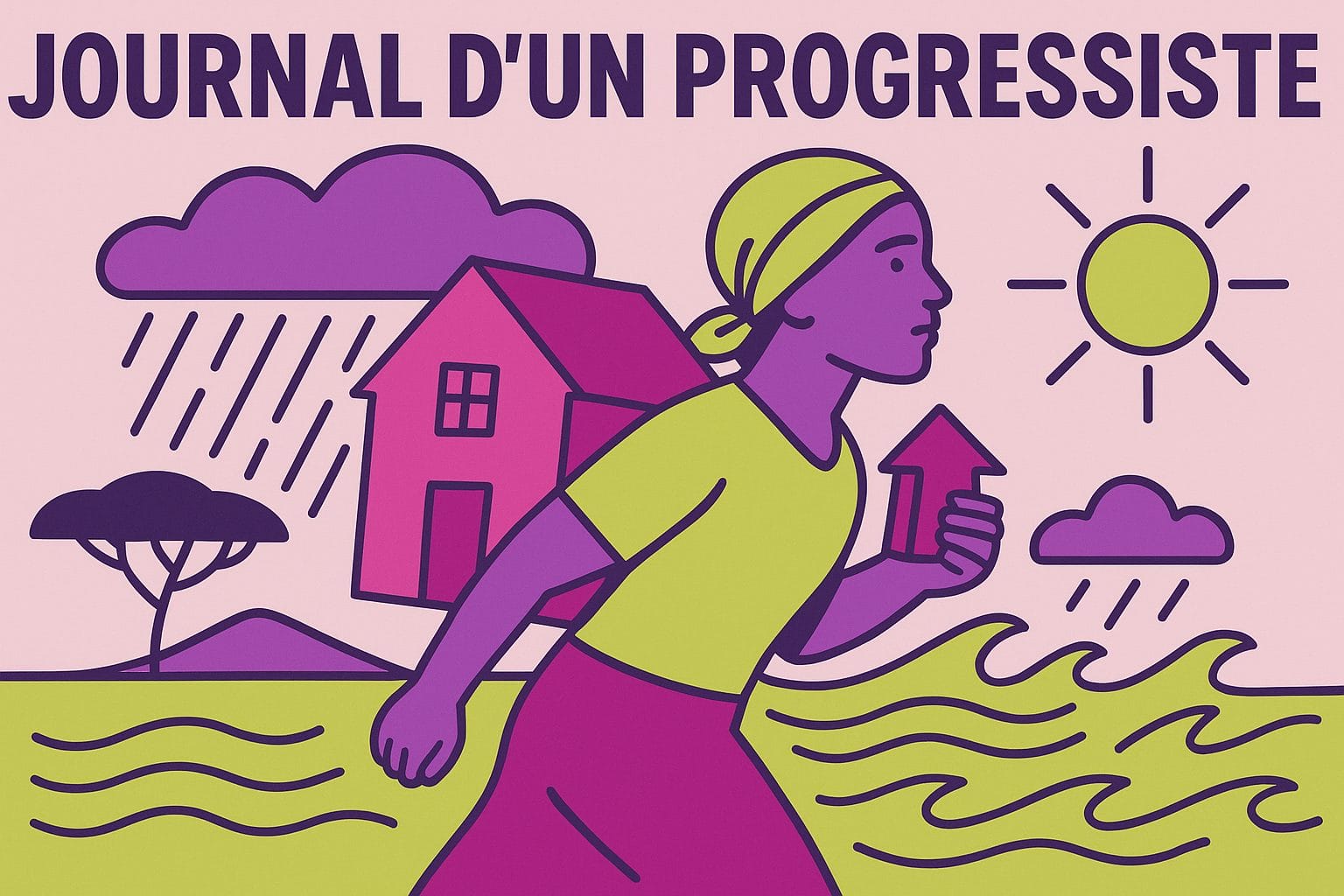
Toshiko Yamasaki is 74 years old. She lives alone in Osaka. Three times a week, a 52-year-old woman comes to do her shopping, accompanies her to the doctor, helps her sort her mail. In exchange, the caregiver receives no money. She accumulates time credits on an account managed by a local association. Twenty years from now, when she herself can no longer move around easily, someone will come to help her in turn.
This system is not philanthropy. It is a currency. It is called Fureai Kippu, “tickets for mutual care,” and Japan developed it beginning in the 1990s to answer a question that aging democracies have not yet resolved: how do you care for an aging society when public budgets are no longer sufficient?
France, Germany, and the Netherlands are today seeking answers in this direction. Not by ideology, but by arithmetic.
The essentials
- Japan has deployed at large scale since the 1990s time-credit systems for elderly care, including Fureai Kippu, integrating tens of thousands of volunteers across several dozen affiliated organizations
- Several European cities (Rotterdam, Barcelona, Lyon) are testing adapted variants suited to their institutional contexts, carried out by associations and sometimes co-financed by local authorities
- Public spending on dependency in France represents approximately 36 billion euros per year according to DREES, in a context where needs are growing faster than budgets
- In France, the ratio of people over 65 to working-age people should shift from 40 today to 62 in 2070, according to INSEE projections (central scenario)
- The model faces real obstacles regarding standardization, portability, and institutional trust — but several European experiments are producing measurable results
Demographics has already won
This is not a trend. It is an irreversible demographic fact.
In France, 21% of the population was over 65 in 2023, according to INSEE. This figure will reach 29% in 2050 in the central scenario of demographic projections published in 2023. The ratio between working contributors and retirees is shifting: 40 people over 65 per 100 working-age people today, 62 per 100 in 2070. These are not alarmist projections — they are the mechanical consequence of the baby boom, increased life expectancy, and fertility that has stagnated around 1.7 children per woman since the end of the 2010s.
Japan experienced this transition twenty years before Europe. In 2023, 29% of Japan’s population was over 65 — the highest rate in the world, according to UN data. The consequences are direct and well-documented: saturation of formal care facilities, burnout of family caregivers (80% of informal care is still provided by women, according to a 2022 Japanese Ministry of Health study), and growing budgetary pressures on the universal long-term care insurance system created in 2000.
It was in this context that Fureai Kippu was born. The idea is simple: human time is an abundant resource, redistributable, and non-inflationary. A healthy 65-year-old retiree can help a bedridden octogenarian. In exchange, he accumulates credits that someone else will use to help him when his time comes. The Sawayaka Welfare Foundation network, one of the main Japanese organizations to have deployed this system, today counts several dozen branches throughout the country.
The value of these credits is deliberately qualitative: one hour remains one hour, regardless of the care provided. Driving someone to the hospital is worth as much as helping prepare a meal. This principle of equivalence is not trivial. It avoids the hierarchization of care that characterizes conventional labor markets, where home care workers are among the lowest-paid workers in Europe — approximately 11.50 euros per hour in France in 2024 according to the sector’s collective agreement, barely above the minimum wage.
What the Japanese model actually contains
Fureai Kippu is not a government program. It is an invention of Japanese civil society, subsequently partially integrated into local public policies. This distinction is fundamental for understanding why it is difficult to replicate — and why it remains valuable.
The system rests on three pillars. Interpersonal trust first: credits are exchanged within a local community, where participants know each other or can be connected by a reference association. Portability next: some systems allow credits accumulated in one city to be transferred to another, or even to a family member. Finally, traceability: each hour is recorded, verifiable, and certified by the managing organization.
This last point is crucial for trust. Fureai Kippu does not operate on honor. It operates like a bank — hence the generic term “time bank” used to describe these systems in Europe. The difference from an ordinary bank is that the currency can neither appreciate nor depreciate: it generates no interest, it cannot be speculated on, and it loses its value if the network managing it disappears.
This is its main point of fragility. Several academic studies conducted on the subject, including work compiled by the OECD in its analyses on community care systems, indicate that the sustainability of time banks depends closely on the organizational continuity of the managing entity. When an association ceases operations, the accumulated credits become worthless. In Japan, several local networks experienced crises of symbolic liquidity — not enough providers to honor requests — particularly in rural areas where the population is aging faster than it can help each other.
These limitations do not disqualify the model. They define the conditions for its scaling up.
Europe experiments, without yet deciding
European interest in time banks is not new. As early as the 2000s, experiments emerged in Spain, Italy, and the United Kingdom. But their nature has evolved: we have moved from activist initiatives carried out by alternative networks to partially institutionalized projects, co-financed by local authorities and evaluated by researchers.
Rotterdam launched a pilot project in 2019, “Buurtbanen,” which combines time credits and employment support in neighborhoods with high proportions of isolated retirees. Barcelona has a longer tradition, with the XES network (Xarxa d’Economia Solidària), which integrates time banks into a broader social economy ecosystem. Lyon has been experimenting since 2022, via an association supported by the metropolitan authority, with a time-credit system targeting home maintenance for people over 75.
These initiatives share an observation: they do not aim to replace public care services, but to cover blind spots. Relational care first — companionship, conversations, outings — that professional home care workers no longer have time to provide in a context of cost rationalization. Mobility care next — accompaniment to appointments, shopping, administrative tasks. These needs are real, documented, and structurally underfunded.
A study published by the Jean-Jaurès Foundation in 2022 emphasized that 30% of dependent elderly people in France reported not receiving sufficient help with daily living activities, despite their eligibility for the Personalized Autonomy Allowance. The APA is financial aid, not time aid. It assumes that the service supply exists, that it is accessible, and that it is accepted by the elderly person. Yet, in rural areas and small towns, the supply of home services is structurally insufficient — with job vacancy rates in the health and social sector among the highest in the French economy, according to DARES data for 2023.
It is in these interstices that time banks find their concrete legitimacy.
A social currency facing the arithmetic of dependency
Financing old age is an equation that European democracies know how to write but refuse to solve.
In France, public spending on dependency represented approximately 36 billion euros in 2023, according to DREES data. This figure includes the APA, housing facilities for dependent elderly people (EHPAD), and associated outpatient care. The Court of Accounts, in its 2023 report on financing loss of autonomy, estimated that this need could reach 57 to 65 billion euros annually by 2050, factoring in demographic changes and inflation in labor costs in the sector.
This 60% increase over twenty years raises a question that time banks alone cannot resolve, but which they help to reframe. If a significant fraction of relational and mobility care could be provided by time-credit networks, public funding needs would concentrate on medical care and situations of severe dependency, where professionalism is irreplaceable. The division of tasks between formal and community care is not an ideological choice: it is the direction gradually taken by aging policies in countries that have advanced furthest on this issue, including Japan, but also the Netherlands with their Buurtzorg model of proximity nursing care.
It must be stated what this logic implies. It rests on an intergenerational wager: today’s workers invest time for the benefit of current seniors, in exchange for deferred reciprocity. This contract is not natural. It assumes trust in the network’s longevity, institutional stability, and a form of collective sense that European societies, fragmented by geographic mobility and individualization of life trajectories, do not spontaneously possess.
This is precisely why the role of local authorities is central in the most developed European experiments. In Rotterdam as in Lyon, public power does not operate the system — it guarantees its credibility. It certifies managing organizations, it partially compensates for orphaned credits, it integrates data into its home maintenance coordination systems. This is not privatization of care. It is a recomposition of responsibilities between the State, associations, and individuals — a question that several economists of public institutions, including Daron Acemoglu in his work on the distribution of technological gains, pose more broadly: who organizes and who captures value in large-scale mutual aid systems?
Conditions for scaling up
Time banks will not scale up on their own. Three conditions seem decisive, in light of experiences accumulated over thirty years.
The first is credit portability. An hour accumulated in Lyon should be usable in Bordeaux if the caregiver moves. Japan has partially solved this problem by developing federated systems at the national level, with a clearinghouse between local networks. In Europe, this coordination requires a legal framework that neither the EU nor member states have yet provided. The OECD, in its work on the care economy published in 2023, explicitly identified the lack of portability as the first structural obstacle to the development of time-credit systems for care.
The second condition is protection against organizational failure. If the managing association disappears, accumulated credits evaporate. This risk is real: the median lifespan of associations active in the health and social sector in France is less than ten years, according to INSEE data on the associative sector. A public guarantee on a fraction of credits — not their monetary value, but their conversion into substitute services — would be technically simple to implement and would fundamentally change participants’ perception of risk.
The third condition is digital integration. Manual management of time credits, still predominant in small European structures, is a brake on scaling. Digital platforms exist — the hOurworld network in the United States manages hundreds of thousands of transactions per year — but their adoption in Europe remains fragmented. Convergence between digital tools, institutional guarantee, and portability constitutes the crux of the problem.
These conditions are not out of reach. They simply outline the next step: moving from activist experimentation to service infrastructure, with all that entails in terms of regulation and standardization. This is institutional work, long, unglamorous, and inevitable.
What Japan learned in thirty years
Thirty years of Japanese practice deliver several lessons that European teams would do well not to reinvent.
The first is demographic. Time banks work well as long as the population of potential caregivers is larger than that of those needing care. When the ratio reverses — which happens in the most aging rural areas of Japan — the system enters tension. The solution is not to abandon it, but to complement it with credit transfers from urban areas, or with tax incentives for working-age people who participate in the network. Several Japanese municipalities have experimented with these adjustments with encouraging results.
The second is cultural, but not deterministic. The culture of Japanese community reciprocity is often cited to explain the success of Fureai Kippu, suggesting that the model would be untranslatable to individualistic Europe. This reading is lazy. The European time banks that work best — in Barcelona, Bologna, in several Dutch cities — have precisely built this culture of reciprocity; they did not find it pre-existing. Trust is designed, not decreed, but it is organized.
The third lesson is the most structural. Fureai Kippu has not solved the problem of financing Japan’s aging. It has eased pressure on a specific segment of needs — relational and proximity care — by mobilizing a resource that the market does not value: the time of healthy people. It has not replaced public long-term care insurance. It has made it more efficient by allowing it to concentrate on what it does better than informal networks: complex medical care, protection of vulnerable people, financing infrastructure.
This division of labor may be the most valuable lesson. Not “citizens in place of the State,” but “citizens where the State cannot go.”
When 62 people over 65 must be supported by 100 working-age people in France in 2070, the question will not be choosing between public solidarity and community mutual aid. It will be whether institutions have managed to build the infrastructure that allows both to function together. The experiments currently underway in Rotterdam, Lyon, and Barcelona do not yet answer this question. They are beginning to lay the foundations for an answer.
Sources
- OECD — analyses on community care systems and the care economy
- Jean-Jaurès Foundation — study on care for dependent elderly people in France (2022)
- INSEE — demographic projections 2023, central scenario
- DREES — data on public spending on dependency in France (2023)
- DARES — data on recruitment tensions in the health and social sector (2023)
- Court of Accounts — report on financing loss of autonomy (2023)
- Japanese Ministry of Health — study on informal caregivers (2022)
- UN — World Population Ageing 2023