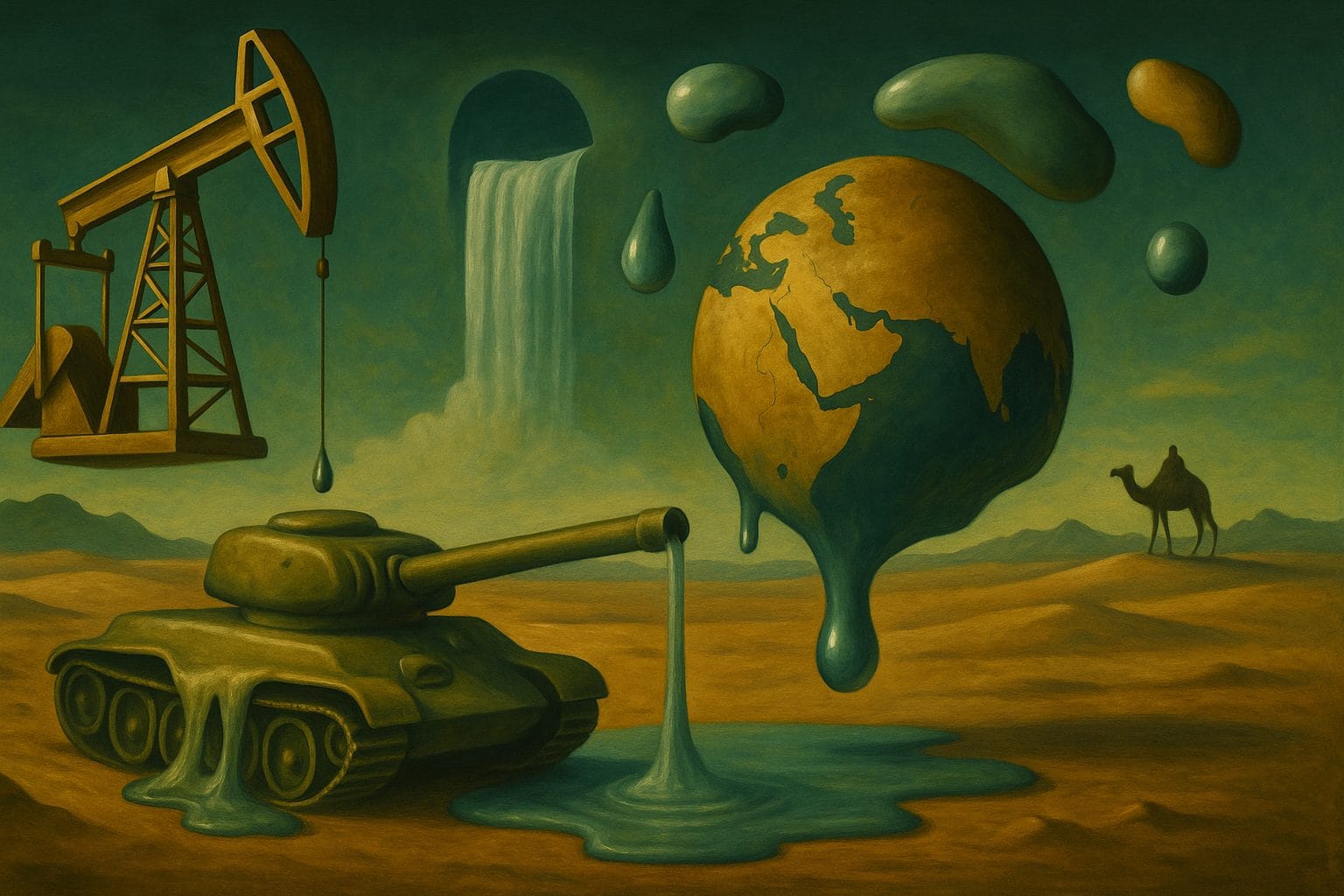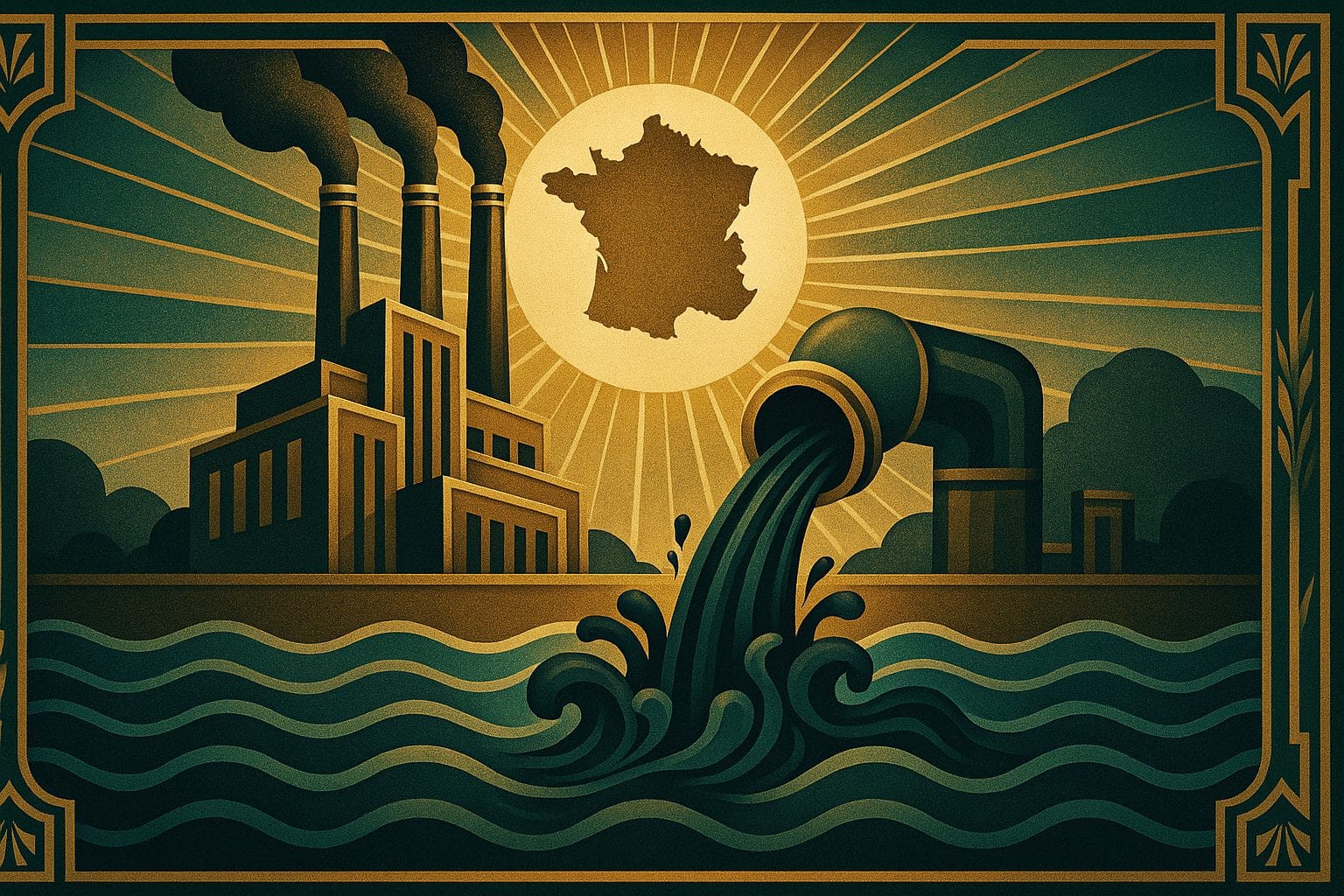
The same region, two seas, two ecological destinies diverging at high speed. Saudi Arabia has committed to protecting at least 30% of its Red Sea waters by 2030, coupled with coastal tourism development. The Persian Gulf is experiencing warming, hypersalinity, and intense industrial pressures, within an existing but variably effective regional governance framework. What this divergence demonstrates extends beyond the Saudi case: when an ecosystem generates profit, it defends itself.
The Essentials
- The Red Sea hosts 10% of endemic species and 13,605 km² of coral reefs, representing 5.3% of global stocks (UNESCO).
- Saudi Arabia targets 30% of marine protected areas by 2030 as part of the Saudi Green Initiative launched in 2021.
- Red Sea coastal tourism generates $9 billion annually with 15% growth in 2024-2025, according to Arab News.
- The Persian Gulf, lacking a comparable economic engine tied to its biodiversity, faces mounting industrial and thermal pressure without equivalent protective frameworks.
- The central tension: protecting to exploit creates real incentives, but the ecosystem remains dependent on maintaining tourist demand that climate change directly threatens.
The Red Sea, a Biological Reservoir the World Barely Knows
Ask a diver to name the planet’s great reefs. He’ll think of Australia’s Great Barrier Reef, Indonesia’s Coral Triangle, perhaps the Maldives. The Red Sea rarely makes that list, and this is a considerable misjudgment.
Its 13,605 km² of coral reefs represent 5.3% of global stocks, according to UNESCO. That figure alone doesn’t tell the whole story. What makes these waters singular is their endemism: 10% of the species living there exist nowhere else on Earth. Fish, corals, invertebrates shaped by millennia of relative isolation between Arabian and African coasts. Losing these reefs means losing organisms that science has sometimes not yet had time to describe.
The Red Sea also displays thermal resilience that scientists study carefully. Its waters are naturally warm and salty—conditions that should, according to classical models, have weakened its corals. Yet these reefs have developed adaptations giving them thermal stress tolerance above the global average. Some northern zones have occasionally shown better thermal tolerance, but central Red Sea experienced severe bleaching and mortality in 2024. This makes it a potentially valuable natural laboratory for understanding how corals might adapt to a warmer ocean.
Nine Billion Dollars Alter the Political Calculation
The Saudi Green Initiative, launched in 2021, sets an ambitious target of 30% of marine and terrestrial protected areas by 2030. On paper, this is an ambitious commitment for a country whose carbon rent long defined environmental priorities. In practice, this commitment has a precise economic logic.
Red Sea coastal tourism is associated with tourism development projects. NEOM, The Line, Amaala, and the Sindalah project rank among Saudi Arabia’s mega tourism developments located on or near the Red Sea. Their commercial value is notably tied to the attractiveness of coastal and marine spaces. A bleached reef doesn’t attract luxury divers. A polluted lagoon doesn’t call for five-star hotels at $3,000 per night.
This mechanism is simple, and that’s precisely its strength. Governments that protect their natural spaces for purely ideological or diplomatic reasons can shift priorities with political cycles. Those protecting because the ecosystem represents a revenue line in the national budget have far more stable incentives. The Saudi strategy presents Red Sea protection as a joint means of conservation, blue economy development, and economic diversification in Vision 2030. Vision 2030, in this specific case, literally rhymes with conservation.
Concrete mechanisms are underway. The National Center for Wildlife coordinates and develops Saudi Arabia’s network of protected areas, including marine ones. No-fishing zones have been established around the most sensitive coral sites. Environmental impact assessment protocols are now required for coastal developments, a significant regulatory novelty in a country accustomed to building quickly. UNESCO accompanies part of this classification and monitoring work, giving these commitments useful international visibility.
The Persian Gulf, the Kingdom’s Other Sea
Less than 400 kilometers away, on the other coast of the Arabian Peninsula, the Persian Gulf tells a different story. Its waters are among the hottest and saltiest on the planet—naturally extreme conditions that human activity methodically aggravates.
The Gulf concentrates numerous offshore oil and gas infrastructures. Accidental spills, ballast water, thermal discharges from desalination plants lining the coasts of Saudi Arabia, the UAE, Kuwait, and Qatar: the cumulative pressure is chronic. The Gulf’s reefs, already weakened by summer temperatures regularly reaching 35°C, suffer severe and repeated bleaching episodes. Local declines in coral coverage have been documented in the Gulf, but they cannot be attributed to PERSGA as a continuous regional trend since the 1990s.
The role of tourism activities in protecting this ecosystem remains difficult to establish. The Persian Gulf coasts are not destinations for international divers. Saudi Arabian Gulf coasts are also subject to national tourism development projects, though their scale and visibility differ from Red Sea mega-projects. The market value attached to this ecosystem’s health and incentives to protect it remain difficult to establish. Degradation costs are diffuse and deferred; revenues from industries causing it are immediate and concentrated.
Results and Limits of Conservation Motivated by Economic Interest
Criticizing profit-driven conservation is tempting but counterproductive. American national parks survived a century because they generated tourism and local tax revenues. Palau’s marine reserves are among the best protected in the Pacific, partly because the government understood that living sharks were infinitely more valuable to the local economy than dried fins. The logic isn’t pretty on paper, but it works over the long term.
What Saudi Arabia is building around the Red Sea fits within this pragmatic tradition. Protected areas reduce fishing pressure on reefs. Impact assessments brake the most destructive developments. International monitoring creates transparency that makes politically costly any retreat.
The limitation is real and deserves to be named. Protecting an ecosystem to sell access to wealthy tourists is not the same as protecting it for its intrinsic value or for fishing communities depending on it. The Saudi conservation model focuses notably on marine and coastal environments. Posidonia meadows, mangroves, and coastal nursery zones are also among affected habitats. And if luxury tourism slows due to global economic or climate reasons, incentives to maintain protections would erode with it.
There is also a distribution question. How Red Sea coastal tourism revenues are distributed among different local actors is not established. Conservation through tourism development can locally translate into exclusion from traditional uses without compensation mechanisms. The Amaala project, for example, develops 4,200 hectares on a Red Sea coast that was not devoid of human presence.
The Challenge of Long-Term Horizons in a Climate-Pressured Ecosystem
Over a fifteen to twenty-year horizon, the Saudi strategy faces a tension that official documents seldom raise. Thermal resilience of Red Sea corals is real, but it has limits. If global temperatures continue rising beyond 1.5°C, even the most robust reefs will suffer increasingly frequent and intense bleaching episodes. The tourist value of these seabeds would then mechanically decline, exactly the moment when protections would be most necessary, and when economic incentives to maintain them would be most fragile.
The Global Coral Reef Monitoring Network documents this dynamic at global scale. Governments that built their conservation model on coral tourism rent will at some point need to broaden their justifications or accept progressive collapse of their main argument.
Effective protections can strengthen reef recovery capacity against local pressures, but they don’t suffice to prevent damage from extreme marine heat waves. A reef spared from overfishing and pollution recovers faster from a bleaching episode than an already weakened reef. Today’s measures around the Red Sea thus improve coral survival chances regardless of luxury tourism’s fate. The economic argument creates protective policy; protection produces real ecological results.
The Red Sea/Persian Gulf Contrast as a Revealer of Global Conservation Inequalities
The divergence between these two Saudi seas is a textbook case for ecosystem services theorists. The idea is simple: when measurable economic value is assigned to a healthy ecosystem, decision-makers have concrete reasons to maintain it. The Red Sea illustrates this can work at large scale, with substantial means, in a state not renowned as an environmental pioneer.
The Persian Gulf illustrates a case where the relationship between seabed valorization, economic activities, and protection levels remains difficult to establish. Persian Gulf coastal states have a regional environmental cooperation framework via ROPME, different from the Saudi Red Sea strategy. PERSGA exists, but the extent of its means and authority against incumbent industrial interests remains difficult to establish.
The economic transformation Saudi Arabia is piloting with Vision 2030 thus produces, as a side effect, serious marine conservation policy on the Red Sea. This is an exportable lesson, conditionally. It requires an ecosystem offering valorizable tourism services, a state capable of regulating access, and a national economic project making ecosystem degradation politically costly. These three conditions aren’t met everywhere. But where they are, they produce results that purely environmental arguments often struggle to achieve alone.
The issue for 2030 is whether Riyadh’s announced 30% protected areas will actually be managed, patrolled, and enforced for violations, or remain mere cartographic perimeters. Conservation on paper and conservation on water are two distinct realities, and by this standard Saudi ambition will be measured.
Sources
- Arab News, February 2026, Red Sea conservation and Saudi tourism data: https://www.arabnews.com/node/2632943
- UNESCO World Heritage Centre, Red Sea coral and endemism data: https://whc.unesco.org
- Saudi Green Initiative, 2030 protected areas objectives: Saudi Green Initiative official documentation
- PERSGA (Regional Organization for the Protection of the Marine Environment of the Red Sea and Gulf of Aden), Persian Gulf coral monitoring data
- Global Coral Reef Monitoring Network, State of Global Reefs