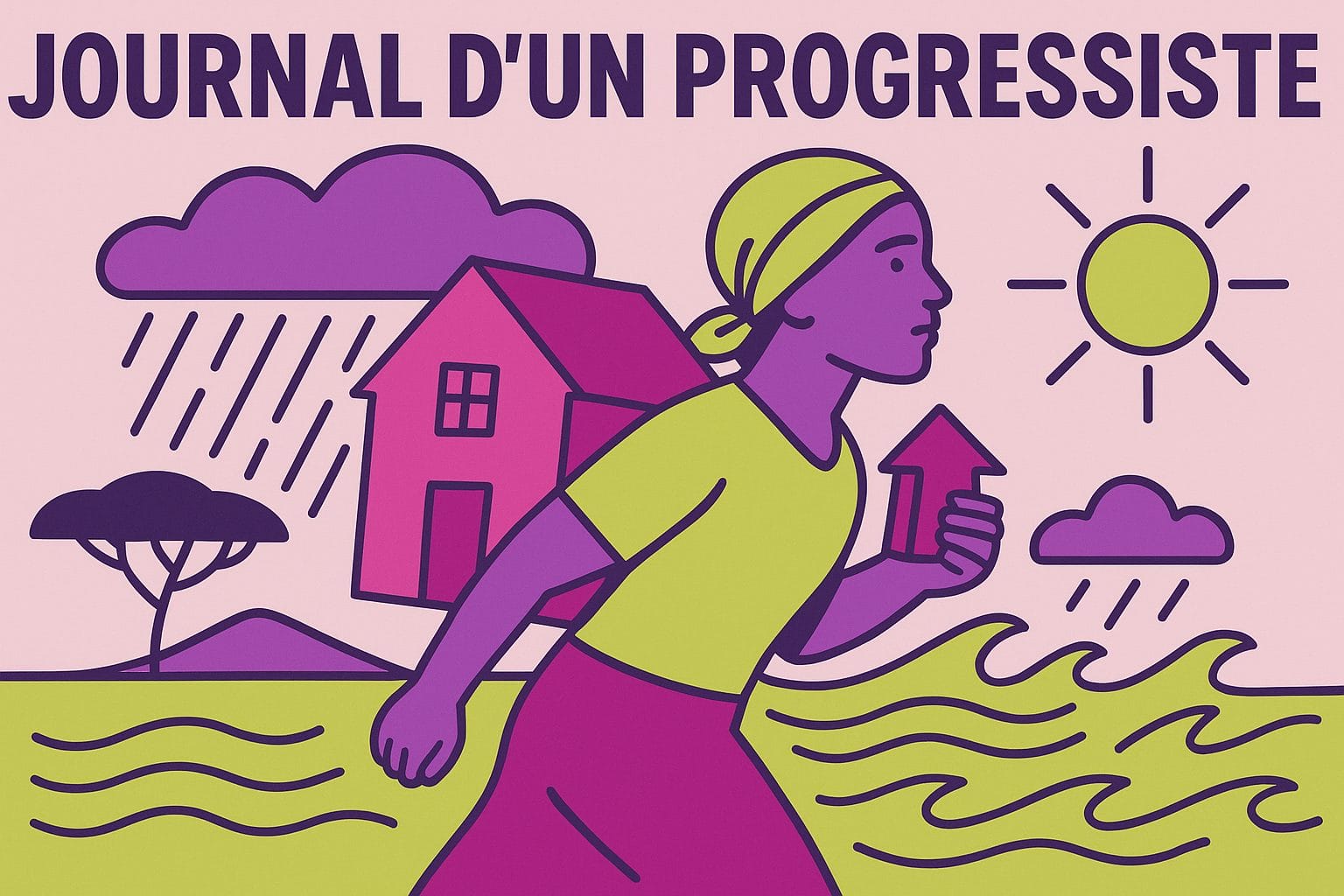
In World Bank-funded economic inclusion programs in sub-Saharan Africa, success is measured by revenues generated after aid ends, not by money distributed. Assistance that does not produce self-sufficiency is a recurrent expense. The IDA FY25 report records 374,880 beneficiaries of economic inclusion programs (including 187,440 women and 71,227 young people) and 2,500,000 beneficiaries of productive inclusion programs. A growing number of micro-certifications are being issued within these frameworks, while 75% of new beneficiaries of cash transfer and livelihood support programs come from the two poorest quintiles, illustrating the rigorous social targeting of the approach.
The Essentials
- African economic inclusion programs combine social registry, short-term training and productive assets, then measure revenues at the end of the program to assess its real impact.
- The World Bank (IDA FY25) records 374,880 beneficiaries of economic inclusion programs and 2,500,000 beneficiaries of productive inclusion programs. The 75% figure in this report refers to targeting beneficiaries from the two poorest quintiles, not to an increase in employment access.
- The key mechanism: programs abandon aid that does not create measurable self-sufficiency, forcing an investment logic rather than a permanent safety net.
- The central tension remains scaling up: what works under rigorous oversight for hundreds of thousands of beneficiaries can lose its rigor when reaching millions.
From Social Registry to Productive Capital
The idea is not new. For some twenty years, development economists have debated conditional cash transfers: giving money on condition that children attend school, adults receive training, and households use health services. Brazil’s Bolsa Família provided the most famous demonstration. But the African programs tested under IDA’s aegis add a dimension that classical conditional transfers did not have: sequencing.
Entry into these programs first passes through the social registry. Precisely identifying who is poor, where they live, what assets they do or do not possess. This mapping work, often thankless and costly, conditions everything else. Next comes short-term training, a few weeks, rarely more, oriented toward a specific and verifiable skill: masonry, industrial sewing, managing a stall, maintaining agricultural equipment. Then the productive asset: a sewing machine, a seed stock, a small startup capital.
Finally, outlets: connections with local buyers, market access, networking with employers.
What distinguishes the most advanced programs is post-program follow-up. Beneficiaries are traced after aid ends, at a time horizon sufficient for trajectories to truly diverge. Their revenues are measured. And programs that do not produce measurable gains are reformulated or abandoned. This is precisely the evaluation logic that makes the World Bank’s documented approach distinctive.
Social Targeting: 75% of Beneficiaries from the Poorest Quintiles
The 75% figure in the IDA FY25 report deserves careful reading. It does not designate an increase in employment access for participating young people. It indicates that 75% of new beneficiaries of cash transfer and livelihood support programs must come from the two poorest quintiles. This is a rigorous social targeting criterion, not an employment results statistic.
This precision is not a methodological detail. Assistance programs have a long history of flattering numbers built on loose definitions. Counting as “employed” someone who sold a mango two days after their training is exactly the kind of measure that allows a program to survive its own inefficiencies. The rigor of the IDA approach consists in refusing these definitions.
But it also creates tension. The most rigorous programs are the most expensive to evaluate. Longitudinal follow-up, finding beneficiaries after program end, interviewing them, verifying their revenues, requires resources that the poorest African states do not always have. In countries with low administrative capacity, evaluative rigor is itself a rare resource, and sometimes imported. This is one of the paradoxes of development aid: its most reliable tools often depend on institutions this aid is supposed to build.
Micro-Certifications as Market Signals
The development of micro-certifications may be the most innovative element of the program. A classical certification—vocational diploma, professional baccalaureate, university degree—takes years and assumes an educational infrastructure that does not exist uniformly across sub-Saharan Africa. A micro-certification, meanwhile, attests to a specific skill in a few weeks. It is only useful if someone recognizes it.
The link between training and market is decisive. A micro-certification issued by an unknown NGO, without validation by local employers, is worth little on the labor market. Programs that work have developed the other end of the chain: negotiating with local businesses, cooperatives, regional contractors so they recognize these certifications as signals of employability. Without this upstream work, the certification becomes another piece of paper that opens no doors.
The stakes go beyond social aid: the relationship between measurable skills and insertion in local labor markets is a challenge that developing economies share with advanced economies seeking to retrain workers displaced by automation. The form differs, but the structural stakes are similar: creating credible skill signals for people without classical educational trajectories.
Concrete Requirements for Scaling Up
The IDA FY25 report records hundreds of thousands to several million beneficiaries depending on program category, far from simple experimentation. Sub-Saharan Africa has approximately 1.23 to 1.26 billion people (2024-2025), a considerable share of whom live below the poverty line. For these programs to cease being promising initiatives and become mass public policies, several conditions must be met simultaneously.
The first is states’ capacity to keep their social registries updated. A registry that is three years old in countries with significant internal migration does not allow effective targeting. Work on African development identifies social data infrastructure as one of the main bottlenecks in inclusion policies. A program that knows who to include is already halfway there.
The second condition is articulation with local markets. Seed funds that allow beneficiaries to start an activity only work sustainably if they are connected to real value chains: contract agriculture, industrial subcontracting, structured local commerce. Productive capital transferred to someone with no identified outlet often disappears within months, absorbed by household survival expenses. Programs that best resisted this drift have integrated local market development from the design stage, not as a complement.
The third condition, often underestimated, is training for field agents. A well-designed economic inclusion program on paper can be disastrous if the people administering it lack training or are subject to incentives that favor enrollment over follow-up quality. Experience with French experimental social policies shows that scaling difficulties rarely stem from the concept and almost always from institutional capacity to replicate it faithfully.
The Long-Term Stakes: Assistance or Economic Graduation
Over the 2030-2040 horizon, these programs pose a direct question: under what conditions does social aid become durable productive capacity? Two trajectories are emerging, and current data do not yet allow a definitive answer.
In the first, programs combining transfers, training and professional support enable a growing share of beneficiaries to generate autonomous revenues after aid ends. This is the logic of “economic graduation,” a term borrowed from BRAC Bangladesh, the organization that built the most studied model in the world on this matter. In this trajectory, the cost per job created decreases as programs learn, certifications gain recognition, and local markets deepen. The current hundreds of thousands of beneficiaries would constitute the first cohorts of a system that, replicated at national scale in several countries, would reach millions of people within fifteen years.
In the second trajectory, without rigorous evaluation of post-program results, social safety nets perpetuate themselves without durably transforming beneficiaries’ productive capacity. Micro-certifications remain papers without market value. Productive assets finance household expenses whenever activity revenues stagnate. And programs survive not because they create autonomy but because they create jobs in their own administration. This risk of a safety net that cushions without emancipating is not unique to Africa: it haunts social policies in all geographies.
Two signals will allow distinguishing these trajectories in coming years. The first is the share of beneficiaries in formal employment or viable self-employment twelve months after program end, not at exit or midway, but at twelve months: this is the horizon where trajectories truly diverge.
The second is the cost per job created compared across programs. If this cost decreases as programs gain experience and integration with local markets, the investment logic is valid. If it stagnates or increases, the program resembles more an expensive safety net than an elevator.
The needs conditioning the first trajectory are documented and partially financeable. Longitudinal data on post-program revenues, which assumes permanent information systems, not one-off surveys. Real articulation between social registries and local employment markets, which assumes employment agencies and social services speak the same administrative language. And micro-certifications recognized by employers, which assumes sectoral negotiation work that takes time and is not confused with training delivery.
Measuring Results Transforms Program Design
These programs carry a methodological lesson that transcends the African continent. The decision to measure revenues at aid’s end, rather than at the program’s immediate exit, is a political decision, not a technical one. It means a program can be judged insufficient, reformulated or abandoned. It creates accountability toward results rather than procedures.
It also shifts the upstream question posed by designers: conditions for aid to create autonomy take priority over delivery modalities.
This shift from compliance to impact is precisely what makes these programs difficult to generalize in contexts with low administrative capacity. Rigorously evaluating a program costs money and requires skills. International donors, who often also finance evaluations, have an interest in showing successes. Governments receiving funding have an interest in showing enrollment figures rather than employment rates at twelve months. These inverse incentives do not disappear because a program was well designed.
IDA programs thus pose a precise institutional challenge: anchoring evaluative rigor in systems historically rewarded for their capacity to spend rather than transform. The first answers are encouraging. They are not definitive.
Sources
- World Bank, IDA Sustainable Development Bonds FY25 Impact Report (Complete Annex)
- African Development Bank, Africa Sustainable Development Report 2025
- BRAC, documentation of economic graduation programs in Bangladesh (reference source for comparative model)
- MacroTrends – Sub-Saharan Africa Population (World Bank data)
- UNECA – 2025 Africa Sustainable Development Report
- BRAC International – Ultra-Poor Graduation
- J-PAL – Targeting the ultra-poor to improve livelihoods
- NIH/NCBI – Bolsa Família Brazilian programme
- BRAC UPGI – Graduation Overview
- Banerjee et al. (2015) – Science – Multinational graduation
- World Bank – Delivering Jobs for People Living in Poverty (2025)