The Essentials
Since November 2022, Australia’s professions most exposed to AI have seen employment grow by 5.6%, compared to 9.5% in those least exposed, according to the Department of Employment and Workplace Relations. The gap is real, but without massive job destruction. Young graduates, often presented as the first victims, have proved more resilient than catastrophist scenarios predicted. Australia above all provides a method: measuring trade by trade, continuously, to distinguish what is actually happening from what theoretical models predicted.
The great prophets of technological unemployment have a problem with Australian data: it does not prove them right. Since the launch of ChatGPT in late 2022, economists, unions, and consultants have produced dramatic projections about the job destruction that generative AI would cause in cognitive functions. Australia preferred to look at what was actually happening. And what it found resembles slow tectonics more than an earthquake.
This does not mean AI is harmless. It means that recomposition is playing out over time, sector by sector, and that public policies still have time to act, provided they equip themselves with the right instruments.
An Employment Growth Gap That Poses the Right Questions
The report from the Department of Employment and Workplace Relations published in 2025 is one of the rare national statistical exercises to track the impact of AI on employment by profession in near real-time. The method is based on a classification of professional exposure to AI, evaluated according to the proportion of tasks that current models can automate or augment, cross-referenced with quarterly labor market data.
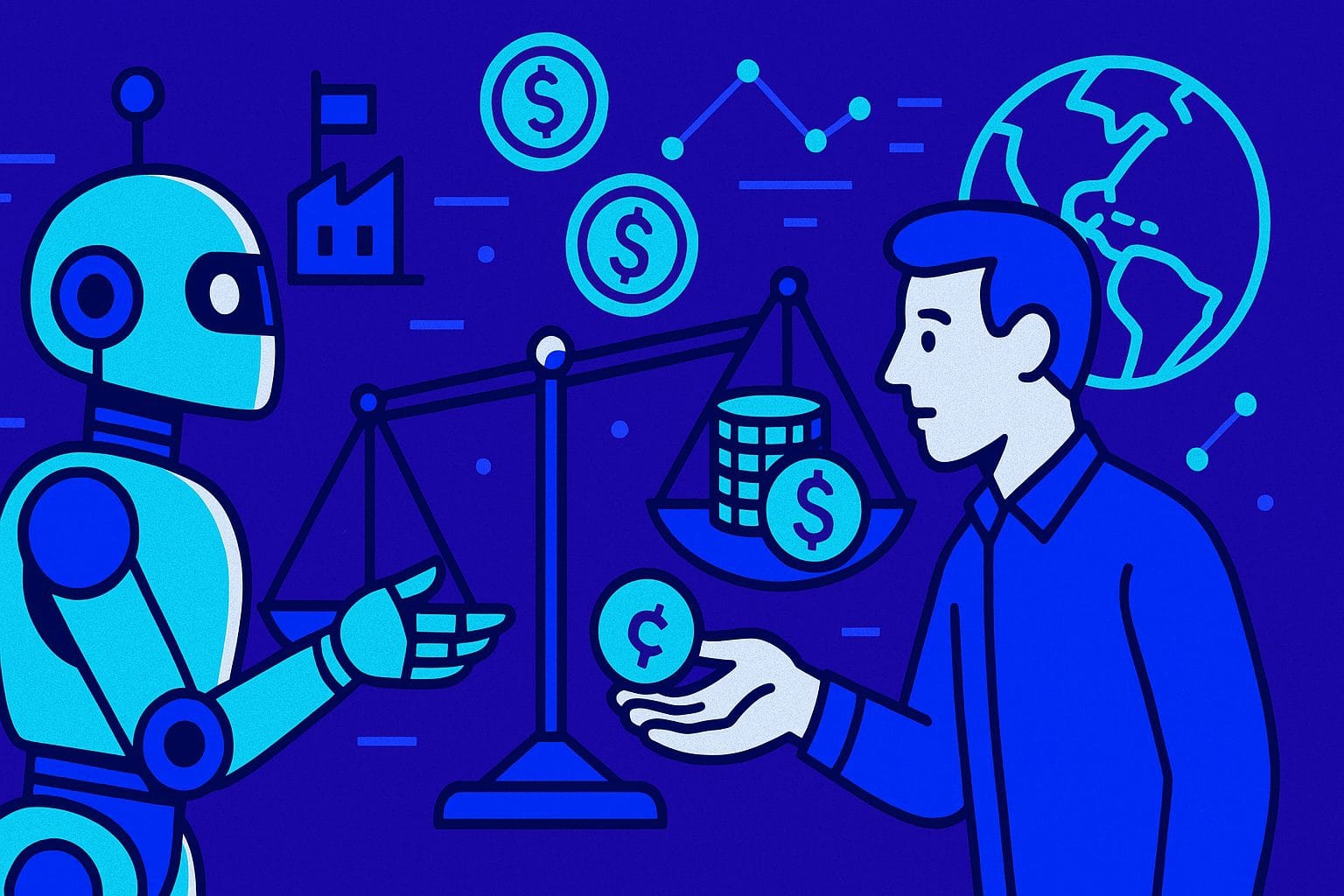
The central finding is this gap: +5.6% employment growth in professions most exposed to AI, versus +9.5% in those least exposed, since November 2022. Two points deserve clarification. First, both categories have grown. Exposed professions have not lost jobs in absolute terms: they have simply grown more slowly. Second, this gap is measured over less than three years, in an Australian labor market that is globally tight, where unemployment has remained low. Extrapolating from this finding toward an imminent catastrophe would be to force the interpretation; ignoring the gap would be to deny it.
What the data says with certainty: AI is already exerting differential pressure on the labor market. What it does not yet say: whether this pressure is an early signal of disruption to come, or the lasting signature of gradual recomposition. This distinction is far from trivial for public policy choices.
Young Graduates Are Holding Up Better Than Expected
One of the most commented angles in projections of AI’s impact on employment concerns young graduates. The logic seemed inexorable: language models excel at intermediate-level analytical tasks—drafting summaries, analyzing contracts, coding simple functions—which precisely constitute the core of entry-level jobs in skilled sectors. Young lawyers, junior analysts, beginning developers were supposed to suffer first.
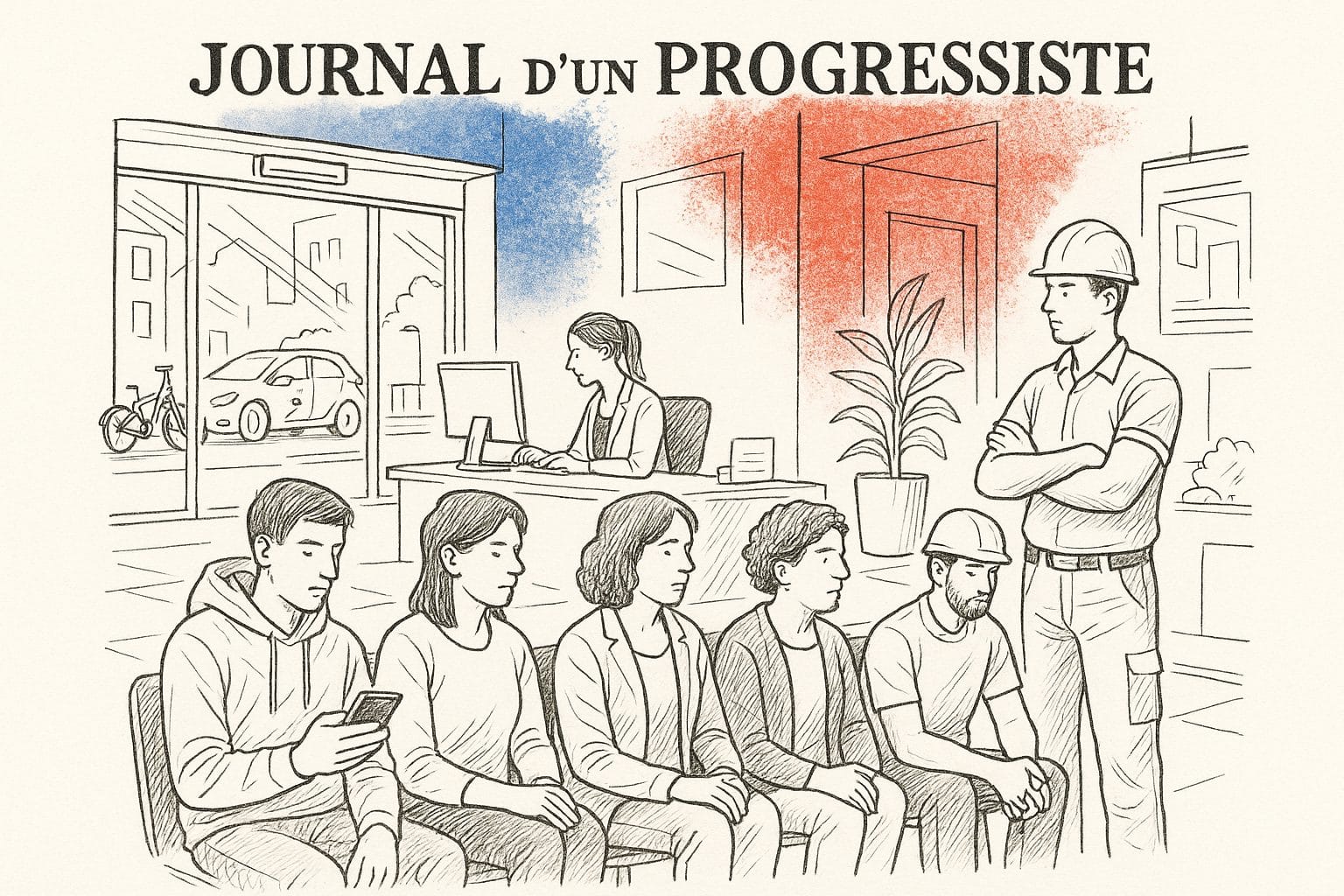
Australian data nuances this scenario. The report shows that young graduates in exposed sectors did not experience a net decline compared to other cohorts. Junior employment continued to progress, sometimes more slowly, but without visible rupture. Several mechanisms can explain this. Companies maintained their entry-level recruitment flows because AI, in practice, augments the seniors who supervise juniors, displaces tasks but spares positions. Training in the use of AI tools is often transmitted by new entrants, who arrive with a digital culture that organizations seek to import. And in exposed professions, demand for services has sometimes increased due to greater accessibility—a law firm using AI tools can take on more cases, which maintains the need for staff.
This guarantees nothing for the coming years. The trajectory will depend on the speed at which AI models progress in complex tasks, and on organizations’ capacity to reorganize their processes. But the scenario of rapid eviction of young qualified workers has not materialized in Australian data at this stage.
Sector by Sector, Dynamics Diverge
The national aggregate masks very different realities depending on sectors. Australian methodology draws its true value from this decomposition by profession, which makes it possible to see where pressure is concentrated.
Financial and legal services, writing and analysis functions, certain segments of accounting: these professions combine strong theoretical exposure to AI with employment growth slower than the national average. The health sector presents the inverse profile—increasing exposure to AI diagnostic tools, but sustained employment growth driven by structural demand that Australia’s aging demographics continue to fuel. The construction sector and skilled manual trades remain little exposed to current generative AI models and are growing at full capacity.
This sectoral heterogeneity is precisely what aggregate AI impact models do not capture well. A report announcing “40% of jobs threatened,” in reference to estimates produced by institutions like the IMF or OECD, speaks to theoretical exposure to automatable tasks; an observed trajectory of jobs lost is a different measure. Australia, by tracking actual headcounts by profession, introduces a layer of empirical reality that is missing from most debates about AI and work.
To explore this measurement question further, Diane Coyle’s diagnosis of the limitations of our statistical tools sheds light on what is lost by reasoning with instruments designed for an industrial economy, applied to a cognitive economy in mutation.
The Slowness of the Shift and Its Effects on Public Policy
If recomposition is slow, sectoral, and measurable, the implications for public policy are considerable. The debate on AI and employment that has unfolded since 2022 produces two types of political responses: either wait-and-see (“let’s wait and see”), or loud urgency (“we must reform everything now”). Both miss the mark if the actual trajectory is the one that Australian data sketches.
Slow recomposition demands continuous monitoring instruments, real-time adjustable retraining programs, and the capacity to direct public investment in training toward sectors where pressure is beginning to concentrate, before slippage becomes irreversible.
France is exploring analogous approaches. A recent report estimates that one in eight workers is directly exposed to the rise of agentic AI, but fine-grained monitoring instruments, trade by trade, remain less developed than in Australia. The question of who captures the productivity gains generated by AI arises in parallel, the fiscal imbalance between work and capital making it all the more urgent to construct a robust dashboard of ongoing transformations.
Australia, with its monitoring system, is gaining ground on this front. But the method is useful only if coupled with institutions capable of acting on what they observe. Statistical monitoring is a necessary condition, not a sufficient one.
The Twenty-Year Horizon No One Wants to Look At
The true challenge of slow recomposition is institutional: our political cycles are short, and professional transition policies are too. Retraining mechanisms designed over five years are not suited to a transformation unfolding over two decades.
If the Australian trajectory continues—a growth gap of a few points per year between exposed and non-exposed professions, with no clear rupture for ten to fifteen years—the cumulative effect on entire cohorts could be significant, without ever producing the shock that mobilizes political attention. This is the paradox of slow change: it escapes the radar because no single year resembles a crisis, and the sum of these non-crisis years can compose a major transformation invisible until it is too late to anticipate easily.
This hypothesis—and it is indeed a hypothesis that current data allows us to formulate but not yet validate—invites us to rethink the horizon of employment policy. Continuous training systems, mechanisms for portability of retraining rights, partnerships between companies and universities to adapt curricula: these instruments gain in relevance if recomposition lasts twenty years rather than five. They become infrastructure; emergency plans are ill-suited to this scale.
Australia has not yet drawn these operational conclusions from its own monitoring. The Department of Employment and Workplace Relations report documents; it does not prescribe. But by producing a long series of data on employment exposure to AI, it creates the conditions for evidence-based policy rather than policy based on theoretical projections. For now, this is a methodological advance more than a political advance.
Measuring to Act
The true contribution of the Australian exercise lies in what the figure—5.6% versus 9.5%—makes possible. When you know which sectors are diverging from the trend, you can target training resources there before the gap becomes a chasm. When you have quarterly data series, you can distinguish a structural trend from a cyclical artifact. When you granularize by profession rather than by broad sector, you move from the general to the actionable.
Countries that produce instruments analogous to Australia’s over the coming years will be better positioned to calibrate their policy responses. Those who continue to reason from aggregate theoretical projections risk either over-reacting to scenarios that do not materialize, or under-reacting to sectoral recompositions that accumulate silently.
The practical question for other developed democracies is simple: who, in national statistical agencies, is responsible for producing equivalent monitoring? And with what frequency? Australia has laid out the groundwork for an answer. It now invites its counterparts to ask the same question.
Sources
- Department of Employment and Workplace Relations (Australia), AI and Employment in Australia, https://www.dewr.gov.au/workplace-relations/announcements/ai-and-employment-australia-report
- International Monetary Fund, AI and the Future of Work, thematic report 2024
- OECD, OECD Employment Outlook 2023: Artificial Intelligence and the Labour Market
- Journal d’un Progressiste, One in Eight French Workers Facing the Challenge of Agentic AI
- Journal d’un Progressiste, Book Review, Measuring Progress with 1940s Tools: Diane Coyle’s Diagnosis
- Journal d’un Progressiste, Work Pays Half the Taxes; the Capital Replacing It Pays Almost Nothing