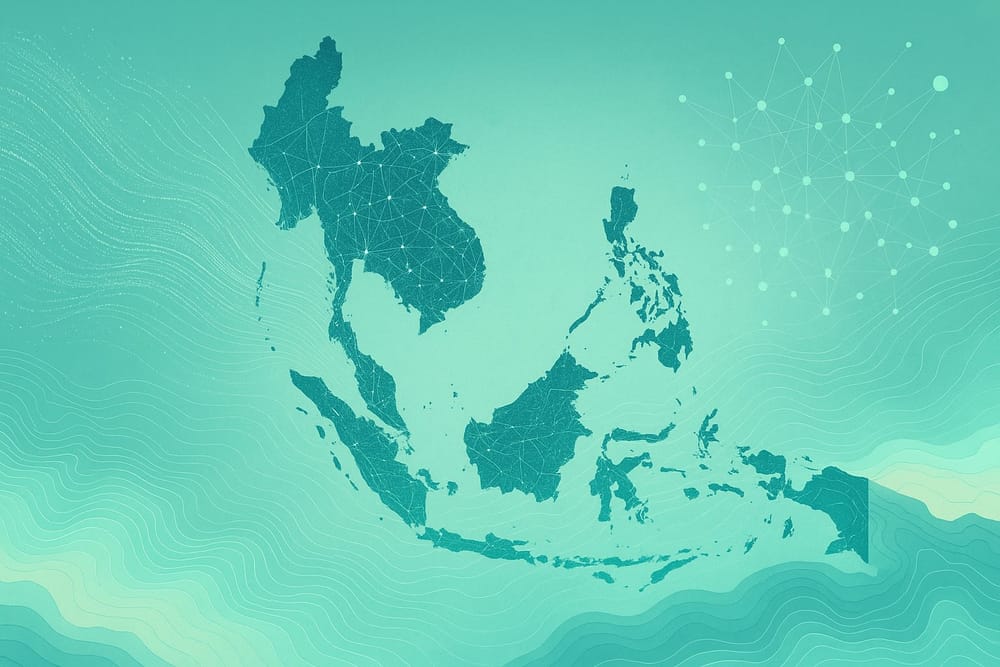
Meanwhile, ten Southeast Asian countries cooperated to strengthen a regional infrastructure for epidemic surveillance. The gap between these two trajectories says something precise about how democracies manage invisible risk: the kind that is not yet killing. Southeast Asia decided to invest in strengthening a regional infrastructure for epidemic surveillance.
The essentials
- ASEAN Plus Three established laboratory and epidemic surveillance cooperation.
- Audits of American strategic stockpiles revealed restocking deficiencies.
- Preparation between pandemics generates neither electoral urgency nor media coverage, which complicates sustainable funding for preparedness.
- ASEAN has institutionalized the continuity of preparedness efforts after the end of the crisis that motivated it—a rare outcome at the regional level.
- If health preparedness becomes a tool of power, the viability of a global governance of resilience will be the central issue of the next decade.
Short memory is expensive
In 2003, SARS killed fewer than a thousand people but paralyzed Hong Kong’s economy for weeks. In 2009, H1N1 flu showed that even wealthy countries lacked vaccines at the right moment. In 2020, mask shortages in OECD countries illustrated brutally that stockpiling medical resources during calm periods was harder than promising to do so.
Deficiencies in managing strategic stockpiles were documented by the GAO and the OIG HHS/ASPR. The Strategic National Stockpile has existed since 1999 precisely to prevent this type of shortage. After Covid-19, Congress voted additional funding to strengthen it. Yet in 2020, some masks distributed by the SNS were expired; the current state and the extent of possible antiviral expirations are not established by this source.
Restocking timelines extend over several months. These restocking delays would pose a risk if a new pandemic suddenly began.
The mechanism of degradation is well understood. Budgets for restocking are discretionary. They compete each year against more visible expenses. Elected officials arbitrate in favor of what their constituents see: hospitals, medicines, care. Masks stored in a federal warehouse in Arizona have no electoral district.
They expire without anyone being accountable for their disappearance.
The regional architecture built by ASEAN after 2003
Southeast Asia drew a different lesson from the same crises. SARS in 2003, then bird flu H5N1 in 2005-2006, struck the region hard. The response combined regional surveillance, shared laboratory capacity, and medical stockpiling planning.
The ASEAN Plus Three framework, which brings together the ten ASEAN members with China, Japan, and South Korea, progressively institutionalized this cooperation. The regional architecture includes partner laboratories capable of rapidly diagnosing new pathogens and sharing results, as well as surveillance tools that aggregate multiple regional datasets for risk assessment.
The architecture is imperfect. National interests sometimes slow data sharing: no government likes to announce an emerging epidemic first. But the structure exists, it works, and it has survived several political transitions in member countries. That is what distinguishes it from a promise.
In Moral Ambition, Rutger Bregman identifies precisely this type of problem as a systematic blind spot: challenges that are decisive during crises but invisible during calm periods attract neither talent nor funding, because they produce no visible warning signal. Pandemic preparedness falls into this category. ASEAN has succeeded in maintaining an institutional effort in this blind spot, where most wealthy countries let attention disperse after 2022.
Democracies with short cycles and institutional memory
Systems with short mandates create no political penalty for abandoning investments whose benefits are deferred and conditional, making their sustainable funding difficult. Preparedness investments produce no visible short-term results. The loss remains abstract until it becomes catastrophic, and by then, those responsible for the initial trade-off have long since left office.
Cycles of temporary funding and budget withdrawals make it difficult to maintain long-term preparedness capacity.
The comparison describes distinct institutional and budgetary choices, without allowing us to conclude there is a structural flaw in electoral democracies. Mandates last four to five years. Historical flu pandemics have been described at highly variable intervals, roughly 10 to 50 years apart. An elected official’s horizon rarely covers the interval between two crises. Fluctuations in public funding can erode preparedness without an established causal link to electoral cycles.
The constraint is institutional in nature. A senator voting in 2026 to fund strategic stockpile restocking will probably no longer be in office when the next pandemic strikes. The benefit of his vote will remain invisible for years and will be captured by his successor. The incentive to invest in preparedness meets structural obstacles.
Europe illustrates a parallel version of this mechanism: European health systems chronically underinvest in prevention in favor of treatment, precisely because prevention produces no visible short-term result. Pandemic preparedness is an extreme form of prevention: its benefits are entirely deferred and conditional on an event we hope never to experience.
The institutionalist reading, that of Daron Acemoglu on the conditions that allow institutions to survive political cycles, opens a path to answers. What protects a long-term investment from short-term trade-offs is its inscription in a structure that makes it costly to undo. Independent agencies, dedicated funds, legal obligations to restock: all mechanisms that loosen the electoral constraint. The CDC has such mechanisms on paper. Recent audits show these mechanisms have proven insufficient.
Geopolitics enters the equation
Health resilience is gradually acquiring a strategic dimension that the Covid-19 pandemic made evident. In 2020 and 2021, differences in preparedness between countries influenced their initial response capacity.
This observation feeds an important tension. The growing strategic dimension of health preparedness creates tensions for global resilience governance. A country investing heavily in its own resilience may be tempted to treat it as a competitive advantage rather than as a common good to be shared.
The Pandemic Agreement, adopted on May 20, 2025 after more than three years of negotiations, attempts precisely to address this tension. It frames surveillance and provides for sharing mechanisms, including a future PABS mechanism whose terms remain under negotiation. But it runs into a fundamental difficulty: countries that have invested most in their preparedness will also have the most to lose by sharing their resources in a crisis. The Agreement is an adopted instrument but not yet open for signature nor in force, due to lack of a finalized PABS annex.
ASEAN navigates between these two logics. The Plus Three architecture is designed as a regional sharing tool, not as an exclusive advantage. But it is also an instrument of regional capacity: member countries participating in common surveillance have access to richer epidemiological information. Cooperation and competition are not mutually exclusive.
The coming years as a test of durability
The period 2027-2035 will probably be decisive in determining whether pandemic preparedness can become a durable institutional norm or will remain a cyclical investment, strong after each crisis and eroded in the years that follow.
Several signals merit careful monitoring. The first is budgetary: ASEAN Plus Three commitments will have to withstand the political trade-offs within each of the thirteen member countries. Several countries contribute to financing. If one of them goes through a severe economic crisis, the temptation to reduce its contribution to the regional framework will be strong.
The second signal is American. Reports on the state of stockpiles create an opportunity for reform. The question is whether it leads to structural reform—for example, a legal obligation to restock accompanied by independent inspection—or to provisional budgetary correction.
The third signal is multilateral. The agreement adopted in 2025 remains incomplete as long as the PABS annex is not finalized; its review is scheduled for no later than May 2027. If these mechanisms work—that is, if countries actually choose to share resources rather than reserve them in a crisis—they will provide valuable proof of concept. If the agreement remains a dead letter, the logic of national resilience will regain the upper hand, and ASEAN’s investments will look more like a health arms race than a regional common good.
What Bregman calls institutionalized moral ambition runs into its hardest limit here: institutions that direct resources toward neglected problems work better when they can rely on a shared conviction that the problem is real. Between two pandemics, this conviction fades. The value of the infrastructure built by ASEAN will be visible when the next crisis strikes, which exposes its maintenance to political trade-offs between crises.
The central question remains open: Can institutions of health preparedness resist forgetting, or will resilience be renegotiated in the urgency of each new crisis?
Sources
- WHO Southeast Asia Regional Office, ASEAN Plus Three cooperation framework
- CDC Strategic National Stockpile, Audit 2026 (internal report, references cited by regional think tanks)
- Rutger Bregman, Moral Ambition: Stop Wasting Your Talent and Start Making a Difference, https://www.moralambition.org/book
- WHO, Pandemic Preparedness Framework Agreement, 2024 (text available on who.int)
- Daron Acemoglu & Simon Johnson, Power and Progress, on the institutional conditions for sharing technological gains (Penguin Random House, 2023)