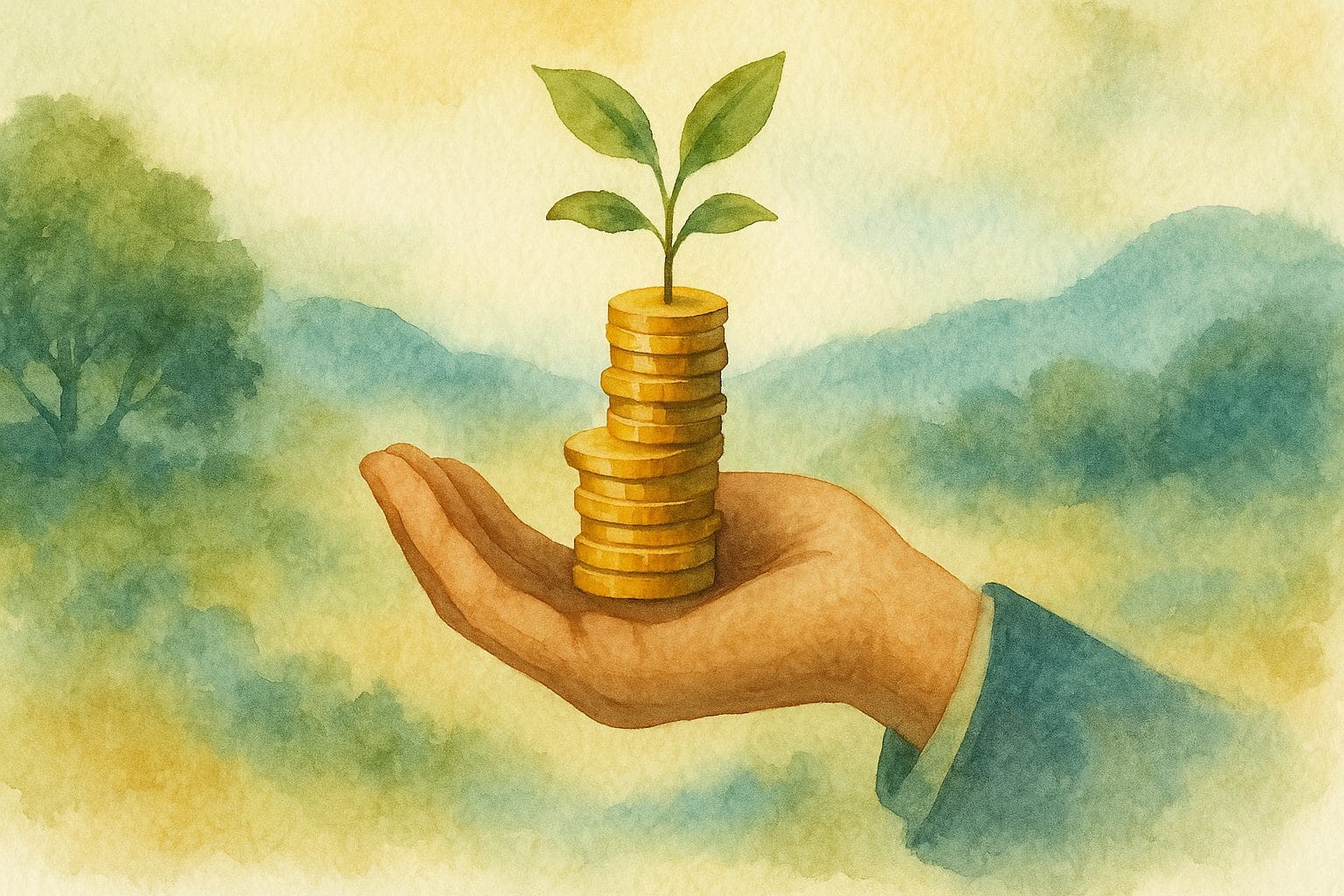
The problem lies both in insufficient financing volumes and in the adequacy of instruments, timelines, and monitoring modalities. Latin America harbors exceptional biodiversity and has developed instruments such as debt-for-nature swaps and thematic bonds, but the example of “Jaguar bonds” is not substantiated. These instruments can mobilize financing, but do not bridge the incompatibility between the horizons that investors accept and those that ecosystems require.
The Essential Points
- The global forest restoration market is under-capitalized by 40 to 60%, according to the Inter-American Development Bank (IDB, 2025).
- The 20x20 initiative shows that 92% of restoration programs rely on active planting, a sub-optimal method for long-term biodiversity, according to a study published in Biological Conservation (ScienceDirect, 2024).
- Establishment costs reach up to $4,445 USD/ha in high-variance scenarios, making most projects unprofitable at the usual horizons of private funds.
- Instruments tested in Latin America—green bonds, debt-for-nature swaps, habitat markets—reduce the cost of capital without solving the temporal misalignment between financial returns and ecological regeneration.
- The viability of investment vehicles with horizons of thirty to fifty years will determine whether biodiversity remains structurally dependent on public spending.
The Underlying Problem Goes Beyond Capital Scarcity
For a long time, the lack of biodiversity financing was simply explained: governments were not spending enough, markets saw no asset to monetize. This diagnosis remains partially true. But recent data shows that where financing exists, its duration, allocation, and indicators may be poorly adapted to restoration needs; overall volumes nonetheless remain insufficient.
The 20x20 initiative, the most ambitious regional program for restoring degraded lands in Latin America, led by the World Resources Institute and around twenty governments, offers a textbook case. The study surveyed 166 restoration practitioners in 14 Latin American countries; it did not analyze the 200 million hectares of opportunities associated with the 20x20 initiative. The survey found that active planting featured in more than 92% of the programs studied; it calls for diversifying practices and better adapting them to contexts. Active planting is not systematically the least effective: its ecological results depend heavily on the site and project design; natural regeneration may be preferable in certain contexts. Assisted natural regeneration, allowing the ecosystem to reconstitute itself with minimal support, produces better ecological results at often lower cost, but unfolds over decades and generates metrics difficult to track for an investment committee.
Financing thus structures technical choices. These choices, objectives, landscape context, and monitoring jointly determine biodiversity outcomes; planting trees alone does not guarantee them.
Establishment Costs That Make Projects Non-Bankable
The figures from the 20x20 initiative help explain why restoration projects struggle to attract private funders without public subsidy. Average establishment costs for planted areas were $4,445 USD/ha over the first three years, with high dispersion (± $4,841 USD/ha). High and sustained costs can limit the attractiveness of some projects for private investors, but the study does not demonstrate that most projects are unprofitable.
The UNEP estimates that annual restoration financing must rise from approximately $64 billion USD in 2022 to $296 billion USD annually by 2030; the implicit deficit is approximately $232 billion USD per year. This gap corresponds to the gray zone between what projects require and what markets accept to finance. Governments cover part of the deficit through multilateral mechanisms: the Global Environment Facility (GEF), the World Bank’s carbon funds, and the IDB’s concessional loans. These flows, though growing, remain insufficient to reach the necessary scale.
This differential is not a matter of information or good faith. It reflects a mechanical reality: a mature tropical forest ecosystem takes between fifty and one hundred years to fully regenerate. Long-term debt instruments exist, but they do not automatically resolve the ecological, measurement, and revenue risks associated with restoration.
Instruments Tested in Latin America and Their Real Limits
Three families of tools dominate Latin American experiments, each shedding different light on the problem.
Green bonds and Jaguar bonds. Green bonds can broaden the investor base and improve transparency in fund allocation; a reduction in financing costs must be demonstrated issue by issue. Its ecological effectiveness depends notably on eligibility criteria, additionality, fund allocation, monitoring, and the quality of indicators; these are not necessarily collateral. Sovereign green bonds are proliferating in the region—Chile, Colombia, Costa Rica—and can finance already-planned public spending without necessarily attracting new private capital.
Debt-for-nature swaps. The mechanism is elegant: a heavily indebted country renegotiates part of its external debt in exchange for a conservation commitment. Ecuador signed the largest debt-for-nature swap in history in 2023, restructuring $1.6 billion in debt to finance Galápagos protection. Colombia followed suit. These operations can, under certain conditions, create fiscal space or reduce debt service; their effects on creditworthiness and financing costs are not guaranteed. Their limitation lies in their logic: debt-for-nature swaps can rest on commercial debt negotiated in markets, but also on bilateral agreements concerning public claims.
The land question complicates the equation further: where property rights over land remain unclear, conservation commitments are difficult to contractualize. Here we find a constraint already documented in agricultural microcredit programs: without clear land title, the financial instrument does not take hold.
Habitat banks. Inspired by carbon credit markets, these mechanisms allow developers or industrialists to offset habitat destruction by financing restoration elsewhere. Brazil is experimenting with such devices under its Forest Code. The structural problem is well-known: fungibility between one hectare destroyed and one hectare restored presumes ecological equivalence that science contests. A primary forest habitat is not replaceable by a plantation, however well-managed. Habitat markets thus risk validating net destruction masked by lower-value restoration.
These three families share a common point: they can mobilize public or private funds without resolving the fundamental temporal misalignment. African conservation offers an instructive counter-example. Where the most direct pressures, such as poaching, have been reduced through targeted interventions, ecosystems have recovered part of their functionality without massive financial investment, as recent data on African species populations document. Financing remains necessary, but its effectiveness depends on its adequacy to actual ecological dynamics.
Capacities and Limitations of Financial Engineering
Financial engineering excels at reducing frictions: cost of capital, information asymmetries, currency risks. It can help structure financing flows toward projects the market ignores. It can create partial guarantees that make projects acceptable for institutional investors.
It cannot shorten ecological time. An ecosystem does not repay in five years. The value of an ancient forest—carbon sequestration, hydrological regulation, habitat for thousands of species—is real but diffuse, not fully contractualizable, and unfolds over generations.
Investment horizons constitute the central obstacle. Pension funds, insurers, and sovereign wealth funds theoretically have long horizons—twenty or thirty years for some. Some investors subject to liquidity requirements, frequent reporting, or performance evaluation may favor liquid and predictable assets; this does not apply uniformly to all investors. Biodiversity produces the opposite: uncertain, long, and illiquid returns.
A few structures attempt to circumvent this. Permanent conservation funds, notably in Costa Rica and Bolivia, manage endowments whose returns finance protected area management over unlimited horizons. The approach is solid but requires a very high initial endowment that only States or philanthropists can provide. The IDB and the International Finance Corporation (IFC) are testing long-term debt vehicles for forest restoration projects in Colombia and Peru. These structures exist, but remain marginal in volume.
The viability of private vehicles with long horizons will determine whether biodiversity remains structurally dependent on public and philanthropic financing for decades to come.
Actors Making Progress Nonetheless
Behind structural constraints, programs advance.
Costa Rica remains the regional reference. Its system of payments for environmental services (FONAFIFO), active since 1997, provides direct compensation to forest owners for conservation and restoration. Costa Rican institutional data consulted indicates approximately 52.4% forest coverage according to the 2013-2014 inventory; historical series vary by measurement method. The PSA is primarily supported by public resources, including a portion of fuel tax, supplemented notably by water royalties and certain private contributions; the role of ecotourism certifications is not established here. Private capital plays a complementary role here, not a driving one.
Herencia Colombia aims at sustainable financing for over 29 million hectares; the GEF notably mentions two million additional terrestrial protected hectares and 15 million marine hectares in the first ten years. Emphasis is placed on indigenous communities as territory managers. Preliminary data suggest a reduction in deforestation in targeted zones, although long-term evaluations are still lacking.
In Brazil, despite political volatility surrounding the Amazon, the Amazon Fund, fed primarily by Norway and Germany, resumed disbursements since 2023 after a four-year suspension. According to the BNDES, the Amazon Fund had supported 107 projects in 2023; higher figures sometimes cited concern organizations or beneficiaries, not necessarily projects. The mechanism illustrates both the power of public flows and their vulnerability to political alternations.
Toward Instruments Calibrated to Ecological Time
The temporal misalignment between capital and biodiversity is not a permanent inevitability. It calls for precise architectural solutions.
The first avenue is temporal tranching of risks. Public guarantee mechanisms can absorb part of a restoration project’s initial risks to facilitate mobilizing private capital at later phases. The IDB is experimenting with this type of structure in Central America.
The second avenue is the creation of standardized and auditable biodiversity metrics. Indicators employed by issuers and markets remain heterogeneous, despite the existence of frameworks, taxonomies, and common indicator repositories. The absence of standards prevents comparison and increases verification costs for investors. The Taskforce on Nature-related Financial Disclosures (TNFD), launched in 2021, works to fill this void. Its reporting framework was finalized in 2023 and companies are beginning to adopt it voluntarily.
The third avenue is structural: aligning fund managers’ incentives with long horizons. So long as bonuses are annual and benchmarks quarterly, biodiversity assets will remain niche objects. A few sovereign wealth funds, notably Norges Bank Investment Management, have begun integrating biodiversity criteria into their exclusion policies. The effect on the cost of capital for the most destructive companies could be significant if others follow.
Latin American biodiversity faces both a financing deficit and an inadequacy of instruments, their horizons, and their measurement criteria. It risks degrading for lack of capital in the right format, at the right time, with the right horizon. Correcting this misalignment demands less spectacular financial innovation than patient architectural work: targeted public guarantees, robust measurement standards, long-term incentives. The instruments exist or can be designed. The question is whether institutions—States, development banks, institutional investors—will accept adopting them before the ecosystems they aim to finance cross their own thresholds of irreversibility.
Sources
- Biological Conservation (ScienceDirect, 2024), Initiative 20x20, restoration costs and planting methods: https://www.sciencedirect.com/science/article/pii/S0006320724001708
- Inter-American Development Bank (IDB), 2025, Estimation of global forest restoration financing deficit (report with no publicly available URL)
- Global Environment Facility (GEF), Biodiversity financing programs in Latin America: https://www.thegef.org
- BNDES (Brazil), Amazon Fund, disbursement report: https://www.bndes.gov.br/fundoamazonia
- FONAFIFO (Costa Rica), Payments for environmental services, forest coverage data: https://www.fonafifo.go.cr
- Taskforce on Nature-related Financial Disclosures (TNFD), Biodiversity reporting framework: https://tnfd.global
- FAO, Global data on deforestation and forest restoration: https://www.fao.org/forest-resources-assessment