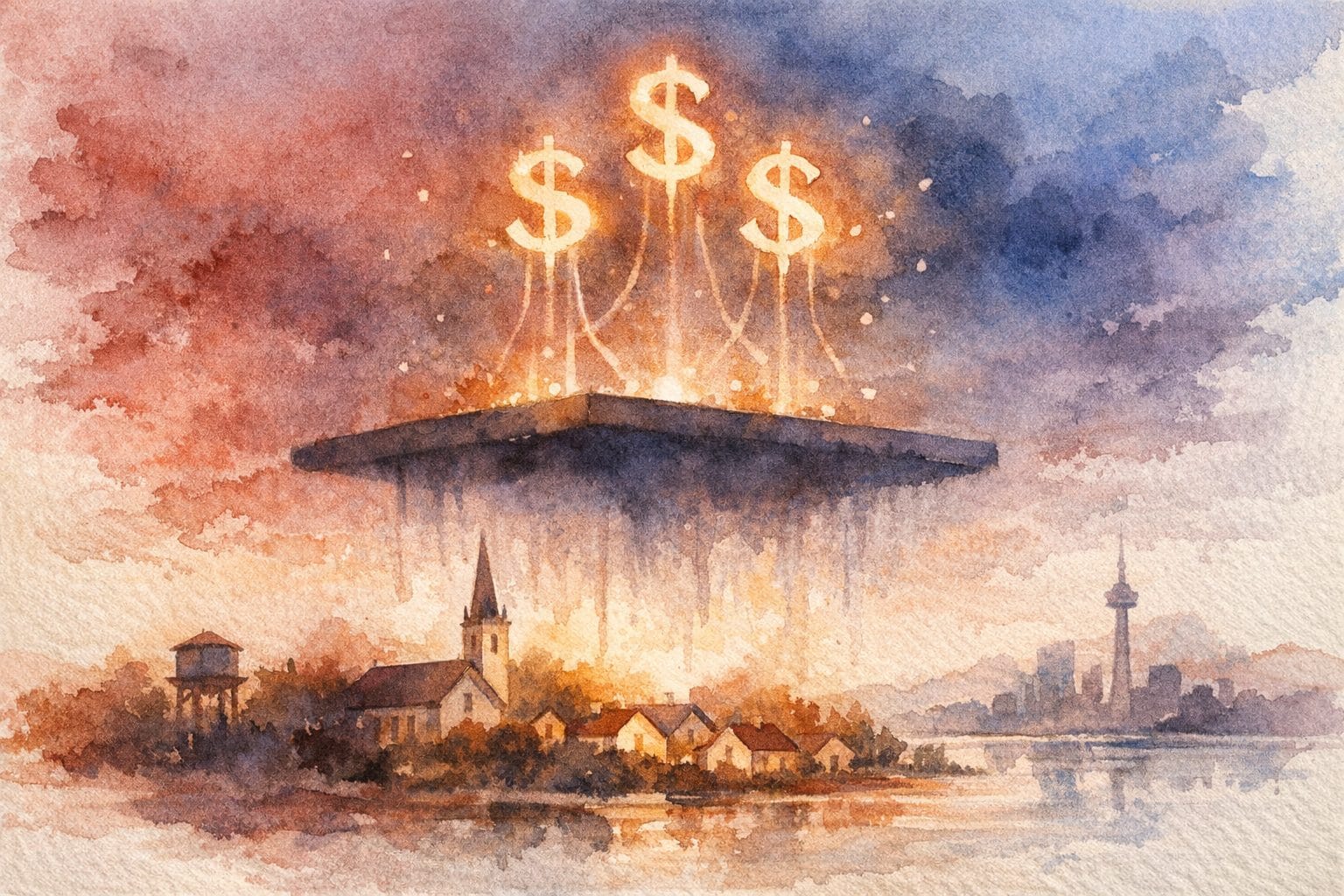
Alison Okuda traces musical and migratory circulations between London, Accra, and Caribbean diasporas to show that Pan-Africanism is embodied first in everyday practices: record bins, diaspora playlists, neighborhood parties. She also raises the question of who owns the catalogs, platforms, and revenues from this repertoire that has become global.
The Essentials
- Musical Pan-Africanism expresses itself in everyday practices: record bins, diaspora playlists, neighborhood parties.
- The circulation of sounds between West Africa, the Caribbean diaspora, and the United Kingdom constitutes a living cultural identity, documented in ordinary practices.
- Dominant streaming models distribute revenues mainly to rights holders, often labels, and artists’ share depends on their contracts; the share of communities of origin is not established by this source.
- UNESCO documents digital inequalities and capacity gaps between countries, without establishing in this report the specific finding on musical heritage of the Global South.
- Artists under contract may receive a minority share of streaming revenues, but the share received by affected communities is not quantified here.
Who Is Alison Okuda
Alison Okuda is the author of Pan-African Resonance, published by Ohio University Press on August 25, 2026 in the African Humanities and the Arts collection. The book explores ordinary musical practices and sound circulations between continents.
The Thesis: Pan-Africanism as Practice, Not Doctrine
The book begins with a simple and powerful observation. According to Alison Okuda, ordinary relations and musical spaces sustained Pan-Africanism beyond the formal efforts of political leaders. Pan-African solidarity flourished in listening choices, in DJs’ repertoires, in family parties where Ghanaian highlife stood alongside Jamaican reggae and Nigerian afrobeats. This is a grassroots Pan-Africanism, horizontal, carried by bodies and ears rather than by parties.
This approach owes much to ethnomusicology and sound studies, but it orients itself toward a precise political question. When music crosses colonial borders, unequal markets, and communities in permanent migration, it carries claims of belonging, memories of forced displacement, and solidarities built far from States.
Alison Okuda’s book draws notably on musical recordings, journals, oral histories, and government documents from six countries. The author listens, describes, and connects, without theoretical overview.
Accra and London: Two Capitals of the Same Sound Territory
The most concrete part of the book documents circulations between Ghana and the United Kingdom. Since the 1960s, Accra and London have functioned as two poles of the same musical space, sustained by postcolonial migrations. Musicians sought studios and quality recording equipment. Caribbean artists adopted West African rhythms while seeking a common origin. Immigrant communities in Brixton or Peckham imported records in their luggage and built exchange networks that preceded by several decades what is called today “world music.”
These exchanges rested on power imbalances. Many recording catalogs remained the property of British labels. Some Ghanaian artists signed without adequate legal advice. Cultural circulation was nonetheless real and nourishing.
Economic circulation, by contrast, remained asymmetrical.
This imbalance is not merely a historical anecdote. Market share payment models can favor artists already dominant on platforms; a specific causal link with the history of Pan-African circulations and contemporary afrobeats is not demonstrated. The link with algorithms that shape visible repertoires is direct: recommendations can integrate popularity signals and priorities declared by labels or rights holders, and independent artists in Accra or Lagos can suffer similar mechanisms of invisibilization as some creators in Europe.
The Caribbean on the Map: The Third Branch of the Triangle
The book devotes several chapters to the role of the Caribbean in this sound triangle. The connection between West Africa, the Caribbean, and the British diaspora predates the digital era: it passes through the slave trade, through Empire, through the Rastafarian movement, through dub, reggae, and dancehall. Reggae was born in Jamaica in a specific social and cultural context, with multiple musical influences including African heritage, and in turn nourished musicians from Kumasi or Abidjan who found in it a mirror.
What strikes in the book is the vividness of these circulations at moments when no infrastructure sustained them. Before platforms, before the internet, and before major international tours, cassettes circulated hand to hand between Kingston, Brixton, and Accra. Producers found themselves in Jamaican studios to record Ghanaian musicians. DJs improvised mobile sound systems that physically moved music from one neighborhood to another.
The book describes forms of collective intelligence, distributed and informal, that built a significant sound heritage without having the institutions that could have protected it. This heritage exists, it circulates, it generates value, but streaming revenues can be concentrated among rights holders of recordings; the precise distribution to communities of origin is not established.
The Question of Archives and Catalogs
One of the book’s most solid contributions concerns archives. Alison Okuda studies especially highlife, calypso, and reggae in networks linking London and Accra. These recordings are today digitized, available for streaming, sometimes “rediscovered” by Western curators. Royalties, when they exist, are distributed mainly to rights holders of labels according to structures of ownership established historically.
UNESCO documented digital inequalities in its report Re|Shaping Policies for Creativity. According to this report, copyright legislation is often insufficiently adapted to the digital environment and its application remains uneven, notably for practices of collective creation that characterize several African musics. Okuda’s work illustrates several dimensions of this diagnosis.
The question of cultural sovereignty in the digital age arises here with acuity: African music archives digitized by private platforms risk reproducing historical imbalances if communities of origin do not participate in decisions about access and distribution. Sounds travel; mastery remains to be defined.
Blind Spots in the Book
Pan-African Resonance is a book of ethnomusicology and cultural studies rather than political economy. This is both its strength and its limitation.
Its strength: the book documents with precision sound circulations that economists struggle to grasp, because they pass through informal practices, affects, embodied memories. It restores the lived texture of a musical Pan-Africanism that large political theories have often sacrificed to abstraction.
Its limitation: the book does not go so far as the economic mechanisms it suggests. The work does not propose detailed figures on streaming volumes, nor systematic analysis of contracts, nor precise recommendations on international copyright reform. Readers seeking a roadmap will leave disappointed.
One can also note that the work is concentrated on Accra and London, two metropolises that are not representative of the continent as a whole. What Okuda describes is real and important. But musical circulations between Dakar, Nairobi, Lagos, and their respective diasporas obey different logics, which the book touches on without exploring.
Finally, the question of contemporary afrobeats, an African genre widely listened to on streaming, is addressed but not developed. Yet it is there that economic questions of revenue distribution are most visible.
Reasons to Read It
Pan-African Resonance addresses several types of readers. To those curious about African music first: the book offers a sound cartography of rare richness, anchored in real practices rather than fixed genres. To readers interested in questions of diaspora, identity, and migration next: it shows how a cultural identity is constructed between continents, in the ordinary rhythms of daily listening. To those working on cultural industries and digital sovereignty finally: this book asks the right questions, even if it does not resolve them.
What you do not read elsewhere: this capacity to hold together fine cultural analysis and the political question of economic control over circulations. Most work on “world music” or afrobeats chooses one register or the other. Okuda holds both.
As platforms obtain licenses to distribute music catalogs while labels and other rights holders generally retain control of them, and as new tools generate sound content inspired by African repertoires, creators and institutions on the continent face increased challenges of recognition and remuneration. This book poses these problems with a precision that few other works achieve.
Bibliographic Information
- Pan-African Resonance: Music, Migration, and Everyday Practice in London and Accra
- Alison Okuda
- Ohio University Press
- Publication: August 25, 2026
Sources
- Alison Okuda, Pan-African Resonance, Ohio University Press, 2026
- UNESCO, Re|Shaping Policies for Creativity (report on digital imbalances in cultural heritage of the Global South)