Democratic distrust has overflowed its usual boundaries
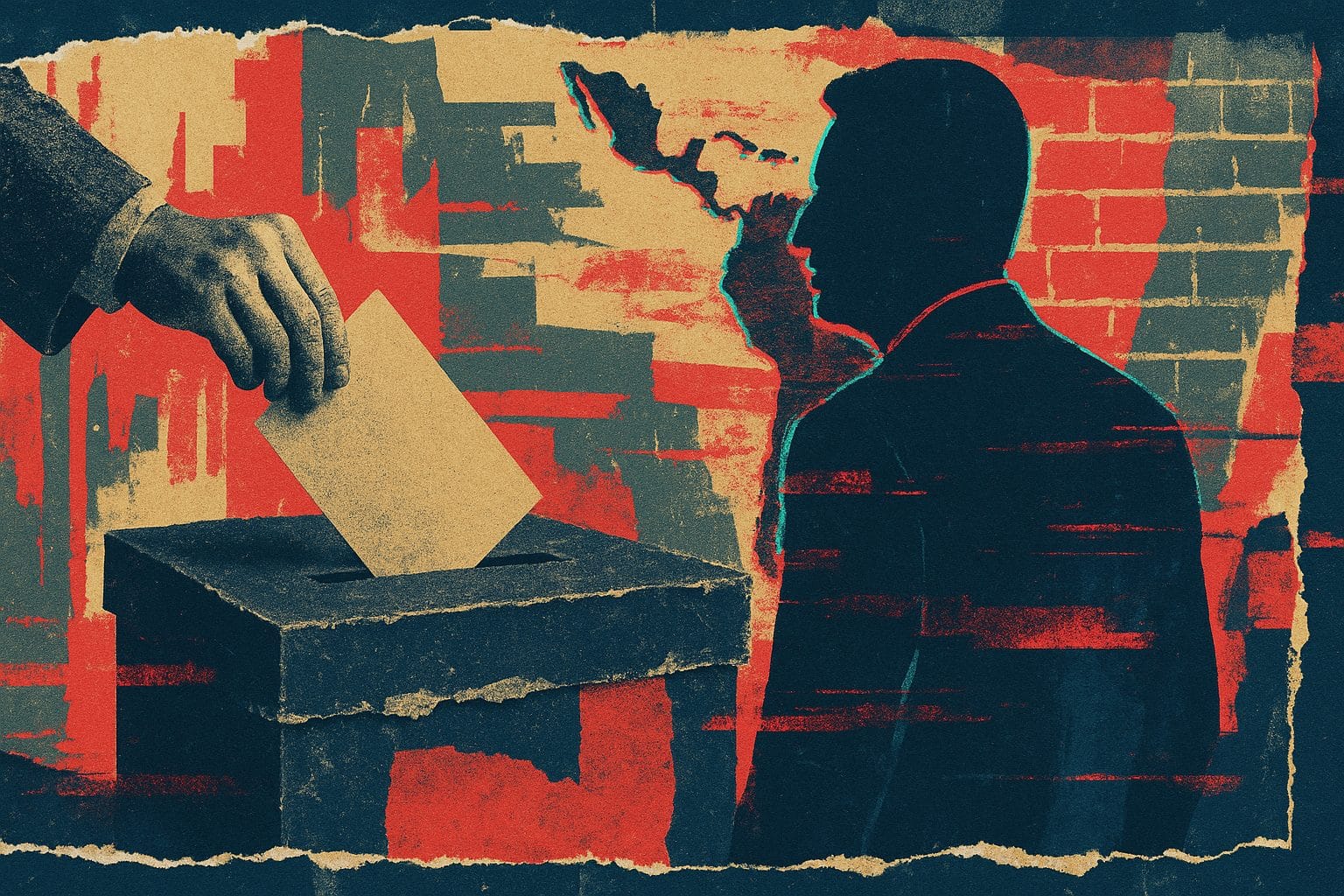
In January 2026, 78% of French people say they have no confidence in politics [1]. This is no longer merely the anger of the precarious or excluded. The middle classes and senior managers now display levels of distrust that no one would have predicted ten years ago. The mechanism that produces this gap is institutional, precise, and modifiable by ordinary legislation. This is where a choice presents itself for 2027.
A thirty-year disconnection, accelerated under the Fifth Republic
The trajectory is long. Abstention in the first round of the presidential election increased by 80% between 1974 and 2002, rising from 15.8% to 28.4% [8]. For legislative elections, the increase reached 107% between 1978 and 2002 [8].
This movement did not stop. By 2022, the proportion of systematic voters had fallen to 37%, down eleven points in twenty years [8]. Since 2017, intermittent voting has exceeded systematic voting. Systematic abstention affected 16% of voters in 2022, compared with 9% in 2007 [8].
The rebound in 2024, linked to the surprise dissolution, did not contradict the trend. The abstention rate stood at 33.29% in the first round of the 2024 legislative elections [9]. It was 52.49% in 2022 and 51.29% in 2017 [9]. The dissolution mobilized voters, but the confidence thermometer continued to fall. In 2026, only 22% of French people have confidence in the presidential institution, 20% in the National Assembly, and 26% in the Senate [4].
France is singular in this picture. In 2025, only 26% of French people say they have confidence in politics, compared with 47% in Germany and 39% in Italy [3]. The gap with Germany reaches nearly twenty points. France appears as the country where distrust in the workings of democracy is most firmly crystallized, even compared to countries facing significant political instabilities.
In 2025, only 22% of French people express high or moderately high confidence in their government [7]. This is twelve points lower than in 2023. The OECD average stands at 40% [7].
Distrust changing in nature
For decades, political distrust was concentrated among categories most exposed to economic precarity. Bruno Cautrès of CEVIPOF used, for the survey conducted in late 2024 and early 2025, the concept of “total political distrust”: there is practically no segment of the electorate that is not affected [16]. The middle classes and senior managers display levels of mistrust that one would not have thought of ten or fifteen years ago [16].
The unexpected fact goes beyond simple sociology of grievance. The highest levels of distrust remain among the most vulnerable categories, but distrust has ceased to be their exclusive property. It has reached those who, by their social position, had every reason to feel represented.
This shift changes the nature of the problem. It is no longer a deficit in integrating marginal groups. It is a questioning of the very architecture of representation.
Distrust targets not only political leaders. It affects the functioning of representative democracy itself, perceived as distant from everyday concerns [3]. Expectations in favor of referendums, citizens’ conventions, or other forms of direct participation testify to a search for mechanisms to correct the perceived limitations of the system [5].
In 2026, nearly eight in ten French people say they favor more frequent resort to referendums to decide on important laws or policies [4]. The last national referendum was more than twenty years ago. In 2026, 65% of French people believe that Parliament’s power should be durably strengthened relative to that of the government [4].
The majority voting system that manufactures disconnection
A precise institutional mechanism feeds this trajectory. The Fifth Republic has based its political practice on the constant pursuit of a majority fact from 1962 to 2022. Faced with lasting tripolarization of political life, Benjamin Morel outlines two perspectives in The New Regime (2025): a reparliamentarization or increased presidentialization bordering on illiberalism [10].
The two-round majority voting system, designed to produce clear majorities, today produces the opposite effect. It mechanically amplifies imbalances between votes cast and seats obtained, in a country where three electoral blocs of comparable size coexist without any possible coalition [10]. Marc Lazar, in his long history of populism in France published in 2025, argues that the Fifth Republic’s representative system widens the gap between executive power and the voice of the people [12]. Since Boulangism in the 1880s, populism can be found on the far right but also on the left, emphasizing the division between a healthy people and distant, corrupt elites [12]. It is a political offer responding to demand that institutions do not know how to handle.
Marcel Gauchet, in The Democratic Knot (Gallimard, 2024), goes further back in the causal chain [13]. For him, the ruptures in equilibrium stem from the primacy acquired by individual rights, which weaken political powers and cause sight of what could constitute a common destiny to be lost. Globalized capitalism finds its conditions of possibility in the endless extension of individual rights at the expense of the political sphere. Collectives tend to dissolve in favor of individuals.
Pierre Rosanvallon named this phenomenon as early as 2006: counter-democracy is the democracy of organized distrust facing the democracy of electoral legitimacy [14]. The distance between civil society and institutions continues to widen, and the threat is that this counter-democracy degenerates into destructive populism.
In 2024, more than half of respondents in OECD countries consider that the political system does not allow people like them to have a say [5]. Only around 40% believe that public authorities reconcile the interests of different generations [5].
Changing who represents whom, through ordinary legislation
The choice posed for 2027 is to modify the rule that determines who obtains a seat and on what basis. In other words: who represents what in the National Assembly.
Benjamin Morel proposes a system inspired by the German model [11]. A compensatory proportional voting system would ensure more faithful representation of the diversity of political sensibilities, while preserving the link of proximity between the elected representative and their constituents. The institutional scope is precise: reparliamentarization requires returning to the voting system and acknowledging the failure of majority voting [10].
Countries such as New Zealand or Switzerland have adopted this voting system without resulting political crisis [11]. What slows change is political structures, particularly parties, which take time to adapt their strategies to a new context [11]. The reform, prepared by Morel and defended in October 2025 by a cross-party coalition in the Assembly, requires ordinary legislation. It does not require constitutional revision [10].
What this lever changes concretely: a party that receives 20% of the vote stops obtaining 5% of seats, or being eliminated [10]. Its voters stop being citizens whose choice is absorbed by a mechanism they did not choose. In 2026, only 20% of French people believe that political leaders try to keep their promises [1]. This is a score lower than that observed in Italy, Germany, and the United Kingdom. A Parliament whose composition reflects actual votes is the prerequisite for this perception to change.
This lever has a real counterpart: the formation of coalitions becomes inevitable, and the responsibility to govern disperses among several parties. The clarity of executive action suffers. On the other hand, voters who today vote for parties without seats proportional to their weight stop being invisible. The reform is neutral in terms of public spending: it concerns electoral law, not a financial transfer.
Deliberative democracy, through citizens’ conventions, lotteries, or referendums on citizen initiative, provides a complementary layer documented by the OECD [15]. Public authorities at all levels are increasingly turning to these citizens’ assemblies to tackle complex political problems. These mechanisms have lasting legitimacy only when supported by a Parliament itself perceived as representative. Adding citizens’ conventions to an electoral system that structurally distorts representation amounts to treating the symptom without touching the mechanism.
Sources
[1] CEVIPOF/OpinionWay, “Barometer of Political Trust, Wave 17,” January 2026, Sciences Po CEVIPOF, https://www.sciencespo.fr/cevipof/fr/actualites/barometre-de-la-confiance-politique-cevipof-2026-la-confiance-s-effondre-en-politique-la-proximite-fait-figure-de-refuge/ (accessed 30/08/2026).
[2] Institut de l’Entreprise / CEVIPOF, “Barometer of Political Trust Wave 17: Business Brief,” May 2026, https://www.institut-entreprise.fr/publication/cevipof_-_le_barometre_de_la_confiance_politique_vague_17/ (accessed 30/08/2026).
[3] CEVIPOF/OpinionWay, “Barometer of Political Trust, Wave 16,” February 2025, Sciences Po CEVIPOF, https://www.sciencespo.fr/cevipof/fr/actualites/barometre-de-la-confiance-politique-du-cevipof-2025-le-grand-desarroi-democratique/ (accessed 30/08/2026).
[4] CEVIPOF/OpinionWay, “French Democracy in Distress,” March 2026, Sciences Po CEVIPOF, https://www.sciencespo.fr/cevipof/sites/sciencespo.fr.cevipof/files/BCP_BC_democratiesouffrance_mars26.pdf (accessed 30/08/2026).
[5] OECD, “OECD Survey on the Determinants of Trust in Public Institutions: 2024 Results,” July 2024, OECD Publishing, Paris, https://doi.org/10.1787/80ddd09b-en (accessed 30/08/2026).
[6] OECD, “Country Note: France,” Survey on the Determinants of Trust 2024, https://www.oecd.org/content/dam/oecd/fr/publications/reports/2024/06/oecd-survey-on-drivers-of-trust-in-public-institutions-2024-results-country-notes_33192204/france_aab7c213/bbf73400-fr.pdf (accessed 30/08/2026).
[7] Acteurs Publics, “French People Have More Trust in Administration Than in Politicians,” July 7, 2026, https://acteurspublics.fr/articles/la-confiance-des-francais-envers-le-gouvernement-au-plus-bas-selon-une-enquete-de-locde/ (accessed 30/08/2026), primary source: OECD, trust survey 2025.
[8] INSEE, Kilian Bloch, “Twenty Years of Electoral Participation: In 2022, Gaps by Age and Qualification Continue to Widen,” INSEE Première no. 1929, November 2022, https://www.insee.fr/fr/statistiques/6658143 (accessed 30/08/2026).
[9] Ministry of the Interior / DILA, “2024 Legislative Elections: First Round Results,” July 2024, https://www.dila.gouv.fr/home/article/legislatives-2024-les-resultats-du-premier-tour (accessed 30/08/2026).
[10] Benjamin Morel, The New Regime, or Impossible Parliamentarism, Passés Composés, 2025.
[11] Benjamin Morel, “Proportional Voting System: Between Promises and Challenges,” Plan Collection no. 2025-01, France Stratégie, May 2025, https://www.strategie-plan.gouv.fr/publications/le-mode-de-scrutin-proportionnel-entre-promesses-et-defis-par-benjamin-morel (accessed 30/08/2026).
[12] Marc Lazar, For Love of the People: A History of Populism in France, 19th-21st Centuries, Gallimard, NRF Essays, 2025.
[13] Marcel Gauchet, The Democratic Knot: On the Origins of the Neoliberal Crisis, Gallimard, Library of Human Sciences, 2024.
[14] Pierre Rosanvallon, Counter-Democracy: Politics in an Age of Distrust, Seuil, 2006.
[15] OECD, “Exploring New Frontiers in Citizen Participation in the Policy Cycle,” March 2025, https://www.oecd.org/content/dam/oecd/fr/publications/reports/2025/03/exploring-new-frontiers-in-citizen-participation-in-the-policy-cycle_3b33d845/a697cb85-fr.pdf (accessed 30/08/2026).
[16] Bruno Cautrès (CEVIPOF/CNRS), interview, “Toward Total Political Distrust,” Fund for Democracy, January 2026, https://fondspourlademocratie.org/defiance-politique-totale-ce-que-le-barometre-de-la-confiance-politique-du-cevipof-revele-dun-malaise-democratique-profond/ (accessed 30/08/2026).