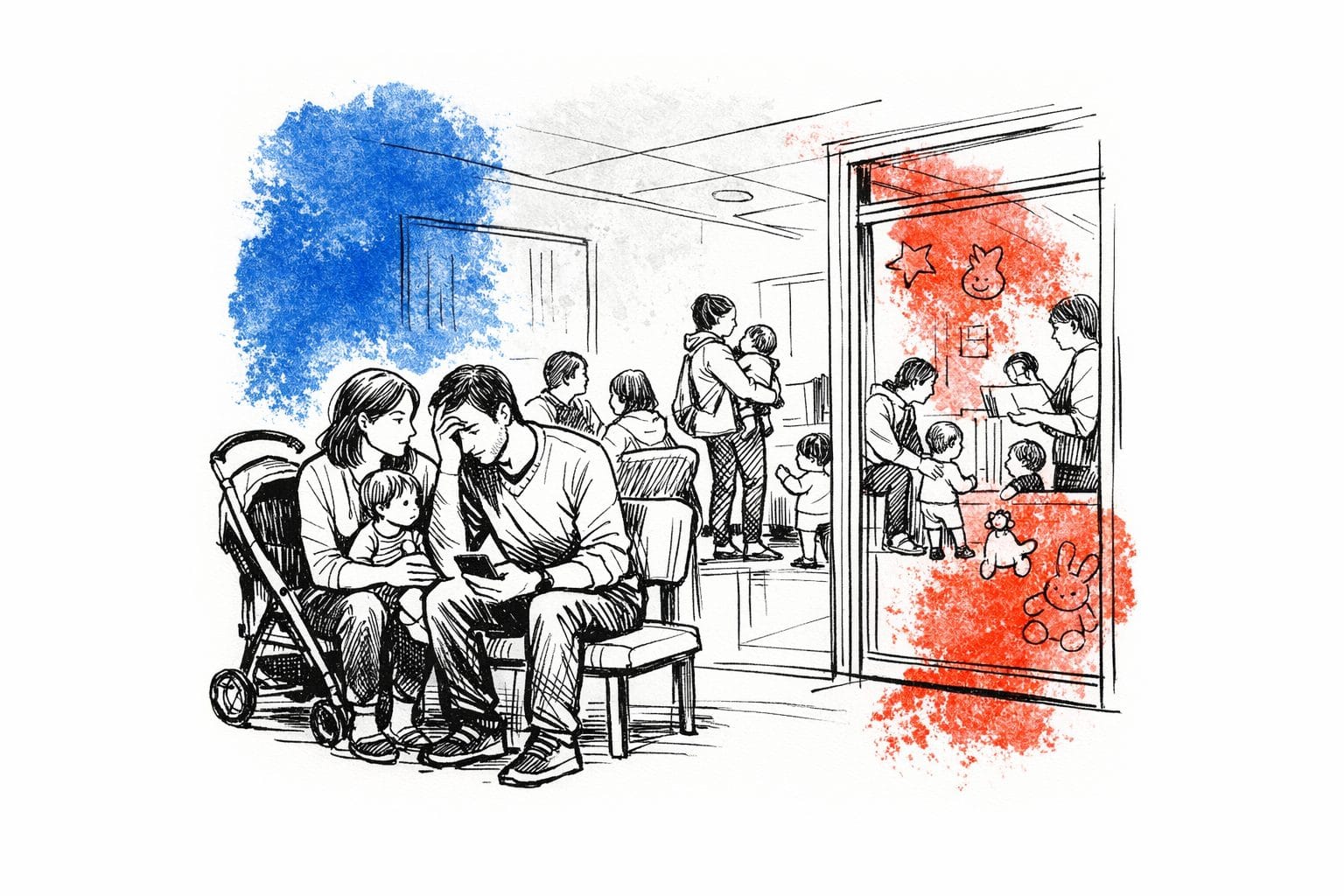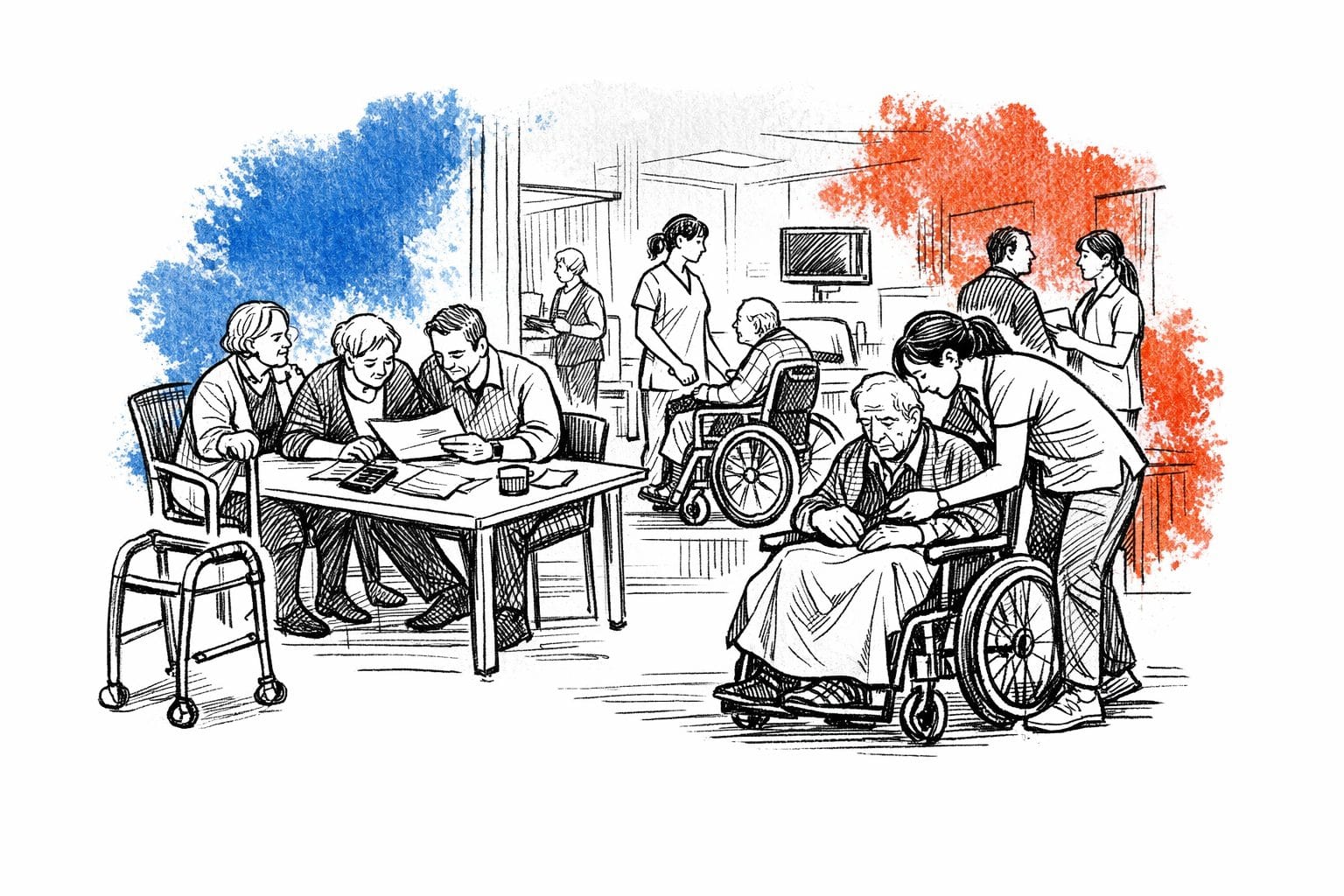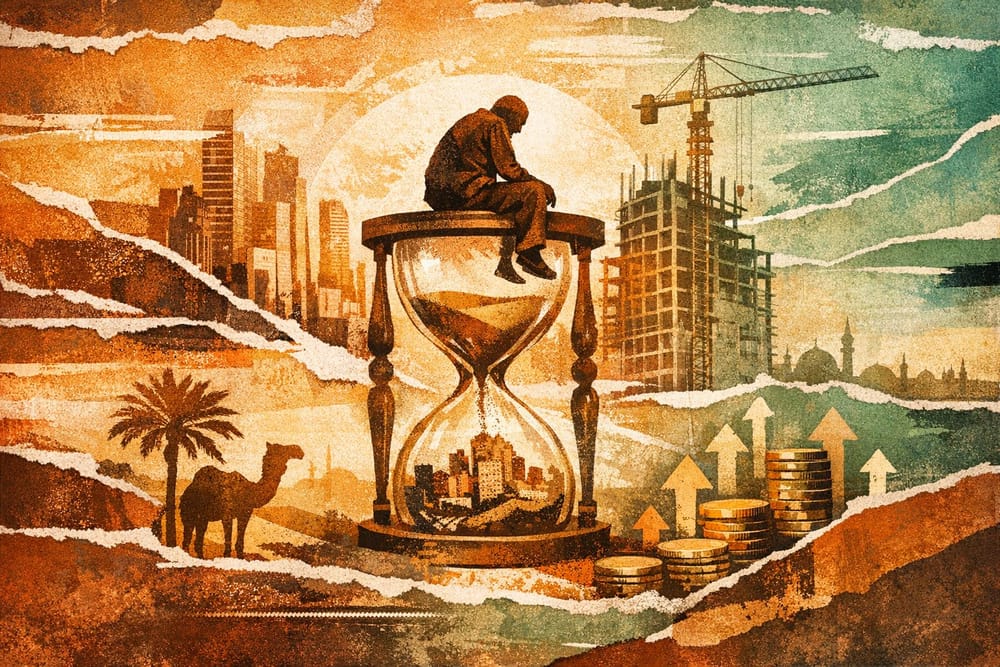
Fertility in the Middle East and North Africa has been divided by three over fifty years. This demographic shift should have delivered a growth dividend; it risks producing the opposite, lacking pension systems and formal employment capable of absorbing the shock. According to the World Bank, the share of those over 65 will reach 12% of the region’s population by 2050, and the elderly dependency ratio—the number of retirees per hundred working-age people—will rise from 8 to 18. The window for building institutions that will make this aging sustainable is closing at vastly different speeds depending on the country.
The Essential Points
- Fertility in the MENA region has fallen from approximately 7 children per woman in the 1970s to 2.5 in 2023, according to the World Bank, one of the fastest transitions ever documented.
- The elderly dependency ratio is projected to more than double by 2050, rising from 8 to 18 per hundred working-age people, according to World Bank projections (MENA 2025 report).
- In countries most advanced in the transition, like Iran, aging is accelerating without contributory pension systems having achieved sufficient coverage.
- INED documents divergent trajectories between Iran, whose fertility has fallen below replacement level, and Maghrebi countries, still halfway through their transition.
- Financing social protection for the elderly remains the central challenge: the majority of employment remains informal and the fiscal window is closing.
A Fertility Transition Among the Fastest in History
In 1970, a woman in Iran had on average more than seven children. In 2023, she has fewer than two. This decline took fifty years; in Europe, the same transition took a century. Speed matters as much as magnitude, because it compresses the time available to adapt institutions.
The World Bank, in its 2025 report on human development in the MENA region, places regional fertility at 2.5 children per woman, still slightly above replacement level, but with massive disparities. Iran and Tunisia are already below that threshold. Yemen and Iraq remain above four. Behind a misleading regional average, several demographic transitions coexist at incomparable stages.
This decline in fertility could have produced what economists call a “demographic dividend”: a generation where workers are numerous, dependents few, and savings available for investment. Several East Asian countries captured this dividend in the 1980s-2000s. In the MENA region, capture has been partial. Insufficient formal employment, a bloated public sector, and a private sector creating few skilled jobs prevented the mass of workers from transforming into a contributory base for social systems.
Iran Has Raced Through Stages Its Neighbors Have Yet to Reach
Iran is the most documented and most acute case. In Iran, fertility has fallen well below replacement level since the late 1990s, a collapse accelerated by rapid urbanization, rising education levels among women, and, from the 1980s onward, determined family planning policies. The result is an age pyramid narrowing at the base and widening at the top at a speed Iran’s social systems never anticipated.
Iran’s pension system covers mainly civil servants and formal-sector employees. Yet a significant share of the active population worked in agriculture or informal trade, without contributions. These aging cohorts have not accumulated pension rights. Pressure on families, particularly on women, who provide most care for elderly relatives, is already visible. It will intensify over the next two decades as the post-revolutionary baby-boom cohorts, mainly born in the 1980s, reach 65.
Iran illustrates a configuration other countries in the region will face in turn: aging rapidly, without first building the institutional architecture to finance dependency. This is the exact opposite of the European path, where the welfare state preceded mass aging.
The Maghreb Still Has Room to Maneuver, But It’s Shrinking
Morocco, Algeria, and Tunisia are in an intermediate phase. Their fertility has declined, but more slowly than in Iran. According to INED data, Tunisia is now approaching replacement level, while Morocco is still slightly above it. This difference of a few years in the transition represents, in political terms, a non-negligible window for action.
Tunisia has a more structured pension system than the regional average, inherited from reforms in the 1980s-2000s. But its financial viability is fragile: deficits in public pension funds are accumulating, and the Tunisian government has entered painful negotiations with the International Monetary Fund over their restructuring. Coverage remains incomplete for agricultural workers and the self-employed.
Morocco launched an ambitious social protection reform in 2021, with an explicit goal of universal coverage by 2025. Rarely has such a policy in the region been so explicitly tied to anticipating aging. The implementation difficulties—funding, identifying beneficiaries in the informal economy, administrative capacity—are real. But the political diagnosis has been made. That is already a difference from countries where the question remains taboo.
Informal Employment Is the Structural Obstacle, Not the Symptom
Behind the pension question lies a prior problem: much of the work in the MENA region has never been formalized. The World Bank estimates the informal economy accounts for between 40 and 60% of employment in several countries in the region. An informal worker does not contribute. When they age, the absence of contributory coverage exposes them to the risk of family support, public assistance, or no protection, depending on the country and household.
This situation is not unique to the region. Southeast Asia reduced informality by combining sustained industrial employment growth, tax incentives for formalization, and progressive extension of protection systems. This combination nonetheless took two to three decades. In the MENA region, aging is accelerating while informality remains high, leaving less time to act.
Jordan and Egypt are experimenting with micro-contribution mechanisms for self-employed workers, with still modest results but providing useful data. The idea is simple: adjust the contribution level to the actual contributory capacity of precarious workers, rather than requiring entry into a system designed for stable employees. These experiments merit attention. The question of elderly dependency is not unique to the region: in Europe too, the true cost of dependent aging remains largely underestimated.
The Concrete Requirements of Care Systems by 2050
The doubling of the elderly dependency ratio in twenty-five years increases the need for geriatric care, medicalized housing, and doctors trained in managing chronic disease. In countries already short of doctors and nurses for their current populations, the scale of the challenge is considerable.
Health systems in the region were built primarily to address infant mortality and infectious disease. The epidemiological transition toward cardiovascular disease, diabetes, cancers, and neurodegenerative conditions is already underway, but chronic care infrastructure remains limited. Training a geriatrician takes ten years. Building a home care system, anchoring professional caregivers in working-class neighborhoods, putting in place technical aids for aging in place: each of these transformations requires time, money, and political vision.
Employment of older workers is a key variable that several developed countries have learned to measure differently to act differently: in the MENA region, this reflection remains in its infancy. Extending the working lives of people aged 55 to 65 who are in good health and have valued skills is nonetheless one of the most direct levers for easing pressure on younger workers.
The financing question is the most difficult. A pay-as-you-go pension system, where workers finance retirees, assumes a broad contributory base and sufficient institutional trust for contributions to be paid and rights honored. In countries where trust in public institutions is fragile, building this intergenerational contract is as much a political task as a technical one. Gulf countries have fiscal margins their neighbors lack, thanks to sovereign wealth funds fed by hydrocarbons. But their own populations are aging, and their social protection models, very generous for nationals and virtually nonexistent for migrant workers, were not designed for evolving demographics.
The Trajectories That Will Set Countries Apart by 2040
By 2040, several signals will distinguish countries that have prepared their transition from those overtaken by it. The first is the coverage rate of pension systems: the share of the active population that actually contributes. When this rate rises, it signals that employment formalization is progressing and the intergenerational social contract is expanding. Low contributory coverage increases the risk of dependence on families and public assistance programs.
The second signal is health systems’ capacity to pivot toward geriatrics. The number of doctors trained in chronic disease management, the development of home care, the professional recognition of family caregivers: these indicators reflect the political will to prepare for aging rather than simply endure it.
The third issue is political: are governments integrating demographic aging into their long-term development plans? Morocco did so explicitly with its social protection reform. Several countries in the region remain in a short time horizon, dominated by managing immediate crises. The window for acting differently is closing at different speeds depending on the country, but it is closing everywhere.
What is at stake, fundamentally, goes beyond pension systems. MENA societies have experienced in two generations a demographic transformation unprecedented in their history. They have produced cohorts of educated young people, the most highly trained in their history, who await formal employment and a predictable future. The question of how very young societies build institutions that will allow them to age with dignity is one of the great political questions of the century. The Middle East and North Africa will pose it in accelerated time.
Sources
- World Bank, Embracing and Shaping Change: Human Development for a Middle East and North Africa in Transition (2025), worldbank.org
- INED, Population & Sociétés, no. 644, May 2026, ined.fr