In Canada, 1.65 million households lived in 2021 with roommates or extended family under the same roof. These households have a lower housing affordability crisis rate according to the housing cost-to-income ratio, which does not directly measure individual financial difficulty. But Statistics Canada reveals another reality: these same households are six times more often in overcrowded conditions, a sign that mutual aid often masks a constraint that ordinary affordability figures do not see.
The Essentials
- Cohabitation with roommates or extended family affects 1.65 million Canadian households, according to Statistics Canada (2025).
- These households are less often in unaffordable housing by the housing cost-to-income ratio standard—16.7% versus 21.5%—but six times more often in unsuitable housing (28.3% of multigenerational households versus 4.7% of other household types).
- 388,000 people lived with non-relatives without contributing to rent, a sign of residential dependency invisible to standard indicators.
- Standard affordability indicators measure rental costs, not household density: residential precarity can hide behind healthy financial figures.
- Building more housing is necessary but may be insufficient: without formats adapted to complex households, overcrowding may persist.
Standard Affordability Statistics Miss Half the Problem
The dominant measure of the housing crisis relies on the “effort ratio,” the share of income devoted to housing costs, which include rent and sometimes utilities. When the housing cost-to-income ratio exceeds 30%, it suggests the household may have difficulty paying for other essential goods, without constituting by itself a definitive qualification of a household in difficulty. This logic is simple, verifiable, comparable. It has a blind spot.
A household of six people in a three-room apartment can very well devote 25% of its combined income to rent. Financially, it flies under the radar. Spatially, it lives in conditions that public health qualifies as overcrowding. Households sharing housing had an affordability crisis rate of 16.7%, compared to 21.5% for households not sharing housing. A flattering gap, which led some observers to see cohabitation as a solution to the housing crisis.
In the same census, 28.3% of these multigenerational households lived in housing with insufficient bedrooms according to the adequacy threshold, compared to 4.7% of other household types—a ratio of roughly 6 to 1. This figure changes the diagnosis: cohabitation can signal certain risks of unmet needs or residential instability, but cannot by itself establish them.
Two Forms of Cohabitation That Are Worlds Apart
Behind the 1.65 million shared households, two realities coexist without resembling each other.
The first is chosen. Adults decide to share a home to reduce their costs, to live together, to get through a period of transition. This form of cohabitation is ancient, stable in many cultures, and economically rational in markets where rents have exploded. It can be comfortable, organized, balanced among occupants.
The second is imposed. An elderly parent who can no longer pay rent moves in with their adult child in an apartment already too small. A young adult who cannot afford to access the rental market remains in the family home years after having needed to leave. A recently arrived family crowds in with relatives until they find an entry point to a market closed to them. These situations share an address, not a choice.
The 388,000 people living with non-relatives without contributing to rent illustrate a third, even more fragile category: de facto housed, without tenant status, without legal safeguards, transparent to affordability statistics. They are neither owners, nor tenants, nor in measurable financial difficulty. They are simply there, without the information system really seeing them.
This distinction is decisive for public policy. Helping chosen cohabitation requires something different from helping imposed cohabitation. Conflating the two amounts to treating a fracture with a band-aid.
The Limits of a Policy Centered on Supply Abundance
Ezra Klein and Derek Thompson, in Abundance (2025), offer a sharp diagnosis of North American progressivism: certain American rules and procedures slow construction, densification, and infrastructure projects. Their prescription is direct—build more, lift regulatory obstacles, treat housing as basic infrastructure—and the data partly support them. Scarcity aggravates everything. Insufficient supply can favor certain constrained cohabitations, but it does not make all cohabitation inevitable.
Canadian data pose a problem that supply policy alone does not solve: build what, for whom, and in what configuration. The housing market produces a significant share of units calibrated for standard nuclear households—one or two adults, possible children, one bathroom, one kitchen. This format responds poorly to several household categories: extended families wishing to cohabit with dignity, elderly people who would like to share a home without finding themselves cramped, groups of adults seeking suitable shared spaces.
Canadian overcrowding does not result solely from a lack of available housing. It can also result from a lack of housing adapted to diverse household compositions. An apartment designed for four people that accommodates six is not a solution: it is a symptom. Increasing total supply without diversifying building types may not solve overcrowding.
Daron Acemoglu and Simon Johnson, in their work on the distribution of technological and economic gains, examine an analogous question for innovation: who captures the benefits of progress. Applied to housing, this question becomes: does an abundance policy equally benefit complex households, multigenerational families, low-income roommates, or does it reproduce supply calibrated for typical solvent households, leaving others adapt in homes that do not suit them. Statistics Canada data suggests the second hypothesis deserves to be taken seriously.
Overcrowding is observed in major Canadian metropolises; it has not clearly declined with measured supply growth.
Overcrowding as Concealed Public Health Risk
Overcrowding produces measurable effects on mental health, sleep, school performance of children, and transmission of respiratory diseases, according to epidemiologists. Excessive density is associated with more sleep disorders and can limit access to quiet space, and creates friction liable to degrade family relationships.
These effects touch the most vulnerable first. Public health sources associate residential instability, sometimes including overcrowding, with worse school outcomes, without demonstrating here a mean specific to overcrowded homes. Elderly people cohabiting in spaces too small see their health decline faster. Workers returning to a crowded apartment recover less well.
These are real, diffuse costs, which appear in no affordability statistic. They materialize in health data, in school results, in psychiatric emergencies. They have an economic cost for the community that finances them without identifying them as stemming from residential overcrowding.
Housing policy tends to measure what it can measure easily: rents, effort ratios, vacancy rates. It rarely measures household density at the fine scale that would make it possible to identify overcrowded households before they appear in other systems. The 2021 Canadian data are a precious exception precisely because they cross residential status, household composition, and housing conditions. This granularity should become a standard, not a statistical curiosity.
Intergenerational Cohabitation on the Horizon of 2035
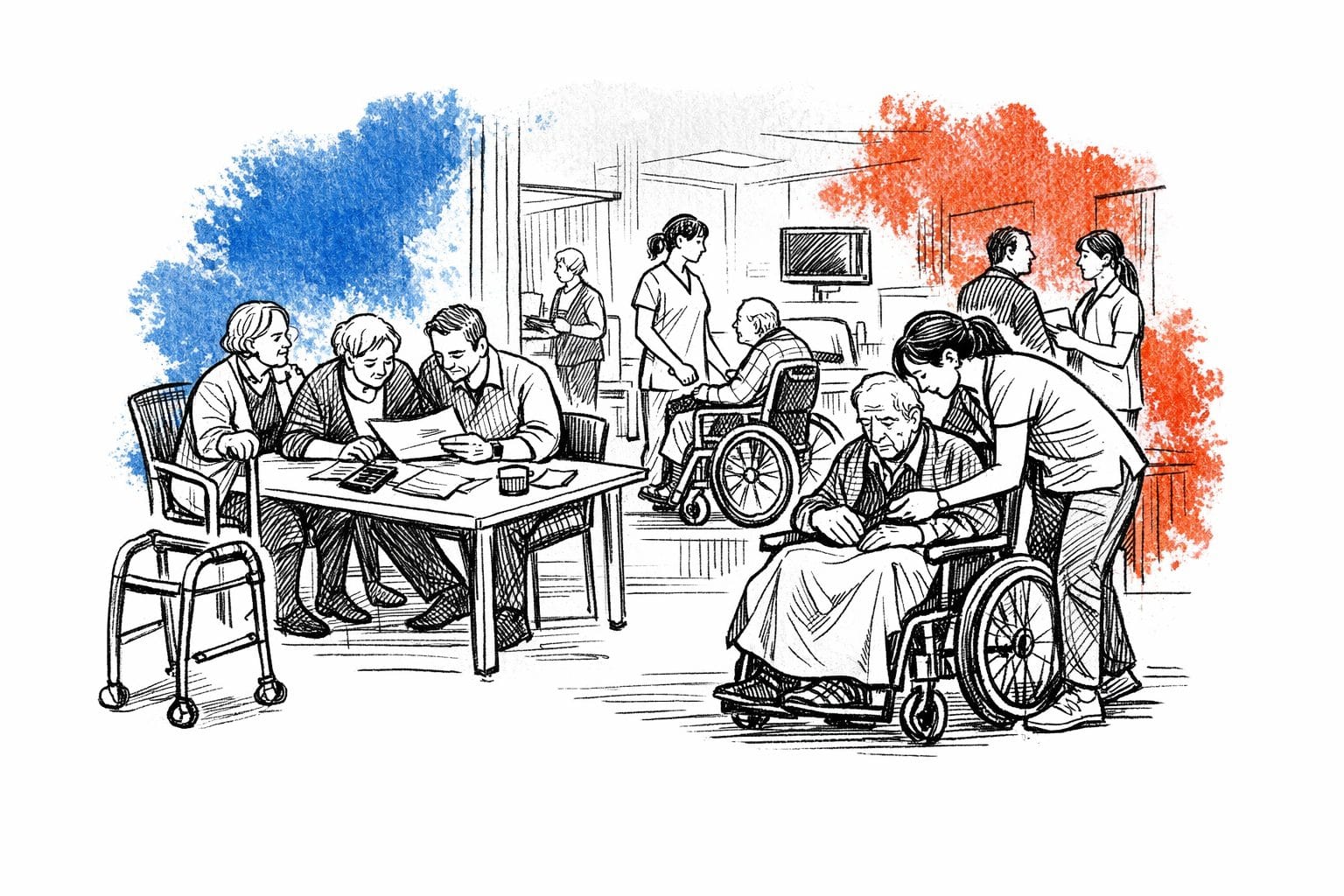
Cohabitation could become more important as a result of the combined effect of aging, affordability, cost of living, and cultural factors. Some elderly people live with their adult children to access support and facilitate their remaining in private housing, while rental affordability has deteriorated unevenly across cities, with particularly marked deterioration during the COVID-19 period.
The two groups converge toward the same apartment, with different needs and lifestyles poorly compatible in homes designed for a single generation. 2025 Census Bureau estimates document adults living with their parents; they are not sufficient by themselves to establish a trend in multigenerational cohabitation.
Two trajectories are conceivable by 2035, depending on whether public policies adapt to this reality or not.
In the first, cohabitation remains an informal and imposed response to an unresolved shortage. Families crowd into unsuitable homes. Overcrowding advances without being properly measured. Affordability policies continue to watch rents without seeing density. Intergenerational tensions increase in spaces too small to accommodate multiple lives.
Family caregivers, predominantly women, assume growing burdens in difficult residential conditions. Cohabitation absorbs the pressure but amplifies it for the most fragile.
In the second, public policies recognize cohabitation as a structural reality and equip it with an adapted framework. This requires several concrete changes. Building standards evolve to allow and encourage intermediate typologies—homes with two separate entrances, shared common spaces between neighboring units, apartments modular according to household composition. Housing assistance adapts to complex households, without penalizing those who share an address. Rental protections cover housed persons without status.
Local authorities integrate household density into their needs assessments, alongside standard effort ratios.
This second trajectory assumes that states accept a simple reality: the nuclear family housed in a standard apartment is no longer the only relevant model for calibrating housing policy. Intergenerational solidarities exist, are desired by many, and can be an asset in aging societies, provided that the homes that welcome them are designed for them, not constrained by them.
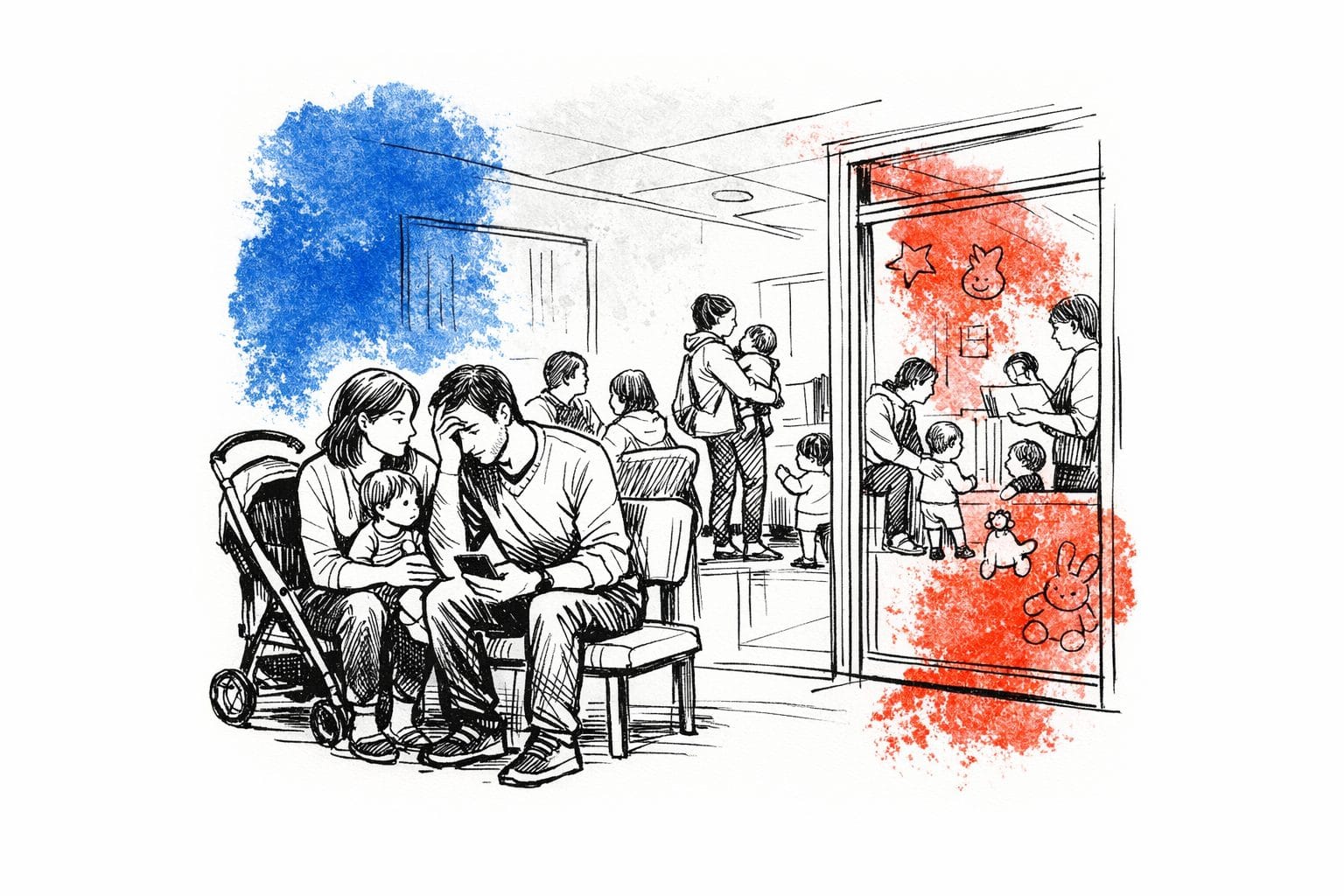
Cohabitation must remain a choice rather than an imposed constraint. The shortage of childcare places already illustrates how infrastructure gaps transform life decisions into constraints; housing follows the same logic.
Measuring What We Want to Change
The Canadian case has a pedagogical virtue: it shows what one can see when one provides oneself with the tools to look. The 2021 census crosses residential status, household composition, financial contribution, and occupancy density. It is this combination that reveals overcrowding where affordability indicators see only healthy households.
Most OECD countries lack this granularity. Their housing statistics are built around cost, not density. They can detect that a household spends too much to be housed; they struggle to detect that a household lives six in 600 square feet without apparent financial difficulty.
This statistical gap has direct policy consequences. What is not measured is not targeted. Housing assistance programs are calibrated to effort ratios because these are the only data continuously available. Overcrowding, invisible residential dependency, housed persons without status: these realities exist in occasional surveys, not in the dashboards that guide budget decisions.
The most accessible step for governments would be to systematically integrate household density into their annual housing surveys, not only in decennial censuses. This change in measurement costs little. It would make it possible to detect residential precarity hidden behind correct affordability figures, adapt eligibility criteria for assistance, and evaluate whether construction policies truly reduce pressure or merely displace it.
Canadian data raise a question for the coming years: does the rise in cohabitation reflect chosen mutual aid as a sustainable resource, or the absence of another option for the households involved.
Sources
- Statistics Canada, Measuring unmet housing need and housing instability in households with roommates and extended family, 2025, https://www150.statcan.gc.ca/n1/pub/46-28-0001/2025001/article/00001-eng.htm
- Ezra Klein and Derek Thompson, Abundance, Simon & Schuster, 2025, https://www.simonandschuster.com/books/Abundance/Ezra-Klein/9781668023976
- U.S. Census Bureau, America’s Families and Living Arrangements, 2025, https://www.census.gov/topics/families/families-and-households.html