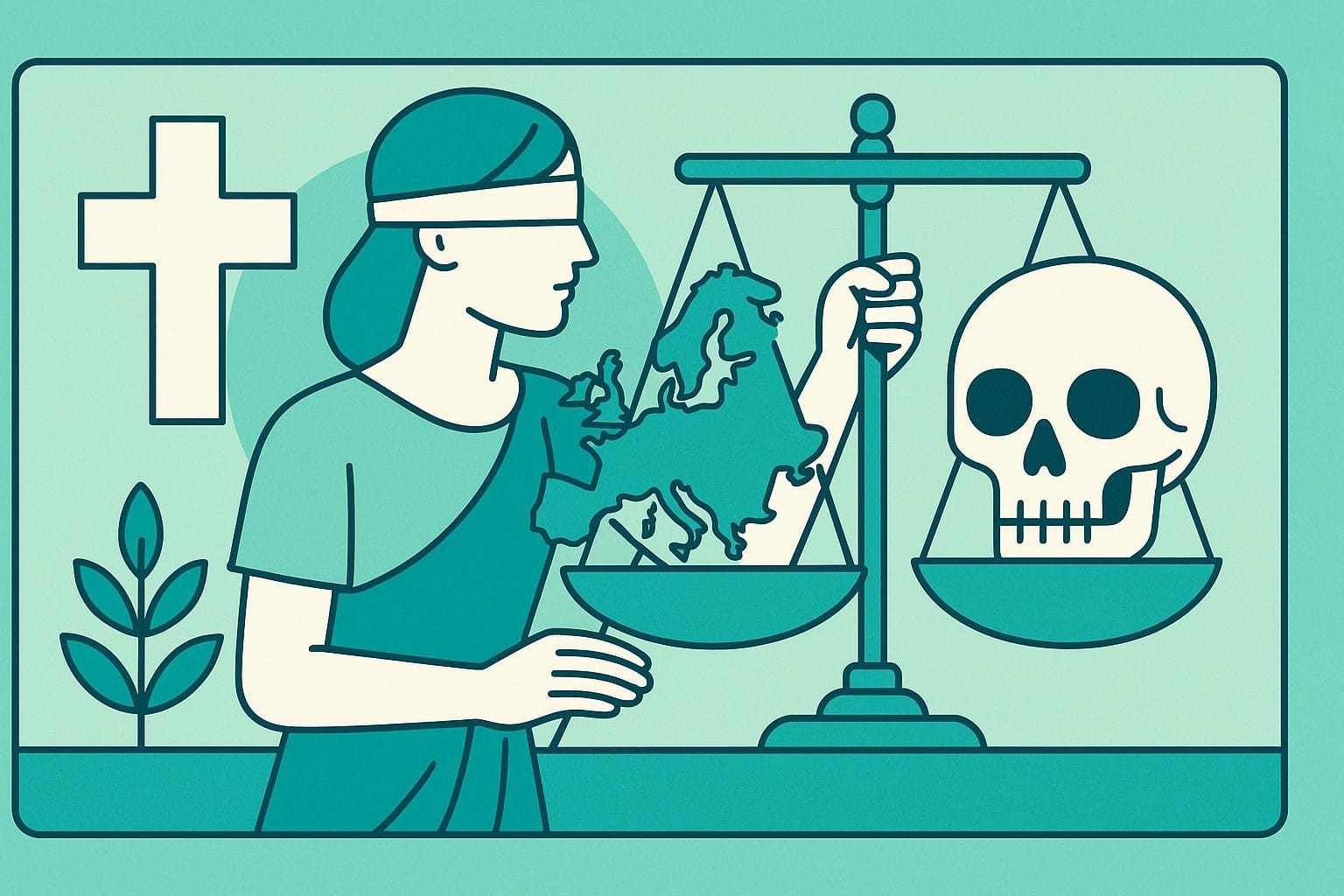
In Europe, having health insurance does not guarantee access to a psychiatrist. The World Health Organization documents a gap between legal coverage and actual coverage that disproportionately affects already vulnerable populations. Four countries—Czechia, Estonia, Finland, and Ireland—have launched financing and delivery reforms that can improve access through targeted funding, initial investments, or external resources.
Key Points
- European mental health systems are universal on paper, but actual coverage of psychotic disorders varies from 20% to 99% depending on the country (WHO/Europe, February 2026).
- The most vulnerable populations—refugees, homeless people, ethnic minorities—show coverage gaps exceeding 80%, according to the same WHO data.
- Czechia, Estonia, Finland, and Ireland are testing financing reforms that redistribute existing budgets rather than requesting new ones.
- The central mechanism works as follows: psychiatric hospitals capture a disproportionate share of resources at the expense of community care that reaches patients outside conventional circuits.
- If these models do not scale up, current budgetary choices will determine who remains outside the system by 2030.
Legal Coverage Does Not Protect Those Who Need It Most
A universal health system promises access to care for all. But the universality of a right does not guarantee uniformity in its exercise. In mental health, effective access to care remains unequal and incomplete.
WHO Europe published in February 2026 a comparative analysis covering four countries that decided to take action. According to the Mental Health Atlas 2020, coverage by mental health systems for psychosis averaged 76% in the WHO European Region in 2020, across 13 countries with available data. Depending on the country where care is organized, estimates of coverage for psychotic disorders can differ significantly; this data does not measure the effect of birthplace. WHO/Europe indicated in 2023 that on average mental health represented approximately 3.6% of the total health budget in most Member States of the Region; an older WHO estimate reported 5.8% according to a different scope and period. The problem relates both to the level of resources and their allocation: WHO calls for greater investment and better distribution of financing.
Marginalized populations bear the cost most directly. For refugees, homeless persons, and ethnic minorities, coverage gaps can be substantial. These groups can combine psychological risk factors, traumatic trajectories, residential instability and discrimination, as well as significant access barriers: language barriers, institutional mistrust, lack of a general practitioner, travel costs for care often concentrated in urban centers.
The result is silent stratification. European mental health systems serve well those who know how to access them. For others, legal coverage can remain difficult to exercise fully.
Psychiatric Hospitals Capture What Community Care Does Not Have
Understanding why this gap persists requires examining how money flows within systems. WHO notes the persistence of excessive allocation toward large psychiatric hospitals and recommends rebalancing toward community services; it does not quantify this phenomenon for the majority of European countries. These structures are necessary for severe cases. Large psychiatric hospitals continue to receive a significant share of resources; WHO recommends better balancing financing with community, primary, prevention, and rehabilitation services.
Community care—community mental health centers, mobile teams, front-line psychologists, home-based support programs—receives a share of budgets. Yet it is precisely through these services that marginalized populations can be reached. A refugee unaware of their rights will not spontaneously push through the door of a psychiatric hospital. A homeless person in crisis will not schedule an appointment three weeks in advance. Community and primary care services can reduce geographic and organizational barriers; they complement hospital services rather than systematically replace them.
This budgetary configuration is not the product of deliberate choice: it is inherited. In many countries, psychiatric hospitals were built in the twentieth century as the primary response to serious mental illness. In many countries, budgets remain partly based on historical allocations; some reforms have nevertheless begun to redirect or supplement financing toward community and primary care. Changing the distribution of flows therefore requires undoing institutional habits, not merely entering different figures in a budget.
Lessons from Czechia and Estonia on Redistributing Care
It is precisely this challenge that the four countries analyzed by WHO Europe attempted to address. Czechia and Estonia offer documented examples of financing and care organization reforms.
Czechia used European Union structural and investment funds to create, equip, and operate 29 community mental health centers. These centers are designed to operate outside hospital logic: extended hours, multidisciplinary teams (psychiatrists, psychologists, social workers, nurses), capacity to reach patients where they are. The reform created complementary community centers through European funds; the source does not demonstrate financing through redeployment of hospital budgets. The stated objective is to reach populations that could not find their way in the previous system.
Estonia worked on a different lever: integration of mental health care into primary care. In Estonia, primary care financing changes, investments in training, and multidisciplinary organization strengthened primary care’s capacity to address mental health needs. This approach reduces pressure on specialized structures and increases entry points into the system. For populations with a family doctor but no accessible psychiatrist, this represents tangible access gain.
Finland and Ireland followed comparable paths with different contexts. Finland undertook reforms to extend early intervention and mental health care in primary care for children and adolescents; reduction of downstream demand through school and workplace programs is not established by this source. Ireland funds the national Counselling in Primary Care program, intended for low-income people eligible for the medical card and presenting mild to moderate disorders.
These four experiences share a common logic: measuring not how much care is produced, but by whom and for whom it is consumed. This change in metrics produces a change in allocation.
Obstacles Are Political Before Being Technical
None of these reforms has been painless. Institutional resistance to budgetary redeployment is real and predictable. Psychiatric hospitals employ staff, anchor professional habits, represent organized interests. Redirecting their budgets toward community structures less visible politically requires sustained governmental will and a coalition of support extending beyond the health ministry alone.
The question of timing is equally central. A financing reform produces measurable effects on access with a lag of several years. Community structures must be built, staff trained, populations informed. Within the usual political cycle, this lag is sufficient to weaken support for reform before it proves its effectiveness. The four countries analyzed had to construct intermediate indicators and documented cases to track reforms.
Measuring actual access poses a technical challenge that European mental health systems have not yet solved uniformly. Measuring how many people receive care is simpler than measuring how many people who need it do not receive it. Marginalized populations often appear in no health registry. Building indicators of non-access requires seeking data where it does not exist: in social services, associations, emergency shelter structures. This data can help document the scale of the problem and direct resources.
Today’s Choices and Their Effects on Tomorrow’s Margins
Health systems face enduring budgetary constraint. Mental health has benefited from increased attention since 2020, but this attention may not translate into structural reallocation. Increases in mental health budgets do not necessarily change allocation logic. The budgetary trajectory of States determines choices that commit far beyond the next budget law.
If current logic persists, marginalized populations will remain the primary victims of this inertia. Untreated psychotic disorders progress toward more severe and costlier forms to manage. People in precarious situations who do not access mental health care accumulate associated pathologies, addictions, somatic illnesses, social disengagement, which ultimately burden other segments of the system. The cost of inaction is real, but it is diffuse and delayed in time, making it politically less visible than the cost of reform.
WHO/Europe shows that reforms require a combination of financing, service transformation, investment in capacities, and governance; it does not demonstrate improvement with unchanged global budgets. The lessons from Czechia and Estonia are not mechanically transposable: financing systems, professional structures, and political contexts differ. Case studies show that governance and resource allocation can be modified, but also that stable financing and investment in capacities remain necessary. The distribution of benefits produced by a system, whether health, economic, or technological, is a question that other fields pose with equal acuity.
Lessons from the Four Experiences and Their Applicability at Larger Scale
The principal value of the WHO Europe report is not in its normative conclusions: it lies in the comparison of four models that operated in different contexts with different tools. It is this empirical material that makes the lessons potentially exportable.
Several Central and Southern European countries present configurations similar to those Czechia and Estonia confronted: strong concentration of resources in hospital structures, weakness of community care, marginalized populations without effective access. The European Union has financing instruments—structural funds, the EU4Health program—that could support similar transitions on condition that Member States define indicators of actual access as eligibility conditions rather than mere spending indicators.
The question that remains open is that of scale. The reforms documented by WHO were conducted in small to medium-sized countries with relatively centralized health systems and administrations capable of steering complex transitions. Is this model applicable in decentralized systems, fragmented among public and private actors, where levers of redeployment are more diffuse? Spain, Poland, and Romania will offer useful observation grounds in coming years: different national contexts and growing pressures on hospital systems. The Finnish and Estonian experiences show that financing and care organization reforms are possible, but they require adapted contexts, investments, and governance mechanisms.
Sources
- WHO/Europe, Expanding affordable access to mental health care, WHO Europe outlines lessons from 4 countries, February 2026: https://www.who.int/czechia/news/item/05-02-2026-expanding-affordable-access-to-mental-health-care–who-europe-outlines-lessons-from-4-countries
- Lancet Regional Health Europe, October 2025 (analysis of inequalities in access to mental health care in Europe), source cited without URL, consult the journal directly.