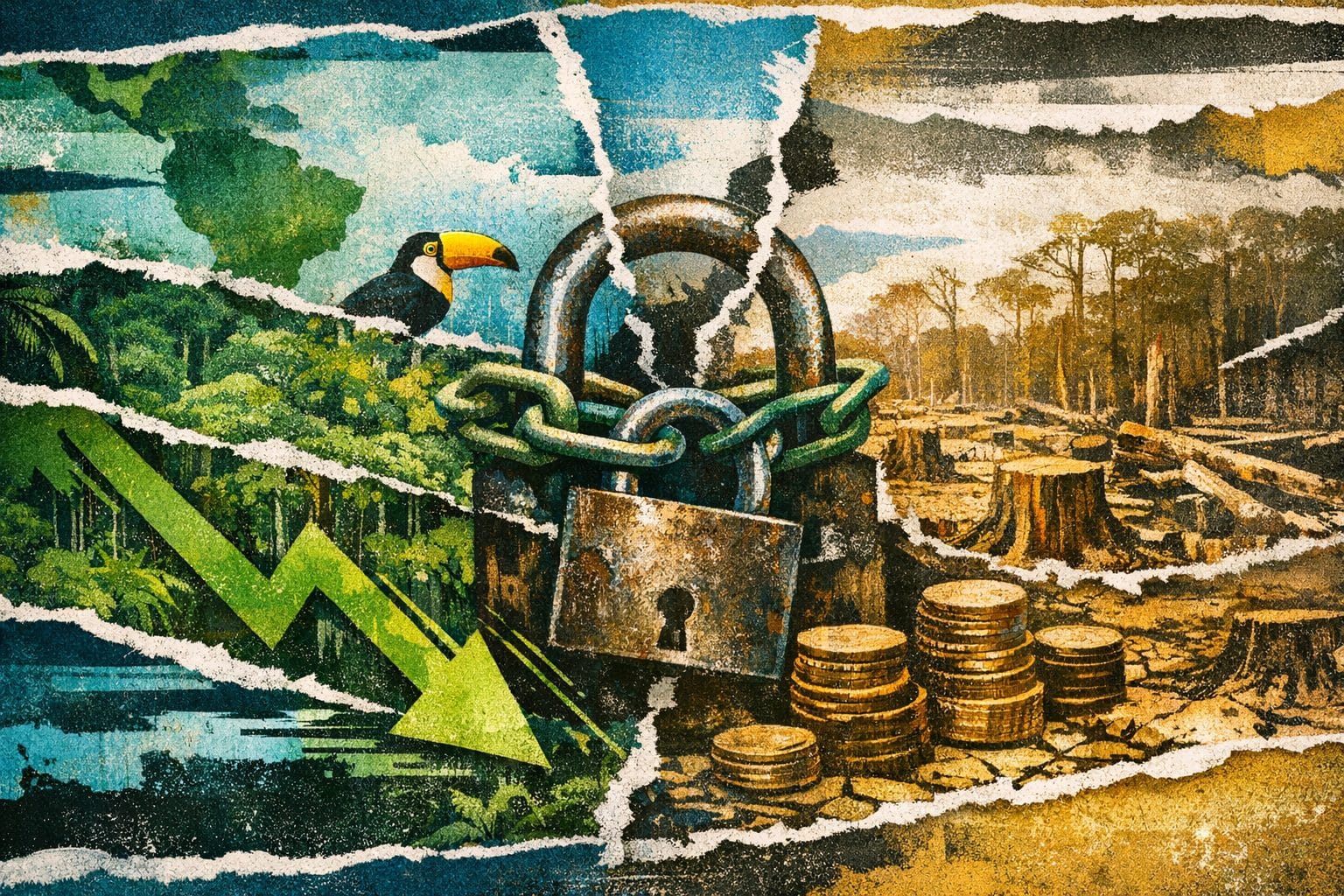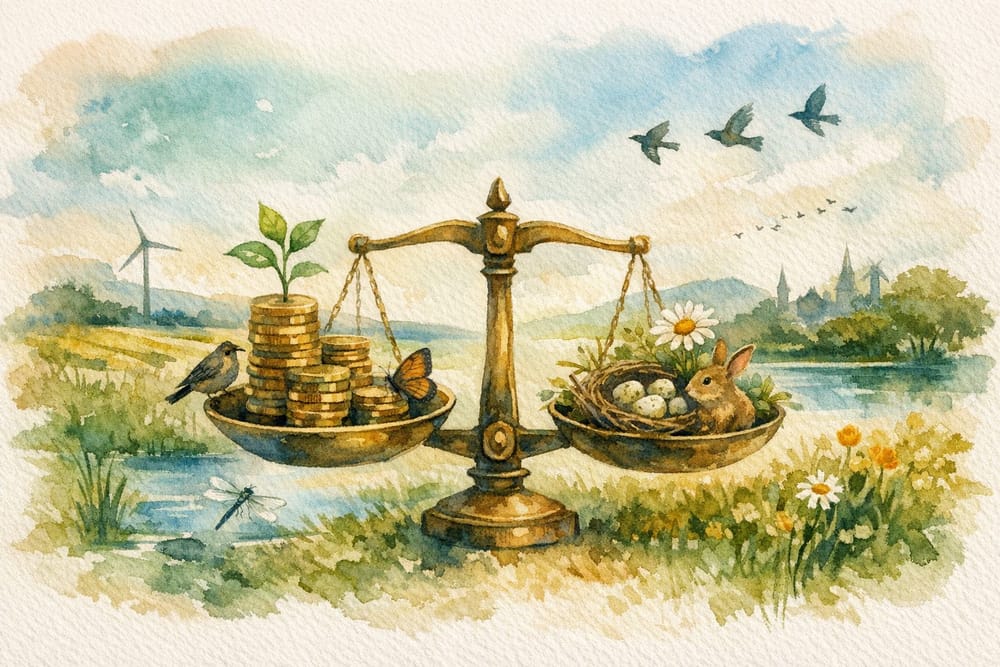
In 2024, 23% of direct payments financed eco-schemes, which pursue environmental, climate, and sometimes animal welfare objectives. Available Article 17 reports show that agriculture was the most frequent pressure on habitats and species, without measuring the effect of 2024 CAP commitments. In 2024, 23% of CAP direct payments financed eco-schemes and 23% of agricultural land carried biodiversity commitments, according to the European Commission’s assessment of the implementation of strategic plans. The gap between formal coverage and measured ecological effect is the challenge the next reform will have to resolve.
The essentials
- In 2024, one euro in four of CAP direct payments financed eco-schemes, and nearly a quarter of European agricultural land carried biodiversity commitments (European Commission, strategic plans assessment 2026).
- Despite this coverage, Article 17 reports show that agriculture was the most frequently reported pressure on habitats. The data signal the persistence of strong pressures and unfavorable conservation states, without allowing attribution of this gap to recent CAP commitments.
- Eco-schemes primarily remunerate practice-based commitments, though some schemes can be results-based.
- Regulation imposes objectives and monitoring of ecosystem restoration, creating regulatory pressure on the CAP by 2030.
- The real reform to pursue involves shifting from payment for practice to payment for verified results, while protecting farmers against the natural variability of ecological outcomes.
23% of land under commitment, yet agriculture remains the most frequently reported pressure
The figure seems reassuring. In 2024, one hectare in four of Europe’s utilized agricultural land carries a CAP-financed biodiversity commitment. Eco-schemes, introduced in the 2023 reform, were adopted in almost all national strategic plans. The budget mobilized exceeds, in several member states, the minimum threshold imposed by Brussels.
The European Commission’s assessment published in early 2026 presents a more complicated picture. In Article 17 reports, published on a six-year cycle, agriculture is the most frequently reported pressure, ahead of urbanization, industry, and infrastructure. This ranking describes the declared pressures and threats on habitats and species.
The CAP has financed agro-environmental measures for decades. The older so-called “second pillar” measures already covered millions of hectares in the 2000s. Coverage has expanded; agricultural pressure on habitats remains significant. The lesson is direct: covering land area does not guarantee ecological results.
The practices actually remunerated by eco-schemes
An eco-scheme works like a menu. The farmer chooses one or more practices from a list defined by their national strategic plan: extended rotations, reduced inputs, maintenance of cover crops, extensive grassland management. They declare their choice, it is inspected for practice adoption, and they are paid. The ecological link is not necessarily measured at the scale of each plot in all schemes, but some eco-schemes include verified results.
The Commission’s assessment highlights a design flaw: the system primarily remunerates practices, while including some results-based mechanisms. A farmer who sows a flowering cover crop is paid for sowing it, regardless of any increase in pollinators on their holding. This distinction determines whether public money produces an ecological effect or merely administrative compliance.
The logic has a historical justification. Measuring biodiversity is expensive, time-consuming, and protocols vary from country to country. Remunerating practices is administratively simple, verifiable by satellite or inspection, and politically acceptable to agricultural unions. But this administrative convenience has a price: it decouples the financial effort from the intended effect.
Work published in the journal EuroChoices on results-based payments in Europe shows that several member states, notably the Netherlands, Germany, and the United Kingdom before its EU exit, experimented with remuneration schemes based on biological indicators: number of plant species per square meter, presence of nesting birds, soil organic matter content. These experiments show that farmers adapt their practices differently when the objective is an observable result, rather than compliance with specifications.
Agriculture, dominant pressure on habitats
Intensive agriculture generates multiple simultaneous types of pressure on habitats. The fragmentation of landscapes by large plots without hedges or buffer zones isolates animal populations. Runoff of nitrates and plant protection products degrades adjacent water quality. The disappearance of fallows and permanent grasslands removes refuges. These pressures do not disappear because a farmer adopts extended rotation on one plot.
Fragmentation deserves particular attention. A biodiversity commitment covering 23% of land area does not have the same effect depending on whether that land is dispersed or connected. A continuous network of hedges between committed plots produces a functional ecological corridor. Isolated plots, even managed according to best practices, do not form this network. Some strategic plans already include forms of territorial targeting or adaptation to protected areas.
However, the CAP does not provide a uniform premium across the EU for any location near a priority habitat, even though some plans include mechanisms that are territorialized or adapted to protected sites.
This observation connects to broader issues of species dynamics. Species moving with warming need functional corridors to migrate toward more favorable zones. Fragmented agricultural habitats block these movements, even when individual plots benefit from biodiversity commitments. Landscape connectivity remains a dimension that current eco-schemes do not remunerate.
The Commission’s assessment highlights another mechanism: baseline conditionality, which links access to all direct payments to compliance with good agricultural and environmental conditions, was relaxed in several member states under pressure from agricultural protests in 2024. Obligations relating to fallows and rotations, which were part of the basic foundation, were temporarily suspended or eased. The signal sent to voluntary eco-schemes by this loosening of the mandatory floor is ambiguous.
Member states do not all measure the same thing
One of the least visible obstacles to an overall assessment is the disparity in monitoring methods. Member states choose relevant indicators within a common European framework and apply harmonized calculation methods and reporting obligations. The Commission has aggregate figures on committed land area and payments made. It has far fewer comparable data on ecological effects measured on the ground.
This gap is not incidental. It means that the European assessment rests largely on declarations of practices rather than independent biological measurements. A member state can declare that 30% of its agricultural land carries biodiversity commitments and have no verifiable data on what those commitments produced in terms of bird, insect, or wild plant populations.
The contrast with other areas of environmental policy is useful to note. Natural regeneration reduces tree loss where agroforestry increases it, a result that could be established because forest cover can be measured by satellite with sufficient precision to compare practices. Agricultural biodiversity, much more diffuse, is not measured with the same tools. It requires field surveys, standardized protocols, trained observers, an investment that the CAP has not integrated into its control costs.
Remunerating results without placing risk on the farmer
The shift toward results-based payment faces a legitimate objection. Biodiversity depends on factors the farmer does not control: seasonal weather, the presence of species in neighboring plots, population dynamics at the landscape scale. Conditioning a payment on a biological indicator exposes a farmer to an ecological outcome their practices may not have caused, in either direction. During drought, insect populations decline even on the best farms.
This risk is real. But it is manageable through known mechanisms. Experimental schemes in the Netherlands and Germany used local benchmarks: the farmer is evaluated against a peer group in the same zone, with the same climatic conditions. If biodiversity declines everywhere due to drought, no farmer is penalized. If it improves on their holding while neighbors stagnate, they are rewarded.
This relative benchmarking approach absorbs part of the climate risk.
A complementary approach would be to create a European public insurance mechanism. The farmer who commits to a biodiversity result receives a guaranteed base payment for their practices, plus a conditional supplement linked to measured results. If the ecological result fails for documented climate reasons, insurance covers the difference. The cost of this mechanism can be estimated from available experimental data, and it is probably lower than the cost of a system that finances practices without verifying their effects for another decade.
It would also be necessary to fund an independent measurement network. National environmental agencies, in several countries, already have protocols for monitoring agricultural biodiversity and could be mandated to provide comparable reference data at the European scale. These data would allow the Commission to evaluate strategic plans not only on their committed land area, but on their measured biological effects.
The trade-offs of the post-2027 revision
The current CAP runs until 2027. Negotiations on the next one will begin in earnest from 2025-2026. The European nature restoration regulation imposes targeted restoration obligations, notably the restoration of at least 30% of drained agricultural peatlands by 2030, and measures to improve biodiversity in agricultural ecosystems, measured by defined indicators. This regulation creates new pressure on the CAP’s logic: if member states must demonstrate measurable habitat restoration, agricultural payments financing practices without proof of effect become difficult to justify as a contribution to this objective.
Two trajectories are emerging. In the first, the post-2027 revision conditions a growing share of payments on measured biological indicators, develops insurance mechanisms for ecological risk, and funds an independent monitoring network. If this scenario materializes, the current 23% of committed land begins to produce verifiable effects and agriculture gradually ceases to be the dominant pressure on habitats reported by member states. The path takes time: biological populations take years to respond to practice changes.
In the second trajectory, budgetary and agricultural pressures maintain the status quo of payment for practice. Formal coverage continues to expand. Member states’ reports continue to place agriculture at the top of pressures on habitats. The Commission’s next assessment, in 2030, reproduces the same gap between financial commitment and measured ecological effect. This scenario is not hypothetical: it is the current trajectory, without inflection.
The difference between the two depends on a political decision the CAP has not yet had to make clearly: does public agricultural money buy compliance or results? The question has been posed for a long time in academic literature. The Commission’s 2026 assessment now poses it with official figures.
The signals to monitor are precise. The share of payments conditioned on indicators measured on the ground, not declared practices, will say whether the reform is advancing. The frequency with which agriculture appears as a dominant pressure in member states’ annual reports will say whether it produces effects. These two measures are available in the Commission’s public assessments; they require no new instruments, only the political will to stick with them.
The question for the negotiators of the next CAP is this: how many funding cycles without verification of effects are acceptable before requiring proof that the money served something measurable?
Sources
- European Commission, assessment of CAP strategic plans implementation, Commission working document SWD(2026) 66, part 1, Direct link (PDF)
- EuroChoices, Making Results-based Payments Work across Europe, European agricultural policy journal, Wiley (no guaranteed URL)
- Regulation (EU) 2024/1991 of the European Parliament and of the Council on nature restoration, EUR-Lex