All articles

States Deploy Their Own Cryptography and Bypass Global Standards
A sufficiently powerful quantum computer could break the protections that today secure government communications, banking transactions, and infrastructure networks. The United Arab Emirates and Saudi Arabia have launched their own sovereign cryptographic programs, running parallel to the internation

Book Review. "Boom: Bubbles & the End of Stagnation" by Byrne Hobart, Tobias Huber
Financial bubbles are not accidents. They are, according to Byrne Hobart and Tobias Huber, the primary mechanism through which societies finance bets too risky for ordinary capital circuits. This is the central thesis of Boom, published in 2025, and it challenges post-2008 crisis orthodoxy with a
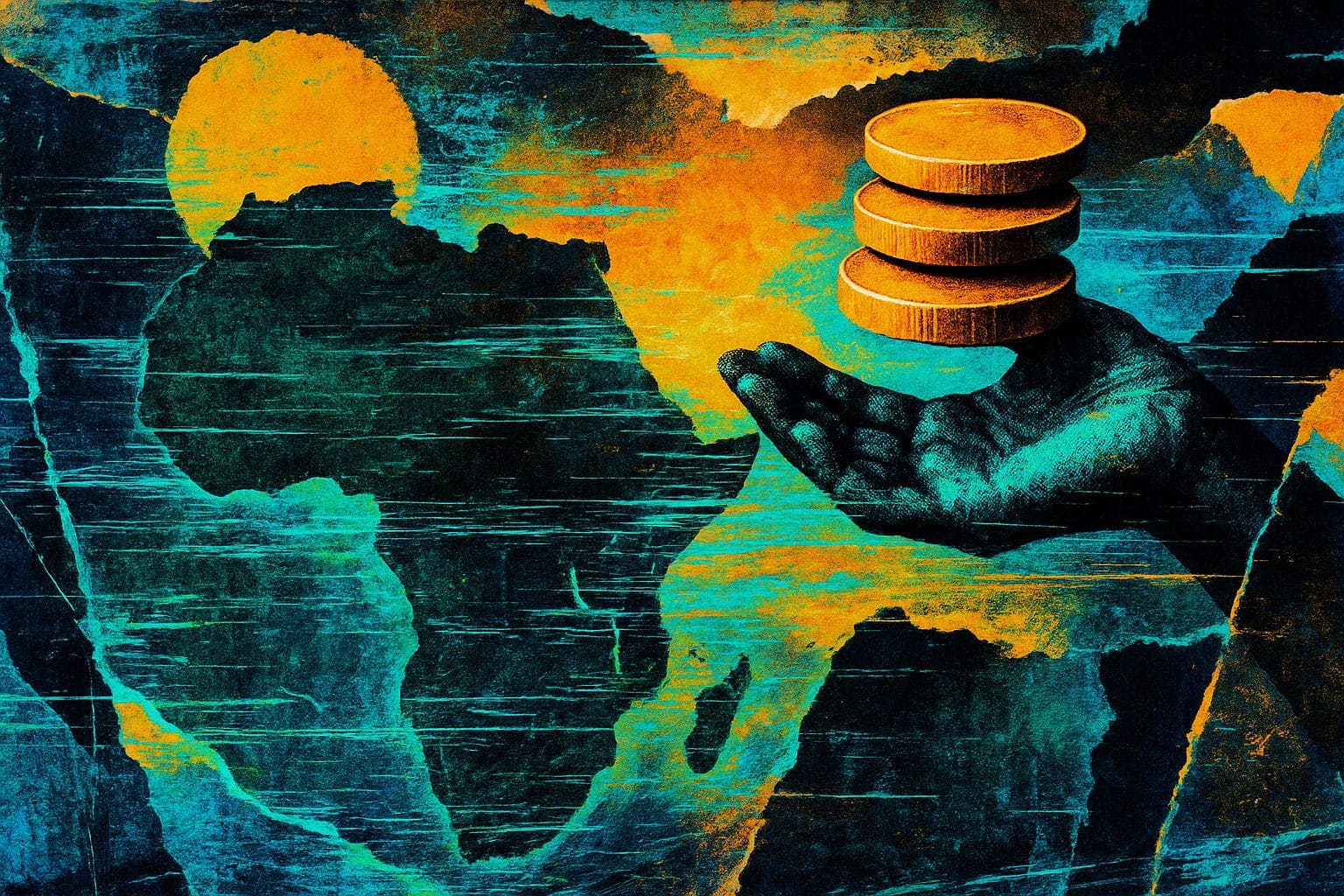
Climate Adaptation Receives $30 Billion Annually Where $500 Billion Are Needed
Heat-related deaths were reported in Africa in 2024, but available sources do not allow for establishing a continental increase in 2024-2025. Climate adaptation has been the subject of fine speeches for thirty years, but it represents 26 billion dollars in international public flows in 2023 against
37,000 Species Assessed to Calibrate Conservation
A study published in Nature in April 2026 puts biodiversity loss in sub-Saharan Africa at 24%. This estimate rests on the bii4africa dataset, fed by the expertise of 200 specialists for approximately 50,000 species of terrestrial vertebrates and vascular plants—a fraction of the continent's likely

Without Integrators, Robotics Is Widening the Gap Between Regions
In 2026, France Travail counts 3,040 non-seasonal recruitment projects for electrical, electronic and automation maintenance technicians; this statistic does not measure vacant positions. The French robotics market is worth 4.5 billion euros and continues to grow, but companies that want to take the

Build Your Own AI Rather Than Rent It: ThaiLLM Opens a Path for Asia
In April 2026, Thailand launched ThaiLLM, a foundational model presented by authorities as a national AI infrastructure. Countries in Southeast Asia combine national infrastructures, regional frameworks, and services from global providers, according to varying configurations. For a nation of 70 mill

A School That Sorts Rather Than Elevates: Returning Power to Institutions
In 2022, only 7% of French students achieve excellence in mathematics [4]. The gap in results between a privileged student and a disadvantaged student reaches 113 points, one of the largest in the OECD [4]. Spending per student in primary education remains 9% below the OECD average [5]. And 67% of s

Aging Populations Dependent on Migration Policy
By 2032, the United States will need to fill 8.9 million positions in direct care for elderly persons. The population of Americans aged 85 and older is projected to more than double between 2020 and 2040, growing from 7 to 14 million. Existing federal initiatives are insufficient to fill all project

The EU Chips Act: When Europe Has Money but Not Brains
The European Court of Auditors delivered a severe verdict: Europe will not reach 20% of the global semiconductor market by 2030, but rather 11.7%. The EU Chips Act has framed at least 43 billion euros in announced investments induced by policies through 2030, with the decision-making power resting p

Between the Robot and the Cobot, Industrial Asia Creates Two Models for the World
South Korea aligns 1,220 robots per 10,000 workers, a world record, and concentrates a significant share of this fleet in its semiconductor and electronics factories. Two hours' flight away, Thai and Vietnamese automakers are deploying cobots with short payback periods. These two trajectories produc
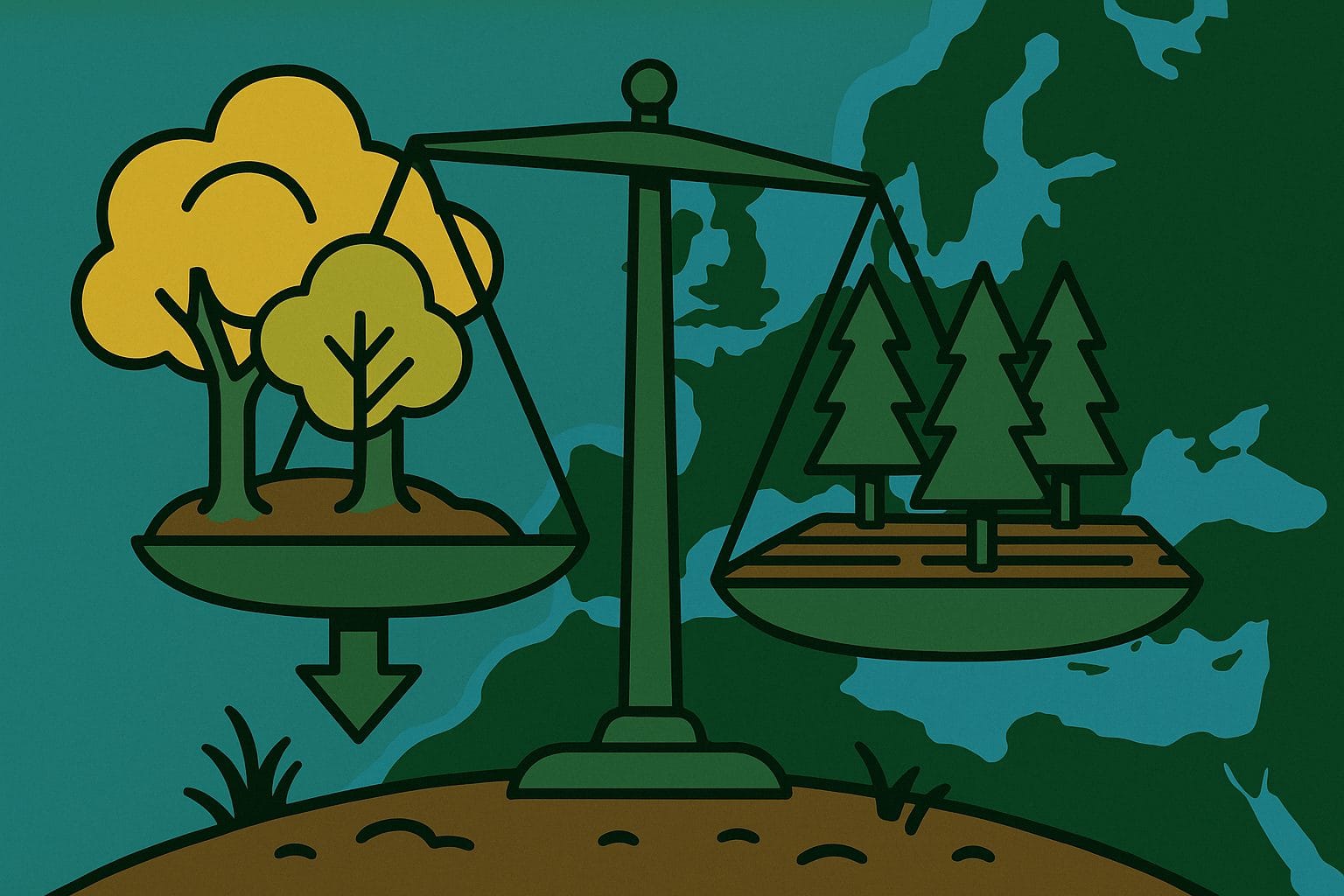
Europe's Forest Carbon Sink Lost 27% in a Decade, Monocultures to Blame
Over ten years, the carbon sink in European forests, including their soils, has diminished by approximately 27%. Homogeneous stands with rapid growth can create trade-offs between living biomass carbon and biodiversity, without evidence that they largely explain this decline. Europe has bet on refor

The Arab World and South Korea, at Opposite Ends of Youth Unemployment in the Age of AI
In five Arab countries with available data, administrative support jobs represent between 1.0% and 6.9% of youth employment, without specific breakdown of the formal sector. According to the ILO, the youth unemployment rate was 28.0% in 2023 and was projected at 28.6% in 2024, more than double the g

Homeownership is now inherited rather than earned
In 2026, 40% of first-time buyers purchase their first home with money from their parents, compared to 20% in 2002 [14]. Salary alone is no longer enough. And the 27.2 billion euros in annual public housing subsidies [9][10][11] have failed to correct the problem: distributed to help buyers access a

Capital Against Labor: The Gap That Redistribution No Longer Closes
In 2024, income inequality in France reaches its highest level since 1996 [1]. The Gini coefficient, which measures the disparity in living standards between French citizens, peaks at 0.302. For the first time, France exceeds the European average for inequality after redistribution, at the very mome

European University Excellence Deepens Territorial Inequalities
Twenty European university alliances have just received €145.6 million in Erasmus+ funding for 2026. This choice illustrates an educational model that is consolidating at the continental level: Europe finances alliances to strengthen the international competitiveness of higher education, with declar

Excess of Appeals: Minority Tyranny Against Energy and Housing
In 2010, according to polls, a majority of Massachusetts voters supported an offshore wind farm off Cape Cod. Sixteen years later, not a single wind turbine has been built. The Cape Wind project was not constructed after its lease was abandoned in 2018, following an accumulation of legal appeals, pe

The Territories Abandoned by Climate
The International Organization for Migration (IOM) plans to provide regional support for policies, preparedness, and where applicable, planned relocations in nine South Pacific countries, including Fiji and Vanuatu. These two archipelagos are among the first nations to adopt public frameworks integr

Data Sovereignty Without Infrastructure, the PDSN Network Opens a Path
The Pacific Data Sovereignty Network is a data governance initiative concerning Pacific peoples living in New Zealand. The PDSN brings together members and institutions primarily established in New Zealand around community-based data governance. This approach raises pertinent questions for small eco

Investing in R&D Without Opening Visas, Innovation Declines
France ranks better in innovation outputs (12th) than in inputs (18th) in the GII 2025, producing more outputs than its level of investments would suggest. In the 2025 Global Innovation Index (GII), it ranks 18th for its investments and 12th for its results: a gap that reflects relative efficiency:

Automated Warehouses Lack Qualified Personnel to Operate Them
An automated warehouse is deployed within a few months to less than two years. Training a supervisor of robotic systems requires several years of education. Talent shortages constitute a declared brake on the adoption and exploitation of technologies: according to the MHI 2025 annual report, 45% of

The AI Act and London Theatre
In 1967, a parliamentary committee recommended the abolition of theatrical censorship; this was implemented by the Theatres Act 1968, an institution two centuries old that had entrusted a single official with the right to decide what Londoners could see on stage. The European AI Act today covers 450

More Funding, Less Access to Home Care for Older Adults
In Australia, 96,709 people were waiting for a Home Care Package at their approved level as of 30 June 2025. Funding for Home Care Packages increased by 15% in FY25, but the number of people receiving home support advanced by 6.3% in FY25 according to KPMG. Funding and allocations increased, but wer

Without Shared Data Infrastructure, African Science Remains Dependent
Three certified data repositories among the 160 registered worldwide: this is where Africa stands in terms of scientific sovereignty. The continent generates data, trains researchers, publishes results, but the infrastructures that would make it possible to valorize, store, and share this data relia

Rare Minerals and Satellite Data Are Sufficient to Erase a Territory's Autonomy
Greenland has 57,000 inhabitants and significant reserves of rare earth elements and lithium. This concentration attracts major powers even before deposits become exploitable. China has announced its desire to promote a "Polar Silk Road" and encourage participation of its companies in Arctic infrast